


 66
66
48% of UK Venues Opened in 2025 Are Already Closed: The Electronic Music Crisis Explained
MAY. 8 2026
Section
Read Time
Written By
[ EXCERPT ]
As skyrocketing costs and legislative burdens choke the nightlife industry, exactly 48 percent of new UK entertainment venues closed within a year. Explore how electronic dance music culture is adapting to this devastating infrastructure collapse.
As skyrocketing costs and legislative burdens choke the nightlife industry, exactly 48 percent of new UK entertainment venues closed within a year. Explore how electronic dance music culture is adapting to this devastating infrastructure collapse.
Picture rolling up to your favorite local spot on a Saturday night. You expect a packed room and sweaty walls. Instead, you just see a lonely bartender wiping down a sticky counter. The heavy bass kicks from the speakers, but nobody is around to hear it. The UK club scene is basically running on empty right now.
A brutal combination of skyrocketing rent and aggressive noise complaints is choking the life out of independent music spaces. The raw data tells a grim story. Analysts recently crunched the numbers and found a shocking reality. Exactly 48 percent of all entertainment venues launched in the UK in 2025 have already ceased operations. The typical lifespan for a new club is now a pitiful 2.1 years. You have a better chance of surviving a bad roll at a craps table than keeping a new venue open.
TL;DR: The UK grassroots music infrastructure is collapsing under immense economic pressure. Taxation policies and legislative burdens are forcing venues into early insolvency. Nearly half of all new clubs close within a single year. The industry demands immediate structural reform to save the talent pipeline and preserve independent dance culture today.
Why Are New Dance Floors Dying So Fast?
The math simply does not work anymore. Operators face an impossible climb against inflation and corporate consolidation. The profit margins sit at a critically low 2.5 percent for grassroots spaces. Owners try to pack 500 sweaty bodies into a concrete box just to break even. A sudden hike in national insurance or business rates triggers immediate collapse. Over 6,000 jobs disappeared across the sector last year alone.
We are witnessing the slow death of the mid tier room. Only 15 percent of spaces now hold between 500 and 2500 people. This chokes the talent pipeline completely. A local DJ can conquer a 100 capacity pub. They cannot leap directly to a massive corporate superclub. They need that middle ground to test tracks and read the crowd physics.
The government also introduced Martyn’s Law in April 2025. This new safety legislation requires rigorous threat assessments and security upgrades for any venue holding over 200 people. The intent is entirely necessary. The financial reality is devastating. Many operators cannot absorb the mandatory costs of new metal detectors and training protocols.

Why Real DJs Are Missing From Global Top 100 Leaderboards
The Audience Migration to the Underground
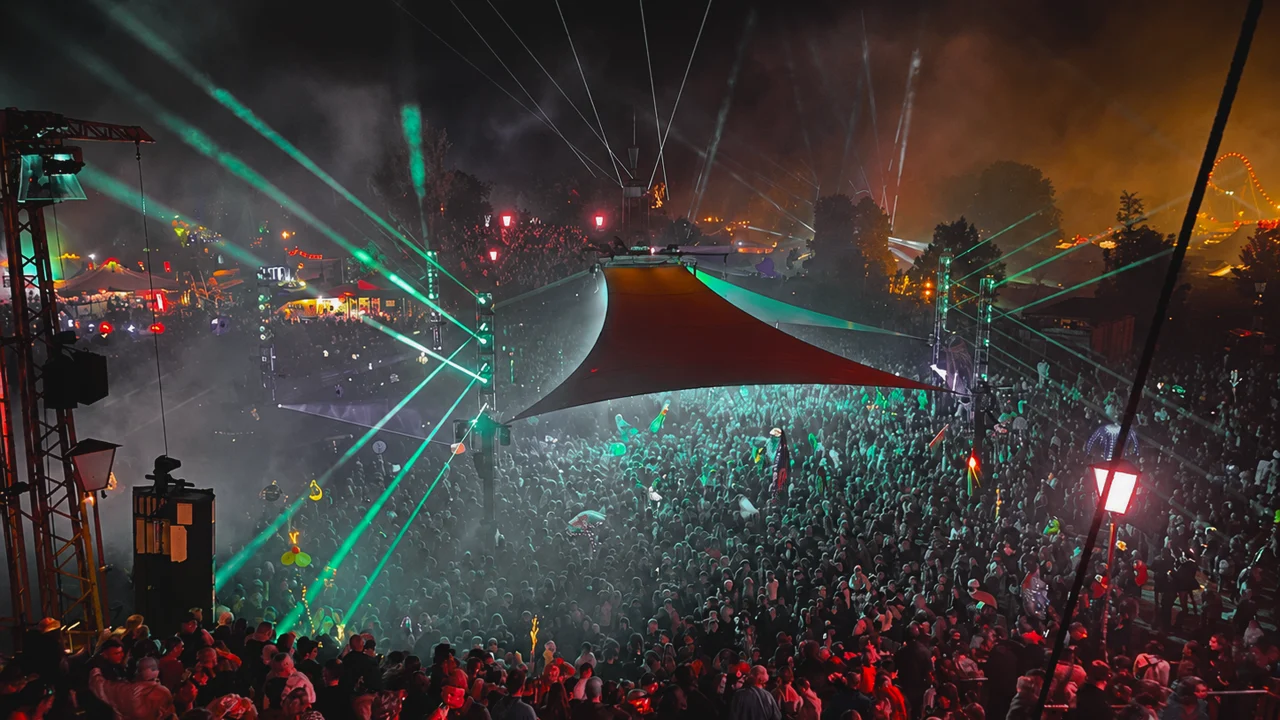
Clubbers are not staying home. They are actively rejecting the broken model. Exorbitant cover charges and overpriced drinks push the crowd elsewhere. Free, unlicensed parties surged by 34 percent last year. People want the raw experience back. They haul heavy generator rigs into muddy fields and abandoned warehouses. You do not need a slick VIP booth to move to a 140 BPM techno track.
“We are seeing free parties rise, mid-tier venues disappear and audiences pushed out of licensed spaces.”
The Night Time Industries Association CEO Michael Kill hits the nail on the head. He notes that demand remains intensely high. The corporate squeeze is just forcing the culture into the shadows. We are also seeing a massive spike in daytime events. Promoters rent out industrial parks at noon to bypass late night licensing fees.
Can the Grassroots Levy Save the Circuit?
The industry is mounting a desperate counteroffensive. Organizations like the Music Venue Trust are demanding a £1 surcharge on arena tickets to subsidize failing independent clubs. High profile touring acts back the plan. If major promoters refuse to pay up voluntarily by June 2026, activists want the government to mandate the fee legally.
The situation demands drastic measures. Some venues try to pivot and survive by any means necessary. This desperation fuels a broader commercial real estate crisis where operators transform nightclubs into co working spaces by day. The dancefloor becomes a sterile desk farm. The DJ booth becomes a coffee station.

The Temporary Death of a South London Institution
Even the heavyweights are taking a knee. Corsica Studios sits under the railway arches in Elephant and Castle. It spent 23 years building a reputation for punishing sound systems and forward thinking bookings. The founders recently announced it will shut its doors in March 2026.
“Nothing lasts for ever,” founder Adrian Jones stated bluntly regarding the closure.
The truth is slightly more complex. The venue is closing temporarily to undergo massive soundproofing retrofits. Property developers are building luxury flats right next door. Corsica must adapt its physical shell to survive the incoming wave of noise complaints. They chose to close voluntarily to armor themselves for the future.
The electronic music ecosystem faces a brutal reckoning. Corporate giants buy up the massive arenas while the underground retreats to the woods. The middle tier is rotting away. We are rapidly approaching a point where building a career requires deep pockets instead of raw talent. The beat will go on. It just might not have a roof over its head.
Sources & Further reading
The “Median Lifespan” Crisis
The volatility of the venue market has reached a critical peak. A staggering 48% of UK entertainment venues launched in 2025 have already shuttered, and data reveals the median lifespan of a dissolved venue is now just 2.1 years.
- The Profit Gap: Grassroots music venues currently operate on a razor-thin average profit margin of 2.5%.
- Human Cost: This economic squeeze resulted in the loss of over 6,000 jobs in the grassroots sector last year alone.
Regulatory Pressure: Martyn’s Law
Adding to the financial burden is the Terrorism (Protection of Premises) Act 2025, commonly known as Martyn’s Law, which received Royal Assent in April 2025.
- Compliance Threshold: Any venue with a capacity of over 200 people falls under the “standard tier,” requiring mandatory staff training and comprehensive threat assessments.
- Operational Strain: While essential for public safety, the cost of these security upgrades is cited as a major pressure point for independent operators already facing 2.5% margins.
The Rise of the “Free Party” & The Hollow Middle
As regulated venues disappear, the culture is moving back to the underground.
- Unlicensed Growth: There has been a 34% year-on-year increase in free, unlicensed electronic music parties. NTIA CEO Michael Kill warns that the disappearance of mid-tier venues is driving this shift.
- Capacity Imbalance: Currently, only 15% of UK music venues fall within the crucial 500–2,500 capacity “mid-tier” range, creating a massive gap between small bars and massive stadiums.
The Grassroots Levy: A Search for Solutions
To save the ecosystem, the industry is pushing for a Grassroots Levy—a proposed £1 surcharge on all arena and stadium tickets to fund smaller spaces.
- The Deadline: The live music industry has set June 2026 as the deadline for a voluntary agreement before demanding a statutory government mandate.
Iconic Departures: Corsica Studios
Nowhere is this crisis more visible than the temporary closure of South London’s iconic Corsica Studios. After 23 years of defining Elephant and Castle’s nightlife, the club will close in March 2026 for extensive soundproofing retrofits to accommodate surrounding urban development. Founder Adrian Jones famously reflected on the struggle, stating, “Nothing lasts for ever.”
What We Covered

- [2026.07.10] ./Loco Dice Links with Alaina Arnez for Peak-Time Club Weapon “Hold Up (You Feel That)”
- [2026.07.02] ./Why the fight against AI music is just history repeating itself on a bigger scale
- [2026.06.30] ./Six-Time Grammy Nominee Fatboy Slim Shares Turning Point in Sobriety
- [2026.06.21] ./The Atlantic AI Watchdog tool unmasks widespread music copyright theft
- [2026.06.15] ./How Gotye Used His Pop Fortune to Restore Electronic Music History