


 62
62
Top 8 Gritty Underground Rave Spots for Authentic DIY Parties
MAY. 23 2026
Section
Read Time
Written By
[ EXCERPT ]
Throwing a massive underground party requires the perfect raw venue to handle heavy acoustics. Explore eight unique off grid locations ranging from concrete highway underpasses to remote coastal beaches where your late night event thrives.
Throwing a massive underground party requires the perfect raw venue to handle heavy acoustics. Explore eight unique off grid locations ranging from concrete highway underpasses to remote coastal beaches where your late night event thrives.
Throwing an underground party demands more than simply renting a massive PA system. It requires an intense understanding of spatial dynamics and crowd physics. The room dictates the energy. You need concrete walls for bass bounce and heavy steel for proper atmosphere. Finding the right venue means balancing raw aesthetics with cold logistical reality.
Dance music thrives in the brutalist spaces the city left behind. As commercial clubs push ticket prices higher, organizers return to the forgotten fringes of urban zones. The most effective DIY spaces sit in a legal gray area. They look completely illicit but operate under quiet agreements with property owners. This keeps the subwoofers running without sudden police intervention.
TL;DR Throwing a successful DIY party requires securing unconventional venues like warehouses, underpasses, or deep forest clearings. Promoters achieve this by paying quiet rental fees to property owners. This strategy preserves the gritty underground aesthetic while eliminating the risk of police shutting down the generators and seizing expensive PA audio gear.
Which Environments Can Promoters Actually Secure?
The survival of independent dance music depends on temporary autonomous zones. Promoters must always find cracks in the concrete to wire up their amplifiers. To keep the bass running until dawn, organizers generally target eight specific environments that balance gritty aesthetics with high feasibility.
- Industrial Warehouses: Concrete walls provide massive acoustic bounce that works perfectly for high BPM techno. Organizers must look for spaces in light industrial zones where night noise drops off before hitting residential windows.
- Disused Basements and Cellars: Moving below ground offers immense tactical advantages because subterranean spaces naturally absorb massive amounts of sound pressure. Look for closed restaurants that still have active grid power to avoid hauling generators down stairs.
- Highway Underpasses and Bridges: These urban spaces provide built in rain cover and massive pillars that look incredible under simple strobe lighting. They exist on the city periphery where ample parking simplifies loading heavy amplifier racks.
- Abandoned Commercial Spaces: Closed mechanic shops and dead strip malls present an excellent loophole for promoters. Negotiating a private rental agreement for a single night with the owner removes the threat of a police raid.
- Empty Skateparks or Drained Pools: Concrete bowls function as massive natural amphitheaters for crowd physics. The DJ booth sits on the edge of the bowl while dancers pack the center to form a dense moving organism.
- Provincial Farmland and Empty Fields: Leaving the city grid entirely behind requires hauling industrial diesel generators into empty dirt fields. Paying a local landowner ensures zero noise complaints while the subwoofers run deep into the next day.
- Deep Forest Clearings: Heavy foliage functions as a massive organic acoustic dampener that traps sound pressure tightly within a clearing. The bass stays localized instead of bleeding into neighboring towns but requires total off grid preparation.
- Remote Beaches and Coastal Coves: Outdoor environments near water present unique acoustic barriers because the crash of the ocean naturally masks the low frequencies. Sand absorbs sharp high frequencies making coves ideal for extended melodic house sets.

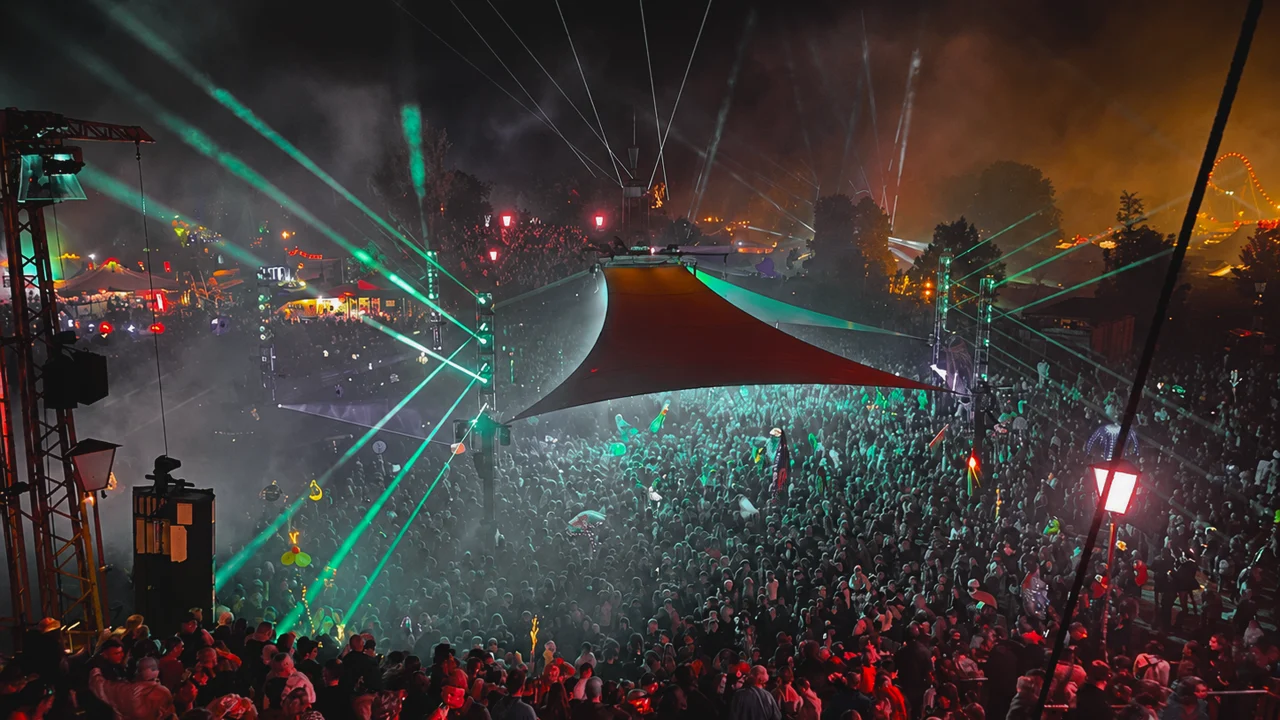

The Economics Of Autonomous Spaces
Moving away from traditional clubs requires smart financial negotiation. Sometimes local authorities actually notice the quiet efficiency of these rogue operations. An illegal rave in Spain wins unlikely praise from mayor for strategic planning due to its shockingly seamless setup.
“Frankly, it was magnificently organized. It was like a small town. They had their bakery, their pizzeria, their clothing shops.”
Mayor Fernando Alvarez recognized the complex logistics behind the unauthorized event. True underground culture relies on this exact level of self sustained infrastructure.
Technical Logistics In The Open Air
Taking a party outside changes the entire technical equation. If the generator dies the music ends immediately. Organizers must balance heavy fuel consumption against the power draw of the PA system. The lighting rig requires significant stable wattage.
You do not need excessive volume if the sound is clear. “You don’t need excessive volume if the sound is clear,” notes audio engineer Tony Andrews regarding sound system dynamics in open spaces. The true cost of freedom is simply carrying your own diesel. As cities grow increasingly expensive the search for raw space becomes an art form itself. The best rooms are still out there waiting in the dark.
What We Covered

- [2026.07.12] ./Record Labels Are Not a Golden Ticket and Electronic Music Producers Must Stop Signing Bad Deals
- [2026.07.12] ./Festival Transparency Revolt: The End of Hype-Driven Lineups
- [2026.07.10] ./Skrillex shares his honest opinion on the future of AI in the music industry
- [2026.07.08] ./Why AI Event Posters are Killing Ticket Presales in 2026
- [2026.07.06] ./Generative AI Migrates From Cloud DAWs Directly to Standalone Performance Hardware