
Watch any musician open their backend dashboard after a million plays. The screen shows thousands of hours of listener attention. Yet the payout balance looks like a mistake, barely covering a monthly car payment. Digital streaming engineering scales infrastructure perfectly, but the financial distribution architecture is broken.
This systemic optimization issue is why platform mechanics matter. When distribution networks treat audio assets as zero-marginal-cost commodities, creators lose leverage. Software engineering dictates creative survival. The current standard forces independence into a volume game that independent players cannot win.
TL;DR: Music tech veteran Tim Quirk has launched Tapedeck, a new streaming service built to replace pro-rata fractional payouts with a hard $0.01 per-play floor. Backed by Zedge, the platform bypasses mandatory subscription models to prove that direct-to-fan digital retail infrastructure remains viable for independent artists.
How bad is the existing streaming infrastructure?
The technical reality of modern music delivery is built on extreme cost minimization. Right now, a standard digital play operates on a complex pro-rata model. The platform pools all subscription revenue, splits it by total platform plays, and distributes fractions. According to active data, the average payout on the market hovers between $0.003 and $0.005 per stream.
This code architecture means fans do not actually pay the specific artists they listen to. Your ten-dollar monthly fee is distributed globally to automated playlists and top-tier catalog owners. Independent labels bear the technical overhead of delivery without clear unit economics. The database treats a passionate loop the same as background static. Find out more about current payouts via the TuneCore Music Economics Guide.

Pennies for Artists, Millions for Missiles: The Real Reason Musicians Are Leaving Spotify
Who is Tim Quirk and can his model work?
To change a digital distribution system, you need to understand how the plumbing was laid. Tapedeck founder Tim Quirk spent decades building commercial audio networks. He ran programming at Rhapsody back when digital subscriptions were first designed. Later, he managed massive application rollouts as a core product executive for Google Play.
This technical background informs Tapedeck’s fundamental architecture. Quirk previously launched Freeform Development to deploy dedicated applications for major touring acts. Those systems utilized micro-transaction frameworks similar to modern mobile gaming loops. The experiment proved successful, generating between 5 cents and 13 cents per play for independent partners.
What makes Tapedeck technically different?
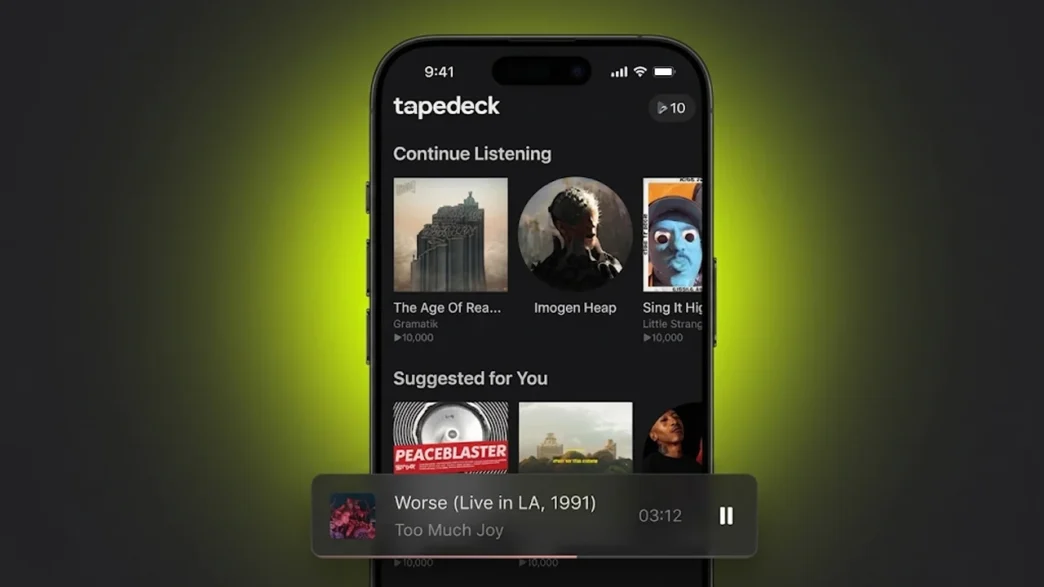
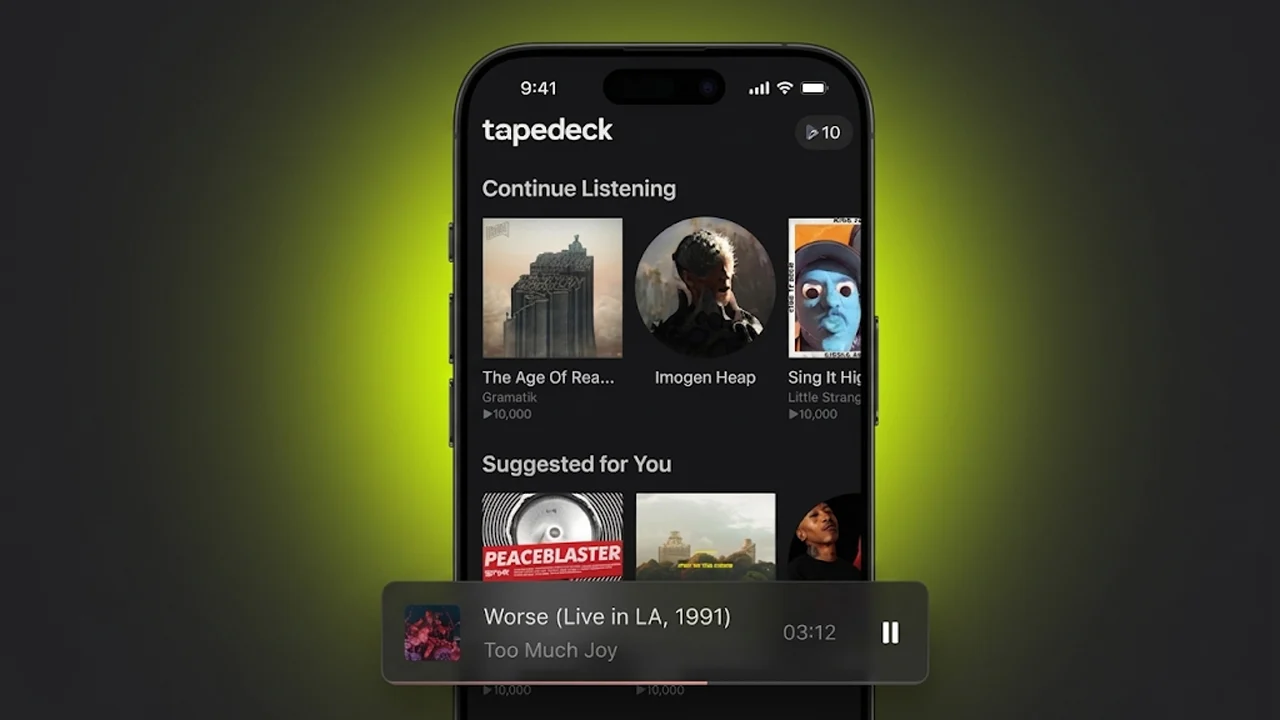
Tapedeck functions as a hybrid digital store and direct playback network. Instead of a locked paywall, users navigate a pay-as-you-go database. The structural baseline guarantees a minimum floor of one penny per play to the copyright holder. It changes streaming from a shared pool into a series of transparent point-of-sale transactions.
The backend application logic extends this hard floor to digital downloads. The service enforces a minimum payout of $1.00 for individual tracks and ten dollars for complete albums. Artists can adjust these variables upward inside their developer portal. Additional revenue triggers whenever an application instance is installed via an artist-specific referral link. Read the detailed structural parameters via the Zedge Product Rollout Documentation.


Can a utility-based system scale?
The survival of alternative distribution models depends entirely on operational scale and financial backing. Tapedeck is not building its server infrastructure from scratch. Mobile personalization firm Zedge acquired Quirk’s previous software property on September 25, 2017. This integration provides a mature infrastructure to manage global asset delivery, as documented in the PitchBook Financial Database.
Quirk currently serves as the Senior Vice President of Product at the parent company. This position allows Tapedeck to utilize pre-built localized payment processing and compliance frameworks. You can track his professional lineage through The Org Executive Directory. The application bypasses the standard subscription model by treating music as a premium utility. If the protocol stabilizes, it proves that fractional-cent streaming is an intentional policy choice, not a technical limitation.
Sources and Further reading
- TuneCore Music Economics Guide: Data documentation verifying standard market payouts scale between $0.003 and $0.005 per stream.
- Zedge Product Rollout Documentation: Official technical launch details for the platform outlining the 1-cent stream and 1-dollar track floors.
- PitchBook Financial Database: Corporate transaction records confirming the acquisition of Freeform Development on September 25, 2017.
- The Org Executive Directory: Verified employment tracking outlining past management roles at Google, Rhapsody, and current status as SVP.