

 72
72
Why the NVIDIA RTX Spark 128GB Unified Memory is a Game Changer for DJs and Producers
JUN. 3 2026
Section
Read Time
Written By
[ EXCERPT ]
NVIDIA RTX Spark superchips integrate up to twenty Arm CPU cores and Blackwell graphics to consolidate digital audio and video processing, providing touring performers with high performance offline workflows on a single mobile system design.
NVIDIA RTX Spark superchips integrate up to twenty Arm CPU cores and Blackwell graphics to consolidate digital audio and video processing, providing touring performers with high performance offline workflows on a single mobile system design.
For decades, multi-disciplinary digital performers have tolerated fragmented workflows. They split operations across bulky desktop towers, thermally unstable laptops, and unpredictable cloud connections. This physical division is beginning to break down. Modern system configurations offer a consolidated alternative. A single mobile workstation can now manage high-bitrate digital signal processing, real-time stage visuals, and localized machine learning.
Hardware limitations dictate the boundaries of live performance. When processing demands exceed localized capacity, software stability degrades. In late May 2026, NVIDIA introduced its Arm-based RTX Spark superchip to address physical system bottlenecks. By linking a 20-core CPU directly to a Blackwell GPU, the chip unifies compute resources. This development signals a structural transition for mobile systems.
TL;DR The NVIDIA RTX Spark superchip consolidates digital audio, real-time 3D rendering, and local AI processing into a single portable platform. Featuring 128GB of coherent unified memory and a 6,144-core Blackwell GPU, this new hardware eliminates external cloud reliance and physical device fragmentation for touring audiovisual artists and modern content creators.
A Simple Breakdown for Performing Artists
Disclaimer: The following analysis translates complex hardware specifications into practical terms for creative workflows.
The NVIDIA RTX Spark is an integrated processor designed for professional portable workstations. For performing artists, it combines a twenty-core CPU, a powerful graphics engine, and a massive shared memory pool on a single chip. This layout allows you to run intensive audio plug-ins, real-time stage visuals, and offline stem separation simultaneously without performance lag.
Silicon Integration Replaces Legacy Workstation Form Factors
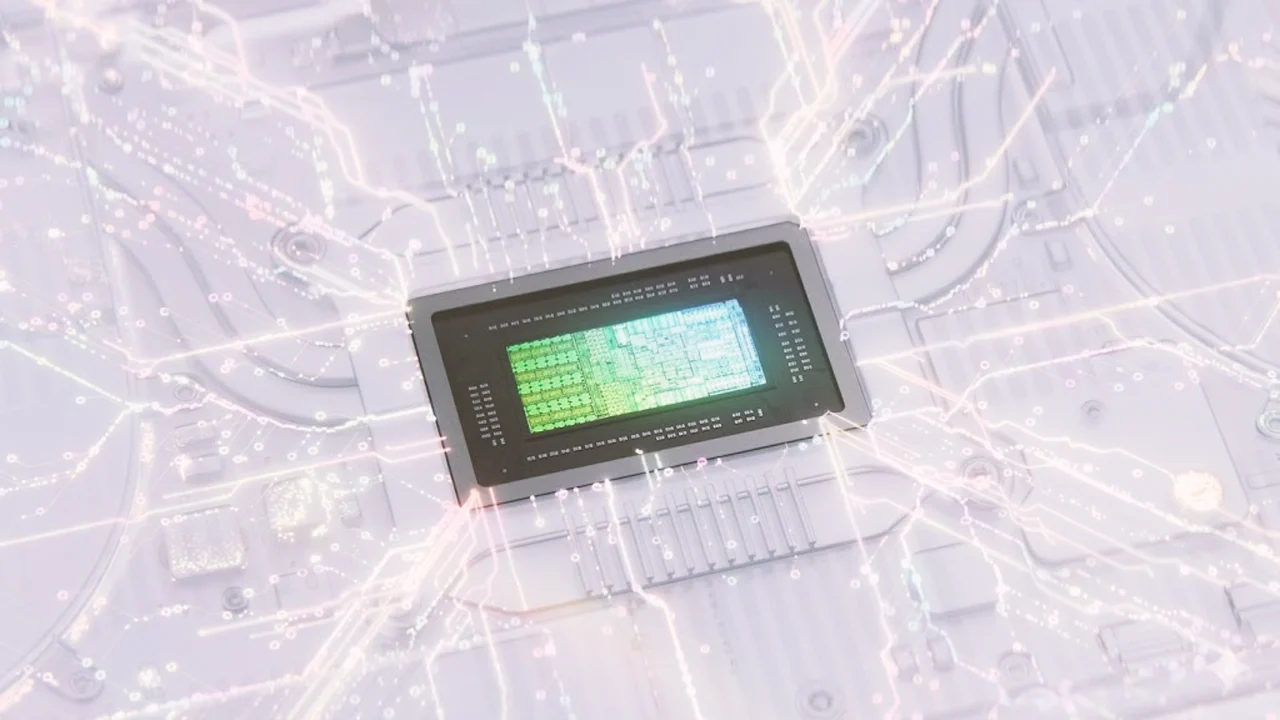
Traditional laptops run separate CPU and GPU memory pools, relying on a slow PCIe bus to transfer data. This transfer introduces latency. The RTX Spark utilizes a different design. It links a twenty-core Arm-based Grace CPU with a Blackwell GPU using NVLink-C2C. This interconnect provides up to 300 GB/s of memory bandwidth. It supports up to 128GB of unified coherent LPDDR5X memory. The design saves physical space. The entire system operates within an 80W to 100W thermal limit. This efficiency allows manufacturers to package the hardware in chassis designs measuring as thin as 14mm.
Is the $599 MacBook Neo the Best Budget DJ Laptop for 2026?
Which Laptop Brands Are Launching RTX Spark Hardware?
NVIDIA has partnered with major personal computer manufacturers to deploy the superchip across high-tier consumer and creative product lines starting in fall 2026. The initial launch phase features several prominent configurations:
- ASUS will deploy the chip in its ProArt creative line, specifically the ProArt P16 and ProArt P14 models.
- MSI is introducing a convertible touchscreen notebook called the Prestige N16 Flip AI Plus.
- Microsoft is releasing the Surface Laptop Ultra alongside a developer-focused Surface RTX Spark Dev Box.
- Dell, HP, and Lenovo will feature the chip in their XPS 16, OmniBook, and Yoga Pro series respectively.
- Additional designs from manufacturers like Acer and GIGABYTE are planned to follow the initial launch wave.
How Does Coherent Unified Memory Prevent Audio Dropouts?
In digital audio workstations, the CPU meter measures timing headroom. It tracks the ratio between processing time and the buffer window. At a sample rate of 44.1 kHz with a 64-sample buffer, the processor has exactly 1.45 milliseconds to compute all active calculations. When processing times exceed this window, buffer underruns occur, producing audible crackles or system freezes. Legacy laptops frequently trigger thermal throttling when internal temperatures reach 95 to 105 degrees Celsius. The central processing unit instantly downclocks to protect itself, dropping performance during critical tasks. Coherent memory eliminates the need to duplicate large sample libraries across distinct RAM blocks. Microsoft updated its Prism emulator in December 2025 to translate AVX and AVX2 vector instructions, enabling Ableton Live 12 to install on Arm systems. A native Arm64 version of Ableton Live is planned for later release to further stabilize real-time execution.
Real-Time 3D Rendering Enters the Live Performance Booth
Touring artists often run separate machines for audio and visuals to prevent system overload. For example, some designs use one laptop for audio playback and a second machine for real-time video rendering. The two systems coordinate via Ethernet cables. The RTX Spark consolidates these tasks. The Blackwell GPU contains 6,144 CUDA cores and fifth-generation Tensor cores. This provides desktop-grade graphics power in a mobile chassis. Derivative and other software developers are working to transition tools like TouchDesigner and Blender to native Arm64 formats. Running these engines natively allows performers to generate complex physical animations directly on stage. This eliminates the latency and physical footprint of dual-laptop configurations.
Can Local AI Engines Run Completely Offline in the Club?
Unreliable venue networks present a risk to live performers who rely on cloud-based processing. Localized computing offers a more secure alternative. The RTX Spark delivers 1 petaflop of local FP4 AI performance. Quantization allows the platform to run complex models on the device. This local execution ensures stability. For example, a 120-billion-parameter model requires 240 gigabytes of memory at FP16 precision. When quantized to FP4, the footprint drops to 60 gigabytes. This fits within the 128GB unified memory pool. Artists can perform real-time stem separation on stage without internet dependencies. Pioneer, Serato, and Ableton have integrated local machine learning models into their software.
During the GTC Taipei launch, the manufacturer’s leadership summarized the industry’s direction:
The PC is being reinvented. For forty years, you launched apps. Click. Type. With RTX Spark and Microsoft Windows, you ask, and the PC does the work. RTX Spark brings everything NVIDIA has built, CUDA, RTX, our AI platform, into a single superchip. Local agents. Frontier models. Creative workflows. RTX games. All on a laptop. This is the new PC. The personal AI computer.
This shift toward local computing reflects an emphasis on infrastructure control. Artist Holly Herndon highlighted this approach during the development of her custom neural network, Spawn. Herndon trained the model locally during group rehearsals to process live vocal harmonies. As she noted, “Choosing to work with an ensemble of humans is part of our protocol. I don’t want to live in a world in which humans are automated off stage.”
The Content Factory and High-Throughput Media Acceleration
Modern independent production requires high-volume media output. Artists must compile video footage, generate visual assets, and manage release documents. The updated media engine in the Blackwell GPU accelerates these tasks. It features three ninth-generation NVENC encoders and two sixth-generation decoders. The system supports native hardware-accelerated decoding for 4:2:2 chroma subsampling. This format preserves critical color information but typically bottlenecks standard processors. The RTX Spark decodes nine simultaneous 4K60 4:2:2 video streams. Software suites like Adobe Premiere Pro are being redesigned to utilize this hardware directly. This native optimization yields a two-fold speed increase. Secure Windows 11 kernel primitives and the NVIDIA OpenShell framework allow local AI agents to execute administrative tasks safely.
While entry-level performers examine whether a budget-friendly portable setup like the new MacBook Neo fits basic playback requirements, high-end production demands advanced hardware integration. The consolidation of system memory and local processing capability marks a transition toward absolute workflow autonomy. This development will shape how artists design and execute real-time audiovisual systems in performance spaces. The era of the fragmented setup is officially coming to a close.
Sources & Further reading
1. Hardware Architecture: The RTX Spark Superchip
- The Unveil (Late May / May 31, 2026): At GTC Taipei, NVIDIA introduced the RTX Spark superchip, a unified platform built to transition Windows into an agentic AI operating system. [NVIDIA]
- Silicon Topology: The superchip integrates a 20-Core Grace CPU (co-designed with MediaTek) alongside a Blackwell GPU featuring 6,144 CUDA cores. [Tom’s Hardware]
- Interconnect & Memory: The subsystems communicate over an NVLink-C2C interconnect delivering up to 300 GB/s of maximum memory bandwidth. This provides coherent access to a unified memory pool configuration of up to 128GB of LPDDR5X. [Tom’s Hardware]
- Physical & Thermal Profiles: The platform operates within a dynamic thermal envelope of 80W to 100W (80W dynamic peak for mobile, 100W peak for desktop development boxes). This efficient architecture allows manufacturers to build premium portable machines with a minimum chassis thickness of just 14mm. [PCMag] [Tom’s Hardware Dev Box] [Indian Express]
+--------------------------------------------------------------+| RTX Spark Superchip || +------------------------+ +------------------------+ || | Grace Arm CPU | | Blackwell GPU | || | (20-Core) | | (6,144 CUDA Cores) | || +------------------------+ +------------------------+ || ^ ^ || +--------> NVLink-C2C <------+ || (300 GB/s) || || Unified Memory: Up to 128GB Coherent LPDDR5X |+--------------------------------------------------------------+
2. Edge AI Inference & Architecture Quantization
- Local Compute Capacity: The hardware delivers up to 1 Petaflop of local AI inference computing power directly on-device. [Stock Titan]
- Local Parameter Capacity: This massive compute budget enables the execution of large language models containing up to 120 billion parameters directly within system memory. [Stock Titan]
- Quantization Optimization: At standard FP16 precision, a 120B model requires a 240 gigabyte native memory footprint, which exceeds hardware limits. By utilizing specialized hardware quantization, the platform condenses the model into FP4 precision, shrinking the memory footprint to just 60 gigabytes to fit comfortably inside the unified RAM pool. [Out of Games]
3. Media Engines & Application Optimization
- Prism Translation (December 5, 2025): To ensure day-one app compatibility on the Arm-based Grace CPU, Microsoft updated its Prism emulator to translate x86 vector instructions (including AVX and AVX2) into native Arm instructions. [Microsoft Tech Community]
- Hardware Video Pipelines: The media engine features three ninth-generation NVENC encoders and two sixth-generation decoders that natively support professional 4:2:2 chroma subsampling. [HotHardware]
- Decoding Throughput: The hardware decoders process up to nine simultaneous 4K60 4:2:2 video streams concurrently without dropping frames. [HotHardware]
- Creative App Acceleration: Due to deep hardware integration, rearchitected Adobe Premiere Pro and Photoshop core workflows run up to 2x faster compared to older generations. [Stock Titan]
4. Digital Audio Deadlines & Thermal Realities
- Real-Time Deadlines: In professional digital audio workstation (DAW) environments working at a standard 44.1 kHz project sample rate with a tight 64-sample buffer, the hardware faces a fixed processing deadline of 1.45 milliseconds per block.

- Thermal Throttling: If sustained AI or rendering workloads cause internal silicon temperatures to hit the 95 to 105 degrees Celsius boundary, safety features trigger clock-speed throttling. This sudden drops in CPU performance breaks the 1.45ms deadline, causing audio dropouts and buffer errors. [Kryozon]
5. Avant-Garde Neural Audio History
- The Spawn Network: Long before consumer AI superchips, electronic music pioneers explored local neural audio synthesis. American composer and sound artist Holly Herndon, along with co-developer Mathew Dryhurst, built “Spawn”—an offline local neural network housed inside a custom, liquid-cooled gaming PC. [Resident Advisor]
- The LP Proto Release (May 10): This custom, localized machine learning pipeline was used to train AI models on vocal ensembles, serving as the foundational framework for Herndon’s third critically acclaimed LP, PROTO. [Resident Advisor]
The Platform Architectural Ledger
| Parameter / Event | Specification Metric | Operational Function | Data Source |
| Local Compute | 1 Petaflop | Edge AI inference capacity for localized models. | Stock Titan |
| Grace Arm Core | 20-Core Topology | Processor subsystem built with MediaTek design. | Tom’s Hardware |
| Blackwell Cores | 6,144 CUDA Cores | High-throughput graphics and matrix compute engine. | Tom’s Hardware |
| NVLink-C2C | 300 GB/s Max Bandwidth | Bi-directional coherent CPU-to-GPU link. | Tom’s Hardware |
| FP16 Model Size | 240 Gigabytes | Unquantized native memory footprint of a 120B model. | Out of Games |
| FP4 Model Size | 60 Gigabytes | Quantized on-chip memory footprint of a 120B model. | Out of Games |
| Audio Deadline | 1.45 Milliseconds | Hard processing turnaround time at 44.1kHz / 64 samples. | DAW System Formula |
| Throttling Ceiling | 95°C to 105°C | Physical thermal boundary before emergency downclocking. | Kryozon |
What We Covered

- [2026.07.14] ./Music Industry Leaders Launch Unified Voluntary Labels for AI-Generated Tracks
- [2026.07.12] ./Record Labels Are Not a Golden Ticket and Electronic Music Producers Must Stop Signing Bad Deals
- [2026.07.12] ./Festival Transparency Revolt: The End of Hype-Driven Lineups
- [2026.07.10] ./Skrillex shares his honest opinion on the future of AI in the music industry
- [2026.07.08] ./Why AI Event Posters are Killing Ticket Presales in 2026