

 51
51
Why AI Event Posters are Killing Ticket Presales in 2026
JUL. 8 2026
Section
Read Time
Written By
[ EXCERPT ]
Relying on synthetic image generation has transitioned from a cost-saving shortcut to a severe financial liability. As social feeds experience oversaturation, visual fatigue is actively driving ticket buyers away from automated event marketing.
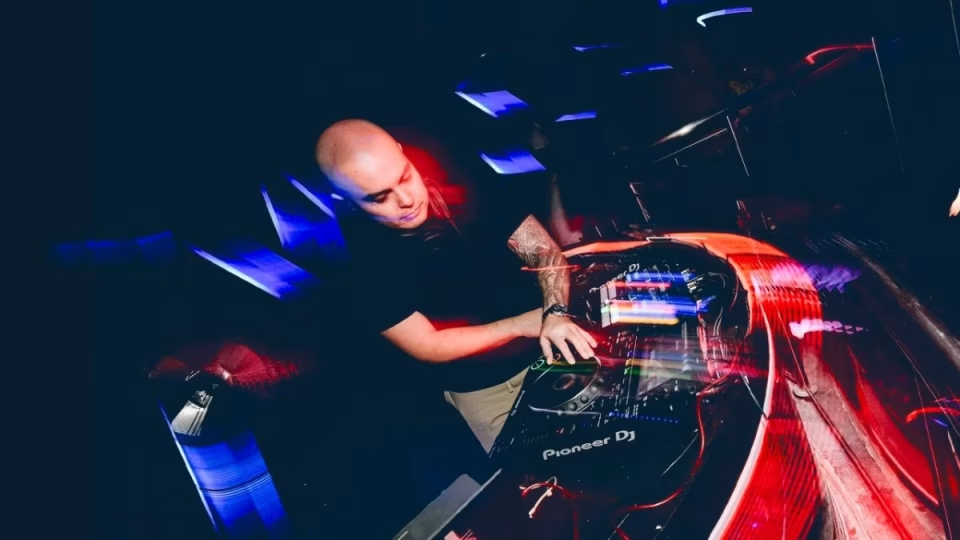
As a working DJ and 3D graphic artist who spends countless hours rendering textures and lighting for stage visuals, watching promoters flood the scene with automated shortcuts feels like a betrayal of the craft. The late nights spent building a genuine visual identity are suddenly competing against lazy, five-second prompts. What began as a simple cost reduction measure is now a quantifiable liability. Industry analysis in 2026 demonstrates that an over-reliance on uncredited automation actively erodes emotional engagement and brand credibility.
Check my work here.
This shift matters because event attendees now actively screen promotional materials for authenticity. The industry is witnessing a direct correlation between automated marketing and sluggish presale momentum. The tipping point traces back to the infamous Willy’s Chocolate Experience in Glasgow, which permanently linked synthetic advertising with fraudulent operations.

TL;DR Consumers are experiencing severe fatigue from synthetic event flyers and rapidly identifying visual errors. For modern ticket buyers, these automated posters signal a low effort experience. Consequently, audiences are actively avoiding promoters who cut corners on visual assets, assuming the live event itself will also be subpar.
The Anatomy of Consumer Fatigue
Audiences are no longer passive consumers of digital advertising. They actively scrutinize event flyers for telltale signs of automation. By early 2026, the oversaturation of social feeds led to a sharp spike in active fatigue, with potential ticket buyers increasingly associating identical synthetic filters with low-effort operations. This widespread backlash translates directly into audience apathy.

Cornell University Preserves 10,000 Original Rave Flyers Documenting Electronic Music History
Digital communities have become highly trained anomaly hunters. On platforms like Reddit, users within communities like r/graphic_design dedicate hours to dissecting local festival posters for errors. They look for the ubiquitous smoothing filter that washes out detail and homogenizes aesthetics. Once a flyer is flagged, the resulting negative sentiment spreads quickly across local event ticketing platforms.
Does Synthetic Art Kill Brand Trust?
The homogenization of promotional art results in a repetitive visual language that damages brand equity. Because most image generation models pull from similar datasets, their outputs lack localized context. Throughout the first half of 2026, analysts noted that relying on automation actively reduces overall ad credibility. It immediately signals a severe lack of investment.


This distrust quickly moves from the digital space into tangible financial consequences. When potential attendees see promoters cutting corners on visual identity, they assume the production budget has also been slashed. The severe backlash faced by Tourism Malaysia in June 2026 illustrates this perfectly. After releasing a synthetic promotional video for a cultural festival, the agency was forced to pull the asset following public outrage over cultural inaccuracies and protests against ignoring local creative talent.
The Direct Impact on Ticket Sales
Consumers are aggressively voting with their wallets. They operate under a simple logic regarding event budgets. If an organizer refuses to pay for authentic art, they will not pay for proper sound or talent. The aforementioned Glasgow debacle, which charged a premium £35-a-ticket, became a cultural touchstone because it delivered a sparsely decorated warehouse. That single disaster trained millions to equate synthetic art with a physical grift.
Promoters must now view visual authenticity as a core component of their risk management strategy. By the summer of 2026, a widespread consensus among media intelligence professionals confirmed that public backlash during promotional failures centers heavily on a lack of authenticity. The trend is absolutely clear. In a crowded live entertainment market, relying on automated visual assets is no longer a shortcut. It is a direct threat to the bottom line.
Sources & Further reading
Live Event Case Studies & Market Backlash
- Tourism Malaysia pulls AI-made Citrawarna 2026 video after backlash
- Tourism Malaysia was forced to retract an AI-generated promotional video for the Citrawarna 2026 cultural festival following intense public criticism over cultural inaccuracies and the exclusion of local creative talent.
Consumer Disdain & Community Sentiment
- So everyone agreed that AI posters are a thing now?
- Musicians and community members are actively pointing out the prevalence of AI-generated event flyers, heavily criticizing them as generic and unappealing eye-sores.
- Seeing more and more AI posters in the wild. Found…
- Graphic designers are increasingly spotting and documenting amateurish AI-generated advertisements, noting that the resulting visual glitches severely undermine professional branding.
- Is it unfair to judge bars/pubs/clubs for using AI…
- Patrons are actively judging nightlife venues that utilize synthetic event marketing, viewing the choice as a sign of laziness that drives away discerning crowds.
What We Covered

- [2026.07.06] ./Generative AI Migrates From Cloud DAWs Directly to Standalone Performance Hardware
- [2026.07.03] ./Sony Music vs Udio: Judge Rejects 30,000-Track Lawsuit Expansion Motion
- [2026.06.30] ./TIDAL Enacts Zero-Royalty Policy for Fully AI-Generated Music Catalog
- [2026.06.28] ./The End of Anonymous AI Integration in Modern Music Production
- [2026.06.26] ./What Makes Cebu’s Sub-Bass Culture a Must-Experience at Fête de la Musique 2026?