
Embedded neural processing is decoupling music-focused machine learning from cloud computation. Standalone physical instruments are replacing screen-bound desktop plugins on stage. This migration is verified by the widespread adoption of edge-computing frameworks. The transition to on-device hardware processing accelerated following the showcase at the Audio Developer Conference in November 2025.
This hardware shift matters because it resolves performance-killing latency. Standard systems suffer from unpredictable delays during real-time neural calculations. Moving models to embedded microchips allows laptop-free stage performance. Platforms like Music.AI Embedded Hardware Solutions now secure $40 million in Series A funding to scale these edge systems.
Generative AI is migrating onto embedded microprocessors like the Raspberry Pi 5 and Jetson Nano, bypassing high-latency cloud systems. By integrating real-time neural synthesis and multi-sensor hand tracking, standalone instruments are evolving into adaptive creative partners, shifting human agency from performance-time manipulation upstream to dataset curation.
What microprocessing designs make real-time on-device synthesis possible?
Executing neural networks locally requires specialized processing topologies. Standard microcontrollers lack the floating-point performance needed to run multi-layered models in real time. Instead, developers use graphical processors or single-board computers. The IRCAM ACIDS Neurorack modular synthesizer fits these components into an 11hp Eurorack width to process inputs locally.
To maintain professional-grade latencies, these systems rely on custom real-time operating systems. System designers resolve desktop scheduling delays by installing platforms like Elk Audio OS. This open-source system runs on a Raspberry Pi 4, handling low-latency tasks in a dedicated hardware-interrupt pipeline.
Why Audio Imperfection is the New Standard for Professional Mixing
Hardware case studies in real-time tone modeling and neural synthesis
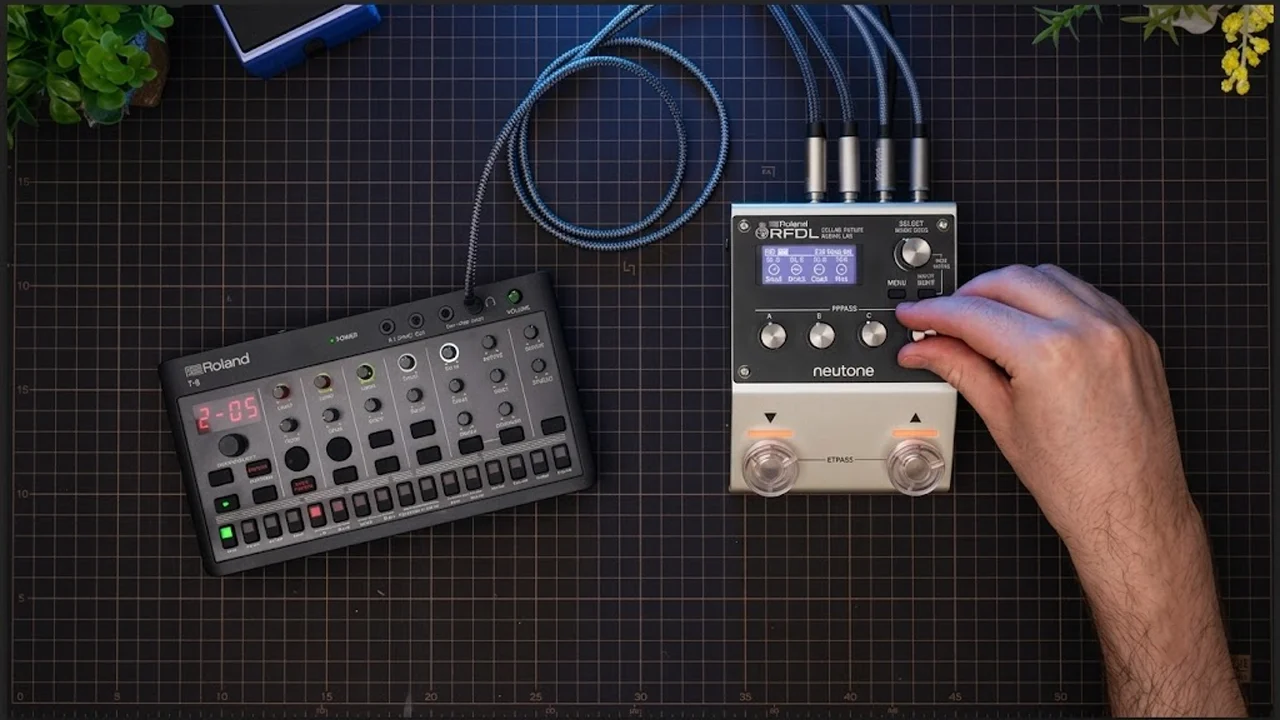
Standalone neural execution is proven by physical prototypes. Developed as a joint research project, Project LYDIA embeds Neutone’s Morpho AI engine inside a tactile guitar pedal. The system executes style transfer to apply real-time timbre transformation. On March 31, 2026, Roland Future Design Lab announced Project LYDIA Phase II, featuring integrated audio and an LCD display.
In modular synthesis, the NVIDIA Developer Jetson Neurorack project uses an embedded processor to run PyTorch deep audio models. The synthesizer uses a modified Neural Source-Filter system to generate percussive sounds without samples. The model is trained on 3,500 percussive impact samples to separate noise from harmonic structures in real time.
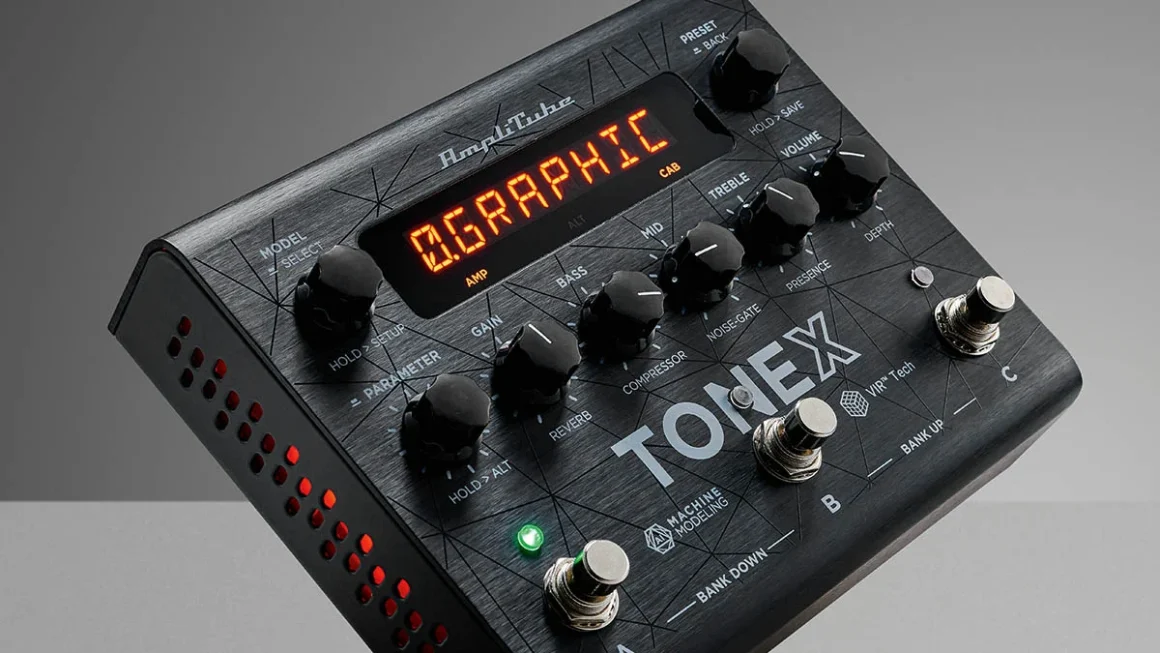
Commercial systems are adopting similar deep learning models. The IK Multimedia TONEX Pedal uses AI Machine Modeling to run pre-trained Deep Neural Networks on internal DSP chips. This method allows the pedal to store 150 custom presets without a computer. Additionally, Google’s NSynth Super prototype executes the NSynth deep learning model on a local processor to interpolate instrument features.
How does physical control translate gestures into synthesis parameters?
The evolution of control has shifted from mechanical sliders to spatial tracking. The physical ROLI Airwave mounts directly onto expressive keyboards to track joint movements. The device utilizes dual infrared cameras and a local vision model running at 90 frames per second. It maps physical anatomy directly to continuous synthesizer parameters.
Researchers are also embedding real-time variational autoencoders into gestural systems. Developed by IRCAM, the FlowSynth performance device runs an embedded RAVE model to navigate complex sound spaces via hand proximity. For DIY builders, the Seeed Studio Grove Vision AI V2 compiles PyTorch models onto an ARM Cortex M55 processor paired with an Arm Ethos-U55 NPU to output data without latency.

Why the fight against AI music is just history repeating itself on a bigger scale
Biometric adaptation and the monitoring of cognitive states
Beyond spatial gestures, modern instruments are adapting to cognitive and biological feedback. Built by researchers at the ATLAS Institute, the BrAIn Jam system monitors prefrontal cortex blood oxygenation to assess mental workload. Published in August 2025, the system adjusts an AI drumming partner’s performance. When a player’s cognitive workload spikes, the neural model simplifies its rhythm.
Interpersonal systems leverage multi-user biometrics to generate synchronized music. The Cyborg Synchrony framework, co-published by researcher Senaida Ng, integrates electroencephalography to track brainwaves. The on-device engine maps biological measurements to generative parameters. This dual-layer system adapts to the distinct baseline of each participant.
Phenomenological implications of algorithmic co-creativity
Integrating generative networks into physical form factors shifts the performer-instrument dynamic. In classical performance, instruments are passive, deterministic tools. In contrast, neural models introduce microtonal drift and unpredictable timbral variations. In their practice-led research on intelligent instruments, Halla Steinunn Stefánsdóttir and Thor Magnusson observe that algorithmic systems decenter the human musician. The performer must relinquish total control, responding in real time to independent outputs.
This decentering does not erase human authorship; it shifts creative agency upstream. Because deep learning models rely on training data, curating the model’s dataset becomes the primary artistic act. Performance-time manipulation is replaced by prototyping agency. As noted by scholar Victor Zappi, deep learning tools demand deep theoretical programming knowledge. However, opaque responses ultimately encourage real-time exploration, helping electronic hardware regain the intuitive immediacy of acoustic systems.


Ethical frameworks and the boundaries of legal ownership
The legal status of music produced with these adaptive systems remains highly contested under current copyright frameworks. In its January 2025 Part 2 report, the U.S. Copyright Office declared purely machine-generated outputs ineligible for registration. This stance was solidified on March 2, 2026, when the Supreme Court denied certiorari in Thaler v. Perlmutter, affirming that copyright protection requires human authorship. Consequently, performers using real-time generative instruments must prove they exercised substantial creative control.
Furthermore, an April 2026 federal court ruling established that tracks generated “primarily by AI” are not protectable, even with extensive human prompt curation. To satisfy legal standards, human authors must contribute substantial original material, such as writing lyrics or performing live over generative backing tracks. To address these concerns, industry leaders have mobilized around the AI for Music Ethical Principles.
Founded in 2024, this initiative commits manufacturers to secure advance consent before training models on copyrighted works. By prioritizing platform transparency, these principles establish standard record-keeping guidelines. Furthermore, they encourage using energy-efficient, edge-optimized models to ensure that machine intelligence acts to assist, rather than replace, human artistry.
Sources & Further reading
Embedded Hardware Architectures and Real-Time Operating Systems
- Music.AI Embedded Hardware Solutions – Music.AI provides an embedded SDK and model library that enables audio hardware manufacturers to run real-time, low-latency stem separation and audio enhancement locally at the edge.
- Elk Audio OS Developer Guide and Architecture – Elk Audio OS is an embedded Linux distribution that utilizes a dual-kernel Xenomai Cobalt architecture with a dedicated interrupt pipeline to achieve deterministic, sub-millisecond audio latency on hardware platforms like the Raspberry Pi 4.
Standalone AI Instruments and Gestural Control Interfaces
- Neurorack Project Repository and Technical Documentation – Housed in an 11hp Eurorack chassis, the Neurorack modular synthesizer uses an embedded NVIDIA Jetson Nano to execute deep generative audio models in real time without a host computer.
- Roland Project LYDIA Phase II Evolution – Built as an open-source audio processing platform on the Raspberry Pi 5, Project LYDIA Phase II features integrated audio connectivity and an onboard LCD display for standalone stage performance.
Biometric Neuro-Musical Integration and Industry Governance
- Frontiers in Computer Science: BrAIn Jam Study – The BrAIn Jam drumming system measures cerebral blood oxygenation in the prefrontal cortex using functional near-infrared spectroscopy to dynamically adjust the AI drum patterns based on cognitive workload.
- Frontiers in Computer Science: Cyborg Synchrony Publication – The Cyborg Synchrony framework utilizes a dual-layer AI model consisting of a Foundational Model and an Individualized Tuning layer to synthesize biofeedback soundscapes from multi-user physiological metrics.