

 26
26
The Atlantic AI Watchdog tool unmasks widespread music copyright theft
JUN. 21 2026
Section
Read Time
Written By
[ EXCERPT ]
The Atlantic’s AI Watchdog tool has unmasked the non-consensual extraction of 21 million music tracks by generative platforms. This forensic evidence is shifting abstract copyright debates into concrete, multi-billion-dollar legal battles for independent creators.
The Atlantic’s AI Watchdog tool has unmasked the non-consensual extraction of 21 million music tracks by generative platforms. This forensic evidence is shifting abstract copyright debates into concrete, multi-billion-dollar legal battles for independent creators.
John Emanuele and Richard Cupolo did not set out to become copyright martyrs. For nearly two decades, the duo recorded ambient instrumental music under the moniker The American Dollar, slowly carving out a sustainable living through sync licensing. Then, the black box opened. Seeing your life’s work converted into math without your knowledge changes how you look at the future of art.
This isn’t an abstract debate about fair use anymore. It is a highly organized corporate operation to strip independent creators of their livelihoods.
TL;DR: The expansion of The Atlantic’s AI Watchdog tool into music datasets has exposed over 21 million non-consensually scraped tracks. This tangible proof of data ingestion is shifting copyright debates into concrete billions-of-dollars legal battles, as independent artists and major labels demand immediate accountability from generative platforms like Suno and Udio.
The Night the Receipts Dropped
I spent an evening plugging indie artist friends into The Atlantic’s lookup tool, and the results were grim. Investigative reporter Alex Reisner effectively handed creators the forensic evidence they needed to prove their work was taken. We are no longer guessing if these machines listened to our records because we finally have the itemized bills.
The scale of the ingestion is staggering. The audit uncovered four massive music datasets circulating among AI developers. The largest of these, LAION-DISCO-12M, contains roughly 12.6 million tracks. It does not just scrape public domain audio because it maps specific artists directly to YouTube Music URLs. Another repository, called Sleeping-DISCO-9M, was found hosted on Hugging Face packed with millions of commercial tracks.
The tech industry loves to use academic language to mask extraction. They call it machine learning, but the reality is much more mundane. It is an automated system designed to take creative work without paying the people who made it. You can see the scale of this pushback in how musicians are fighting back against corporate AI exploitation across the entire industry.
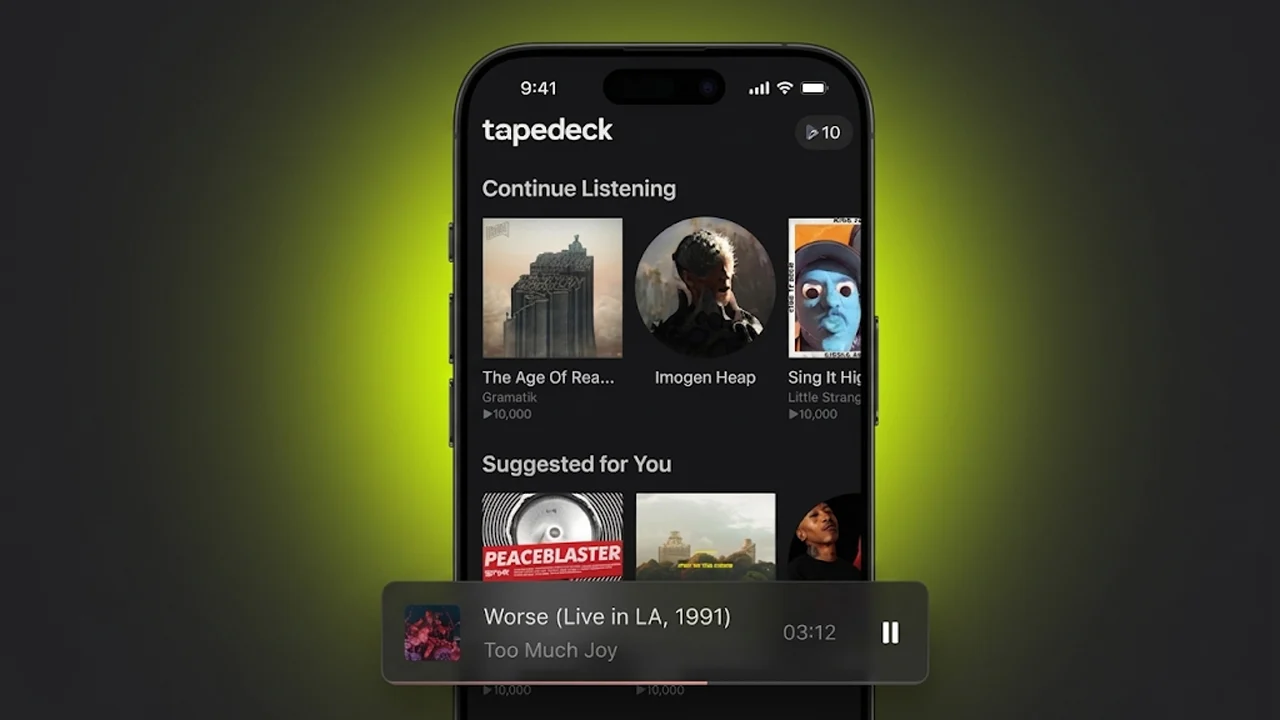
Tech Veteran Tim Quirk Launches Tapedeck to Guarantee One Cent Per Play
How the “Pointer System” Bypasses the Paywall
When I looked into the technical architecture of these datasets, the corporate intent became clear. These repositories do not actually host the raw audio files. Instead, they operate as a structured pointer network.
The data lists metadata and direct URLs to streaming services. Developers then use custom web-scrapers to download the audio en masse. By using this method, AI platforms deliberately bypass standard platform monetization protocols to avoid the licensing frameworks that keep independent music alive. It allows automated bots to strip mine streaming platforms without triggering the ad revenue or per-stream payouts that human listeners generate.
This infrastructure underpins the legal defense of companies like Suno. They claim their models merely learn abstract patterns. But when the band tested the platform by prompting it to mimic their own track titles, Suno spat out tracks like “Echoes of Wonder” which flawlessly cloned the rhythmic and structural layout of the band’s original song.
The Disappearing Middle Class of Music
The financial fallout of this extraction hits independent artists first and hardest. While major pop stars have corporate machines to protect them, indie creators rely on fragile and specialized revenue streams.
In their lawsuit filed on May 12, 2026, the members of the band noted that their sync licensing revenue collapsed by nearly 80% following the rise of generative audio platforms. Why would a low-budget commercial producer pay an indie band a fair sync fee when they can type the band’s name into an AI generator and get a passable imitation for pennies?
This extraction also has deep cultural consequences. The data audit revealed the mass scraping of sacred recordings by Aboriginal and Māori artists including tracks by Yothu Yindi and Gurrumul. Culturally protected music is being fed into the same commercial meat grinder as western pop without any respect for its heritage.
Will the Courts Stop the Bleeding?
The transparency provided by these data leaks has given legacy gatekeepers the ammunition they needed to scale up their legal battles. The major labels are no longer playing defense.
In May 2026, Universal Music Group and Sony Music Entertainment expanded their active copyright infringement lawsuit against Suno. They added 61,026 specific sound recordings to their original complaint. Under current U.S. copyright law, willful infringement carries a maximum penalty of $150,000 per track. That puts Suno’s potential financial liability above $9.1 billion for a single lawsuit.
We are seeing a clear fracture in how the industry responds to this threat. Some entities are choosing to settle because Udio secured agreements with rights administrators like Merlin in January 2026. Yet, these corporate truces do nothing for the independent creator whose back catalog was already digested.
I do not think licensing deals will save us. If the courts do not establish that unauthorized scraping is systemic theft, the middle-class musician will simply cease to exist. The tech industry built its empire on the assumption that forgiveness is cheaper than permission, but these receipts might finally prove them wrong.

Suno And Udio Petition Federal Courts To Seal AI Training Corpus Volume Metrics
Sources & Further reading
Dataset Audits & Scale
- Music Business Worldwide: An investigation by The Atlantic’s Alex Reisner unmasked four giant music datasets containing a combined total of over 21 million tracks circulating widely among AI developers.
- We Rave You: The largest dataset discovered, LAION-DISCO-12M, contains approximately 12.6 million tracks compiled by mapping 250,516 individual seed artists directly to YouTube Music URLs.
- Tech Jacks Solutions: A secondary commercial-facing dataset hosted on Hugging Face, titled Sleeping-DISCO-9M, holds roughly 9 million non-consensually scraped commercial tracks.
The Scraping Mechanics
- News RA: Three of the four uncovered databases operate as structured pointer networks storing direct streaming links rather than actual files, allowing developer tools to systematically download audio while completely bypassing ad gates and platform login requirements.
- Music Business Worldwide: The mass automation of AI music ingestion has caused a flood of up to 75,000 fully AI-generated tracks per day onto streaming platforms like Deezer, accounting for over 44% of all new music uploads by April 2026.
Legal Action & Expansion
- Complete Music Update: Universal Music Group and Sony Music Entertainment filed a motion to expand their infringement list against Suno from 560 to 61,026 tracks, scaling potential statutory damages past $9.1 billion.
- Music Business Worldwide: In an independent artist lawsuit filed in May 2026, the ambient instrumental duo The American Dollar asserted that Suno’s unauthorized training and mimicry tools caused their core sync licensing revenues to collapse by nearly 80%.
What We Covered

- [2026.07.10] ./Loco Dice Links with Alaina Arnez for Peak-Time Club Weapon “Hold Up (You Feel That)”
- [2026.07.02] ./Why the fight against AI music is just history repeating itself on a bigger scale
- [2026.06.30] ./Six-Time Grammy Nominee Fatboy Slim Shares Turning Point in Sobriety
- [2026.06.15] ./How Gotye Used His Pop Fortune to Restore Electronic Music History
- [2026.06.09] ./Midnight Rebels and &Friends Announce Signal Breach Winners