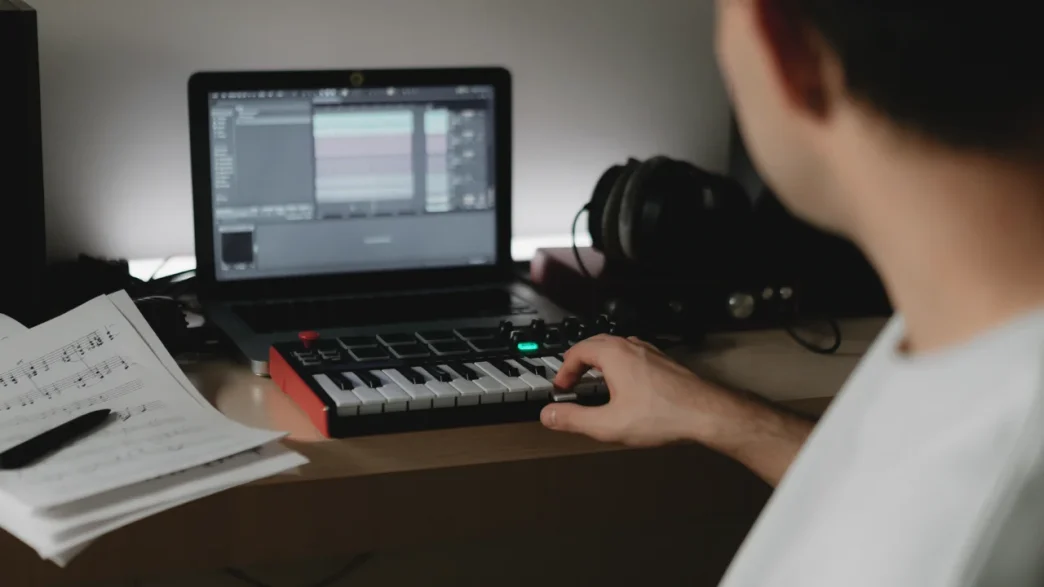
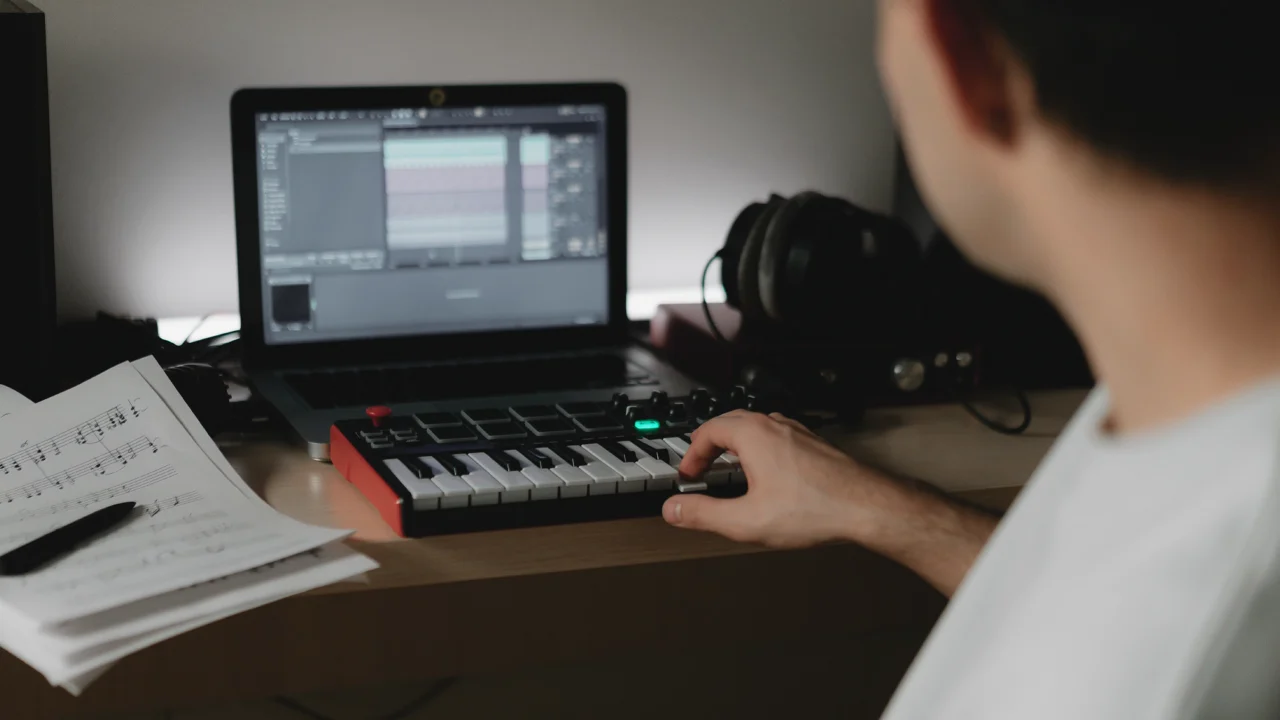

If you look over the shoulder of someone producing music in a spare bedroom today, you will see a familiar setup. A laptop, a MIDI keyboard, and a pair of headphones. They press a key and a synthesized sound plays instantly. There is no perceptible gap between the physical touch and the audio output. It feels completely natural.
Yet, this instant response is not a native feature of modern personal computers. It is an artificial reality engineered to bypass a deep flaw in how consumer computer operating systems were originally designed to handle sound.
Why does a millisecond matter?
For a musician, timing is everything. Human perception can detect a delay between an action and its acoustic result if it exceeds roughly 10 milliseconds. If the delay stretches past that window, real-time playing or singing becomes impossible. The brain begins to fight the delayed audio feedback, which completely destroys any hope of a steady performance.
In the mid-1990s, this timing problem locked home computers out of the professional recording world entirely. Resolving it required an unsexy software breakthrough that quietly laid the foundation for the entire modern home-studio ecosystem.
TL;DR: The shift toward affordable home production hinged entirely on a 1997 software breakthrough called ASIO. By creating a direct communication highway between music software and audio hardware, it cut systemic delay from a sluggish 100 milliseconds down to an unnoticeable 5 milliseconds, transforming consumer PCs into functional recording studios.
Why Audio Imperfection is the New Standard for Professional Mixing
What was wrong with early Windows audio?
Before the late 1990s, personal computers running Windows treated audio as a low priority task. The operating system routed all sound through the Multimedia Extensions (MME) API or early versions of DirectSound. These protocols were built for basic system notification alerts and video game explosions, not multitrack music production.
To prevent systemic crashes or audio dropouts, the native Windows architecture forced audio data to sit in deep storage buffers. This safety net came with a massive performance penalty. The typical round-trip delay between striking a note and hearing it frequently exceeded 100 milliseconds.
At that speed, tracking a live guitar or monitoring a vocal performance through software was useless. Musicians who wanted to record digitally had to buy incredibly expensive external hardware systems that used proprietary processing cards to manage the audio stream outside of the host computer’s CPU.
[Windows Native Architecture]Music Software ──> OS Kernel Mixer ──> Audio Driver ──> Hardware Buffers [>100ms Delay][ASIO Architecture]Music Software ──(Direct Hardware Bypass)──> ASIO Driver ──> Hardware Chips [<5ms Delay]
How did Steinberg bypass the system?
The breakthrough came from Germany. In 1997, a software engineer and musician named Karl “Charlie” Steinberg introduced a new driver architecture called Audio Stream Input/Output, or ASIO.
Instead of waiting for Microsoft to rewrite the Windows internal audio stack, Steinberg’s team designed a protocol that bypassed the operating system’s kernel mixer completely. ASIO established a direct, uninterrupted line of communication between the Digital Audio Workstation and the audio interface hardware.
The driver ignored Windows volume controls, skipped system resource queues, and allowed audio software to talk directly to the audio chip. When Steinberg bundled this new protocol into Cubase VST 3.5 for Windows 95 in October of that year, the landscape changed overnight.
Suddenly, a standard computer could stream multiple channels of high quality digital audio with a buffer size of just 128 samples. This technical adjustment dropped total system latency down to a near-instantaneous 2.9 milliseconds.
+-------------------------------------------------------------+| LATENCY PERFORMANCE COMPARISON |+-----------------------------------+-------------------------+| Legacy Windows MME / DirectSound | 100ms to 350ms |+-----------------------------------+-------------------------+| Steinberg ASIO Protocol (1997) | 1.5ms to 5.0ms |+-----------------------------------+-------------------------+


Did this software rewrite ignite the bedroom studio boom?
Yes, and the impact was immediate. By proving that a standard computer processor could handle real-time audio monitoring without specialized DSP expansion cards, ASIO democratized music production.
When Steinberg opened the ASIO Software Development Kit to third-party manufacturers as a free licensing standard, it forced the entire hardware industry to adapt. Companies began building affordable USB and FireWire audio interfaces backed by dedicated ASIO drivers.
This protocol allowed regular consumer computers to function as stable tracking environments, effects processors, and virtual instrument rigs. The financial barrier to entry evaporated. A bedroom producer no longer needed a commercial studio space because they just needed a PC and a stable driver.
Every time an artist loads a software synthesizer, plugs a guitar directly into an interface, or adjusts an effect plug-in in real time today, they are using an infrastructure built on a driver bypass written nearly three decades ago.
Sources & Further reading
- Audio Stream Input/Output – Wikipedia: A detailed breakdown of the 1997 protocol launch, its core kernel-bypass architecture, and how it establishes low-latency audio streaming on personal computers.
- Karl Steinberg – Wikipedia: A biographical record confirming Karl Steinberg’s role as the co-founder of Steinberg Media Technologies and the driving technical mind behind the development of the ASIO driver standard.
- Cubase – Wikipedia: A historical timeline confirming the October 1997 release of Cubase VST 3.5 for Windows 95, which formally introduced the ASIO driver architecture to the PC market.
- Steinberg Cubase VST v3.5 – Sound On Sound: A contemporary 1997 review explaining how the integration of 32-bit architecture and hardware-direct driver paths enabled low-latency multitrack digital recording on consumer PCs.