

 47
47
What Is the Amen Break and Why Is It Everywhere in Electronic Music?
JUN. 7 2026
Section
Read Time
Written By
[ EXCERPT ]
A 5.2-second drum solo recorded in 1969 changed electronic music forever. Uncover the technical history of the Amen Break, from early hardware samplers and pitch-shifting to the massive copyright anomalies that left its creator broke.
A 5.2-second drum solo recorded in 1969 changed electronic music forever. Uncover the technical history of the Amen Break, from early hardware samplers and pitch-shifting to the massive copyright anomalies that left its creator broke.
A four-bar drum solo recorded in a single afternoon changed the trajectory of electronic music forever. It became a ubiquitous building block for entire underground subgenres. Drummer Gregory Sylvester “G.C.” Coleman performed the fill without knowing it would define future rave music. It remains a masterclass in unintentional innovation.
The performance happened during a session for an instrumental B-side track. This rhythm eventually migrated from physical vinyl to early digital samplers in the United Kingdom. Producers dismantled the groove to build faster, darker syncopations. It bridges the structural gap between 1969 funk and modern computerized breakbeats according to musicologist L. Väkevä.
TL;DR The 5.2-second drum solo from The Winstons 1969 track Amen Brother became the foundational breakbeat for jungle and drum and bass. Early UK producers utilized hardware samplers to slice, pitch-shift, and accelerate the rhythm to 160 BPM, fueling a cultural phenomenon despite severe global copyright anomalies.
Where did the name come from?
The rhythm originates from a song titled Amen Brother by a soul group called The Winstons. The track was an uptempo, instrumental version of a gospel piece composed by Jester Hairston. Musicians simply shortened the title when trading the breakbeat file. The brief title caught on quickly. It became known as the Amen Break across the global crate-digging community.
What is Deadmau5’s new Autopilot custom DJ software?
Early samplers became the technical gateway
Producers in the late 1980s needed hardware with specific digital signal processing capabilities. The E-mu SP-1200, released in 1987, offered the necessary gritty 12-bit sampling resolution. It allowed musicians to ingest the analog break into a digital environment. The hardware constraints forced artists to develop creative engineering workarounds.
Shortly after, the Akai S950 sampler-2/?from=https%3A%2F%2Fmidnightrebels.com%2Fhistory-of-the-amen-break-sampling%2F" class="bracket zm-glossary-link">sampler entered the market in 1988. This machine introduced advanced time-stretching features that altered playback speed without shifting pitch. UK rave producers exploited this throughput efficiency to manipulate audio files with minimal latency. These samplers laid the groundwork for a massive stylistic shift in underground club music.
How did producers manipulate the audio?
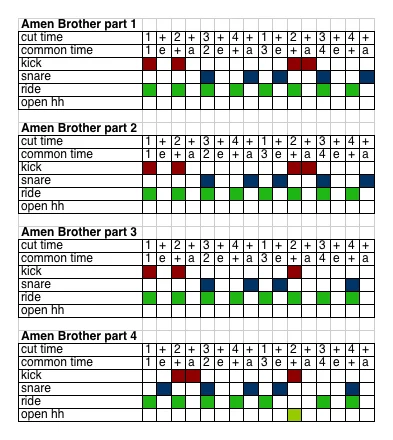
Engineers did not just loop the original 5.2-second file. They used a technique called transient slicing to isolate individual kick, snare, and cymbal hits. Researcher A.V. Frane notes this gave them the surgical capability to rearrange the groove entirely. They resequenced the drum hits into entirely new, highly syncopated patterns.
Pitch-shifting was the next step in the transformation. Speeding up the playback on early hardware shifted the frequencies upward, which gave the snare its signature metallic crack. The resulting aesthetic defined early rave music in the 1990s, paving the way for the top female drum & bass artists who continue to innovate within the genre today. This processing altered the acoustic weight of the drums permanently.
The mathematics of rhythmic acceleration
The original funk recording moved at a steady mid-tempo pace. It registered at approximately 136 BPM on the metronome. This tempo matched the standard groove profiles of late-1960s soul records. It was never intended for high-speed dance floors.
UK hardcore and jungle artists aggressively altered this metric. They pushed the playback speed straight to 160+ BPM to match the energy of the rave scene. Author C. Christodoulou confirms this acceleration fundamentally changed how the frequencies interacted with club sound systems. It transformed a human performance into a hyper-precise machine rhythm.


Copyright anomalies left the creators broke
The widespread deployment of the sample highlights massive loopholes in intellectual property infrastructure. The breakbeat functioned as an open-source asset within the electronic community. Nobody cleared the publishing rights. The Winstons bandleader, Richard L. Spencer, held the copyright to the arrangement but never received royalties.
The financial margin of this cultural explosion bypassed the original artist entirely. Coleman passed away broke and unhoused in 2006. He never collected a single dollar in performance royalties for his historic drum solo. The track stands as a monumental case study in music business asymmetry.
Sources & Further reading
The Original Recording
- The Winstons and “Amen, Brother”: In 1969, the funk and soul band recorded the instrumental B-side track that birthed the legendary breakbeat.
- G.C. Coleman’s Performance: Drummer Gregory Sylvester “G.C.” Coleman executed the iconic, 5.2-second drum solo during the recording session.
- Jester Hairston’s Composition: The groove was based on an uptempo version of a gospel piece originally written by composer Jester Hairston.
- The Original Soul Tempo: The funk recording was initially played at a steady mid-tempo pace of roughly 136 BPM.
Technological Gateways and Manipulation
- E-mu SP-1200 Sampler: Released in 1987, this hardware gave producers the 12-bit sampling resolution needed to bring the analog break into a digital environment.
- Akai S950 Sampler: Entering the market in 1988, this machine allowed musicians to time-stretch the playback speed without altering the pitch.
- The 1990s Rave Scene: The digital manipulation and pitch-shifting of the sample defined the acoustic aesthetic of underground club music in the 1990s.
- Rhythmic Tempo Acceleration: UK jungle and drum & bass artists aggressively accelerated the beat’s speed to 160+ BPM to match the energy of the dance floor.
Copyright Issues and Tragic Outcomes
- Richard L. Spencer’s Copyright: The bandleader held the legal copyright to the arrangement but never collected royalties from its widespread deployment.
- G.C. Coleman’s Death: Left entirely out of the financial margin his performance generated, Coleman passed away unhoused and broke in 2006.
Hear the Original “Amen, Brother” Drum Groove
Listening to the original 1969 soul B-side provides crucial context for how a simple acoustic drum fill was mathematically manipulated into a hyper-fast electronic subgenre.
What We Covered

- [2026.07.18] ./Why the future of underground electronic music belongs to grassroots collectives
- [2026.07.17] ./How a Viral DJ Remix Actually Gets Paid in 2026 (And Why Most Don’t)
- [2026.07.09] ./What Happened to the Pete Tong Missing Remix with John Summit?
- [2026.07.05] ./NOTDEADYET secures massive international festival debut in Manila
- [2026.06.26] ./Popular Ibiza DJ Hugo Bianco Named Mastermind Of International Drug Trafficking Ring