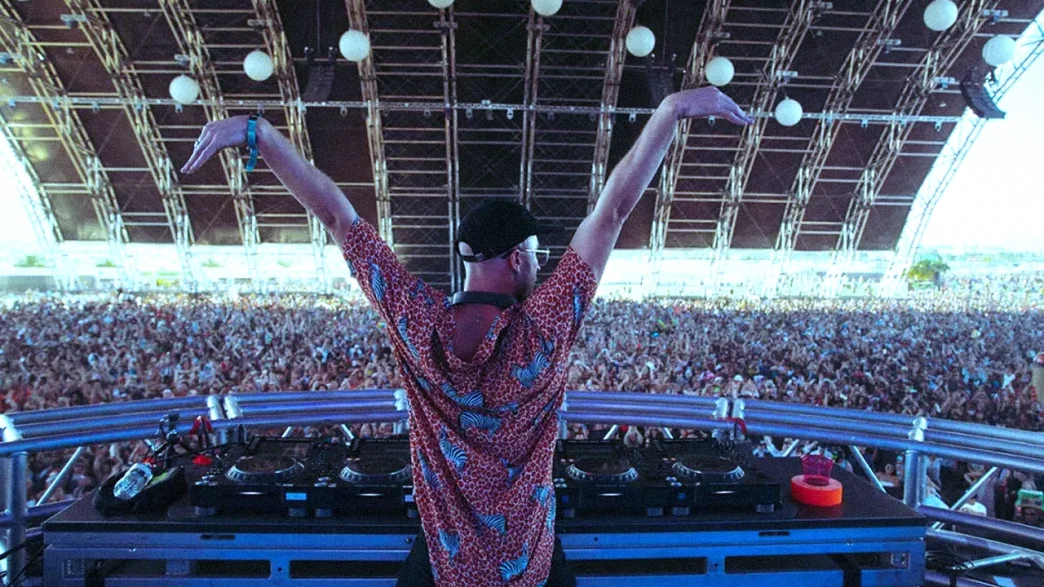
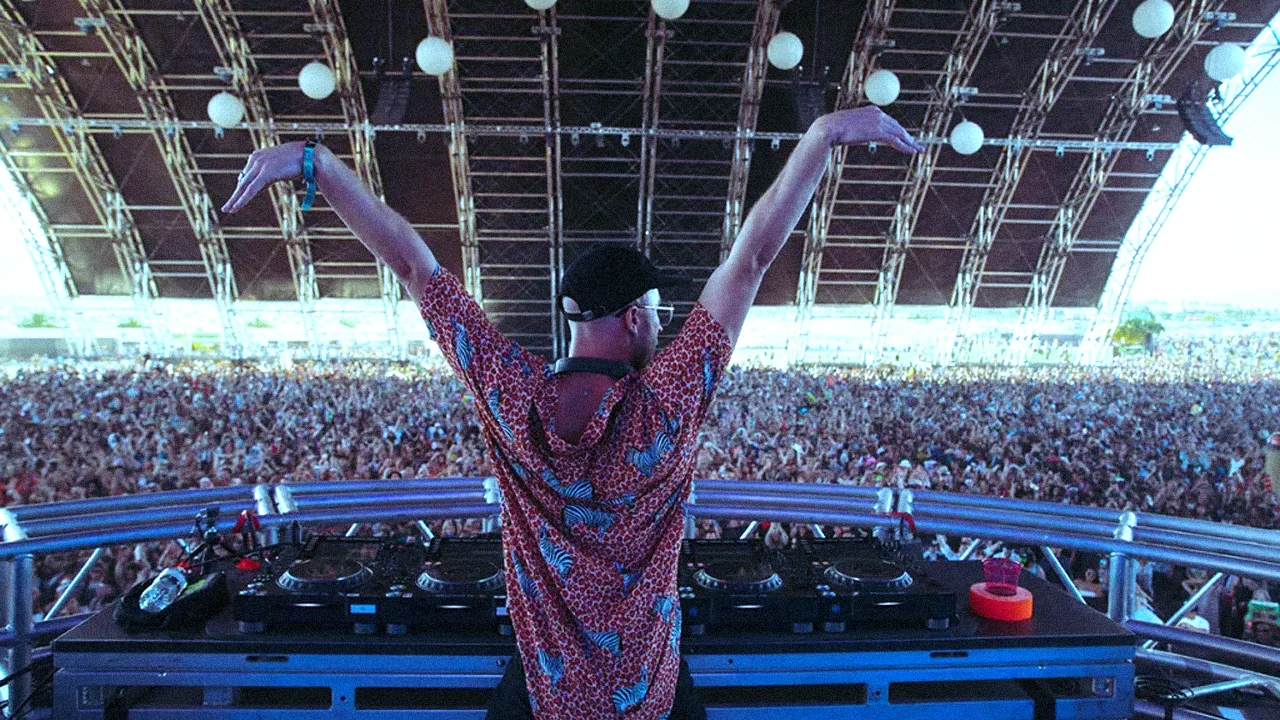

A touring DJ stands on a table while fire shoots from the stage. However, the actual composer sits in a quiet room wearing sweatpants. This is the reality of dance music. Festival posters rarely match royalty databases. For years, superstar David Guetta has relied on highly skilled studio partners to execute his biggest hits.
Touring is grueling. When a performer spends two hundred days a year on airplanes, writing complex synth patches is nearly impossible. Studio outsourcing solves this problem. This business model turns performers into brands. To understand how they shape the market, we must examine the electronic music industry revenue, $12.9 billion market, and DJ payment reality check of the global industry.
TL;DR: While superstar DJs dominate festival mainstages, an elite group of behind-the-scenes producers actually builds the music. From the big-room formulas of Maarten Vorwerk to the technical watchmaking of Chris Lake, this analysis reveals how collaborative production, secret contracts, and analogue synthesis drive the massive multi-billion-dollar global dance music economy today.
| Producer | Superstar Collaborator | Key Contribution |
| Maarten Vorwerk | Dimitri Vegas & Like Mike | Co-wrote and produced the festival anthem Wakanda |
| KSHMR | Borgeous & DVBBS | Primary writer and producer of the hit Tsunami |
| Joachim Garraud | David Guetta | Co-wrote and produced early hits like Just a Little More Love and Love Don’t Let Me Go |
| Chris Lake | FISHER | Uncredited composer on Losing It and Stop It |
| Giorgio Moroder | Donna Summer | Synthesised the rhythm track for I Feel Love in 1977 |
| John Christian | Tiësto | Co-producer on mainstage tracks Scream and Can You Feel It |
| Axwell & Sebastian Ingrosso | Otto Knows & Alesso | Provided Stockholm studio access for Million Voices and Calling |
| Nicky Romero | David Guetta & Rihanna | Co-produced Rihanna’s Right Now and tracks on Listen |
Who is the Dutch mastermind behind the mainstage hits?
Dutch producer Maarten Vorwerk has released music under aliases like David Luca and Overdub. He pioneered early commercial jumpstyle with his project Jeckyll & Hyde. His work laid the foundation for the big-room house explosion.
Minimalist elements can yield massive results. This became obvious on 3 October 2011 when the track “Epic” topped the Dutch charts. Produced with Sandro Silva and Quintino, it combined a simple melodic lead with a heavy, reverb-soaked kick drum.
Major acts wanted his help. He produced “Wakanda” for Dimitri Vegas & Like Mike, which premiered during the final tour of the Swedish House Mafia. Vorwerk rejects the ghost producer label because he retains his songwriting rights in official databases.
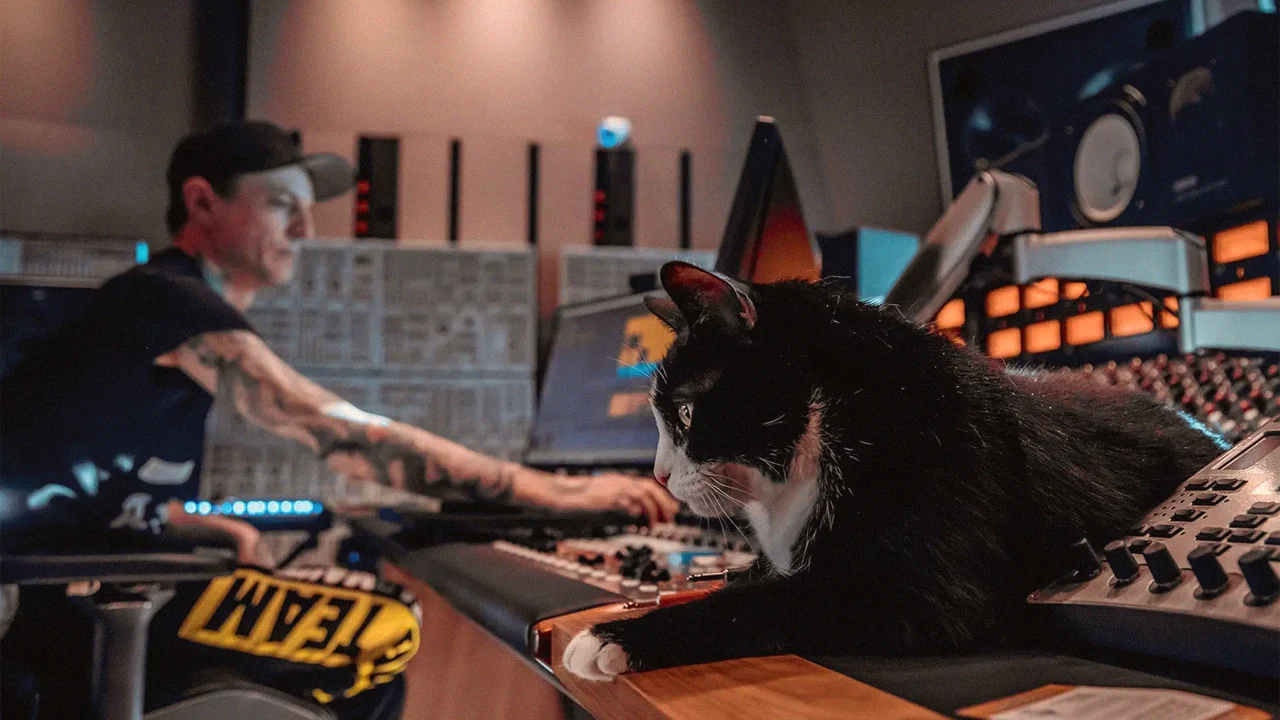
Deadmau5 steps in to cover $30,000 emergency medical bill for 36 rescued cats
How KSHMR quietly engineered Borgeous and DVBBS to the top
Before stepping into the spotlight, KSHMR began his career as half of the production duo The Cataracs, scoring a massive hit with Far East Movement’s single “Like a G6” in 2010. This success established his reputation for arranging catchy, bass-heavy tracks that performed well on commercial radio.
Under his real name Niles Hollowell-Dhar, KSHMR wrote and produced the massive festival anthem “Tsunami” in September 2013 for DVBBS and Borgeous. The track was an instant hit. Billboard called it the most played song at Tomorrowland that year, launching his next career phase.
Leaked documents confirmed his earnings. Contracts revealed that KSHMR received a 75% total revenue split for the Borgeous single “They Don’t Know Us” in exchange for waiving his public credit. He also received a 37.5 percent cut of all revenues generated by “Zero Gravity”.
Joachim Garraud: The French Touch pioneer who powered David Guetta’s early sound
French DJ and producer Joachim Garraud was the primary studio partner who engineered David Guetta’s early signature club sound. Their active partnership began in 2001. Garraud co-produced and co-wrote Guetta’s debut hit single “Just a Little More Love” in his Parisian studio.
Key technical choices shaped their success. Garraud co-wrote and co-produced the massive club record “Love Don’t Let Me Go” in 2002 using Pro Tools to layer multiple synthesizer lines. This track became Guetta’s first major hit in the United Kingdom.
Their studio chemistry yielded multiple albums. Garraud spent years in the studio co-writing Guetta’s second album Guetta Blaster in 2004 which featured the global club hit “The World Is Mine”. Garraud’s meticulous drum programming and sound design established the foundation for Guetta’s global brand.
Later, other key collaborators joined Guetta’s studio team to help transition his music to international pop radio. Most notably, the late French producer Fred Rister became Guetta’s primary studio partner during his major crossover era. Rister co-wrote and co-produced several massive hits, including the global anthem “I Gotta Feeling”. While not listed in the main table, his work with Guetta secured a Grammy and cemented their transatlantic pop legacy.
Who is Thomas Earnshaw, and how did he make FISHER a superstar?
Australian house performer Paul Fisher rose to prominence with tracks like “Ya Kidding” and “Stop It,” which featured a very specific production style. On the database of the music rights organisation BMI, English producer Chris Lake is officially registered as a composer on both songs.
The track “Losing It” from 2018 lists a writer named Thomas Earnshaw alongside Paul Fisher and Lake’s wife, Gita Bakradze. Thomas Earnshaw was an 18th-century English watchmaker who simplified the production of marine chronometers used on ships. It is a clever pseudonym for an English producer simplifying track construction.
How Giorgio Moroder built the mechanical template for all future DJs
In 1977, Giorgio Moroder and Pete Bellotte recorded “I Feel Love” with Donna Summer in Munich. It changed club music forever. They wanted a futuristic atmosphere using a borrowed Moog modular synthesiser.
Recording was tedious. Because the Moog’s oscillators were highly unstable, Moroder recorded the bassline in short bursts of 20 to 30 seconds. Robby Wedel managed synchronization by printing a click track to the tape.
During mixing, engineer Juergen Koppers added a delay synced to the beat, which doubled the tempo of the synthesiser pulse. Because the machine could not generate a sharp kick drum sound, drummer Keith Forsey played the bass drum live.


Why do dance music icons call on John Christian?
Dutch multi-instrumentalist John Dirne, known professionally as John Christian, runs White Villa Studios and has amassed over 1,800 releases. His hybrid setup blends digital convenience with the warmth and saturation of physical hardware compressors.
He has been a critical studio partner for Tiësto, co-writing festival hits like “Scream” in 2017 and “Can You Feel It” in 2019. His White Villa team also handled the mixing and mastering for MOTi’s “The House of Now” (Tiësto Edit).
How Axwell and Sebastian Ingrosso engineered the Stockholm house movement
Sebastian Ingrosso and Axwell managed a highly collaborative ecosystem in Stockholm centered around the Refune Music label. Up-and-coming talents worked next door to established professionals, sharing tips and feedback daily.
A sixteen-year-old assistant named Otto Jettman, performing as Otto Knows, got his start by sorting incoming demos for the label. In 2011, he overheard Alesso and Sebastian Ingrosso writing “Calling” in the adjacent studio room. This inspired him to write his breakout hit “Million Voices”.
Nicky Romero: The technical wizard behind pop and electro anthems
Nick Rotteveel, performing as Nicky Romero, built his early reputation on clean, high-energy synthesizer programming. His ability to deliver clean transients and punchy low-ends made him a key collaborator for global pop acts.
He co-produced Rihanna’s electro-pop hit “Right Now” in 2012 and co-wrote Britney Spears’ “It Should Be Easy”. He also worked with Guetta, providing production for several tracks on the album Listen.
Romero has defended collaborative co-production while criticizing instances where individuals buy completed music to build a brand. By launching Protocol Recordings, he designed a system that credits up-and-coming studio talents fairly for their work.
Sources & Further reading
- Maarten Vorwerk Work: Official catalog of the legendary Dutch engineer who produced major EDM hits like Wakanda and Epic.↳ Maarten Vorwerk Discography
- Dimitri Vegas & Like Mike: Breakdown of Vorwerk’s role as the ghost producer and sonic architect behind top-tier DJ acts.↳ EKM Profile: The Man Behind Dimitri
- Chris Lake & Fisher: BMI registry data showing tech-house veteran Chris Lake as a co-writer on Fisher’s breakout hits like Stop It.↳ EKM Analysis: Chris Lake & Fisher
- KSHMR Evolution: Interview detailing Niles Hollowell-Dhar’s transition from pop production duo The Cataracs into his EDM project, KSHMR.↳ Vice Interview: KSHMR / The Cataracs
- Industry Economics: Analysis of leaked financial documents exposing how much money, buyout fees, and NDAs govern ghost production contracts.↳ EDM Ghost Producer: Leaked Financials
- Otto Knows Network: Biography mapping the career and collaborative history of Stockholm-based producer Otto Jäger.↳ Stockholm-CA: Otto Knows Profile