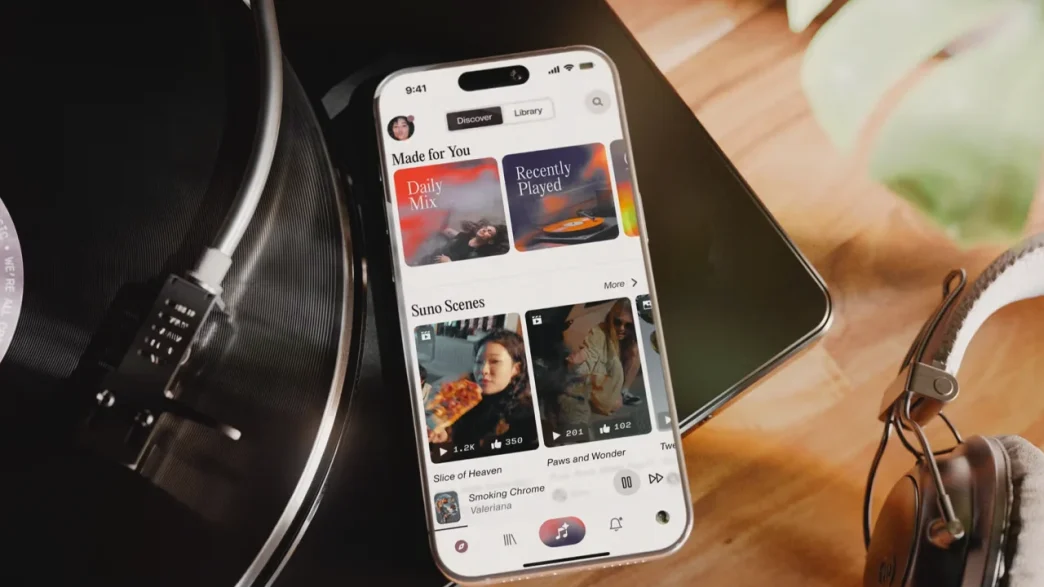
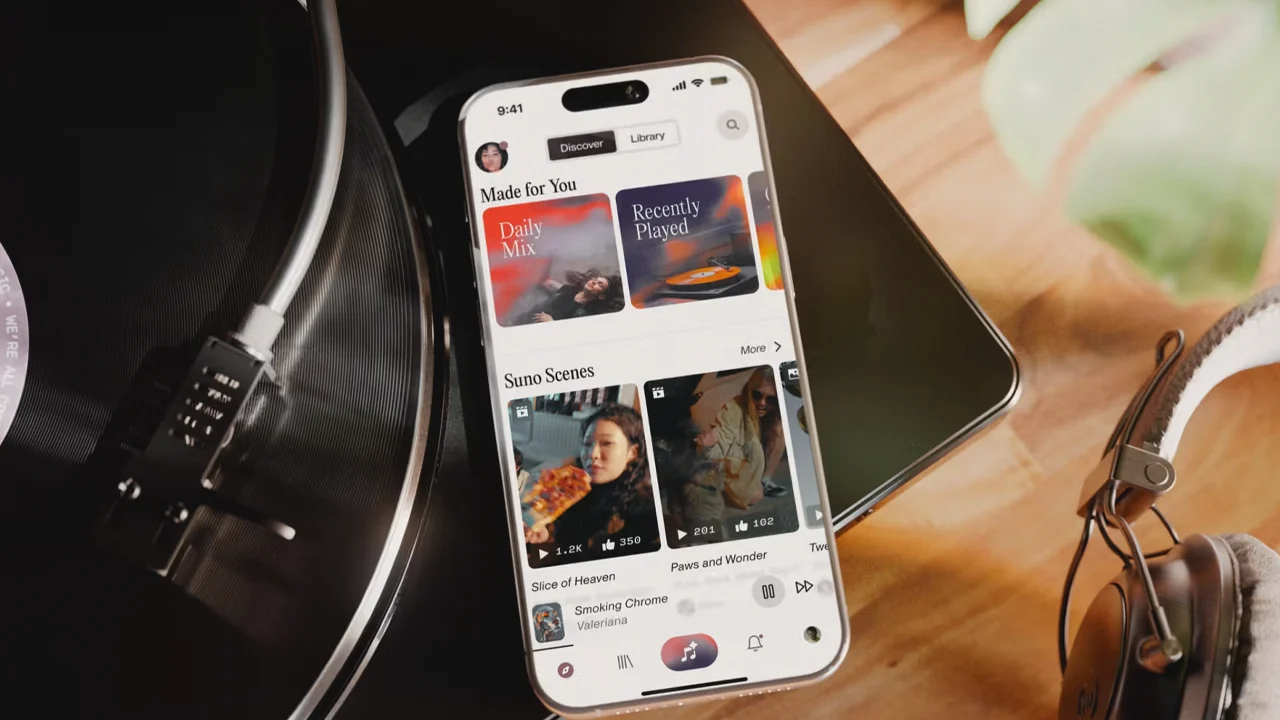

The music industry has survived formats dying off and the piracy wars. The current crisis is entirely different. We are facing a total collapse of the generation layer. Suno is a generative artificial intelligence platform that decoupled music production from human talent. It recently crossed $300 million in annual recurring revenue. Two million paid subscribers are now generating an unfathomable 7 million songs every single day. To put that volume into perspective, this user base is synthesizing the equivalent of Spotify’s entire historical catalog every two weeks. The technical barriers to entry are gone. A standard laptop and a cheap monthly subscription yield a polished track in under thirty seconds. The results are getting alarmingly good.
How Are We Monetizing Infinite Noise?
Suno recently reached $300 million in annual recurring revenue with 2 million paid subscribers and an output of roughly 7 million songs per day.
The platform achieved a $2.45 billion valuation after securing $250 million in venture capital funding. This hyper-scale generation treats art as a pure commodity. People are treating this like a gold rush. One independent operator made $8,500 in six months simply by compiling synthesized music packs and selling them online. He started with nothing but a basic $10 monthly Suno account. When output scales to infinity, the value of the product trends toward zero. The floodgates are fully open.

Suno Studio Promises to End Writer’s Block, But at What Cost?
The Synthetic Pop Star Reality is Here
Record labels are signing AI-generated acts to lucrative contracts while digital streaming platforms populate mood playlists with fictional ghost artists.
The commercialization of artificial identity is already here. Telisha Jones turned her poetry into a viral gospel and R&B act named Xania Monet using Suno. The project landed a record deal with Hallwood Media reportedly worth $3 million. During the virtual audition, Jones did not even appear on screen. Human artists are rightfully furious. R&B singer Kehlani captured the prevailing dread perfectly when she stated, “I’m genuinely sad for people who are trying to come up and their space is being taken up by a computer program. IT, not she, is taking all of the data it’s collected on us and what we want and is tailoring to us. Even down to the voice.”.
It gets bleaker on the streaming platforms. Spotify and other services are bloated with ghost artists. Fictional acts like Blow Records, The Devil Inside, and Aventhis rack up millions of streams. Blow Records alone pulled in over 45 million streams and an estimated 123,000 British pounds in royalties off a viral TikTok track. These fake bands thrive in the realm of passive listening. Algorithms feed them to users looking for background noise while they work or study.
Why Are Criminals Industrializing Streaming Fraud?
Criminals are deploying automated botnets to stream vast catalogs of AI-generated music and are stealing millions of dollars from the legitimate royalty pool.
The extreme democratization of audio has birthed a lucrative dark economy. Because streaming services pool subscriber money and distribute it based on total play counts, fraudulent streams directly steal cash from real musicians. Michael Smith from North Carolina exposed the fragility of this system. He pled guilty to a massive wire fraud conspiracy. Smith used AI to generate hundreds of thousands of tracks. He then unleashed a network of bots to stream those fake songs billions of times across Spotify, Apple Music, and Amazon Music. He stole over $8 million before getting caught. U.S. Attorney Jay Clayton summarized the grim reality during the indictment. He noted, “Although the songs and listeners were fake, the millions of dollars Smith stole was real.”. This is not an isolated glitch. It is a systemic feature of the modern digital ecosystem.

Dance Music Faces an Existential Threat
Generative audio tools are upending the electronic dance music workflow by replacing human ghost producers and forcing digital retailers to implement strict bans.
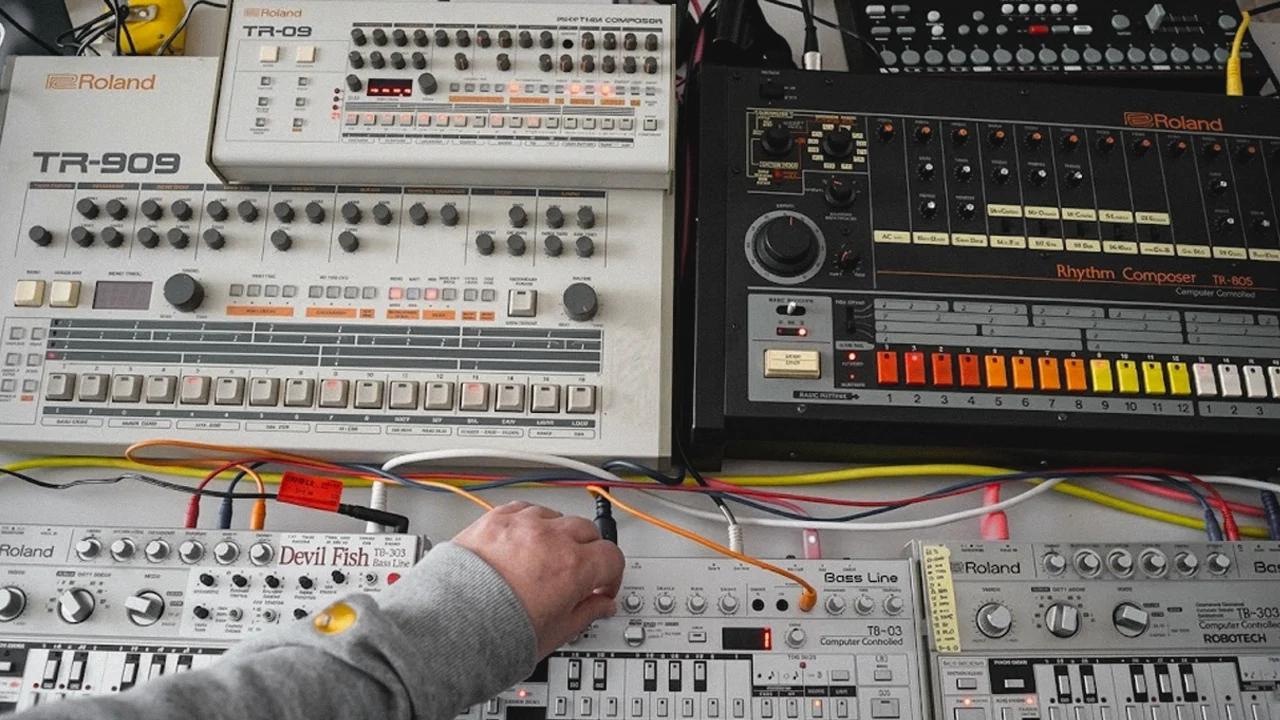
Electronic dance music is uniquely vulnerable to this disruption. The genre relies heavily on rigid grid structures and synthesized sound design. Suno is heavily courting this demographic. The company recently updated its platform to function as a native digital audio workstation. It now features visual timelines and tools to lock synthesized beats perfectly to a club grid.
Club culture is resisting. Beatport is the primary digital retailer for working DJs. The platform updated its terms and conditions to strictly prohibit the sale of fully AI-generated music. Bandcamp enacted similar bans to protect human storytelling. Enforcement is nearly impossible. DJs complain constantly about digital storefronts being choked by low-effort synthetic tracks. The culture is shifting its premium away from isolated studio perfection. The new currency is real-world community and live execution. Fans will demand biological presence when the digital realm becomes completely synthetic.
Sources & Further Reading
- Details Suno hitting $300 million ARR and 2 million subscribers.
- MEXC: Covers the 7 million daily song generation and compares it to the Spotify catalog.
- Medium – James Palm: Documents the $8,500 earnings from selling AI music packs.
- Ebony: Profiles the Xania Monet project, the $3 million Hallwood Media deal, and Kehlani’s reaction.
- (https://www.techdigest.tv/2025/10/non-existent-ai-artists-raking-in-millions-from-spotify.html): Reports on high-earning ghost artists like Blow Records.
- (https://routenote.com/blog/first-us-streaming-fraud-case-ai-music/): Covers Michael Smith’s guilty plea and features statements from U.S. Attorney Jay Clayton.
- (https://www.justice.gov/usao-sdny/pr/north-carolina-musician-charged-music-streaming-fraud-aided-artificial-intelligence): Official release detailing Smith’s generation of hundreds of thousands of tracks.
- (https://blakecrosley.com/guides/suno): Reviews Suno Studio’s integration as a digital audio workstation.
- (https://greenroomsupport.beatport.com/hc/en-us/articles/19093504988820-Content-Policy): Outlines Beatport’s policy banning synthetic music.
- (https://clubbingtv.com/bandcamp-bans-ai-generated-music-but-how-will-it-actually-be-enforced/): Discusses Bandcamp’s efforts to restrict automated audio.
* generate randomized username
- COMMENT_FIRST
- #1 Lord_Nikon [12]
- #2 Void_Reaper [10]
- #3 Cereal_Killer [10]
- #4 Dark_Pulse [9]
- #5 Void_Strike [8]
- #6 Phantom_Phreak [7]
- #7 Data_Drifter [7]
- #8 Zero_Cool [7]