
The music industry operates on a faulty premise. Tech giants convinced us that renting access to recorded history was the ultimate victory. We traded physical ownership for infinite convenience. We also handed total control to the algorithm.
The Long and Short of It
Streaming services are hitting a fatal economic wall. Tech platforms treat tracks as an undifferentiated utility. For electronic dance music producers, algorithmic distribution erases brand identity and starves fan connection. To survive, artists must build owned digital infrastructure, capturing first-party data and directly monetizing superfans instead of continuously renting attention.
Electronic dance music took a massive hit in this exchange. A culture built around 130 BPM kick drums and localized warehouse sweat was flattened into functional background noise. Playlists optimized for studying or chilling stripped the identity right out of the tracks. The producer became a ghost.
Is the Utility Trap Killing the Club?
The problem starts with the product itself. Every major streaming service offers the exact same catalog of tracks. They sell an identical utility. The delivery mechanism holds zero unique value.
As Jimmy Iovine warned on the Founders podcast, “The streaming services, to me, are minutes away from being obsolete“. He saw the structural rot clearly. Standalone platforms bleed cash because their marginal costs scale with every single play.
They push passive listening to survive. They need you zoned out. They do not want you actively engaging with the person who actually wrote the music.
This economic reality forces a brutal erasure of the 32-bar intro and other structural hallmarks of electronic tracks. Producers churn out shorter clips. They chase engagement metrics on social media platforms. They build their careers on land owned by tech conglomerates.
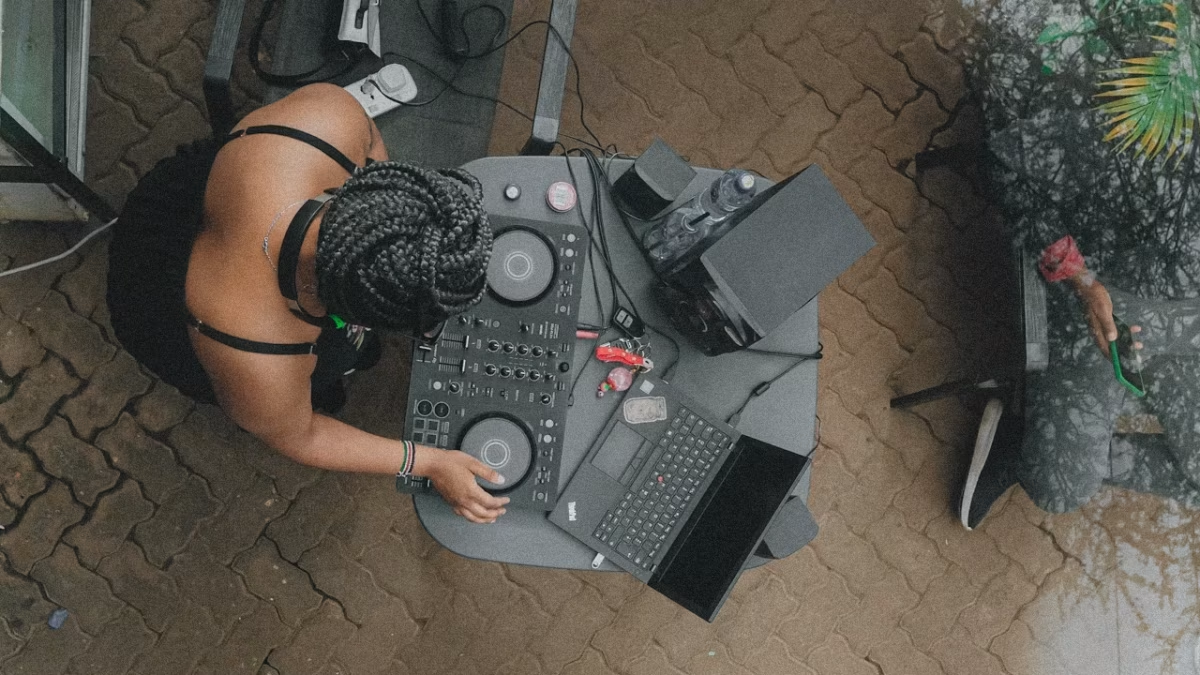
Why 31% of Emerging DJs Are Quitting Music Due to Social Media Pressure
The Myth of Democratized Distribution
Streaming promised to level the playing field. It removed the old gatekeepers. You do not need a major label to upload a techno track. You just need an internet connection.
But the barrier to actual human attention is higher than ever. Spotify and Apple Music keep your audience data locked behind a rigid paywall. You can have millions of monthly listeners. You still have zero idea who they are.
You cannot email them. You cannot text them about a pop-up show. The platform owns the relationship. If the algorithm changes your reach disappears overnight.
How Do Producers Reclaim the Data?
Smart artists are abandoning the hamster wheel. They are shifting from mass broadcast models to decentralized community networks. They prioritize direct communication over passive streams.
Look at the aggressive rise of Fred again… His team bypassed traditional marketing entirely. They tapped straight into private Discord servers and WhatsApp groups.
They handed unreleased tracks to core supporters. When a ticketing issue threatened a Lollapalooza afterparty his team pulled fifty fans straight from Discord onto the guestlist just an hour before the music started. That is an alternative routing system for human attention.
It weaponizes loyalty. It turns casual listeners into active participants. The fans coordinate real life launch parties. They sell out guerrilla gigs in minutes.
Institutional Sovereignty Is the New Standard
Walled gardens like Patreon and Fanfix offer a partial fix. They let producers charge fans directly. But they still hoard the underlying data. You cannot export your subscriber list from Fanfix.
True independence requires owned infrastructure. It demands absolute control over your digital real estate. This massive gap in the market triggered the launch of white label platforms like COY Creator.
Incubated in TMW Labs COY hands artists complete ownership of their first-party data. CEO Matt Silk and CRO Will Keenan built a system that lets producers integrate subscriptions and merchandise on their own custom URLs. You own the entire ecosystem.

Downtown Music executive Craig May recently highlighted this exact vulnerability. He noted that artists must stop leaning heavily on distribution channels they do not control. He put the stakes in plain English.
“When your entire business depends on distribution models you don’t control, you’re not owning your future. You’re renting it.”
The subscription model stabilized a crashing record industry a decade ago. It did its job. Now it is choking the people who actually supply the raw materials.
The future belongs to producers who stop acting like content providers. They will hoard their own data. They will build their own server racks. They will pack physical rooms with fans they can actually contact. The algorithm will eventually realize it has nothing left to serve.
Sources & Further Reading
- 130 BPM (Statistic): Representative of the standard 120–150 BPM tempo range characteristic of classic electronic dance music genres like House. Source URL: https://www.berklee.edu/berklee-now/news/electronic-music-genres-a-guide-to-the-most-influential-styles
- 32-bar intro (Statistic/Event): A structural hallmark of electronic dance music referenced via the required internal link integration. Source URL: https://midnightrebels.com/streaming-economics-erasure-32-bar-intro-electronic-dance-music/
- Founders podcast appearance by Jimmy Iovine (Named Event): Iovine stated that streaming services are “minutes away from being obsolete” and bleed cash due to marginal costs on this podcast. Source URL: https://seobrien.com/ai-startup-differentiation
- Fred again.. using Discord and WhatsApp (Named Event/Platforms): Fred again.. utilized private Discord servers and exclusive WhatsApp groups to bypass traditional marketing and distribute unreleased tracks to core supporters. Source URL: https://www.wheremusicsgoing.com/p/fredagainlessons
- Lollapalooza afterparty & fifty fans pulled an hour before (Named Event & Statistics): Fred again..’s team pulled 50 Discord members onto the guestlist just an hour before the show due to a ticketing issue. Source URL: https://www.levellr.com/portfolio/exploring-fred-again-s-journey-bridging-the-gap-from-discord-to-real-life/
- “A decade ago” the subscription model stabilized a crashing industry (Date Reference): The music industry’s revenue bottomed out at a 20-year low in 2014 before the widespread adoption of streaming services initiated eight consecutive years of growth. Source URL: https://www.weforum.org/stories/2023/03/charted-the-impact-of-streaming-on-the-music-industry/