
 62
62
The Open-Source Revolution: Free Tools Changing Electronic Music Production
APR. 15 2026
Section
Read Time
Written By
[ EXCERPT ]
The electronic music industry relies on expensive software, but a massive subculture of developers is dismantling this monopoly. Discover the free synthesizers, plugin formats, and live visual tools that democratize modern audiovisual club music production.
The electronic music industry relies on expensive software, but a massive subculture of developers is dismantling this monopoly. Discover the free synthesizers, plugin formats, and live visual tools that democratize modern audiovisual club music production.
The electronic music industry runs on a quiet extortion scheme. Buy this expensive workstation. Subscribe to this monthly synth bundle. Rent your creative potential. As an Ableton Live producer and an active user of Blender and TouchDesigner, I know this financial drain firsthand. But a massive subculture operates completely off the grid. Bedroom coders and DSP math obsessives are quietly dismantling the commercial monopoly. They build world-class synthesizers and mind-bending live visual engines. They give it all away for exactly zero dollars. This is not a budget alternative. This is a total hijack of the system.
TL;DR The open-source electronic music ecosystem provides free professional-grade production tools that rival expensive commercial software. Driven by independent developers this movement democratizes access to synthesizers plugin formats and live visual rendering. It eliminates financial barriers and ensures long-term software preservation for budget-conscious producers and audiovisual artists across the globe.
High-level audiovisual production used to require massive studio budgets. Today an entire ecosystem of free open-source software supports artists pushing the limits of dance music. The infrastructure relies on permissive licenses and relentless community beta-testing. Developers collaborate on platforms like GitHub to maintain codebases that outlive commercial products. It forces massive corporate entities to rethink their pricing models. From custom C++ frameworks to browser-based video synthesizers the invisible backbone of modern club music is built by volunteers. They share knowledge freely.
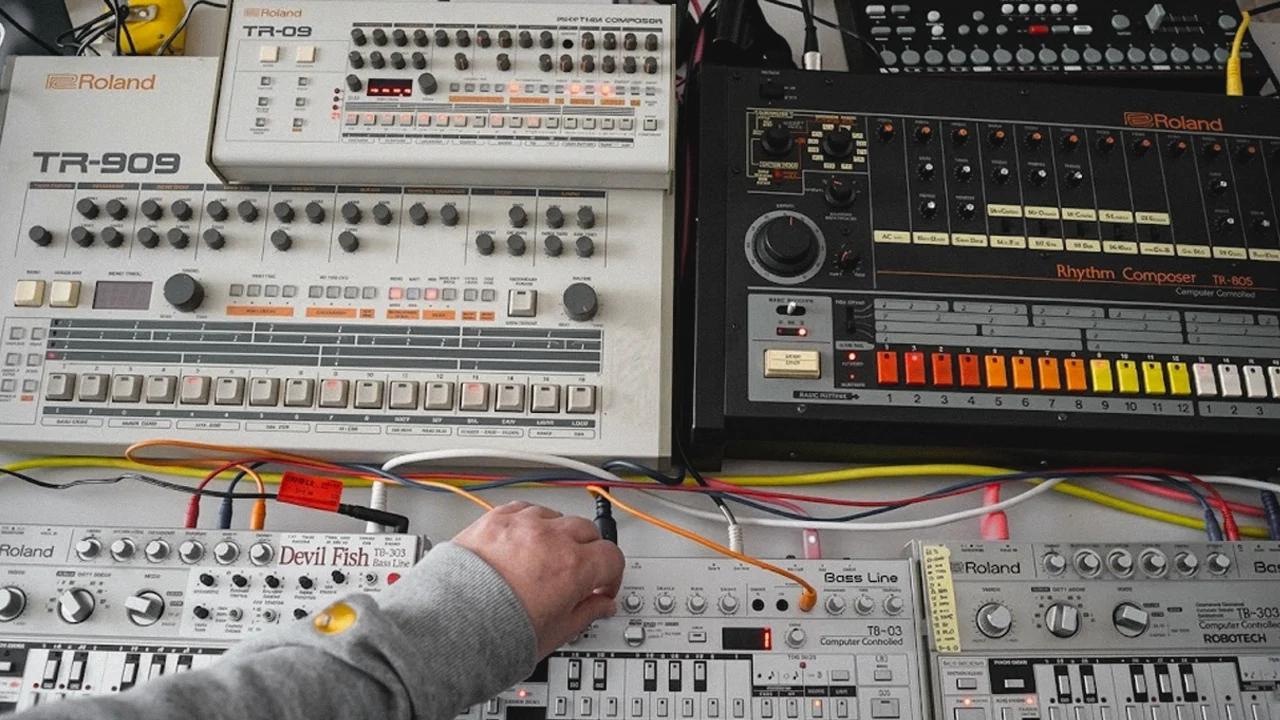
Roland 808 and 909: The Failed Drum Machines That Defined Underground Club Culture
What Happened to Plugin Freedom?
For decades proprietary formats like VST dictated how plugins communicated with host applications. The shift to VST3 introduced massive technical hurdles and restrictive legal agreements. Independent developers hit a brick wall. Then Bitwig and u-he engineered the CLever Audio Plugin standard. CLAP operates under an MIT license. It strips away the legal red tape and registration costs entirely.
The format introduces highly efficient thread-pool multi-threading for modern processors. DAWs can now manage CPU threading seamlessly across multiple cores. It hands power back to the bedroom coder. A massive community-driven push for independence released independent makers from corporate gatekeeping.
The Synthesizer Underground Demands Permanence
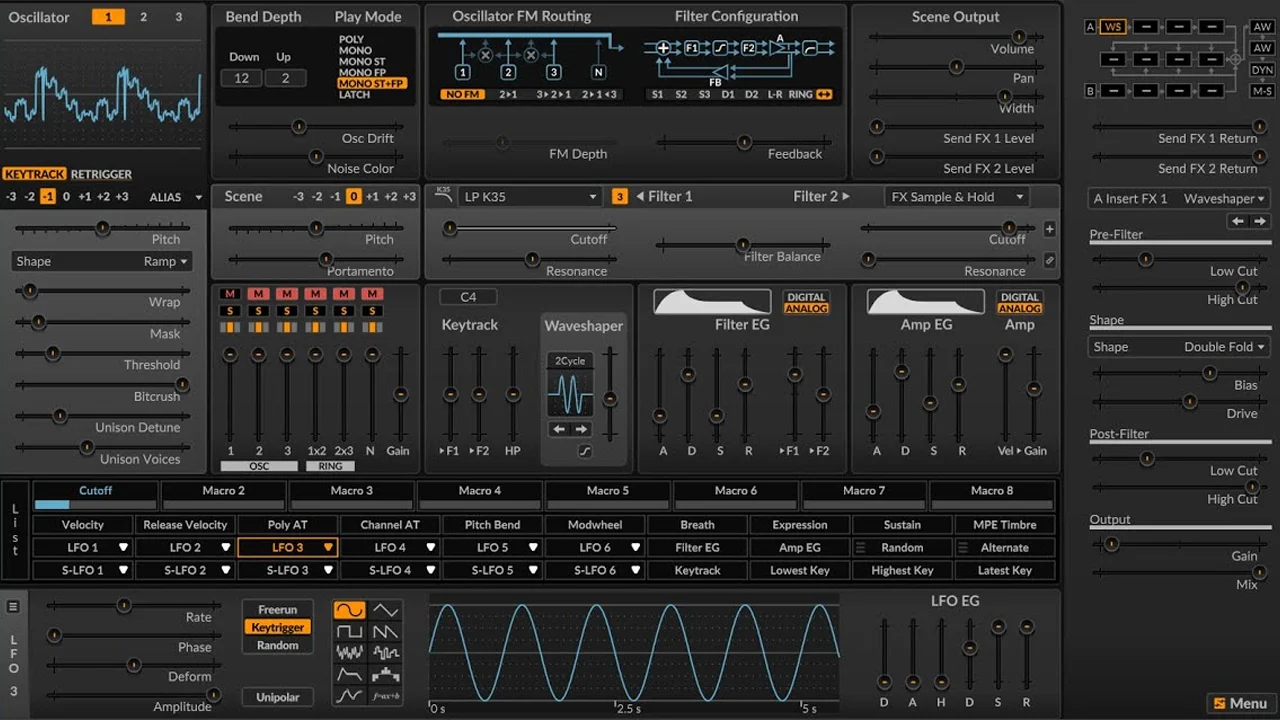
Commercial synthesizers frequently become dead code. A company pivots or drops an update and your favorite tool stops working. Open-source code guarantees immortality. Take the Surge synthesizer. Claes Johanson built it as a commercial product in the early 2000s. When development stalled he released the engine under a GPL3 license. The Surge Synth Team rapidly ported it to modern frameworks. Surge XT now rivals any premium hybrid synth on the market. It even features deep screen-reader accessibility and custom tuning scales for blind producers. It sets an inclusion standard the commercial sector ignores.

Then you have Bespoke Synth. Ryan Challinor spent over a decade building this object-oriented modular environment. It fragments the traditional DAW timeline into over 190 independent nodes.
“Bespoke is a bit like smashing Ableton Live to bits with a baseball bat and then asking you to put it back together”.
Bespoke integrates Python live coding natively. Controllerists map hardware directly to its routing to build unstable and brilliant live instruments.
Why Did Cardinal Fork VCV Rack?
Hardware modular synthesis drains bank accounts. Andrew Belt leveled the playing field by launching VCV Rack to provide an open-core virtual modular sandbox. It mirrored physical Eurorack gear perfectly. But the hybrid business model frustrated software purists. Filipe Coelho stepped in and engineered Cardinal.
Cardinal wraps VCV Rack code into a self-contained and completely free plugin. It cuts the cord. Coelho stripped out all online tracking and telemetry. Cardinal locks both audio and MIDI processing directly to the host DAW audio thread. This radically reduces latency jitter. Coelho stated his motivation clearly when explaining the fork. He noted that without open code “we are at the mercy of the wishes of a company for what we can and cannot do”. Cardinal guarantees your modular patches will open exactly the same way ten years from now.

Generative Code Rules the Visual Stage
VJing at a techno club normally requires an expensive proprietary software license. Open-source visual artists reject that entirely. Blender is the new king of the DJ booth. Artists use the Simple Audio Visualizer extension to map audio frequencies directly to 3D object transform channels. You drop in a kick drum and the geometry reacts instantly. Mike Hodgetts used Geometry Nodes to generate audio-reactive visuals for Grammy-winning artists. Midge Sinnaeve distributes extensive free Blender files and motion graphics tutorials for aspiring VJs.
For live improvisers Hydra dominates the visual output. Olivia Jack built Hydra as a live-codeable video synthesizer that runs inside a standard web browser. Audiovisual artists type GLSL shader code live on stage. The code itself becomes the performance. It requires zero installation and outputs massive glitching feedback loops.
The Linux Extremists Prove It Works
The ultimate flex in electronic music is bypassing commercial operating systems entirely. The GNU/Linux audio community treats music production as an ideological stance. It is difficult. It requires terminal commands and deep system knowledge. But it yields pristine commercial-grade techno.
YouTube educator unfa produces heavy electronic tracks using only free software. He relies on Arch Linux alongside the Ardour DAW and synths like Vitalium and ZynAddSubFX. He recently released a massive 25-track album constructed completely outside the commercial grid. Translation layers like Yabridge allow Linux users to run Windows VSTs seamlessly when necessary. The workflow is uncompromising. The results are undeniable.
The corporate music technology sector relies on planned obsolescence. They need you to buy the next upgrade. The open-source scene operates on a completely different axis of power. Every line of code submitted to GitHub hands the means of production back to the artist. The tools to build the next massive club anthem already exist on a server somewhere. You just have to download them.
Sources & Further Reading
- Development of the CLever Audio Plugin (CLAP) standard by Bitwig and u-he under an MIT license: Verified via https://www.martinic.com/en/blog/clap-audio-plugin-format.
- Surge synthesizer originally built as a commercial product in the early 2000s by Claes Johanson: Verified via https://www.sunsetsilencio.com/blog/exploring-surge-xt/.
- Surge engine released under a GPL3 license in September 2018: Verified via https://github.com/surge-synthesizer/surge.
- Surge Synth Team maintaining the codebase and porting it to modern frameworks (JUCE): Verified via https://surge-synthesizer.github.io/manual-xt/ and https://bedroomproducersblog.com/2022/01/19/surge-xt/.
- Ryan Challinor spending over a decade (since 2011) building Bespoke Synth: Verified via https://www.bespokesynth.com/ and https://www.youtube.com/watch?v=0eLoOtf6HBg.
- Bespoke Synth fragmenting the DAW timeline into over 190 independent modules/nodes: Verified via https://www.bespokesynth.com/.
- Andrew Belt launching the VCV Rack virtual modular sandbox: Verified via https://disquiet.com/2019/07/08/andrew-belt-ccrma-vcv-rack/.
- Filipe Coelho engineering the Cardinal open-source fork of VCV Rack: Verified via https://cardinal.kx.studio/about.
- Blender’s Simple Audio Visualizer extension mapping audio frequencies to 3D object transform channels: Verified via https://extensions.blender.org/add-ons/simple-audio-visualizer/.
- Mike Hodgetts using Geometry Nodes to generate visuals for Grammy-winning artists (specifically Jacob Collier): Verified via https://conference.blender.org/2024/presentations/1966/.
What We Covered

- [2026.07.14] ./Music Industry Leaders Launch Unified Voluntary Labels for AI-Generated Tracks
- [2026.07.12] ./Record Labels Are Not a Golden Ticket and Electronic Music Producers Must Stop Signing Bad Deals
- [2026.07.12] ./Festival Transparency Revolt: The End of Hype-Driven Lineups
- [2026.07.10] ./Skrillex shares his honest opinion on the future of AI in the music industry
- [2026.07.08] ./Why AI Event Posters are Killing Ticket Presales in 2026