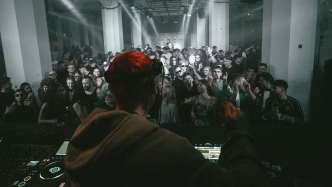


We’ve all seen them. The person in the back of the dimly lit warehouse, arms crossed, quietly scrutinizing the DJ’s transition. The internet commenter who insists your favorite track is just a watered-down rip-off of a 1994 Detroit white label. The music purist.
In an age of infinite digital abundance, where you can access the entire history of recorded audio from a glowing rectangle in your pocket, the “music snob” feels like a bizarre relic. You’d think the democratization of music would have effectively ended elitism. Yet, in the electronic music industry—a scene that practically invented the underground-versus-mainstream paradigm—gatekeeping isn’t just surviving; it’s evolving into a fierce digital turf war.
Are these music purists just insecure elitists? Or are they the last line of defense against an impending, algorithmically generated monoculture?
Why Do Electronic Music Purists Care So Much About “Authenticity”?
To understand the mind of the music purist, you have to understand the economy of “cool.” Sociologists call it subcultural capital. In the underground dance music scene, your status isn’t determined by your bank account; it’s determined by your encyclopedic knowledge of obscure B-sides and your unwavering allegiance to “authenticity.”
Historically, being an electronic music purist required serious legwork. You had to physically travel to specialized record stores, build relationships with intimidating clerks, and spend hours crate-digging to find that one transcendent pressing. That scarcity gave the music profound personal meaning.

The Electronic Dance Music Industry is Fractured, But These 3 Rules Keep It Alive
Then came the internet. Suddenly, algorithms could spoon-feed a 16-year-old the deepest cuts of 90s ambient techno with a single click. In 2024 alone, videos tagged #ElectronicMusic attracted over 13 billion views globally on TikTok, a massive 45% spike from the previous year. For the older generation of vinyl purists, this democratized access often feels like a cultural devaluation.
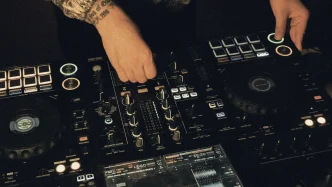
When a veteran DJ scoffs at a teenager using a digital controller with a “sync” button, it’s not just an argument about audio fidelity. It’s the sunk cost fallacy in action. The old guard dedicated thousands of hours to mastering a difficult mechanical skill, and they can be anxious about having their hard-earned status diluted by casual hobbyists. The post-lockdown era flooded the EDM space with new fans who discovered the culture through a warped social media lens rather than physical, communal raves. When purists employ the infamous “name three songs” test, they are engaging in a desperate, albeit frustrating, attempt at self-preservation.
What Exactly is “Business Techno” and Why Does the Underground Hate It?
If there is one phrase guaranteed to make an electronic music purist’s eye twitch, it is “Business Techno.”
As mainstream EDM waned in the late 2010s, massive festival conglomerates set sights on the dark, industrial aesthetics of underground techno. The result is a sanitized, highly marketable caricature of the genre. Business Techno DJs are essentially the influencers of the electronic world—sporting oversized black t-shirts, commanding astronomical booking fees, and playing formulaic, relentless 4×4 beats completely divorced from the genre’s radical roots.
For the purist, this isn’t just bad music; it is a structural failing. Critics increasingly point to the “Business Techno Industrial Complex”—a corporatized sphere that often ignores the systemic issues of appropriation, specifically the erasure of the Black pioneers from Detroit who invented the genre. When collectives like Detroit’s legendary Underground Resistance wore black masks and refused corporate sponsorships, it wasn’t an act of pretentious elitism. It was a vital political defense mechanism against the systemic exploitation of Black cultural production. In this context, the purist’s intense gatekeeping functions as a righteous protest against the gentrification of their sonic sanctuary.


Are Music Snobs and Gatekeepers Actually Bad People?
Let’s not romanticize things too much: at its extreme, music purism can be undeniably toxic. Research into personality traits shows a distinct overlap between rigid music snobbery and an inherent need for superiority. Some will readily weaponize their obscure taste to assert dominance, belittle newcomers, and intentionally hoard underground tracks to artificially inflate their own social capital. By refusing to share or promote brilliant underground artists out of a selfish desire to keep them a “personal secret,” these gatekeepers actively starve the very artists they claim to love of vital streaming revenue and algorithmic visibility.
However, if we eradicate the purist completely, what are we left with? A frictionless, homogenized void.
If everything is for everyone, culture quickly becomes a watered-down product entirely devoid of deep meaning. We need the obsessives. We need the historians who stubbornly analyze specific hardware synthesizers and trace the lineage of a drum pattern back to a Reagan-era warehouse. As cultural theorist Simon Reynolds famously described, 90s underground genres like jungle served as an “education in anxiety”—a necessary psychological defense mechanism and a way for marginalized youth to process societal trauma. That profound emotional utility cannot survive if the music is diluted to serve as background audio for a fast-fashion TikTok challenge.
How Can We Evolve From Toxic Gatekeepers to Educational Gateways?
The music purist is not the enemy of the music; they are its most anxious, overprotective parent. They are terrified that the profound emotional refuge they helped build will be reduced to a passing aesthetic trend.
The future of electronic music doesn’t rely on silencing the purist, but on encouraging them to evolve. The culture thrives when the elitist learns to lower their guard, step aside from the gate, and become an educational gateway. Because true subcultural capital shouldn’t be about hoarding the music—it should be about teaching the next generation exactly why it matters in the first place.
Sources & Further Reading
1. Shifting Popularity & Tech Platforms
- TikTok’s Electronic Era: TikTok Views: Electronic vs. Indie (April 2025) — A Guardian report detailing how short-form video has propelled dance music past indie in global engagement.
- Viral Dynamics: High-energy subgenres are now the primary “sonic backdrop” for global social content.
2. The Gatekeeping & Commercialism Debate
- Community Tension: Reddit: The “Not-What-That-Genre-Is” Gatekeeping Conflict — A viral discussion on the friction between genre purists and the modern EDM explosion.
- The “Business Techno” Critique: Dweller: How Those Who Have the Most Sacrifice the Least — A deep dive into the corporate homogenization of techno and the erasure of its radical roots.
3. Critical Perspectives & Theory
- Simon Reynolds Quotes: Goodreads: Thoughts on Rave Culture & Futurity — Essential quotes from the author of “Energy Flash” on how dance music cycles through innovation and nostalgia.