


 87
87
The Generational Gap in EDM: Gen Z vs. Old School Ravers
FEB. 15 2026
Section
Read Time
Written By
[ EXCERPT ]
A Gen Z producer analyzes the friction between old-school ravers and new-school influencers. From the "sync button" debate to the gentrification of warehouse parties, we explore how technology and economics are reshaping electronic music culture.
I produce electronic music on a laptop in a bedroom on the other side of the world, far from the warehouses of Manchester or the superclubs of Ibiza that defined the global canon. I am Gen Z. My mentors, however, are Millennials and Gen Xers who cut their teeth lugging crates of vinyl through Manila traffic and sweating in unventilated clubs before “EDM” was a marketing term. We speak the same language of 4/4 kicks and sawtooth waves. Yet we often talk past each other. They mourn the loss of a “pure” underground. I navigate an industry where a 15-second TikTok loop can act as a record deal.
This friction is not unique to my circle. It is the defining tension of the electronic music industry in the mid-2020s. But to frame this merely as “Old School vs. New School” is reductive. It ignores the sociological and economic realities that have reshaped the dancefloor. We need less complaining and more structural analysis. The generational gap in rave culture is not a decline. It is a rapid evolution driven by technology, gentrification, and a fundamental shift in how human beings consume art.
Buying the Vibe: How Raves Swapped Danger for Safety
To understand the friction, one must look at the venue. For the “feral generation” of Gen X, the rave was a Temporary Autonomous Zone born of necessity and resistance. It was often illegal, uncomfortable, and unsafe. The “vibe” was predicated on shared risk. If you were there, you were committed.
For my generation, the rave is often a product. We did not kill the underground. The economy did. The shift from illegal free parties to regulated festivals is a mirror of broader gentrification. Organizing a rave today requires insurance, permits, and significant capital. This shifts ownership from collectives to entrepreneurs. Consequently, Gen Z participants are not “soft.” We are navigating a landscape where safety and inclusivity are the primary currencies rather than rebellion.
This shift has altered the ethos of PLUR (Peace, Love, Unity, Respect). For older heads, PLUR was a survival mechanism in a hostile environment. For Gen Z, it is a mandate for “safe spaces,” harm reduction, and accountability. When veterans complain about the lack of “edge” in modern crowds, they are often critiquing a necessary correction toward inclusivity that allows marginalized groups to participate without fear.
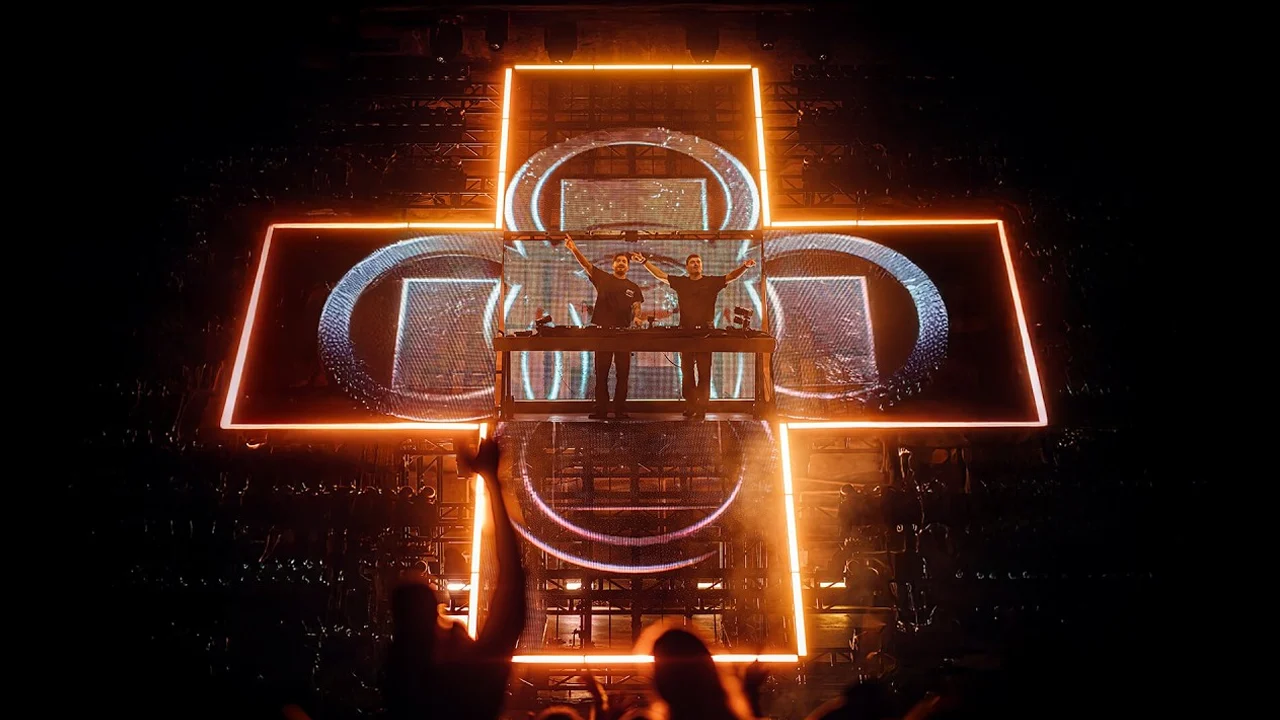
The 12.9 Billion Time Machine: How the Electronic Music Industry Is Rebooting 2016
Pressing Play: Why the Sync Button Isn’t the Enemy of Real DJing
The most contentious frontline remains the DJ booth. The argument usually centers on the “Sync” button, which matches the tempo of two tracks automatically. Purists argue this de-skills the craft and reduces the DJ to a button-pusher.
This view relies on a definition of “skill” that technology has rendered obsolete. In the vinyl era, the barrier to entry was mechanical difficulty and financial scarcity. You had to afford the records and train your ears to beatmatch, or you couldn’t play. Today, the barrier to entry is gone. Music is abundant and cheap. The “Sync” button didn’t remove skill. It shifted the cognitive load from time-keeping to curation and live editing.
A Gen Z DJ using four decks, loops, and live stems is engaging in a complex performance that would be impossible on vinyl. We are not “lazy.” We are prioritizing creativity over mechanics. Authenticity in 2026 is no longer defined by the medium (vinyl vs. USB) but by the connection with the audience. If the floor is moving, the method is valid.
Do It for the Gram: The Real Cost of Viral DJing
The most profound disconnect is the “Content Industrial Complex.” Veterans like Fatboy Slim have lamented that young ravers are a “clean-cut generation of screen-addicted homebodies” who experience the night through a lens.
It is easy to dismiss the sea of smartphones recording a drop as narcissism. But for a digital-native generation, documentation is a form of memory banking. We exist in an attention economy where an artist’s viability is often determined by metrics rather than merit. A Mixmag report noted that over 60% of emerging DJs believe social media numbers are now more critical than musical ability. We didn’t choose this system. We are simply surviving in it.
This pressure has physically altered the music. Data from 2024 shows the average song length on streaming platforms has dropped significantly since the 1990s, driven by algorithms that prioritize skip rates and repeat listens. The “TikTokification” of EDM has normalized the “pop structure” with short intros, immediate hooks, and drops designed for 15-second viral clips.
While this frustrates those accustomed to the slow-burn progressive house of the 2000s, it has also democratized fame. You don’t need a major label to blow up. You need a hook and a smartphone.
Closing the Gap: Why the Old School and New School Need Each Other
Despite the friction, the walls are permeable. We are seeing a “Rave Renaissance” where the cycles of fashion and sound are merging. Gen Z is currently reviving the fast tempos of 90s techno and the aesthetics of Y2K rave gear to validate the tastes of the older generation.
Mentorship is the bridge. Industry titans like Carl Cox are actively endorsing new talent. He notes that while the tools change, the energy remains the same. When veterans stop gatekeeping and start teaching, the knowledge transfer resumes. They teach us patience and history. We teach them relevance and digital fluidity.
The generational gap is real, but it is bridgeable. The “Old School” built the foundations of this industry in warehouses and fields. The “New School” is expanding it into the digital and global realms. We are not replacing the culture. We are iterating on it. And as long as the kick drum hits, we are all dancing to the same beat.


Frequently Asked Questions
1. What is the main difference between “Old School” and “New School” rave culture?
The primary difference is the shift from a culture of resistance to a culture of inclusivity. Old School rave culture (Gen X/early Millennials) was born in illegal, unregulated spaces (warehouses) where the “vibe” came from shared risk and rebellion. New School culture (Gen Z) operates in a regulated, commercialized environment where the priority is safety, harm reduction, and “safe spaces” for marginalized identities. Neither is “better,” but they serve different sociological needs.
2. Is using the “Sync” button considered cheating in 2026?
No. While purists argue it removes the mechanical skill of beatmatching, the industry consensus has shifted. The sync button allows DJs to focus on more complex creative tasks, such as 4-deck mixing, live looping, and effects processing. As long as the DJ is actively curating and manipulating the energy of the room, the tool used to match the tempo is considered irrelevant by modern standards.
3. Why are electronic music tracks getting shorter?
The decline in song length—from an average of over 4 minutes in 1990 to roughly 3 minutes today—is driven by the “attention economy.” Streaming platforms like Spotify and TikTok incentivize shorter tracks because they encourage repeat listens and reduce the likelihood of a user skipping the song before the hook hits. This has led producers to cut long intros and outros, creating punchier, “pop-structured” dance tracks.
References / Sources
- Not Your Jukebox. (2024).(https://notyourjukebox.com/2024/03/31/what-new-school-djs-need-to-know-about-the-old-school-and-vice-versa/)
- The Strand Magazine. (2024).(https://www.strandmagazine.co.uk/single-post/behind-the-decks-unpacking-the-gentrification-of-rave-culture-and-youth-entrepreneurship)
- Insomniac. (n.d.).(https://www.insomniac.com/magazine/10-things-new-school-ravers-vs-old-school-ravers/)
- The Society Pages. (2018).(https://thesocietypages.org/trot/2018/08/27/youth-and-the-development-of-rave-culture/)
- Gray Area. (n.d.).(https://grayarea.co/academy/the-inclusivity-of-rave-space)
- Vintage Music Label. (2024).(https://www.vintagemusiclabel.com/vml-news/2024/10/5/how-digital-djing-has-eroded-the-art-of-djing-the-turntable-vs-controller-debate)
- Digital DJ Tips. (2021).(https://www.digitaldjtips.com/how-to-dj/)
- DSokolovskiy. (n.d.).(https://dsokolovskiy.com/blog/all/vinyl-vs-sync-button/)
- Kill The Music. (n.d.).(https://killthemusic.net/articles/the-dj-debate-vinyl-or-digital)
- Daily Star. (2025).(https://www.dailystar.co.uk/showbiz/fatboy-slim-urges-gen-z-36066950)
- The Idaho & J. (n.d.).(https://theidahoandj.com/social-media-vs-musical-skill-a-modern-dj-dilemma/)
- Chartmetric. (2024).(https://hmc.chartmetric.com/shorter-songs-trend-streaming-history/)
- Reddit. (2023).(https://www.reddit.com/r/edmproduction/comments/1ei6ocv/edm_song_structure/)
- 6AM Group. (n.d.).(https://www.6amgroup.co/rave-fashion-throughout-the-decades/)
- Carl Cox via Recording Academy. (n.d.). Carl Cox Interview on Mentoring
- Reddit. (2023).(https://www.reddit.com/r/EDM/comments/1kx2qv0/whats_with_the_culture_change/)
What We Covered

- [2026.07.05] ./NOTDEADYET secures massive international festival debut in Manila
- [2026.06.26] ./Popular Ibiza DJ Hugo Bianco Named Mastermind Of International Drug Trafficking Ring
- [2026.06.16] ./YouTube Music Nights Brings the Album Release Party Back to Life
- [2026.06.16] ./Roger Sanchez releases Spectrum marking his first studio album in two decades
- [2026.06.13] ./8 Underrated Producers Who Made The Careers Of Superstar DJs