
Beatport, the digital record store that’s been the backbone of the DJ economy for two decades, is making a power play. On October 16, 2025, the company officially launched Beatport Tickets, a platform built to sell you entry to the same clubs and festivals that play the music it sells. The move is a bold attempt to create a closed loop, a “360 platform” that guides you from discovering a track online to sweating it out on a dance floor. 1

For years, the worlds of buying music and buying tickets have been separate. Beatport wants to smash them together. The company says it’s here to fix a broken system, one where artists struggle to make money from recordings and independent promoters get crushed by giants. Helen Sartory, Beatport’s Chief Revenue Officer, put it plainly: “Because without live music, there is no dance scene”. It’s a nice line. It frames a corporate expansion as a noble quest to save the culture.
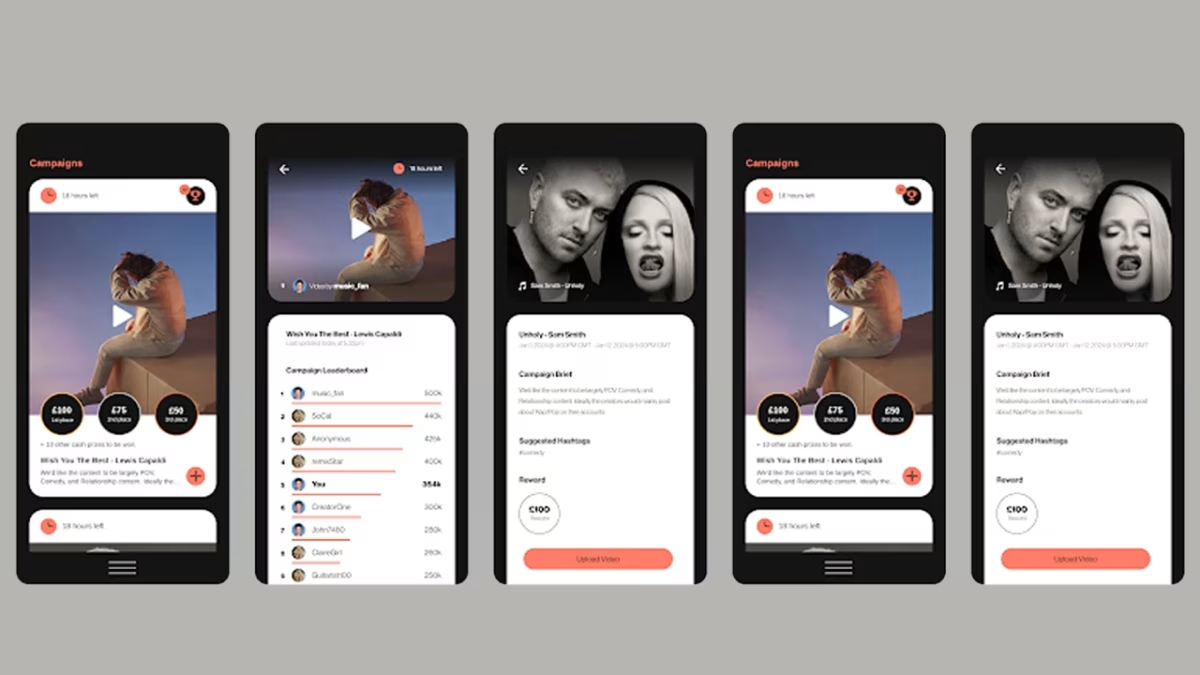
The strategy is simple. Beatport has a massive, captive audience of over 40 million electronic music fans, DJs, and producers visiting its site every year. Now, it wants to sell them tickets. The platform, powered by a tech company called Weeztix, promises promoters a toolkit of dreams. They can embed playlists directly into ticket pages, turning a boring sales page into an “immersive sound journey”. They get access to a huge global audience and a dashboard full of data telling them who is buying their tickets and why. For an independent promoter, that’s a powerful pitch. 2
The Real Fight: A Showdown with Resident Advisor
Let’s be clear. This is a direct shot at Resident Advisor. For years, RA has been the undisputed king of underground electronic music ticketing. It built its empire on something Beatport can’t just buy: community trust and grassroots credibility. Getting your event listed on RA is a stamp of approval. It tells people your party is legit. 3

RA is fundamentally a ticketing platform with a respected media arm. Beatport is a massive retail and data machine that just bolted on a ticketing feature. This is a classic battle. It’s the data-driven behemoth against the cultural curator.
Beatport Tickets vs. Resident Advisor
Here’s how the two platforms stack up.
| Feature | Beatport Tickets | Resident Advisor (RA) |
| The Vibe / Core Identity | A massive music retail and data company adding ticketing to create an all-in-one ecosystem. It’s a commercial powerhouse aiming for scale. | A trusted cultural curator and media outlet that is fundamentally a ticketing platform for the underground scene. |
| The Crowd / Audience Reach | Huge. Claims access to over 40 million annual users across its global platform of DJs, producers, and fans. | Niche but dedicated. An estimated 4 million monthly users who are deeply engaged with the underground electronic music community. |
| The Pitch to Promoters | Unprecedented reach and a powerful data machine. Connects music sales directly to ticket sales to create a “360 platform”. | Cultural credibility and community trust. Getting listed on RA is a stamp of approval that validates an event’s quality and authenticity. |
| Key Tools for Promoters | – Music Integration: Embed playlists and track links directly on ticket pages.1- Advanced Analytics: Deep data insights on who is buying tickets and why. Flexible Sales: Sell merch, accommodation, and tokens alongside tickets. | – Priority Promotion: Events selling tickets get higher visibility in RA’s influential listings.10- Basic Reporting: Standard tools for tracking sales and finances. Free to Use: Promoters don’t pay to list or sell tickets; fees are passed to the buyer. |
| The Fan Experience | A seamless path from discovering a track to buying a ticket, all within one ecosystem. Event pages act as “immersive sound journeys”. | A trusted source for discovering curated events. Features an industry-leading, secure, face-value resale system that fights scalping. |
| Biggest Strength | Scale and Data. Its massive user base and ability to link music consumption to ticket-buying behavior is a unique and powerful advantage | Trust and Credibility. It has spent two decades building a reputation as the authentic voice of the underground, a position that can’t be easily bought |
| Biggest Problem | Shaky Tech Reputation. Beatport’s main website is notorious among DJs for being slow, buggy, and unreliable, creating a major trust issue for a new ticketing platform. | User Experience Issues. Fans complain about being forced to download the app to access tickets, along with login problems and payment failures. |
Beatport is betting that scale beats soul. It’s offering promoters access to its millions of users, promising to put their events in front of fans right when they discover an artist. The plan is to integrate ticket links directly onto artist and label pages by 2026, making the path from hearing a track to buying a ticket almost frictionless. This creates a powerful data feedback loop. Beatport will know exactly which tracks are driving ticket sales in which cities, giving it an unprecedented view of the entire scene. That data is the real prize. It could reshape how promoters book artists and how labels plan tours.

Tomorrowland Thailand Now Hiring: Join the 2026 Festival Team
The Glitch in the Machine: Can Beatport’s Tech Handle It?
Here’s the problem. For a company building its future on a seamless digital ecosystem, its current technology is a mess. And its core users, the DJs who have been paying for tracks for years, know it.
A dive into online forums reveals a long and painful history of user complaints. DJs describe the main Beatport website as “garbage,” “slow,” and “clunky”. One user on Reddit called the web interface “dogshit”. Another described the search engine as “painfully underdeveloped”. 4
The complaints are specific and consistent. Users report a buggy search function that runs before you’ve finished typing. They describe a website that gets slower with every click until you’re forced to refresh the page. They detail infuriating problems with bulk downloads, where hundreds of dollars worth of purchased tracks simply fail to download properly. Payment issues are also common, with users reporting that their cards are consistently declined for no reason.
This history creates a massive credibility gap. A DJ who can’t reliably download a music file will think twice before trusting the same company with a $50 ticket purchase. The stakes are much higher in ticketing. A buggy download is an annoyance. A failed ticket transaction can ruin a fan’s night and cost a promoter serious money. The ticketing world is already a minefield of bots, scalpers, and website crashes during high-demand sales. Beatport is stepping into this arena with a reputation for shaky tech. Its first major on-sale will be a trial by fire. 5
The Ecosystem Play
Beatport’s move into ticketing isn’t happening in a vacuum. It’s the final piece of a much larger puzzle. The company has spent years building out an ecosystem to touch every part of a DJ’s life. It has Beatport LINK for streaming tracks directly into DJ software, Beatport Next for developing new artists, and Beatport Connect summits to network with the industry.
Now, with ticketing, Beatport can connect all these pieces. An artist in the Beatport Next program can have their tracks promoted in the store, featured on playlists, and then have tickets to their shows sold directly on the same platform. It’s a self-reinforcing system designed to keep everyone inside Beatport’s walls.
The company is even looking to the future with a Web3 marketplace called Beatport.io, launched in partnership with the Polkadot blockchain. The idea is to sell digital collectibles, or NFTs, that could give fans access to unreleased music or, crucially, discounted or early-access tickets. This shows the scale of Beatport’s ambition. It doesn’t just want to sell you a track or a ticket. It wants to own the entire fan experience.



So, What’s the Verdict?
Beatport has a clear and powerful vision. It wants to use its massive scale and data to connect the dots in a fragmented industry. For promoters and labels, the promise of reaching 40 million fans and getting detailed analytics is hard to ignore. The idea of buying a ticket to see an artist you just discovered, all on one platform, is compelling for fans.
But the execution is everything. The company is entering a market full of problems with a history of technical failures. It’s trying to win over a community that values authenticity while being perceived as a corporate giant. And it’s going head-to-head with Resident Advisor, a competitor that has earned the trust of the underground scene over two decades.
The battle for the dance floor is on. Beatport has built the digital record crate for a generation of DJs. Now it wants to be the bouncer at the door, too. The question is whether the community will let them in.
- https://www.musicbusinessworldwide.com/beatport-launches-ticketing-platform-exclusively-for-dance-music-events/ ↩︎
- https://www.beatportal.com/articles/1109058-beatport-launches-beatport-tickets-connecting-music-discovery-with-live-events ↩︎
- https://change-underground.com/beatport-tickets-takes-aim-at-resident-advisors-market-stronghold/ ↩︎
- https://www.reddit.com/r/Beatmatch/comments/1hdao6d/beatport_is_garbage/ ↩︎
- https://www.technoairlines.com/blog/ticket-problems-in-festivals ↩︎