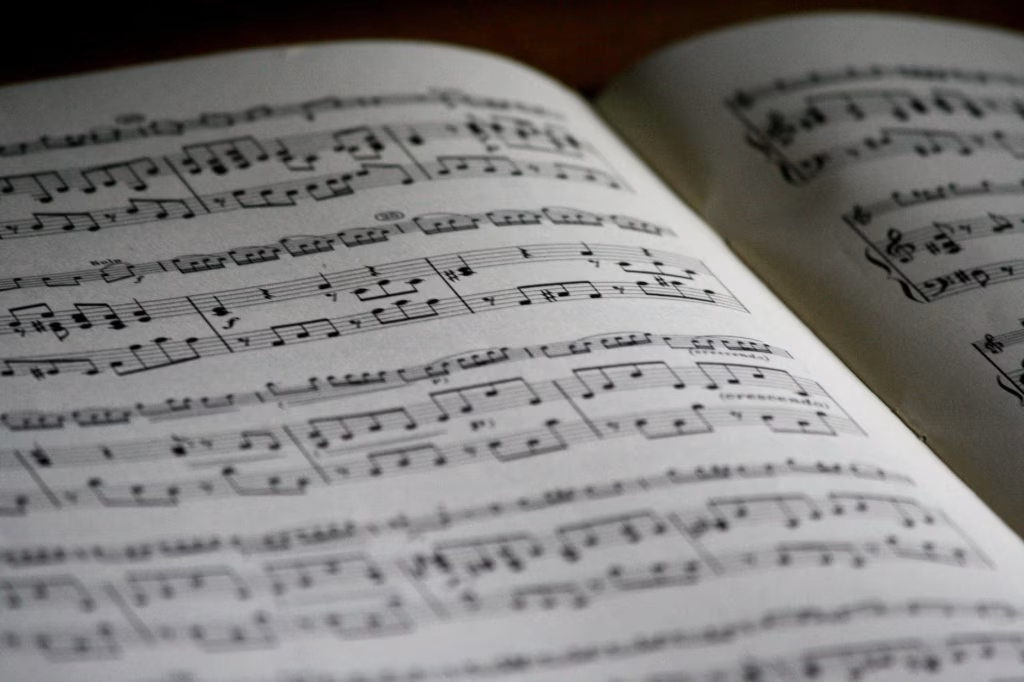

In a recent report, Music for Dementia, a charity dedicated to researching and supplying music to people suffering from dementia as a treatment for their condition, compiled research findings showing that the use of music can significantly improve the quality of life for those who are suffering from the disease.
One study found that participation in a music therapy choir helped to reduce depressive symptoms in 54 percent of patients while also improving their overall quality of life by 57 percent.

The results of another study revealed that music therapy significantly improved the content and fluency of speech in a group of 20 dementia patients when compared to a control group of the same size who participated in a conversational session.
Music for Dementia has teamed up with The National Academy for Social Prescribing (NASP) to bring musical services to dementia care homes across the country. Both organizations are calling for music therapy to be included as a standard component of all treatment plans.
Music for Dementia received a testimonial from a patient who was diagnosed with dementia six years ago and stated, “Music is my memories.” It brings back memories of concerts I attended many years ago, such as Queen at Earls Court in 1982 and David Bowie in Manchester.
In the aftermath of participating in Music for Dementia’s music therapy sessions, he shared his thoughts on the experience: “I really enjoy talking to my friends here about music and bands.”
Four projects have now been funded, with NASP contributing £100,000 and the public contributing an additional £12,000, and they will be used to treat patients across the United Kingdom using social prescribing of music therapy. Lowestoft, Derby, Cambridge, and Dorset are among the locations where projects will be carried out.
“We know that music is powerful and meaningful for many people, whether it is learning something new or reminiscing over an old song,” said James Sanderson, CEO of NASP.
-
Stolen Kicks and Viral Drops: The Hard Techno and Hardstyle Controversy Explained

Explore the intense debate dividing electronic music in 2026: is it hard techno or hardstyle? Discover how viral algorithms, commercial sound packs, and controversial DJ crossovers are collapsing subcultural boundaries and redefining high-BPM rave history.
-
Honoring 27 Years Together: Cosmic Gate Releases Perspectives EP 3 as Bossi Steps Away

Cosmic Gate announced their split after twenty-seven years, prioritizing friendship over the brand. Bossi retires from touring, while Nic Chagall continues solo. The duo leaves a legacy of innovation and strong fan support in the evolving dance music scene.
-
Did Daft Punk Just Make a Fan Video Official for “Human After All”?

Daft Punk released a 2026 music video for “Human After All” that quickly sparked viral internet rumors of being fan-made. In reality, the official release is an archival masterwork edited by creative director Cédric Hervet.
-
Static in the System: Boys Noize, Shinichi Osawa, and the 2026 Dirty Electro Revival

Boys Noize and Shinichi Osawa are spearheading the 2026 “Indie Sleaze” revival with aggressive new releases. We analyze how their distorted, apocalyptic sound reflects a post-digital world and why the chaotic energy of bloghouse is back.
-
Best Dance & Electronic 2026: Gesaffelstein, FKA Twigs, and Tame Impala Take Home Grammys

A trifecta of electronic visionaries claimed gold at the 2026 Grammys. From Gesaffelstein’s industrial remix win to FKA Twigs’ avant-pop album victory and Tame Impala’s psychedelic triumph, discover how these three acts defined the night.
* generate randomized username
- COMMENT_FIRST
- #1 Lord_Nikon [12]
- #2 Void_Reaper [10]
- #3 Cereal_Killer [10]
- #4 Dark_Pulse [9]
- #5 Void_Strike [8]
- #6 Phantom_Phreak [7]
- #7 Data_Drifter [7]
- #8 Zero_Cool [7]


