
For decades, we’ve been held hostage by a geometric dictator: the stereo triangle. You know the drill. Two speaker stacks, Left and Right. If you’re lucky enough to stand in the dead center—the “sweet spot”—you get the phantom image. You get the music.
But if you’re dancing by the bar? You’re getting mud. You’re getting phase cancellation. You’re getting half the picture.
In 2026, that tyranny is ending. The “Death of Stereo” isn’t just clickbait; it’s the observable reality of modern nightlife. The club is evolving from a blunt instrument of volume into a precision tool of spatial simulation. We are moving from channel-based audio—where sound is routed to a speaker—to Object-Based Audio (OBA), where sound is a free-floating entity with coordinates in 3D space.

The Physics of the “Holodeck”
The new paradigm is simple: decouple the sound from the speaker. In venues utilizing 4D Sound or Wave Field Synthesis, producers place “sound objects” in a virtual environment. A kick drum isn’t “Left” or “Right”; it is “center-floor, 0.5 meters high.” A synth line doesn’t pan; it orbits your head.

MONOM: The Sonic Laboratory
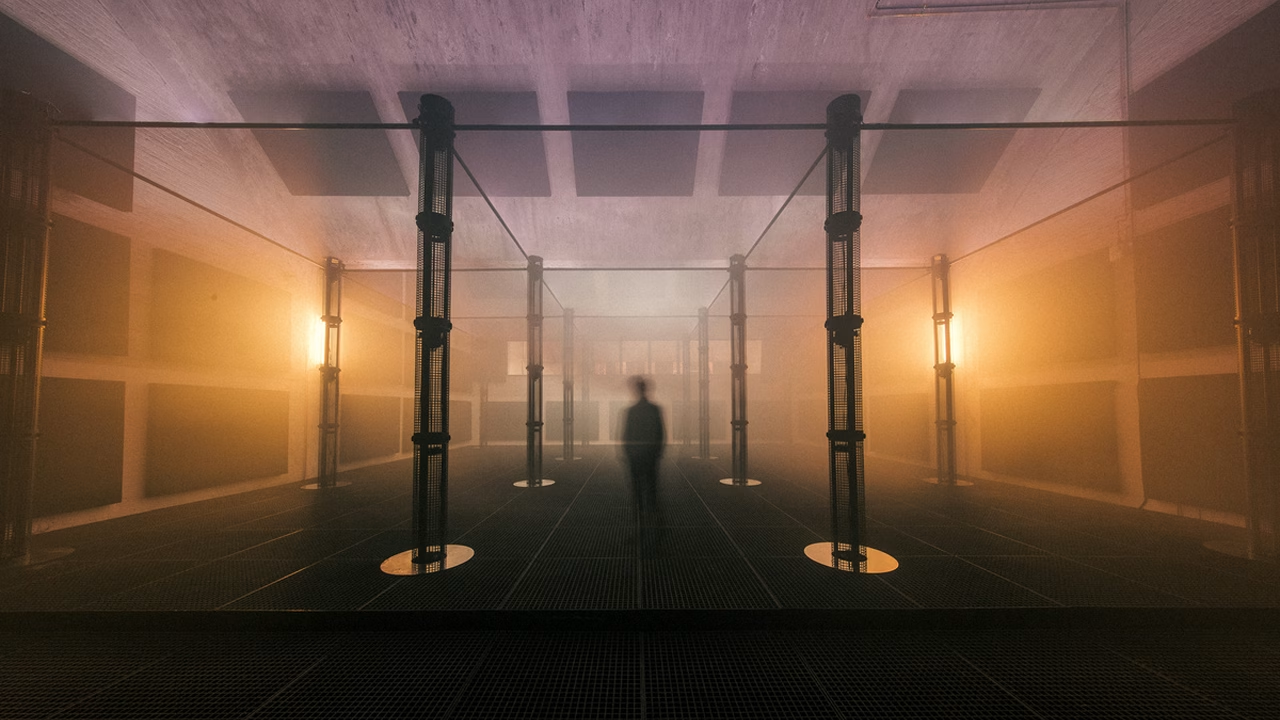
Berlin’s MONOM, located in the historic Funkhaus, remains the gold standard for this holographic audio. It’s not a club in the traditional sense; it’s a spatial instrument.
- The Rig: 48 omnidirectional speakers suspended in acoustically transparent columns.
- The Floor: 9 powerful subwoofers submerged beneath a mesh floor.
- The Vibe: There is no DJ booth to worship. You walk through the sound. You feel the bass resonate through the soles of your feet, decoupled from the mids, creating a tactile suspension that feels less like listening and more like floating.
The Corporate Arms Race: L-Acoustics vs. d&b
While MONOM handles the avant-garde, the big boys are fighting for the main stage. This is a tech war between two giants: L-Acoustics and d&b audiotechnik.
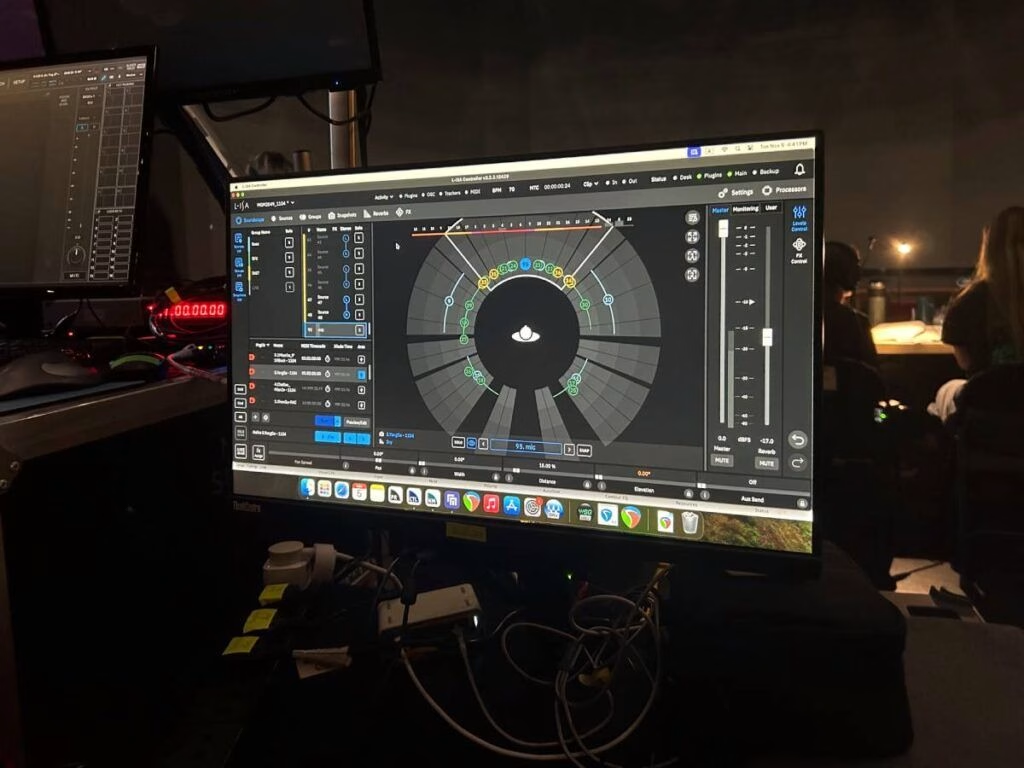
L-Acoustics is pushing their L-ISA technology, which they call “Hyperreal Sound.” It abandons the L/R stack for a “Scene” configuration—arrays of speakers spread across the stage width. Venues like Amsterdam’s The Other Side have adopted this, creating a 14.1.5 channel configuration that makes the entire dancefloor a sweet spot .
On the other side, d&b audiotechnik offers Soundscape. Their secret weapon is En-Space, a room emulation tool. It can make a dry, dead club sound like a Viennese concert hall at the touch of a button. It’s acoustic augmented reality.
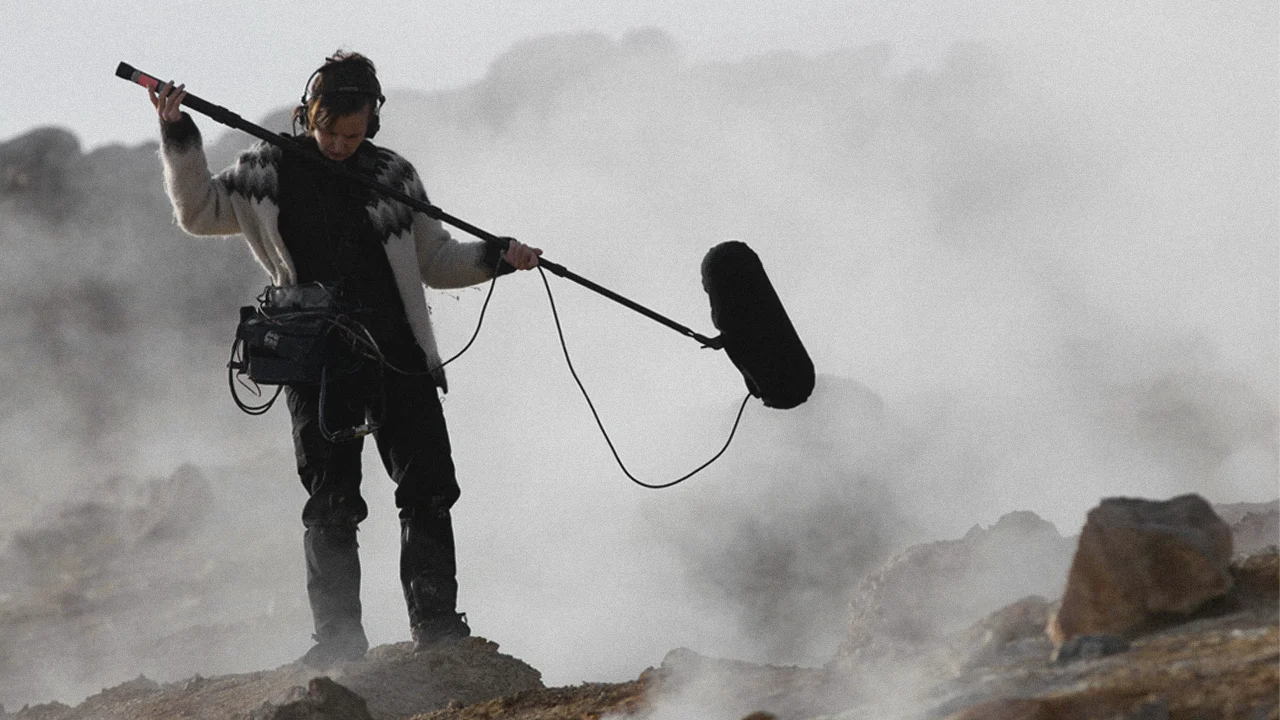
Why Audio Imperfection is the New Standard for Professional Mixing
The Paradox of the “Foam Box”
Here is the irony of the spatial revolution: to make sound move perfectly, you have to kill the room.
Reflections are the enemy of localization. If a sound bounces off a concrete wall, your brain gets confused about where it came from. So, the trend for 2026 is the “Foam Box”—rooms treated to be incredibly dry and absorbent.
- The Problem: Dead rooms feel oppressive. They kill the “vibe” of a crowd.
- The Solution: Active Acoustic Enhancement. Systems like d&b’s En-Space artificially add reverb back in. The club is physically dead but digitally alive. It’s a simulation of a room, inside a room.
The Visual Synesthesia
Sound is only half the trip. The integration of TouchDesigner and ShowKontrol has synchronized the eyes and ears. We aren’t just seeing lights flash to a beat; we are seeing volumetric lighting that tracks the physical coordinates of the audio.
If a producer spins a hi-hat around the room, the lighting rig—often using kinetic winches and lasers—physically tracks that movement. It is a synesthetic loop where data drives the dopamine.
The Resistance: The Audiophile Listening Bar
For every action, there is an equal and opposite reaction. As clubs become digital simulations, a purist counter-movement is exploding: the Listening Bar.
Inspired by the Japanese Jazz Kissa, venues like NYC’s Public Records are rejecting spatial processing for the holy grail of analog tone.
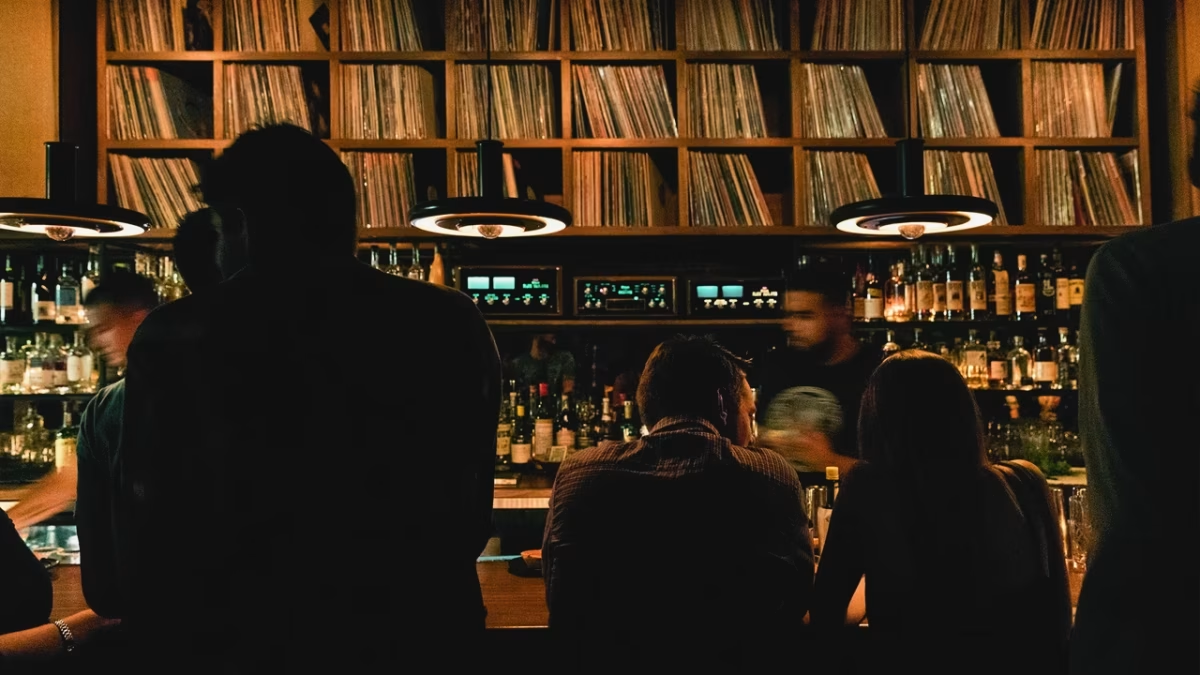
How Listening Bars Combine Community, Cocktails, and Curated Vinyl
The Anti-Spatial Manifesto
- The Gear: Custom-built speakers by Devon Turnbull (OJAS), based on vintage Altec Lansing designs.
- The Philosophy: Point-source stereo. Big horns. Tube amps. No digital trickery.
- The Experience: “Intentional listening.” At Public Records, the “Sound Room” is a sanctuary. No phones. No talking. Just the warm, uncompressed truth of a needle on wax.
Artists like Floating Points bridge this gap. While he composes in spatial, his touring rig—the Sunflower Sound System—is a towering monolith of boutique stereo. It’s a middle finger to the “shitty festival PA,” proving that perfect stereo is its own form of immersion.


The Future is Hybrid
We are heading toward a bifurcation of nightlife. On one side, the Hyper-Clubs: venues like The Sphere and Hï Ibiza (now mixing live sets in Dolby Atmos) that function as sensory deprivation tanks turned inside out. On the other, the Analog Sanctuaries: wood-paneled rooms with Altec horns and strict no-phone policies.
The sweet spot isn’t dead. It just expanded to fill the whole room.