

EDM vs. Electronic Dance Music: Understanding the Nuances
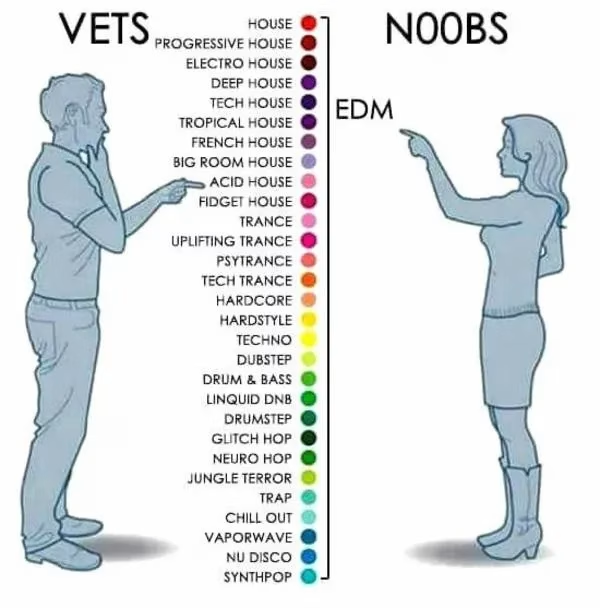
Electronic music genres can be confusing, especially the difference between EDM (Electronic Dance Music) as a genre and electronic dance music as a broader term. This confusion isn’t limited to any one place; many DJs worldwide struggle with these terms. Many incorrectly classify techno, house, and trance as EDM when, in fact, they’re all under the electronic dance music umbrella. Let’s clarify the distinctions.
EDM as a Genre
EDM, known for its mainstream appeal, is a genre with catchy tunes, strong rhythms, and a focus on creating a lively dancefloor experience. Filipino producer-DJs such as Strodano, Nerf, DJ Young, and Awit Awards Winner Louis Vint are prominent examples. Artists like Avicii, Calvin Harris, David Guetta, and Martin Garrix have shaped EDM, creating infectious beats and catchy hooks that dominate festivals and radio waves.
Electronic Dance Music: The Broader Term
Electronic dance music is an overarching term encompassing various dance-oriented genres and styles. It includes EDM but extends to techno, house, trance, and many more subgenres. Think of it as an umbrella term uniting these styles under a shared focus: creating music designed for dance and live performance.
Key Electronic Dance Music Subgenres
- Techno: Originating in Detroit in the 1980s, techno is characterized by repetitive beats, strong rhythms, and futuristic sounds. It has diverse subgenres like minimal techno, Detroit techno, and acid techno.
- House: Born in Chicago, house music is known for its four-on-the-floor beat, soulful vocals, and uplifting melodies. Deep house, progressive house, and tech house are prominent examples.
- Trance: Often associated with its uplifting melodies and strong rhythms, trance uses arpeggios, gated synths, and build-up/breakdown structures to create an engaging listening experience.
The Key Difference
EDM is a specific genre within the broader category of electronic dance music. While EDM enjoys significant popularity, it represents only a portion of the many genres under the electronic dance music umbrella. Techno, house, trance, and others are correctly classified as electronic dance music, not just EDM.
Understanding this distinction clarifies music discussions. EDM is a genre with specific characteristics, while electronic dance music is an all-encompassing term for a diverse range of dance music. Whether you prefer EDM or other electronic dance music subgenres, there’s a world of music to explore.
Read also: Krewella Returns: Ditching EDM for Techno After Three-Year Hiatus
* generate randomized username
- COMMENT_FIRST
- #1 Lord_Nikon [12]
- #2 Void_Reaper [10]
- #3 Cereal_Killer [10]
- #4 Dark_Pulse [9]
- #5 Void_Strike [8]
- #6 Phantom_Phreak [7]
- #7 Data_Drifter [7]
- #8 Zero_Cool [7]


Comments are closed.