


 55
55
Your Guide to the EDM vs. Electronic Dance Music Feud: What’s the Right Way to Say It?
AUG. 31 2025
Section
Read Time
Written By
[ EXCERPT ]
The term "EDM" seems like a simple acronym, but it represents a cultural battleground within the electronic music community. For some, it's a useful umbrella term, while for a passionate contingent, it's a corporate label for a commercialized sound that ignores the rich, underground history of genres like house and techno.
Ever found yourself in a conversation about music, mentioned you like “EDM,” and got a lecture from a friend who insists they only listen to “techno” or “house”? You’re not alone. On the surface, EDM is just an acronym for Electronic Dance Music. Simple, right? But in the world of electronic music, those three letters are a battleground.
To some, it’s a perfectly fine umbrella term for any music made with electronics that you can dance to. To others, “EDM” is a dirty word. They see it as a corporate label for the flashy, commercial, pop-leaning sound that took over American festivals in the 2010s. This isn’t just an argument over words; it’s a debate about history, culture, and what it means to be authentic. So, what’s the right way to use the term, and why do people get so worked up about it? 1
Two Meanings, One Acronym
The core of the issue is that “EDM” now has two different meanings, and which one you use depends on who you’re talking to.
1. EDM as a Simple Umbrella Term
Literally, EDM stands for Electronic Dance Music. From this point of view, it’s a broad category, just like “rock” or “hip-hop.” It covers everything from the deep grooves of house and the driving rhythms of techno to the melodic waves of trance and the aggressive drops of dubstep. This definition is practical, especially when you’re talking to someone who doesn’t know the difference between drum & bass and deep house. It’s a useful shorthand. 2
2. EDM as a Specific, Mainstream Sound
For a huge part of the community, “EDM” isn’t an umbrella term at all. It’s a specific genre—and often, that’s not a compliment. This definition is tied to the sound that exploded in the U.S. around 2010. It’s the festival-friendly music built around a predictable formula: a melodic intro, a big build-up with snare rolls, and then the massive “drop”. 3
This is the sound of Big Room House, pop-dance crossovers, and the American style of dubstep often called “Brostep”. To longtime fans of underground electronic music, calling a classic techno or house track “EDM” feels disrespectful. It lumps their culturally rich music in with what they see as its most commercial and formulaic version. 4

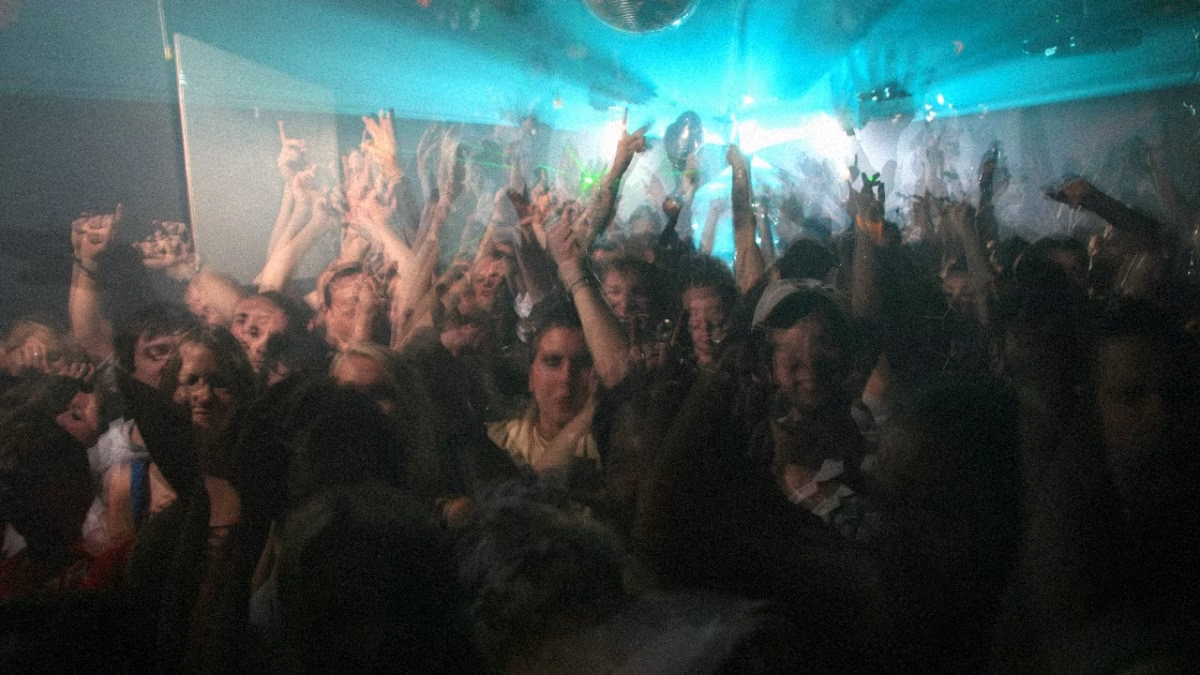

How Did We Get Here? A Tale of Two Scenes
To understand the anger, you have to look at where the music came from versus what it became.
The Underground Roots
Long before the stadium shows and laser spectacles, the foundations of electronic dance music were built in the underground. In the 1980s, House music was born in the predominantly Black and LGBTQ+ clubs of Chicago, with pioneers like Frankie Knuckles creating a soulful sound at The Warehouse club. At the same time, in the post-industrial city of Detroit, artists known as “The Belleville Three”—Juan Atkins, Derrick May, and Kevin Saunderson—were creating Techno, a futuristic sound inspired by machines and their urban environment. 5
These genres were more than just music; they were a form of cultural expression and a sanctuary for marginalized communities. For decades, this music thrived in small clubs and warehouses, mostly in Europe, developing a deep and diverse culture far from the mainstream spotlight.
The American Rebranding
For years, mainstream America was largely indifferent to rave culture. The term “rave” was often linked to drugs and moral panics, making it toxic for big-money sponsors. That all changed in the early 2010s. 6
As artists like Skrillex, Swedish House Mafia, and David Guetta started gaining popularity, the American music industry saw an opportunity. They began pushing the term “EDM” as a way to rebrand and sanitize rave culture for a mass audience. It was a clean, corporate-friendly label that was easier to market than the dozens of niche subgenres.
This marketing push worked. A massive commercial boom followed, turning underground scenes into a multi-billion dollar industry. But in the process, it created a deep divide. Many veterans felt their culture had been co-opted, simplified, and sold back to them, often erasing its Black and queer origins in the process. This is why many outside the U.S. see “EDM” as a “tedious Americanism” created for a market that was late to the party.
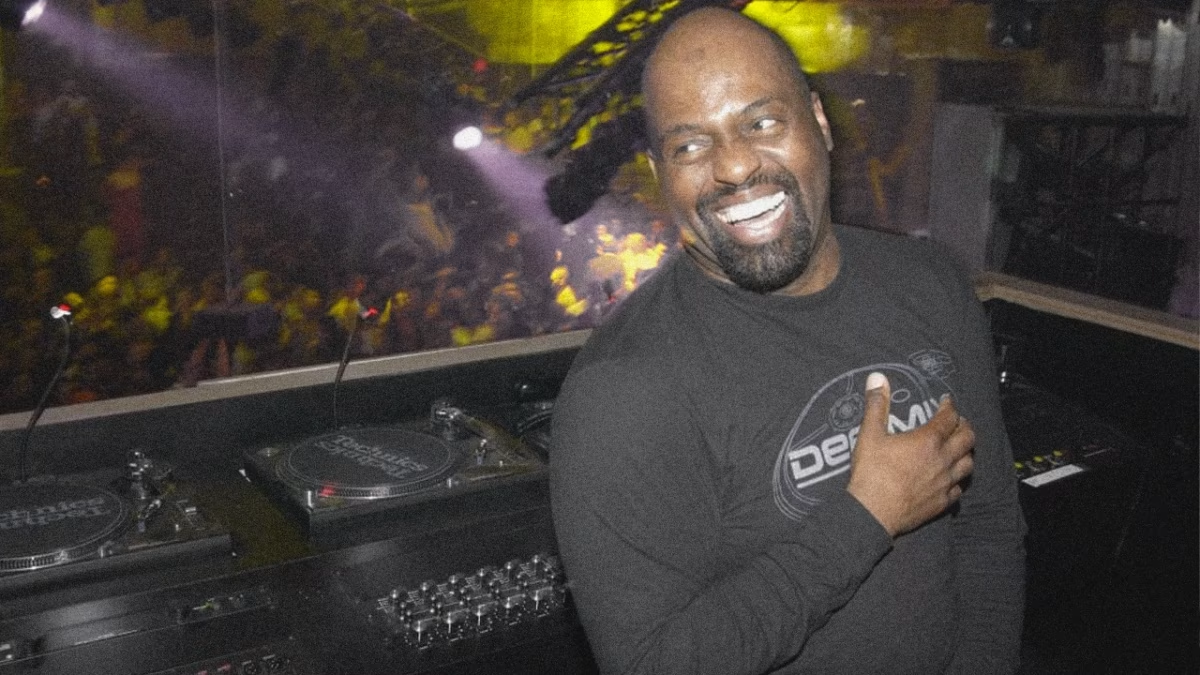
Why Frankie Knuckles’s Warning Against Ego is the Soul of House Music
Voices from the Community
The debate rages on in forums and among artists, showing just how personal the issue is.
Fans and Forum Users
Online, you can see the split clearly. Some longtime fans say the term has been “ruined by the mainstream” and now carries a negative image of “big room crap”. They prefer to just say “electronic music” to avoid the stigma. Others argue this is just elitism. They point out that mainstream “EDM” often acts as a gateway, introducing new listeners who might later explore deeper, more underground styles.
What the Artists Think
DJs and producers are just as divided.
- The Purists: Artists like Seth Troxler have been outspoken, stating that “EDM and underground dance music are separate cultures” that shouldn’t be united. Trance legend Paul van Dyk also rejects the term, preferring the broader “electronic music” to describe his art. 7
- The Pragmatists: On the other hand, techno icon Carl Cox sees a silver lining. He argues that the success of mainstream EDM festivals created a “techno Renaissance” by building a massive new audience and giving underground genres more visibility on dedicated stages. 8
- The Diplomats: Trance superstar Armin van Buuren takes an adaptive view, seeing the current era as an “exciting time for electronic music” where genre lines are blurring and anything is possible. 9
So, What Should You Call It?
After all this, what’s the right way to talk about the music? Since the word “EDM” now carries so much baggage, the safest bet is to be specific. The meaning is entirely dependent on context.
Here’s a simple guide:
- Use the full phrase, “Electronic Dance Music,” when you want a neutral, respectful umbrella term that covers the entire culture and its decades of history. It’s accurate and avoids stepping on any toes.
- Use the acronym “EDM” when you are specifically talking about the mainstream, commercial, festival-focused sound that became popular in the 2010s. In this context, you’re using it as a genre descriptor, which is how many people now understand it.
Ultimately, the passionate debate over these three letters shows how much the community cares about its music and history. It’s a sign of a culture that’s alive and fighting for its identity in the face of massive change.
- https://www.armadamusic.com/news/edm-electronic-dance-music ↩︎
- https://www.reddit.com/r/aves/comments/1ar8bb7/how_do_you_define_edm/ ↩︎
- https://gearspace.com/board/electronic-music-instruments-and-electronic-music-production/1406126-edm-genre.html ↩︎
- https://gearspace.com/board/electronic-music-instruments-and-electronic-music-production/936644-why-everyone-hating-edm-25.html ↩︎
- https://neverlandmusicfestival.com/blogs/news/the-history-of-electronic-dance-music ↩︎
- https://peaceofmind.link/the-problem-with-edm-unpacking-the-commercialization-and-whitewashing-of-dance-music/ ↩︎
- https://mixmag.net/read/seth-troxler-edm-and-underground-dance-music-are-separate-cultures-news ↩︎
- https://www.dancemusicnw.com/cox-credits-edm-for-technos-resurgence/ ↩︎
- https://edmidentity.com/2024/04/05/armin-van-buuren-ultra-2024-interview/ ↩︎
What We Covered

- [2026.07.05] ./NOTDEADYET secures massive international festival debut in Manila
- [2026.06.26] ./Popular Ibiza DJ Hugo Bianco Named Mastermind Of International Drug Trafficking Ring
- [2026.06.16] ./YouTube Music Nights Brings the Album Release Party Back to Life
- [2026.06.16] ./Roger Sanchez releases Spectrum marking his first studio album in two decades
- [2026.06.13] ./8 Underrated Producers Who Made The Careers Of Superstar DJs