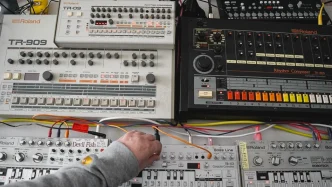


The club lighting cuts through heavy fog as a DJ loads a Pioneer CDJ. Making electronic records requires massive upfront capital. Touring demands expensive flights and heavy road cases. The financial reality hits hard.
TL;DR TuneCore and RoyFi launched a direct royalty advance program allowing independent artists to access short-term capital without surrendering master ownership. The system utilizes a flat fee structure and automatic recoupment from future earnings. This uncouples music financing from copyright extraction and successfully protects working producers from crippling record label debt.
Independent artists command massive influence in modern dance music. The numbers prove their dominance. Self-releasing musicians moving through TuneCore just crossed a huge threshold by earning over $5 billion since 2006. But getting to that payout requires surviving a brutal cash flow drought.
Are Traditional Record Deals Just Predatory Loans?
Record labels historically function as specialized banks for musicians. They solve immediate liquidity problems by offering cash advances to cover marketing and basic survival. The catch is devastating. Labels demand your master recordings in exchange for that check.
This setup creates severe friction for working producers. Artists surrender control of their work just to afford basic touring logistics. An advance operates as a non-recourse loan secured against intellectual property. Debt carries over fast.

Physical Media vs Cloud Streaming in Modern DJ Equipment
The Mechanics of Non-Extractive Capital
A new financial model is breaking that cycle. TuneCore partnered with the fintech firm RoyFi to build a direct advance system. It fundamentally changes how independent artists access money. Qualifying musicians apply for short-term cash injections based on projected streaming revenue.
The structure is brilliantly simple. It relies on a flat fee instead of compounding interest. There is no equity transfer. You keep full control of your masters and publishing.
“TuneCore has long been the standard bearer of independent music distribution, and we’re excited to formalize our partnership to bring transparent, artist-first funding directly to independent creators.”
Why Does Club Culture Demand Immediate Cash?
Electronic music operates on a relentless release cycle. Algorithms demand constant feeding. Producers push out new singles every four weeks to trigger playlist recommendations. Each release requires money for mastering, PR campaigns, and digital ads.
Touring costs have reached a breaking point. Around 82 percent of unsigned musicians cannot afford to take their live show on the road. Renting a splitter van and hauling a heavy synthesizer across borders drains bank accounts fast. Cash flow is everything.
You must understand the legal difference between composition and master rights to survive in this industry. Absolute asset control gives you leverage. Club sets also suffer from severe royalty misallocation. Performing rights organizations frequently fail to track actual DJ tracklists.
They misallocate roughly £5.7 million in UK nightclub royalties every year. Underground producers inadvertently subsidize mainstream pop stars. This lag starves emerging talent of necessary touring funds.
Surviving The Collapse of Music Fintech
Building fair financial tools for artists is incredibly difficult. Utopia Music proved this point spectacularly. The Swiss conglomerate acquired the lending firm Lyric Financial in 2021. Their goal was dominating music data and royalty advances.
Utopia mismanaged its rapid expansion. They failed to pay the sellers of Lyric Financial and spiraled into formal bankruptcy proceedings in Switzerland by late 2024. TuneCore officially ended its direct advance program with Lyric Financial shortly after. The market looked grim.
Yet the core concept survived the corporate disaster. Advances backed by music royalties remain a highly stable asset class. Private credit investors still view streaming payouts as reliable yields. RoyFi stepped into the void left by Utopia by building a cleaner system.
How Do Independent Labels Compete Now?
If distributors act like banks, traditional indie labels lose their primary leverage. A label must offer genuine strategic value to justify taking a cut of your royalties. Some indie labels excel at this by investing heavily in their rosters. They return roughly a third of their revenue directly to the artists.
But the balance of power is shifting. Producers use advances to act as their own venture capitalists. You can secure an upfront payment to fund targeted promotions on platforms like Beatport. This drives chart visibility and secures festival bookings without a label middleman.
Distributors are also building their own marketing engines. The TuneCore Accelerator program allegedly generated over 50 billion new streams since 2023. This automated catalog optimization pushes older tracks to new listeners. You take an advance, feed it into independent promotional tools, and own the results.
TuneCore Chief Business Officer Brian Miller explains this core philosophy clearly. “At TuneCore, we are always listening to our artists to understand their challenges and develop solutions that can help them stay independent, retain their creative control, and keep releasing music on their own terms.”


The Future of the Dancefloor Economy
The old industry gatekeepers are losing their grip on club culture. Access to capital is no longer hidden behind an exploitative contract. Electronic producers are treating their hard drives like private equity portfolios. They calculate risk, isolate stable back-catalog tracks for repayment, and fund their own expansion.
This levels the playing field against massive corporate promoters. When an artist controls their money, they control their touring schedule. They build their own crowds. True power lives on a USB drive in a dark room.
Sources & Further Reading
- TuneCore independent artists earning over $5 billion since 2006: https://www.tunecore.com/press/tunecore-s-independent-artists-surpass-5-billion-earned
- The launch of the TuneCore Direct Advance program with RoyFi: https://www.hypebot.com/tunecore-royfi-launch-direct-royalty-advances-to-eligible-indie-artists/
- Producers releasing singles every four weeks to trigger algorithms: https://aristake.com/tunecore-review/
- 82 percent of unsigned musicians cannot afford to tour: https://press.dittomusic.com/82-of-independent-artists-cant-afford-to-tour-in-2025
- £5.7 million in UK nightclub royalties misallocated annually: https://www.theguardian.com/music/2025/nov/18/musicians-wrongly-allocated-uk-royalties
- Utopia Music acquiring Lyric Financial in 2021: https://www.musicbusinessworldwide.com/utopia-music-acquired-lyric-financial-in-2021-lyrics-sellers-are-still-trying-to-get-full-payment-for-the-sale/
* generate randomized username
- COMMENT_FIRST
- #1 Lord_Nikon [12]
- #2 Void_Reaper [10]
- #3 Cereal_Killer [10]
- #4 Dark_Pulse [9]
- #5 Void_Strike [8]
- #6 Phantom_Phreak [7]
- #7 Data_Drifter [7]
- #8 Zero_Cool [7]