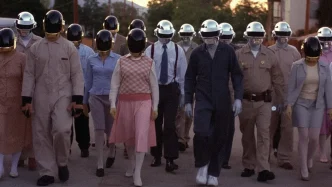
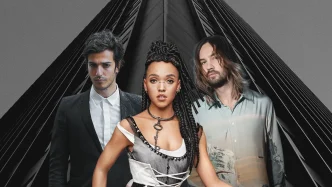
If you stepped into a Parisian club in the late ’90s, you were immediately hit by a wall of sound that felt simultaneously like the future and a forgotten 1970s roller rink. The basslines were thicker, the loops were dizzier, and the whole room seemed to breathe in time with a relentless, thumping kick drum. This was the birth of French house—a movement that traded the cold, mechanical brutalism of early techno for the warm, glittering maximalism of disco.
As a music fan who has spent years tracking dance music’s migration from underground white-labels to festival main stages, I’ve seen firsthand how this hyper-specific strain of dance music has morphed from a well-kept secret into a multi-billion-dollar cultural export. It has influenced everyone from modern pop titans like Dua Lipa and The Weeknd to the very architecture of today’s festival culture. But what exactly is the “French Touch,” and how did a handful of Parisian kids with budget samplers conquer the globe?
Wait, What Exactly is “French House”?
At its core, French house—often used interchangeably with the “French Touch” or “filter house”—is a subgenre of electronic dance music that emerged in France during the 1990s. From an analytical perspective, it’s a sonic Frankenstein, stitching together the rhythmic skeleton of Chicago house with the lush, orchestral extravagance of Euro-disco and American P-Funk.
The genre’s moniker didn’t actually come from the artists themselves. It was first coined in 1987 by a Parisian nightlife photographer named Jean-Claude Lagrèze to promote a series of parties at The Palace. A few years later, in 1991, Éric Morand of the Fnac label printed the slogan “We give a French touch to house” on the back of promotional bomber jackets, and British music journalists eventually ran with it, cementing the genre’s legacy in ink.

Why Mainstream DJs Inevitably Pivot to Underground Electronic Music
How Does It Differ From Traditional House Music?
You don’t need to have been at a rave in Paris in 1997 to understand the acoustic math behind the genre. If traditional house music (born in the warehouses of Chicago and New York) was about raw, drum-machine-driven minimalism, French house was about pure, unadulterated pastiche. Having spent countless hours analyzing the production mechanics of both eras, the differences lie squarely in the hardware and sampling philosophy.
While Chicago house producers relied on the clinical precision of the Roland TR-808 and TR-909 drum machines overlaid with synthesized chords, French producers treated old vinyl records as their primary instruments. A classic French house track is built on 2-bar or 4-bar loops sliced directly from obscure 70s and 80s funk and soul records. They didn’t just sample a snare or a vocal shout; they sampled the entire harmonic foundation of a song. Furthermore, rather than snapping their drums rigidly to a digital grid, French producers often nudged their beats slightly off-tempo to match the organic, human swing of the original disco sample.
And then, there are the effects. French house is defined by its aggressive use of low-pass and high-pass filters, alongside swirling phasers and flangers. Producers would manually sweep the filter cutoff frequencies on hardware like the Mutronics Mutator over the course of two minutes, building agonizing dancefloor tension before letting the beat explode in a bright, euphoric release.
The Alesis 3630: The Cheap Hardware That Created the “Pump”
You can’t talk about French house without talking about the “pump”—that iconic, rhythmic vacuum effect where the entire song ducks and swells in time with the kick drum. When you reverse-engineer the stems of early French house anthems—something I’ve done frequently to understand the era’s engineering—you realize the legendary sound relies heavily on a cheap, notoriously noisy, and unbalanced piece of budget hardware: the Alesis 3630 compressor.
For years, bedroom producers assumed this was achieved through standard sidechain compression, but archival technical breakdowns reveal that pioneers like Daft Punk and Alan Braxe rarely used the sidechain feature for this. Instead, they would route their entire master mix—samples, synths, and all—through the 3630. By mixing the kick drum to be obnoxiously loud (often hitting at exactly nominal level) and slamming the compressor settings, the sheer volume of the kick forced the machine to aggressively clamp down on the rest of the track. It transformed the compressor from a transparent mixing tool into a violent musical instrument, creating an overwhelming psychoacoustic rush that simulated the feeling of a deafening club environment.
The Vanguard: Artists Who Defined the Genre
Having charted the discographies of these artists extensively, it is clear the scene was never just a monolith; it was a sprawling, interconnected web of Parisian cool kids.
- The Blueprint Makers: Before the robot helmets, there was Ludovic Navarre (St Germain), whose 1995 album Boulevard merged deep house with live jazz, offering a sophisticated “Left Bank cool”. Meanwhile, Motorbass (Philippe Zdar and Étienne de Crécy) delivered Pansoul in 1996, laying the groundwork for loop-heavy, sample-driven French house.
- The Kings: Daft Punk (Thomas Bangalter and Guy-Manuel de Homem-Christo). Their 1997 debut Homework brought punk-rock attitude to Chicago jacking rhythms, while their 2001 magnum opus Discovery perfected the vocoder-drenched space-disco aesthetic, making them global pop deities.
- The Groove Masters: Cassius (Philippe Zdar and Hubert Blanc-Francard) brought a heavier hip-hop sensibility, while acts like Modjo and Stardust (the supergroup behind the timeless anthem “Music Sounds Better With You”) took the filtered-loop formula to the top of the global charts.
- The Second Wave: In the mid-2000s, labels like Ed Banger Records (run by former Daft Punk manager Pedro Winter) injected the French Touch with distorted, rock-infused electro. Acts like Justice and SebastiAn maintained the sampling ethos but ran it through distortion pedals, birthing the “blog house” era.
12 More French House Artists You Need to Know
If your appetite for filtered disco and thumping 4/4 beats still isn’t satisfied, the lineage of French house and its heavier electro permutations extends far beyond the usual suspects. To truly grasp the genre’s massive footprint, you need to explore the broader constellation of Parisian hitmakers. Essential listening includes the stadium-sized pop-house anthems of David Guetta, Martin Solveig, and Bob Sinclar; the neon-drenched synthwave of Kavinsky; and the brooding, industrial techno of Gesaffelstein. For pristine, bass-driven grooves, Fred Falke is an absolute must-listen. Meanwhile, the modern, festival-shaking evolution of the French sound continues to be pushed forward by a newer generation of heavyweights, including Tchami, Madeon, DJ Snake, Habstrakt, Cedric Gervais, and Sébastien Léger.
A Legacy Written in Stone (and UNESCO Bids)
The impact of French house extends far beyond the confines of electronic music. It fundamentally altered live music marketing. Collectives like Respect Is Burning took DJs out of the dark corners of underground raves and placed them center stage, utilizing collectible trading cards and narrative-driven branding to create an exclusive, high-fashion mystique. This laid the absolute blueprint for modern EDM festival culture.
Today, as a critic observing the broader music economy, it is fascinating to see the “French Touch” recognized as a vital pillar of France’s identity. It’s so deeply revered that, with the backing of electronic pioneer Jean-Michel Jarre and President Emmanuel Macron, French electronic music has officially been inscribed on the national inventory of Intangible Cultural Heritage, paving the way for a global UNESCO bid in 2026.
From the sweaty basement of the Queen club to the halls of UNESCO, French house proved that with enough panache, a perfectly chopped disco sample, and a cheap compressor, you can literally make the whole world dance.
Sources & Further Reading
History & Cultural Significance:
- The History of the French House Sound (XLR8R)
- French Touch Feature: The Roots of the Movement (Red Bull Music Academy)
- Deeper than Daft Punk: A Love Letter to French Touch (Medium)
- Benjamin Deberdt: Paris Interview (Slam City)
UNESCO & Official Recognition:
- UNESCO Honors French Electronic Music as Cultural Heritage (Electronic Groove)
- France Recognizes Electronic Music as Intangible Heritage (Reddit)
- The Push for French House as a UNESCO Cultural Treasure (Nexus Radio)
Artist Profiles & Guides:
- Justice: The ‘Hyperdrama’ Interview (The Guardian)
- Everything You Need to Know About French Touch (MusicRadar)
- A Community Guide to French House Knowledge (Reddit)
- French House Encyclopedia Entry (Wikipedia)
Music Production & Technicals:
- How to Produce a Funky French House Track (MusicRadar)
- The SoundBridge Guide to French House (SoundBridge)
- What Makes French House Unique to Produce? (Reddit)
- Production Tutorial/Video Resource (YouTube)
* generate randomized username
- COMMENT_FIRST
- #1 Lord_Nikon [12]
- #2 Void_Reaper [10]
- #3 Cereal_Killer [10]
- #4 Dark_Pulse [9]
- #5 Void_Strike [8]
- #6 Phantom_Phreak [7]
- #7 Data_Drifter [7]
- #8 Zero_Cool [7]