The era of the algorithmic pop star is over. By February 2026, the panic over AI in electronic music production has turned into something much more tedious: a massive bureaucratic maze. Welcome to the “Copyright Conundrum.” Today, the difference between an innovative producer and a data-entry clerk is razor-thin. Generative AI platforms like Suno, Udio, and Soundverse don’t just copy the latest trends; they instantly generate them in DMCA-safe, professional-grade audio. But this AI music gold rush has hit a major legal wall: you can prompt a masterpiece, but you cannot legally own it.
The USCO and the Myth of the “Prompt Author”
The legal architecture dictating this new reality was hammered into place by the U.S. Copyright Office (USCO) in their landmark January 2025 rulings. After sifting through a mountain of public panic, the USCO delivered a sobering verdict: copyright law remains a stubbornly human-centric fortress. Generating an achingly beautiful ambient techno track via text prompt, no matter how exhaustive or iterative that prompt might be, does not make you an author. It makes you an algorithm’s client.
If a track is fully synthesized by AI, it lacks the requisite “creative spark” and is immediately jettisoned into the public domain. The implications are staggering for generative AI copyright. A producer can generate a club-ready anthem, properly label it as synthetic, and watch helplessly as a major ad agency or a rival DJ rips, syncs, and monetizes the raw file without paying a single cent in licensing fees.
Study Reveals DJs Are Three Times More Likely to Struggle With Mental Health
| AI Content Scenario (2026) | Federal Copyright Status | Real-World Ownership Implication |
| Fully AI-Generated Audio | Not Copyrightable. | Public domain; no exclusive rights; cannot be licensed exclusively. |
| AI as Assistive Ideation Tool | Copyrightable. | Human owner; AI involvement is considered a standard tool akin to a synthesizer. |
| Hybrid: Human-Created + AI | Protected (Partial). | Human-authored portions are strictly protected by law; AI portions are not. |
| Raw AI-Generated Stems | Remixable / Public. | Cannot be owned in raw form, but final master can be owned if humanly re-arranged. |
The “Pro Workflow”: Sweating for the Master
To survive this public domain paradox, the modern electronic arranger has engineered a bleakly pragmatic survival tactic dubbed the “Pro Workflow”. This is the art of reverse-engineering human soul into machine output just to satisfy a federal bureaucrat and secure AI music ownership.
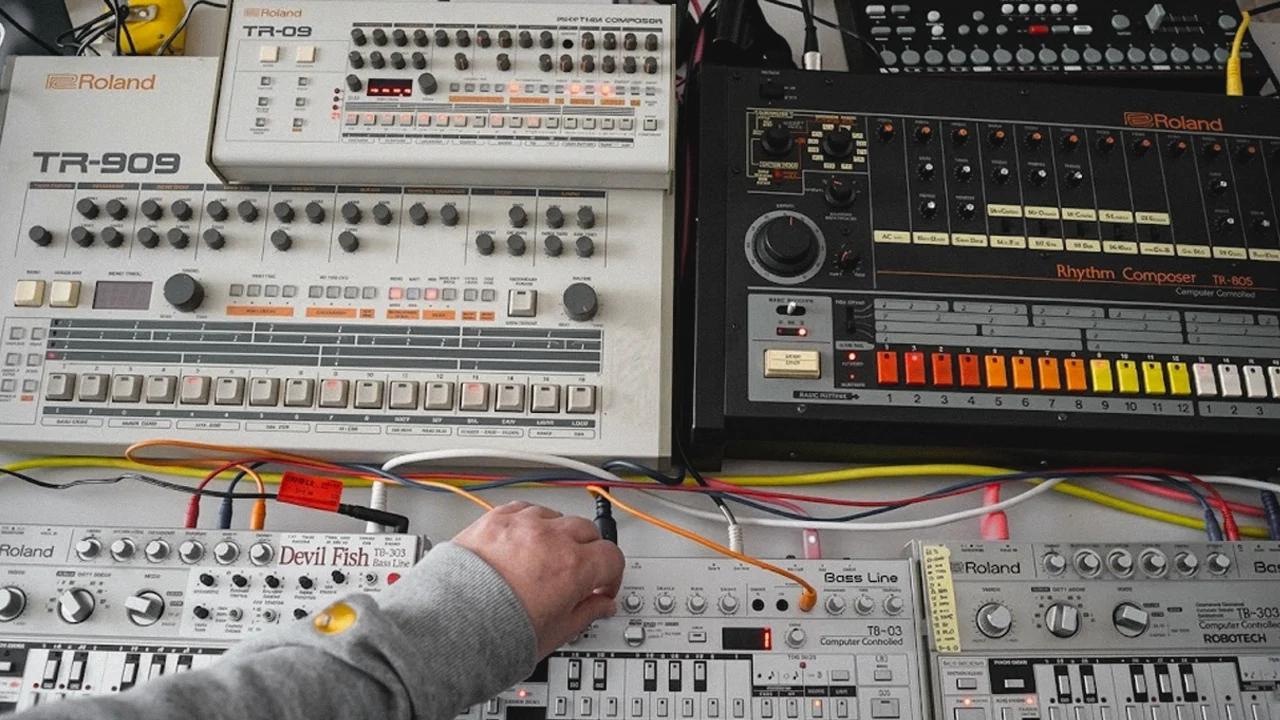
Nobody with an ounce of industry savvy exports a polished two-track mix anymore. Instead, producers meticulously extract isolated AI stems—the ghostly vocals, the mathematical basslines. They drag these raw components into a Digital Audio Workstation (DAW) like Waveform Free or Ableton to undergo the legally mandated “Human Touch”. You want to secure a defensible copyright? You better mute that synthetic hi-hat and program the MIDI yourself. You better chop, pitch-shift, and violently arrange those AI vocals until the USCO concedes you’ve added “meaningful human authorship”.
To prove this labor, producers are now forced to maintain exhaustive, timestamped “session histories,” utilizing provenance plugins to document every agonizing human click. By registering the final, sweaty arrangement as a “Hybrid,” the producer transforms an unprotected algorithmic hallucination into an exclusive, licensable IP.
Cryptographic Snitches and the Streaming Purge
Even if you successfully navigate the USCO, the streaming platforms are waiting for you with digital pitchforks. In 2026, the open internet is policed by an invisible, cryptographic surveillance state anchored by the Coalition for Content Provenance and Authenticity (C2PA). When you export from a licensed platform like Suno or Udio, your audio is branded with an unstrippable forensic watermark—like Google DeepMind’s SynthID—acting as a digital nutrition label detailing the exact machine origins of your sound.
This isn’t just about preserving artistic integrity; it’s about protecting the global royalty pool from complete insolvency. Streaming giants were choking on synthetic sludge. Deezer, acting as the industry’s ruthless vanguard, reported receiving a staggering 60,000 fully AI tracks a day. In response, they initiated a massive purge, demonetizing 85% of detected synthetic uploads and effectively classifying them as financial fraud.
Spotify, the undisputed monolith of the music economy, opted for a slightly more insidious approach. While actively blocking undisclosed synthetic spam, Spotify’s vision for 2026 is an enclosed, highly monetized “walled garden”. They don’t want AI banished; they want to own the sandbox. By leaning into in-app AI DJ tools and fan-generated synthetic remixes, Spotify captures the engagement while paying out standard human royalties only to the original rightsholders. If you are an independent creator trying to upload fully AI music, you’re relegated to the bottom of a brutal three-tier royalty system that pays out pennies on the dollar, assuming you aren’t completely demonetized first.
And thanks to legislative hammers like the California AI Transparency Act (AB 853), the failure to cryptographically disclose your synthetic assistance doesn’t just get your track blacklisted by DSPs; it risks actual legal penalties.
The AI music production landscape of 2026 is an ironic masterpiece. We built machines capable of rendering infinite, flawless audio, only to spend all our waking hours proving to lawyers and algorithms that we still exist behind the glass.
Sources
- (https://www.copyright.gov/newsnet/2025/1060.html)
- (https://datamatters.sidley.com/2025/02/07/u-s-copyright-office-issues-report-on-artificial-intelligence-and-copyrightability/)
- Legal and Ethical Issues in AI Music Creation 2026
- (https://arrangerforhire.com/the-2026-state-of-ai-music-major-differences-and-legal-peace/)
- (https://mixmag.net/read/deezer-says-demonetised-85-percent-ai-generated-music-fraud-news)
- (https://www.musicbusinessworldwide.com/spotify-eyes-ai-derivatives-as-new-revenue-stream-for-artists-and-says-its-tech-to-let-fans-make-remixes-covers-is-ready/)
- (https://calmatters.digitaldemocracy.org/bills/ca_202520260ab853)
- (https://www.sentisight.ai/what-will-2026-hold-for-ai-music-releases/)
- ((https://media.defense.gov/2025/Jan/29/2003634788/-1/-1/0/CSI-CONTENT-CREDENTIALS.PDF))
* generate randomized username
- COMMENT_FIRST
- #1 Lord_Nikon [12]
- #2 Void_Reaper [10]
- #3 Cereal_Killer [10]
- #4 Dark_Pulse [9]
- #5 Void_Strike [8]
- #6 Phantom_Phreak [7]
- #7 Data_Drifter [7]
- #8 Zero_Cool [7]