


 80
80
The Enshittification of Electronic Dance Music and Platform Decay
APR. 1 2026
Section
Read Time
Written By
[ EXCERPT ]
Electronic dance music faces a severe crisis of platform decay. Monopolization, corporate consolidation, and aggressive algorithms have transformed a democratized digital landscape into an extractive ecosystem, devastating independent creators and commodifying underground rave culture globally.
The electronic dance music ecosystem has undergone a profound transformation over the past decade. This is heavily influenced by “enshittification”, a process of deliberate platform decay affecting two-sided digital markets. Once promising democratization for independent musicians, the digital environment is now characterized by monopolization, algorithmic curation, and corporate consolidation that extracts maximum value from artists and consumers alike.
What is the Meaning of Enshittification?
“Enshittification,” or platform decay, was formally coined by digital rights advocate Cory Doctorow in November 2022. The theory explains how online platforms inevitably decline in quality through three sequential stages. First, platforms operate benevolently to lock in users. Second, they abuse users to generate surplus value for business customers. Finally, they abuse both users and business customers to extract maximum capital for their own shareholders, leaving behind just enough utility to prevent users from leaving. Doctorow advocates combating this through the “right of exit” and mandated interoperability.
How Have Streaming Platforms Impacted Music Distribution?
Digital streaming platforms illustrate this decay perfectly. Initially offering unparalleled accessibility, platforms aggressively locked in consumers before pivoting to data surveillance to attract advertisers. Currently, in the third stage, platforms utilize pro-rata distribution systems that disproportionately enrich major labels while leaving independent electronic producers struggling with payouts averaging fractions of a cent per stream.
Furthermore, streaming platforms are increasingly flooded with AI-generated music slop, redirecting royalties away from human creators into the hands of algorithmic fraudsters. Despite public protections, synthetic artists are now signing major label deals and displacing human producers.
Inside the Mind of the Music Purist: Gatekeeping in Electronic Music
What Happened to Independent Digital Marketplaces?
Once considered ethical alternatives, platforms like Bandcamp, SoundCloud, and Beatport have exhibited severe symptoms of platform decay:
- Bandcamp: A bastion for independent artists, it was sold by Epic Games to music licensing firm Songtradr in October 2023, resulting in significant staff layoffs and a shift toward the financialization of music.
- SoundCloud: The platform pivoted aggressively toward monetizing creators, recently announcing an All-in-One Artist Subscription model that eliminates distribution revenue shares but shifts financial burdens directly onto independent artists via upfront fees. Read more
- Beatport: The premier digital storefront for DJs introduced “Beatport Hype.” Originally a protected promotional tier for underground labels earning under $10,000, it shifted its threshold to $25,000 and transformed into a $9.99 monthly pay-to-play subscription simply to achieve baseline visibility on the storefront. Read more
How Do Hardware Monopolies Affect DJ Performance?
The technological infrastructure for performance is heavily monopolized by AlphaTheta, formerly Pioneer DJ. This hardware monopoly forces artists into a proprietary software lock-in with database management systems. This vulnerability was highlighted recently when a version 3.30 firmware update failed to read USB drives properly, resulting in widespread, mission-critical hardware failures for working DJs at professional gigs. The lack of competition enables premium pricing for prosumer equipment that features only marginal, iterative improvements.
Boiler Room’s KKR Acquisition: Why Artists Are Boycotting the Underground Icon
How Has Corporate Consolidation Changed Live Events?
The live music sector has been subjected to severe corporate consolidation. The dominant force in live entertainment is Live Nation, a vertically integrated owner and promoter behemoth that, alongside its subsidiary ticketing platform Ticketmaster, controls at least 70% of the ticketing market. Regulators sued the conglomerate in May 2024 for anti-competitive practices. While a settlement was reached in March 2026, it was heavily rejected by numerous regional governments, and the antitrust trial continues.
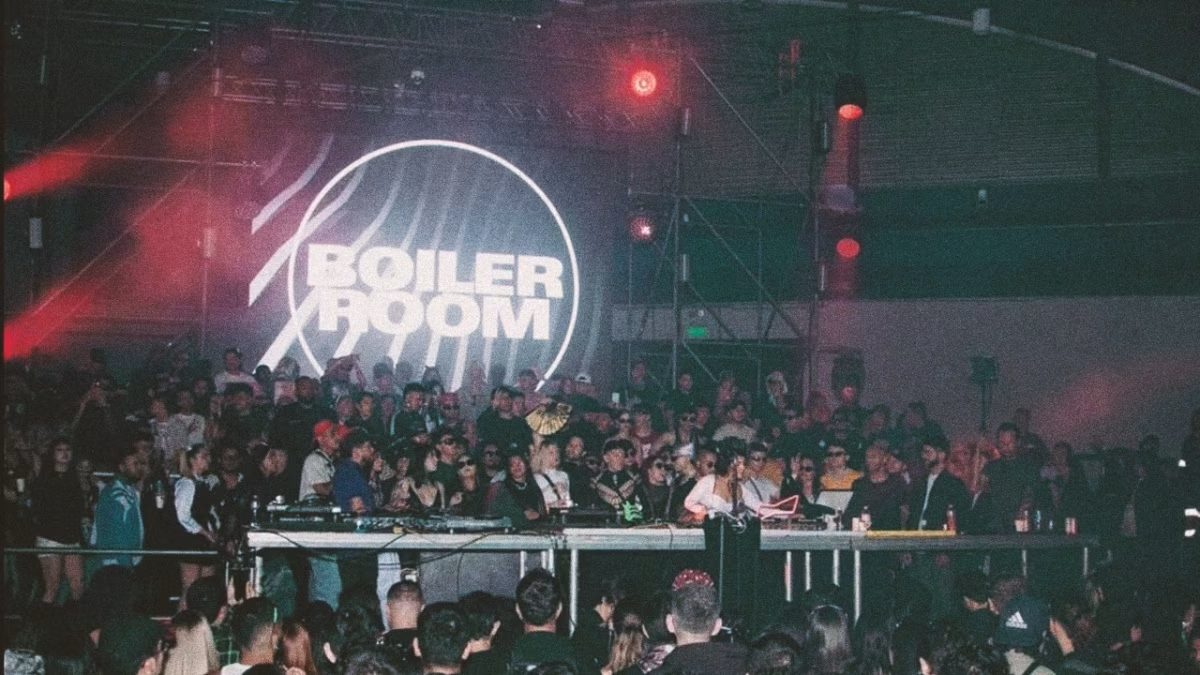
In the worldwide festival market, private equity firms have financialized dance culture. The investment firm KKR acquired Superstruct Entertainment, which owns over 80 festivals, for €1.3 billion in June 2024. This consolidation has fueled “Business Techno,” a sanitized, VIP-tiered environment that commodifies underground dance music and displaces genuine DIY spaces.
How Do Social Media Algorithms Impact Music Discovery?
Electronic music discovery is now entirely subservient to the algorithmic architectures of visual platforms like Instagram and TikTok. By late 2025, social media algorithms heavily prioritized watch time and sends over traditional follower reach, forcing promoters onto a digital treadmill of short-form video content just to maintain baseline visibility.
Simultaneously, the rise of “TikTok Techno” has altered the sonic structure of electronic music. Tracks are produced to be faster, harder, and shorter to capture attention within a 15-second window. This digital mediation has homogenized worldwide scenes into a predictable aesthetic and transformed live events into highly visual spectacles, heavily prioritizing the camera over the dancefloor.



Why is the Middle Class of Electronic Music Dying?
The culmination of platform decay has led to the death of the middle class in electronic music. The industry is polarized between a handful of wealthy touring DJs and a vast underclass of impoverished producers.
To address this, the voluntary profit-sharing platform Aslice allowed DJs to pledge a percentage of their gig fee directly to the producers whose tracks they played. Despite tracking over $422,000 in shared earnings and proving highly accurate, Aslice permanently closed in September 2024. The platform failed primarily because the highest-paid, top-tier DJs in the scene refused to participate, mirroring the extractive tendencies of the tech monopolies that govern the wider digital ecosystem.
How Can the Industry Fix Platform Decay?
The electronic dance music ecosystem is deeply entrenched in the enshittocene. Digital platforms and live performance infrastructures prioritize shareholder extraction over creator sustainability. To reverse this decay, the industry must reject proprietary lock-in and demand interoperability. Guaranteeing the “right of exit” allows artists to seamlessly migrate their audiences to ethical alternatives without penalty. Until these structural shifts occur, the ecosystem will continue its trajectory toward absolute corporate capture.
Sources & Further Reading
- Cory Doctorow on Enshittification: https://doctorow.medium.com/my-mcluhan-lecture-on-enshittification-ea343342b9bc
- Resident Advisor on Algorithms Killing Music Discovery: https://ra.co/news/80247
- Certain Sound on The Enshittified Music Business: https://certainsound.net/the-music-business-is-utterly-enshittified-whats-next/
- Justice Department Sues Live Nation-Ticketmaster: https://www.justice.gov/archives/opa/pr/justice-department-sues-live-nation-ticketmaster-monopolizing-markets-across-live-concert
- Superstruct Entertainment Acquires ID&T: https://news.pollstar.com/2021/09/17/superstruct-entertainment-acquires-idt-a-very-significant-milestone/
- Epic Games Sells Bandcamp to Songtradr: https://thequietus.com/news/epic-games-sells-bandcamp-to-songtradr/
- Aslice Shutting Down: https://www.gearnews.com/aslice-shutting-down/
- Music Industry Reliance on TikTok: https://www.theguardian.com/music/2024/mar/01/music-industry-reliance-tiktok-universal-music-group
What We Covered

- [2026.07.05] ./&Friends Festival 2026 proves Philippine ravers are ready for global dance music scale
- [2026.06.30] ./How DJ Alok Uses Ancestral Music to Fund Real-World Amazon Reforestation
- [2026.06.27] ./Tomorrowland Thailand 2026 lineup sparks intense debate among dance music fans
- [2026.06.23] ./Why Do Modern Club Promoters Prioritize Viral Reach Over DJ Mixing Skills?
- [2026.06.17] ./From Dubstep to Global Pop: Oliver Tree and His Best Dance Music Features