


 79
79
World War 3 and the Future of Electronic Dance Music
MAR. 29 2026
Section
Read Time
Written By
[ EXCERPT ]
The modern electronic dance music industry is a highly capitalized juggernaut dependent on frictionless global supply chains. If World War III erupts, this fragile ecosystem will collapse, forcing dance culture into a radical, underground reset.
Looking objectively at the current global entertainment landscape, the modern electronic dance music market is a bloated, hyper-capitalized juggernaut. Projected to hit an absurd $19 billion valuation by 2033 , the global EDM industry is a well-oiled machine fueled by corporate sponsorships, VIP bottle service, and frictionless international borders. But this ecosystem is incredibly fragile.
We already caught a glimpse of this vulnerability during the COVID-19 pandemic, when mandatory venue closures, local restrictions, and sudden travel bans brought the night-time economy to a grinding halt. That global health crisis proved just how quickly an industry reliant on live events and packing massive crowds into small spaces can unravel.
Right now, the industry is obsessed with digital vanity metrics. But if the balkanization of the globe inevitably accelerates into World War III, the disruptions of the pandemic will look like a minor speedbump, and those digital concerns will be rendered completely meaningless. A global conflict analysis points to an absolute structural annihilation of club culture as we know it. It’s not just a drop in Spotify streams; it’s a profound, visceral reset. Here are 12 dystopian (but highly probable and historically grounded) scenarios of what happens to the music we love when the world goes to war.
Disclaimer: The following article explores hypothetical, worst-case geopolitical scenarios and their potential impact on the music industry and global culture. It is an analytical thought experiment based on historical precedents and is not intended to be insensitive to or diminish the very real, devastating human cost of historical or ongoing global conflicts.
Scenario 1: RIP Global Tours, Hello Local Undergrounds
The era of superstar DJs effortlessly jet-setting from Ibiza to Tulum will die instantly. During regional conflicts, maritime and aviation insurance providers slap on “war-risk” premiums that can surge by over 1,000%. In a total global conflict, the mega-festival model becomes mathematically unviable. The corporate booking fluff will be vaporized, forcing dance music to return to its grimy, localized roots. Success won’t be measured by selling out stadiums, but by keeping a 300-capacity, fiercely unpretentious dark room alive with strictly local resident DJs.

The Psychological Importance of Chillout Spaces at High-BPM Events
Scenario 2: Power Cuts Kill the Giant Festival Stages
The modern EDM festival is an ecological nightmare. A single main stage equipped with professional concert amplification and massive LED visual arrays can easily draw 250 to 400 kilowatts of continuous power. When WW3 hits, state-mandated power limit policies and rolling blackouts will be strictly enforced to prioritize munitions manufacturing and military infrastructure. Goodbye, 30-foot laser walls. To survive severe wartime energy rationing, the scene will be forced into stripped-down daytime events and low-power acoustic-electronic hybrid sets.
Scenario 3: The Internet Breaks, So We Build Our Own Networks
As global conflict fractures the internet into heavily censored, nationalized “splinternets,” centralized streaming apps will be firewalled into oblivion. Survival means going entirely off-grid. We’ll see a massive resurgence of decentralized peer-to-peer (P2P) architectures; ironically, the exact same tech Spotify’s µTorrent-creating engineer built the platform on. Localized music scenes will rely on LoRa radios and mesh network protocols like Meshtastic to drop tracks asynchronously, bypassing state surveillance and internet blackouts completely.
Scenario 4: Hackers Wipe Out Streaming Royalties
Massive centralized streaming databases and digital rights management (DRM) frameworks are prime targets for state-sponsored cyber warfare. If performance rights databases are wiped by ransomware, royalties evaporate overnight. This catastrophic vulnerability will force an accelerated, mandatory adoption of Web3 and blockchain streaming models. Platforms like OPUS and Audius, which utilize smart contracts to guarantee immutable rights metadata and direct compensation, will become the only secure way for artists to get paid.

New Study Confirms: The True Saviors of Underground Music Are Over 40
Scenario 5: Studio Nerds Get Drafted for Cyber Warfare
The modern audio engineer’s skill set, understanding signal flow, frequency modulation, and spectral analysis, is basically a one-to-one match for military signals intelligence (SIGINT). A global draft would decimate the studio world. Mastering engineers and synth nerds will be snatched up by the armed forces to serve as 17E Electromagnetic Warfare Specialists, tasked with jamming enemy radar systems rather than mixing the next underground techno anthem.
Scenario 6: Good Luck Buying a New Synth or CDJ
Synthesizers don’t just magically appear; they require a hyper-complex web of semiconductors and rare earth elements like neodymium, an industry heavily monopolized by China. In a WW3 economy, severe export controls and military embargos will completely cut off the civilian supply. The production of new DJ controllers, CDJs, and hardware synths will grind to a definitive halt, leaving producers fighting over existing, rapidly decaying vintage gear.
Scenario 7: Making Beats Out of Broken Military Scrap
Electronic music was literally birthed from military surplus. The legendary ring modulator was famously salvaged from the control systems of Nazi V2 rockets , and early electronic pioneers utilized oscillators pulled directly from WWII radar kits. When the commercial supply chain dies, the “scavenger synth” movement will inevitably rise. Producers will circuit-bend discarded drone motors and hacked tactical radios to forge a new, metallic breed of abrasive industrial techno.
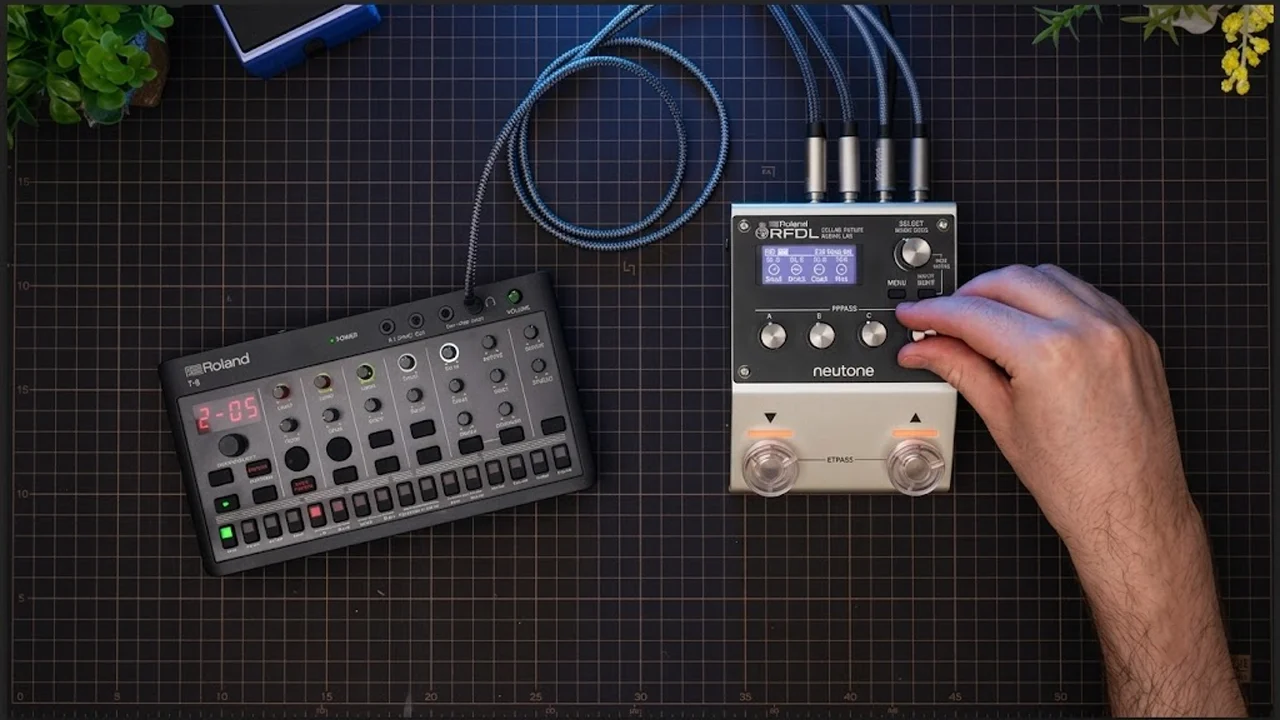


Scenario 8: War Sounds Turn the Music Darker and Heavier
Sonic warfare is very real. Devices like the Long Range Acoustic Device (LRAD) can project 162 decibels of concentrated, disorienting sound , and militaries have historically used extreme noise to induce psychological trauma. The trauma of this acoustic bombardment will bleed directly into the underground’s aesthetic. Expect a terrifying, cathartic resurgence of harsh noise and extreme drone music as producers process the auditory violence of the battlefield on the dancefloor.
Scenario 9: Pirate Radio Makes a Massive Comeback
During the Cold War, shortwave radio (which operates on the high-frequency band between 3 and 30 MHz) bounced off the ionosphere to smuggle banned Western jazz and rock past the Iron Curtain. If the modern internet goes dark, rogue DJs and anti-war activists will resurrect pirate shortwave stations. The static-drenched, lo-fi hiss of high-frequency skip propagation will become the defining, sought-after aesthetic of transnational underground resistance.
Scenario 10: The Dancefloor Becomes a Literal Safe Haven
In peacetime, the phrase “dance music is political” can feel like a tired PR cliché. In a global war, it’s a literal survival tactic. Look at Ukraine’s Shum.Rave in the Donbas region or Kyiv’s legendary Cxema: when the invasion happened, raves instantly transitioned from hedonistic escapes into volunteer hubs and vital psychological sanctuaries. The dancefloor will forcefully revert to a high-risk Temporary Autonomous Zone (TAZ), an illegal, egalitarian space defying curfews and martial law.
Scenario 11: You Can’t “Keep Politics Out of Music” Anymore
The naive neutrality of “Peace, Love, Unity, Respect” simply won’t survive global polarization. The electronic music industry will fracture permanently along intense ideological lines, mirroring the heated debates sparked by the #DJsForPalestine movement and widespread festival boycotts. Refusing to take a stance will be viewed as complicity. The culture will demand rigid ideological purity, leading to mass blacklists and a fiercely politicized club ecosystem.

Why Global Dance Music Culture Despises the Term EDM
Scenario 12: Clubbing as Group Therapy and Survival
When the sirens start wailing, the priority of the dancefloor shifts from late-night hedonism to literal psychological survival. We are already seeing this in active conflict zones like Ukraine, where researchers and promoters are actively exploring “trauma-informed principles” in musical events to help civilians process the immense mental toll of the Russian invasion. In a World War III environment, the club essentially becomes a makeshift psychiatric clinic. Electronic music, with its deep, repetitive bass mimicking the human heartbeat, will be utilized as a primitive, collective coping mechanism to build resilience and alleviate severe PTSD. This directly mirrors how music and dance have historically glued together and healed war-torn societies, providing vital spaces for catharsis in displacement camps from Uganda to the Middle East. The rave will no longer be an escape from reality; it will be the only way to survive it.
The Beat Survives
Look, it’s super easy to read through these twelve scenarios and feel totally hopeless. If World War III actually pops off, the shiny, corporate, jet-setting EDM industry we know today is absolutely toast. But here’s the thing: the death of the industry does not mean the death of the culture. History actually tells us the exact opposite. If you look at devastated conflict zones right now, from the Middle East to displacement camps in Uganda, music and dancing are literally the ultimate tools for keeping people sane and building psychological resilience.
When the power grid fails and the corporate sponsors run for the hills, the raw core of dance music—the communal rhythm, the sweat, the shared frequencies—becomes an actual survival mechanism. People will scavenge whatever broken parts they can find to build rigged-up sound systems. They’ll risk everything just to gather in dark rooms, using the thump of a heavy kick drum to drown out the sirens and process their collective trauma. Sure, electronic music might lose its billion-dollar price tag, but in the rubble, it’s going to find its soul again. The dancefloor will go back to being exactly what it was always meant to be: an indestructible, underground sanctuary.
Sources & Further Reading
Market Trends & Industry Stability
- Electronic Dance Music Market Report: Detailed market analysis and growth projections for the EDM sector (Custom Market Insights).
- Data Insights: EDM Market Status: Supplemental industry data on the global dance music economy.
- UK Night-Time Economy Assessment: Analysis of how the nightlife sector manages economic and pandemic-related pressures.
Music in Regions of Conflict & Geopolitics
- The Return of Localized Club Culture: How regional instability shifts focus back to grassroots, local music scenes.
- ADE: Impact of Middle East Conflict on Music: Insights from Amsterdam Dance Event regarding the war’s effect on international touring and festivals.
- Ukrainian Electronic Scene During War: A look at how labels and venues adapt in active conflict zones.
- Pioneer DJ: Music in Places of Conflict: Exploring the cultural role of performance in volatile environments.
- Resident Advisor News (80297) & (79474): Real-time reporting on scene updates and global impacts.
Technology, Logistics & Infrastructure
- Off-Grid Mesh Networks (Meshtastic): Using decentralized communication for event safety and remote areas.
- Power Supply Planning for Festivals: Technical guide for electrical distribution in large-scale events.
- Rare Earth Supply Chain (Texas Comptroller): The economic importance of minerals required for music hardware.
- IEA: Critical Minerals Export Controls: Global supply risks for the tech and audio industries.
- Wikipedia: Shortwave Radio: Overview of long-distance communication protocols.
Military Influence & Sonic Warfare
- Military History Behind Studio Gear: How defense research birthed essential audio tools like tape and oscillators.
- Reverb: The Test Oscillator: Transforming military testing equipment into musical instruments.
- Sonic Warfare & Ecology of Fear: Scientific exploration of sound as an affective weapon and tool of control.
- HMUN25: Sonic Research Report: Comprehensive brief on the international security implications of sound.
- U.S. Army: Electromagnetic Warfare: Roles and technicalities of managing the electromagnetic spectrum.
- Iran Primer: Tech in Drones: Analysis of global part distribution in military hardware.
Cybersecurity & Web3
- Cybersecurity in the Music Industry: Overview of data threats facing labels and artists.
- Streaming Platform Cyber Threats 2025: Vulnerabilities in digital distribution and streaming apps.
- Decentralized Music Platforms: How Web3 is changing music ownership.
- Gemini: Audius Music (Crypto Streaming): Deep dive into decentralized audio distribution.
Healing, Resilience & Psychology
- Music for Healing Wounds of War: Trauma-informed principles applied to musical gatherings.
- Beyond Intractability: Healing Societies: Case studies on music as a tool for reconciliation.
- Frontiers: Music for Resilience: Psychological research on movement and music for building resilience.
- UKRI: Sounding Conflict: Research into the sonic dimensions of global conflict.
- Music and Emotion Regulation: Scientific study on how listeners use music to manage emotional states.
- Rationing Submission: Economic research regarding supply rationing and market pressure.
What We Covered

- [2026.07.02] ./Why the fight against AI music is just history repeating itself on a bigger scale
- [2026.06.30] ./Six-Time Grammy Nominee Fatboy Slim Shares Turning Point in Sobriety
- [2026.06.21] ./The Atlantic AI Watchdog tool unmasks widespread music copyright theft
- [2026.06.15] ./How Gotye Used His Pop Fortune to Restore Electronic Music History
- [2026.06.09] ./Midnight Rebels and &Friends Announce Signal Breach Winners