


 05
05
Pioneering Asian DJ Producers and Their Impact
APR. 15 2025
Section
Read Time
Written By
[ EXCERPT ]
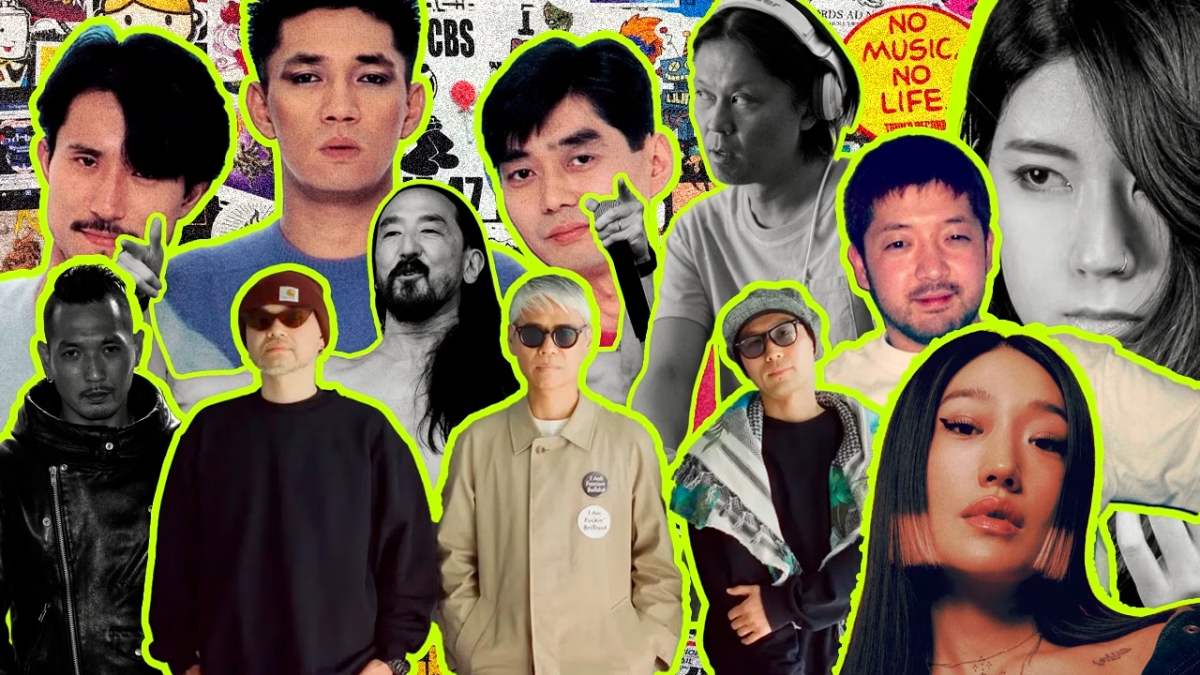
Asian artists significantly shaped the global electronic music scene, from early pioneers like Isao Tomita and YMO to contemporary stars like Peggy Gou and Steve Aoki, blending cultural influences innovatively.
Electronic music is everywhere these days, from clubs to commercials. It’s a global sound that’s always changing. While you might think of its history as mostly Western, artists from Asia and of Asian descent have played a huge, but often overlooked, role in making it what it is today. Let’s take a look at some of the amazing Asian DJ producers who’ve really shaped electronic music.
The Early Trailblazers
Before electronic music became mainstream in Asia, a few brave artists started experimenting with new sounds and technologies.
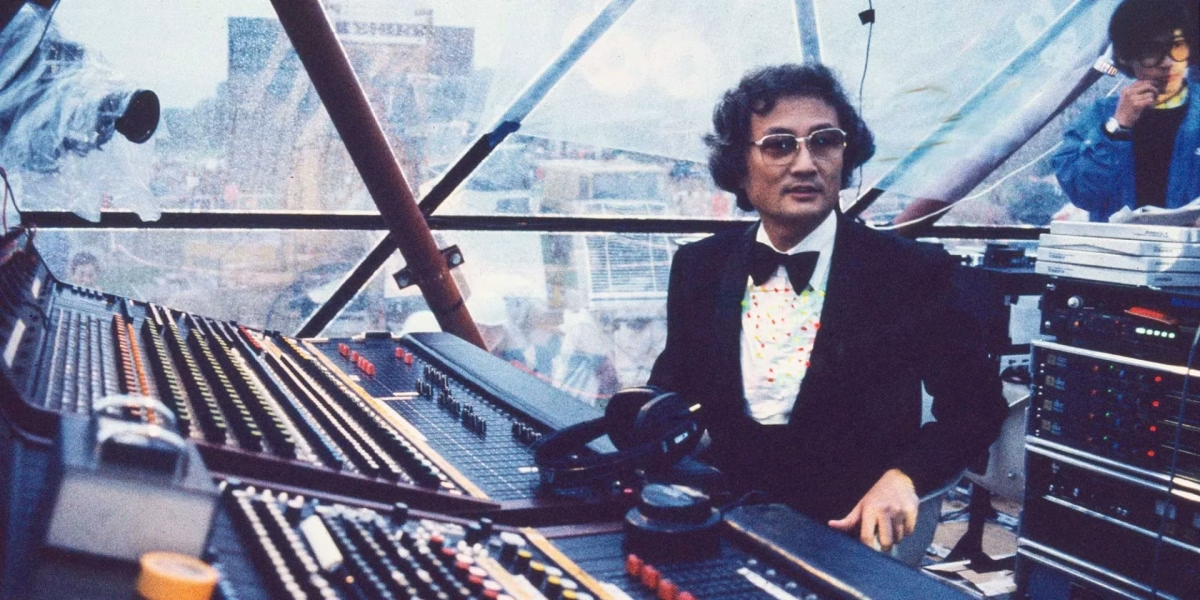
Isao Tomita from Japan was a real pioneer. Active from the 1950s to 2016, he was one of the first to create electronic and “space” music. Inspired by other synthesizer pioneers, Tomita got his hands on a Moog synthesizer in the late 60s and started making incredible new sounds. He didn’t just want to copy other instruments; he wanted to create entirely new sonic worlds. His 1974 album, Snowflakes Are Dancing, which featured his synthesizer versions of Claude Debussy’s music, was a hit around the world. Tomita’s early experiments and his futuristic soundscapes were a big step for electronic music in Asia, and he even got four Grammy nominations.1
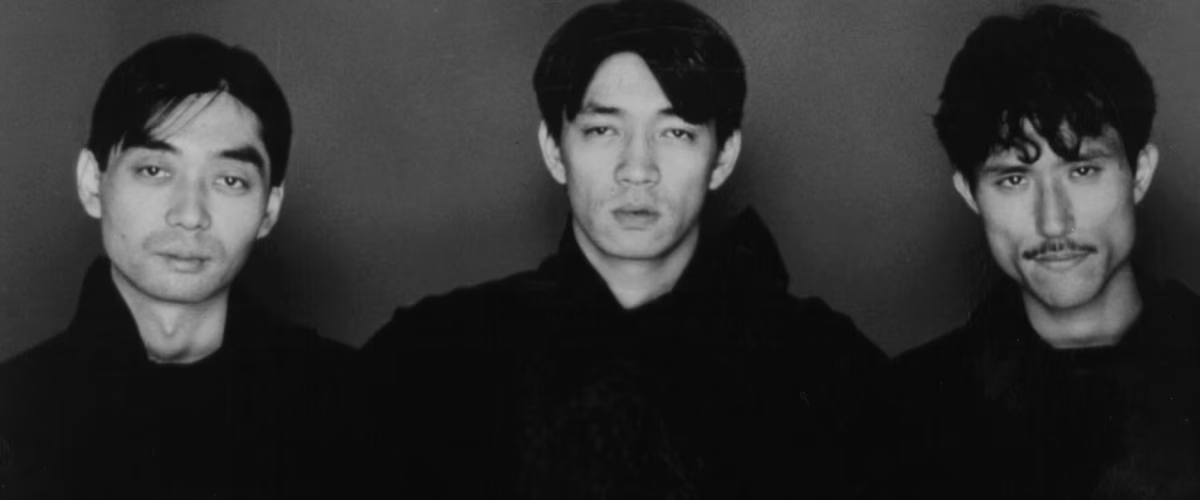
Another game-changer was the Japanese group Yellow Magic Orchestra (YMO), formed in Tokyo in 1978 by Haruomi Hosono, Ryuichi Sakamoto, and Yukihiro Takahashi. They were active until 2012 and are known for inventing techno-pop and synthpop. YMO was one of the first to use synthesizers, samplers, and digital recording, really pushing the limits of music production. Their first album in 1978 mixed electronic sounds with traditional Japanese music and Western pop, which was something totally new. Their song “Rydeen” from 1979 became a classic, showing how experimental music could also be catchy. YMO influenced many genres, from synthpop to techno, and even their use of sampling impacted early hip-hop in the US. They toured the world, bringing electronic music to a wider audience and inspiring tons of artists. By blending their Japanese roots with Western music, they set the stage for other Asian artists to find their own unique sound. 2
In China, Wang Lei 3became a key figure in electronic music in the 1990s. After experiencing the electronic music scene in Paris, he shifted from rock to electronic sounds. His 2004 album, “Xin,” is considered a landmark in Chinese electronic music and was the first of its kind from China to be distributed in France. Even in his earlier rock music, Wang Lei had experimental elements that hinted at his future in electronic music. Albums like “Meili Cheng” (Belleville) showed his move towards electronic music, using samples of voices and traditional Chinese instruments with electronic beats. “Xin” built on this, mixing his experimental style with electronic textures, making him a pioneer in China’s electronic music scene.
Influential Asian DJ Producers: Genre by Genre
Asian DJ producers have made their mark across many different styles of electronic music.
Techno and House Heroes
Ken Ishii from Japan is a global name in techno music. Since the early 90s, he’s been known for his futuristic, polished techno with great beats for clubs. Inspired by Detroit techno, Ishii got his start after meeting Richie Hawtin and releasing music on Hawtin’s label. His early albums like Garden on the Palm (1993) and Jelly Tones (1995), featuring the hit “Extra,” were very influential. The music video for “Extra” even won an MTV award in 1997. Beyond his albums, Ishii also composed the theme song for the 1998 Winter Olympics in Nagano. His 1994 album, Reference to Difference, is also considered a key moment in Japanese techno. Ishii’s ability to blend the energy of Detroit techno with his own sophisticated sound has made him a legend. 4

Soichi Terada 5has been a major force in Japanese house music since the late 80s. After being inspired by the New York club scene in 1987, Terada started making feel-good deep house with strong basslines and smooth synth sounds. In 1990, he co-founded the label Far East Recording, which became a home for Japanese house music. While known for house, Terada also did chiptune music for the video game Ape Escape and his Omodaka project, which mixes 8-bit sounds with Japanese folk music. A compilation of his 90s work, Sounds from the Far East (2015), brought him renewed international attention. His positive and melodic house music has made him a beloved figure.
From Kyoto, Fumiya Tanaka is a leading name in minimal techno. With over 25 years in the scene, Tanaka is known for his intricate and hypnotic grooves. He started in dance music in 1990 and in 1993 founded Japan’s first electronic dance label, Torema Records. While his early work was hard techno, Tanaka’s sound became more minimal in the 2010s, with glitchy elements. By 2009, he moved to Berlin, increasing his international presence. His consistent releases on influential labels show his ongoing impact on minimal techno. 6
Shinichi Osawa, 7 also known as Mondo Grosso, has been a significant figure in Japanese electronic music, especially in electroclash. Born in 1967, Osawa first gained attention with his group Mondo Grosso in 1991. In 1997, he started a successful solo career, mixing electronic beats with rock. His album The One (2005) was critically acclaimed. As Shinichi Osawa, he’s also known for his remixes of artists like Felix da Housecat and Digitalism. His ability to blend electronic music with rock and his collaborations with Japanese pop stars have made him very influential.

Hip-Hop and Downtempo Innovators
DJ Krush, whose real name is Hideaki Ishi, is highly respected in both Japanese and international hip-hop and electronic music. Active since 1985, DJ Krush became known in the downtempo hip-hop scene with his 1994 album, Krush. He’s considered an early pioneer of Japanese hip-hop, popularizing scratching in Japan. Known for his atmospheric instrumental tracks, DJ Krush often uses nature sounds and jazz and soul samples, creating a distinct melancholic feel. He has worked with many famous artists, including DJ Shadow and James Lavelle. His sixth album, Zen (2001), won an award for “Best Electronica Album” in the US. DJ Krush’s experimental beats had a big impact on hip-hop at a time when American rap dominated. 8
Nujabes, 9born Jun Seba, remains a very influential figure, known as the “Godfather of Chill-Hop”. Active from 1995 until his death in 2010, Nujabes essentially created the sound of lofi and chill-hop by mixing jazz samples with smooth, laid-back beats. His music gained wide recognition through the anime series Samurai Champloo, which blended Japanese culture with hip-hop. Nujabes founded the label Hydeout Productions in 1998, which became known for introspective hip-hop. His albums Metaphorical Music and Modal Soul are considered masterpieces of instrumental hip-hop. Even after his death, Nujabes’s influence continues, serving as the main inspiration for the popular lo-fi hip-hop movement.

Trance and Progressive House Influencers
Shogun, whose real name is Andrew Chen, is a prominent Taiwanese-American DJ and producer in the trance genre. Since signing with Armada Music, Shogun has gained recognition for his melodic and uplifting trance. He has remixed tracks for artists like Armin van Buuren and Nadia Ali, and has received support from big names like Ferry Corsten and Above & Beyond. His debut album Dragon (2010) was nominated for Best Trance Album at the International Dance Music Awards. In 2016, Shogun reached #42 in the DJ Mag Top 100. As the first Asian DJ signed to Armin van Buuren’s label, Shogun has broken barriers in a genre traditionally dominated by Western artists. He also explores other genres under different names.

Qrion, whose real name is Momiji Tsukada, is a rising dance music producer from Japan, gaining international attention for her tech house and melodic techno sound. Qrion started making music as a hobby and has released her music, which blends intimate songs with energetic beats, on labels like Anjunadeep and Mad Decent. She was recognized as one of Forbes Japan’s 30 Under 30 in 2020 and named DJ Mag’s 2021 Future Star. Her debut album, I Hope It Lasts Forever, has been praised as masterful. Qrion’s ability to create both melancholic and danceable music has resonated with a global audience.

Shingo Nakamura, based in Tokyo, has been creating dreamy and melodic progressive house music for over a decade. His music, often released on labels like Monstercat Silk, creates a relaxing atmosphere. Nakamura helped launch Monstercat’s Silk brand in 2021 with his track “Glow”. His calming and inspiring music has a dedicated following in the progressive house community.
Bass Music and EDM Figures
Henry Fong, a Chinese-American EDM producer and DJ, has become a leading figure with his groovy electro tracks and energetic sets. Known for his love of Jungle Terror, Fong has had numerous Beatport Top 10s and releases on major labels. His music blends reggae, dancehall, and big-room house, and has received support from artists like Hardwell and Avicii. In 2015, BBC Radio 1 named Henry Fong a Future Star. He also runs workshops for upcoming DJs and his own record label, Banzai Records.

Steve Aoki, a well-known Japanese American DJ, has achieved significant success in EDM. Voted America’s Best DJ in 2015, Aoki is known for his energetic performances and genre-bending sound. He’s ranked among the highest-paid DJs by Forbes. Aoki founded his influential label, Dim Mak Records, in 1996. His debut album, Wonderland, received a Grammy nomination in 2013. Known for his high-energy shows and cake-throwing, Aoki continues to captivate audiences. In 2024, Gold House recognized him as one of the Most Impactful Asians.

Far East Movement, a group with members of Chinese, Japanese, Korean, and Filipino American descent, has made a big impact on dance pop. They became famous in the late 2000s with their hit “Like a G6,” which topped charts worldwide, making them the first Asian American group to reach number one on the Billboard Hot 100. Their music blends electronic rhythms, catchy melodies, and collaborations with various artists. Their album Free Wired had one of the highest charting debuts by an all-Asian American group. Beyond their music, Far East Movement founded Transparent Arts, supporting talented artists.
Female Powerhouses
Peggy Gou, a South Korean DJ and producer based in Berlin, has taken the international scene by storm with her unique techno music. Starting her DJ career over a decade ago, Gou gained recognition in 2016 with her track “Gou Talk”. Her energetic performances at major festivals and clubs have earned her a global following. Known for her style, Gou also launched her own fashion line. In 2019, she started her own record label, Gudu Records. Her track “It Makes You Forget (Itgehane)” won Best Track at the AIM Independent Music Awards in 2018. Gou’s blend of house, techno, and acid with her energy has made her a sought-after artist.

TOKiMONSTA, the professional name of Jennifer Lee, is an innovative Korean-American producer and DJ in Los Angeles. As a pioneer of the “L.A. Beat Scene,” she has had a fascinating career, becoming a defining figure in chillwave and indietronica. TOKiMONSTA blends futuristic melodies with hip-hop, pop, R&B, house, and IDM. Despite facing brain surgeries, she made a comeback, receiving a Grammy nomination for her album Lune Rouge in 2017. She also owns her label, Young Art Records. TOKiMONSTA’s journey is an inspiration in the electronic music community.

DJ Soda, whose real name is Hwang So-hee, is a prominent South Korean DJ who has been popular across Asia since 2013. Known for her performances at major festivals like the S20 Songkran Musical Festival, DJ Soda has become an EDM sensation. In 2016, she released her debut EP, Closer, further establishing her presence in Asian electronic music. Considered one of the best female DJs in the world, DJ Soda’s energetic performances have gained her a large following.
Underground and Experimental Sounds
Goth-Trad, the name of Japanese producer Takeaki Maruyama, has emerged from the Tokyo scene as a unique artist. Since 1998, Goth-Trad has developed a style that blends abstract electronica, noise, dub, reggae, jungle, grime, and dubstep. In 2006, he launched Tokyo’s first monthly dubstep night, “Back To Chill,” which is important to the Japanese dubstep scene. Inspired by grime sounds from London, his track “Back To Chill” gained international recognition. His album New Epoch (2012) was highly praised. Goth-Trad’s darker, experimental approach to bass music has earned him respect in the global underground scene.

Beyond these artists, many other Asian DJ Producers have contributed to electronic music, from the experimental sounds of Aaamyyy and Masami Akita to the genre-bending productions of Park Hye Jin and Sonia Calico. The Asian electronic music scene is full of innovation across many subgenres.
Asia’s Global Footprint in Electronic Music
The influence of Asian DJ Producers isn’t limited to Asia; it has significantly impacted the global electronic music scene.
Yellow Magic Orchestra (YMO)’s pioneering work in the late 70s and early 80s helped shape the global electropop and synthpop boom. Their innovative use of synthesizers and their blend of Eastern and Western sounds inspired countless artists worldwide.
Japanese techno artists like Ken Ishii have greatly influenced the international techno scene. His unique sound design has earned him global recognition.
DJ Krush’s atmospheric and experimental hip-hop played a key role in the global trip-hop movement of the 90s. His abstract soundscapes resonated internationally.
The global popularity of lo-fi hip-hop owes much to Nujabes’s style. His mellow, jazz-infused beats have become synonymous with the genre.
Asian-American artists like Steve Aoki and Far East Movement have achieved mainstream success on global charts. Their hits have increased the visibility of Asian artists in popular music.
More recently, South Korean artists like Peggy Gou have been making waves in the global techno and house scene. Her unique style has made her a prominent figure at international festivals.
The increasing presence of Asian artists at major international festivals and in global DJ polls shows a growing appreciation for talent from Asia. This global exchange continues to enrich electronic music.
Recognition and Awards
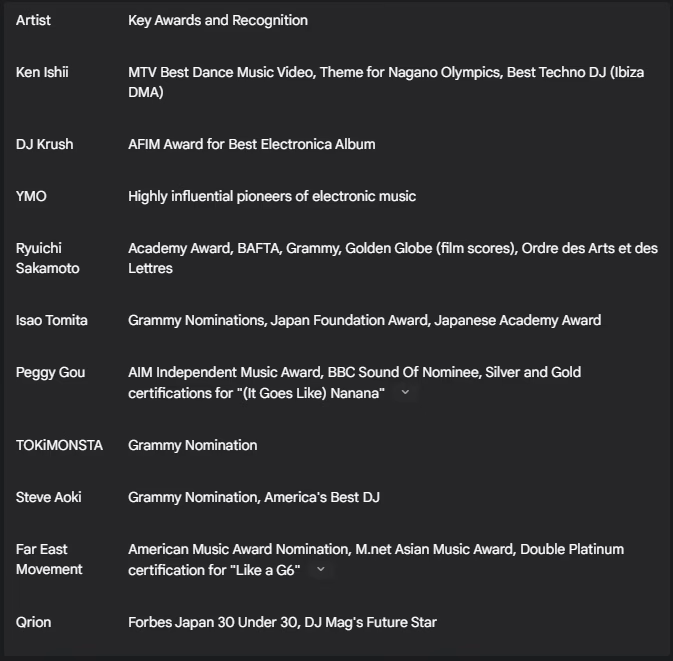
Asian DJ Producers have received many awards for their contributions to electronic music. Ken Ishii won an MTV award and composed the theme for the Nagano Olympics. DJ Krush won an AFIM Award for his album Zen. Yellow Magic Orchestra is considered highly influential. Ryuichi Sakamoto won an Oscar, BAFTA, Grammy, and Golden Globe for his film scores. Isao Tomita received four Grammy nominations and the Japan Foundation Award. Peggy Gou won an AIM Independent Music Award. TOKiMONSTA received a Grammy nomination. Steve Aoki earned a Grammy nomination and was voted America’s Best DJ. Far East Movement received an American Music Award nomination and won a M.net Asian Music Award. Qrion was recognized in Forbes Japan’s 30 Under 30 list and named DJ Mag’s Future Star.
Unique Asian Influences
Many Asian DJ Producers uniquely blend their cultural heritage with electronic music. Yellow Magic Orchestra (YMO) was a pioneer in this, mixing Japanese musical elements with Western electronic sounds. Soichi Terada’s Omodaka project combines 8-bit sounds with Japanese folk music. Nujabes incorporated jazz samples with the melancholic feel of Japanese art. Peggy Gou sometimes includes Korean lyrics and named her first track after a Korean folktale character. Far East Movement aimed to bridge Eastern and Western traditions. Even Shogun’s name reflects his Asian heritage. This integration of Asian influences enriches the global electronic music landscape.
Asian DJ Producers have made profound and diverse contributions to electronic music. From pioneers like Isao Tomita and YMO to innovators like DJ Krush and Nujabes, and global stars like Steve Aoki and Peggy Gou, these artists have consistently pushed boundaries. Their influence spans many genres, and their unique incorporation of Asian culture has enriched the music world. As electronic music continues to grow, the legacy and future of Asian DJ Producers will be crucial in shaping its path, promising more innovation and breaking down of cultural barriers.
- https://www.redbullmusicacademy.com/lectures/isao-tomita/ ↩︎
- https://www.yokogaomag.com/editorial/yellow-magic-orchestra ↩︎
- http://beijing-underground.com/wang-lei-a-pioneer-of-chinese-music/ ↩︎
- https://www.reddit.com/r/electronicmusic/comments/10nzb4k/japanese_electronica_recommendations/ ↩︎
- https://theplayground.co.uk/soichi-terada-asakusa-light/ ↩︎
- https://iamghostproducer.com/blog/exploring-the-best-djs-of-japan-pioneers-in-electronic-music/ ↩︎
- https://hkdi.edu.hk/en/news/news-detail.php?news_id=844 ↩︎
- https://iamghostproducer.com/blog/exploring-the-best-djs-of-japan-pioneers-in-electronic-music/ ↩︎
- https://blog.gaijinpot.com/5-japanese-electronic-music-artists-for-your-playlist/ ↩︎
What We Covered

- [2026.07.02] ./Why the fight against AI music is just history repeating itself on a bigger scale
- [2026.06.30] ./Six-Time Grammy Nominee Fatboy Slim Shares Turning Point in Sobriety
- [2026.06.21] ./The Atlantic AI Watchdog tool unmasks widespread music copyright theft
- [2026.06.15] ./How Gotye Used His Pop Fortune to Restore Electronic Music History
- [2026.06.09] ./Midnight Rebels and &Friends Announce Signal Breach Winners