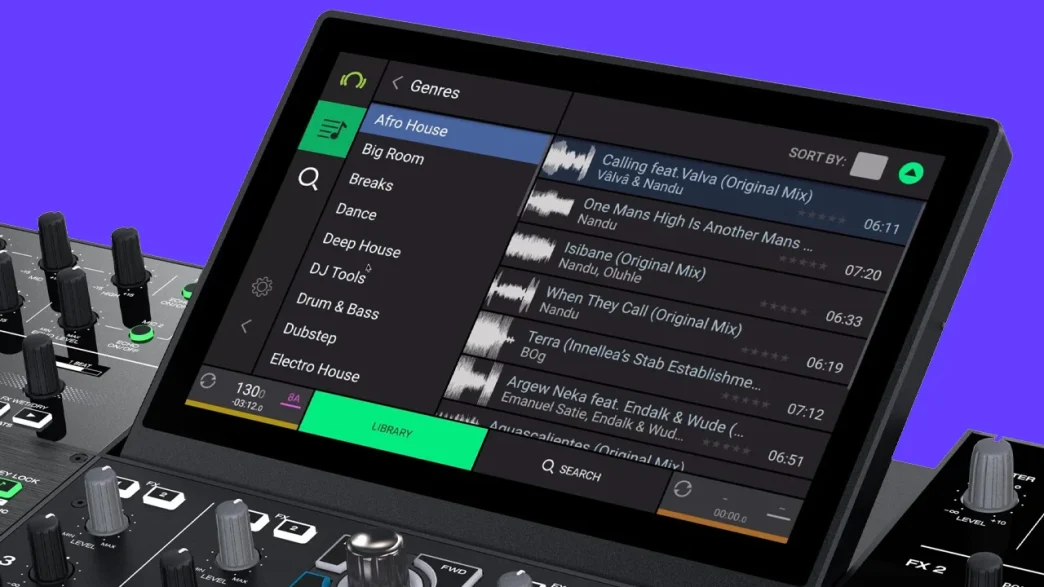
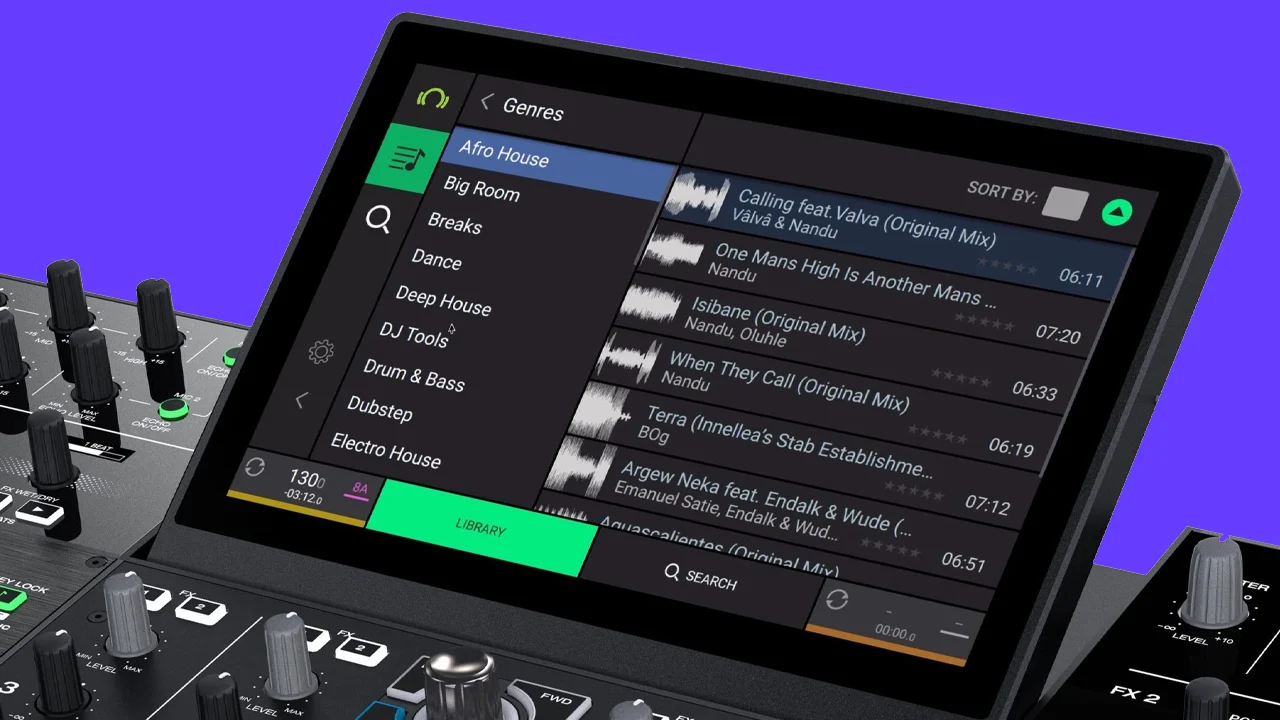

The pitch from DJ hardware manufacturers is undeniably seductive. Leave your laptop at home. Ditch the heavy record bags. Just walk into the club with your headphones and access 100 million tracks directly from the cloud. Devices like the AlphaTheta XDJ-AZ and Denon SC6000 promise a frictionless utopia where venue Wi-Fi streams any requested track instantly into the mix. It sounds like the future.
But professional electronic music performance is a high-stakes tightrope walk. A packed nightclub is perhaps the most hostile environment on earth for a delicate wireless signal. When the bass drops and 500 sweating bodies fill the room, that fragile digital tether frequently snaps. Dead air in a club is catastrophic. The streaming revolution in the booth is currently built on a foundation of sand.
Why Are Standalone Offline Lockers Still A Myth?
Back in 2020, Denon DJ and Beatport announced a massive integration. They promised DJs could finally log into Beatport Streaming right from the touchscreen.
“A DJ can literally show up to an event, connect and play virtually any track on the planet without any physical media or computer.”
Jason Stout of Engine DJ sold us this dream. It came with a specific guarantee of an offline locker to download tracks directly to the hardware for safekeeping. Six years later, that feature remains completely absent from standalone embedded systems.
If you use laptop software like Rekordbox or Serato, you can easily save 1,000 Beatport tracks offline. If you use a flagship standalone CDJ-3000X or Prime 4, you cannot. Record labels are deeply terrified of piracy. Building secure DRM containers on custom Linux operating systems proved too difficult. You must maintain a persistent internet connection the entire night. If the router reboots, your music stops.
Crowd Physics And Network Collapse Guarantee Dead Air
Live event spaces are actively working against your Wi-Fi signal. A room might test perfectly during a 4 PM soundcheck. By midnight, that same room becomes a dead zone. Human bodies are mostly water. Water absorbs 2.4GHz radio frequencies incredibly well.
Then you have spectrum congestion. Every single patron in the building has a smartphone in their pocket. Those phones constantly ping for networks. Lighting technicians use wireless DMX controls that clog the exact same unlicensed frequency bands. Bartenders fire up wireless drink ordering systems. This generates massive co-channel interference.
Track buffering stalls. Search functions freeze. Then there is the dreaded captive portal. Most hotels and premium venues use splash screens requiring browser authentication. Standalone DJ players do not have web browsers. They simply fail the authentication handshake and lock you out of the network permanently.


Are We Anywhere Close To Reliable Wireless Audio?
Streaming files from the internet is only half the wireless equation. Getting the actual audio from the mixer to the speakers or headphones without a cable is the other hurdle. Bluetooth is completely useless for DJing. Standard Bluetooth introduces up to 300 milliseconds of latency. You physically cannot beatmatch by ear with that much delay.
Hardware engineers have finally cracked this specific code. AlphaTheta recently launched a proprietary low-latency protocol. It operates 20 times faster than Bluetooth, driving latency down to a nearly imperceptible 9 milliseconds.
You can now scratch and cue tracks perfectly on their wireless DJ headphones. This actually works. It genuinely frees the performer from the console. It still relies on a strict 15-meter line of sight. If the signal path gets blocked by a rogue stage diver, you will still experience dropouts. The technology is impressive, but wired headphones remain safely coiled in the gig bag.
The Physical Media Mandate Survives Another Decade
Professional DJs understand one simple truth. You cannot outsource your reliability to a venue manager or a cloud server. Ownership guarantees access. Renting access to a catalog leaves you vulnerable to unexpected API failures or removed tracks. Just like electronic music promoters rely on physical marketing flyers to guarantee their message cuts through digital noise, DJs rely on physical drives to guarantee the music plays.
A USB flash drive does not care if the club internet crashes. It does not demand a monthly subscription fee. True curation requires intimately knowing your own library. As the prevailing wisdom dictates: “Stream the music you like, own the music you love”.
High-speed flash drives formatted to FAT32 are the lifeblood of the industry. Most working professionals carry at least three redundant backups. Streaming integrations are incredibly useful tools for finding new genres at home. They are brilliant for taking obscure requests at a private event. They are strictly auxiliary features. The moment you step into the booth and demand a fee, the USB drive is king. The cables stay plugged in. The physical connection rules.
Sources & Further Reading
- Year 2020 (Date of Denon DJ and Beatport integration announcement): https://djtechtools.com/2020/08/03/denons-engine-os-releases-v1-5-with-soundcloud-go-beatport-link/.
- 2.4GHz radio frequencies (Statistic regarding Wi-Fi and Bluetooth operating spectrums absorbed by humans): https://inldigitallibrary.inl.gov/sites/sti/sti/Sort_67627.pdf.
- AlphaTheta SonicLink (Named proprietary low-latency wireless protocol): https://thedjhookup.com/blog/reviews/alphatheta-hdj-f10-review/.
- 15-meter line of sight (Statistic regarding maximum transmission distance for SonicLink): https://wearecrossfader.co.uk/blog/hdj-f10review/.
- FAT32 (File system formatting standard for USB drives): https://thedjhookup.com/blog/reviews/alphatheta-cdj-3000x-review/.
* generate randomized username
- COMMENT_FIRST
- #1 Lord_Nikon [12]
- #2 Void_Reaper [10]
- #3 Cereal_Killer [10]
- #4 Dark_Pulse [9]
- #5 Void_Strike [8]
- #6 Phantom_Phreak [7]
- #7 Data_Drifter [7]
- #8 Zero_Cool [7]