The Quote That Sparked the Uproar
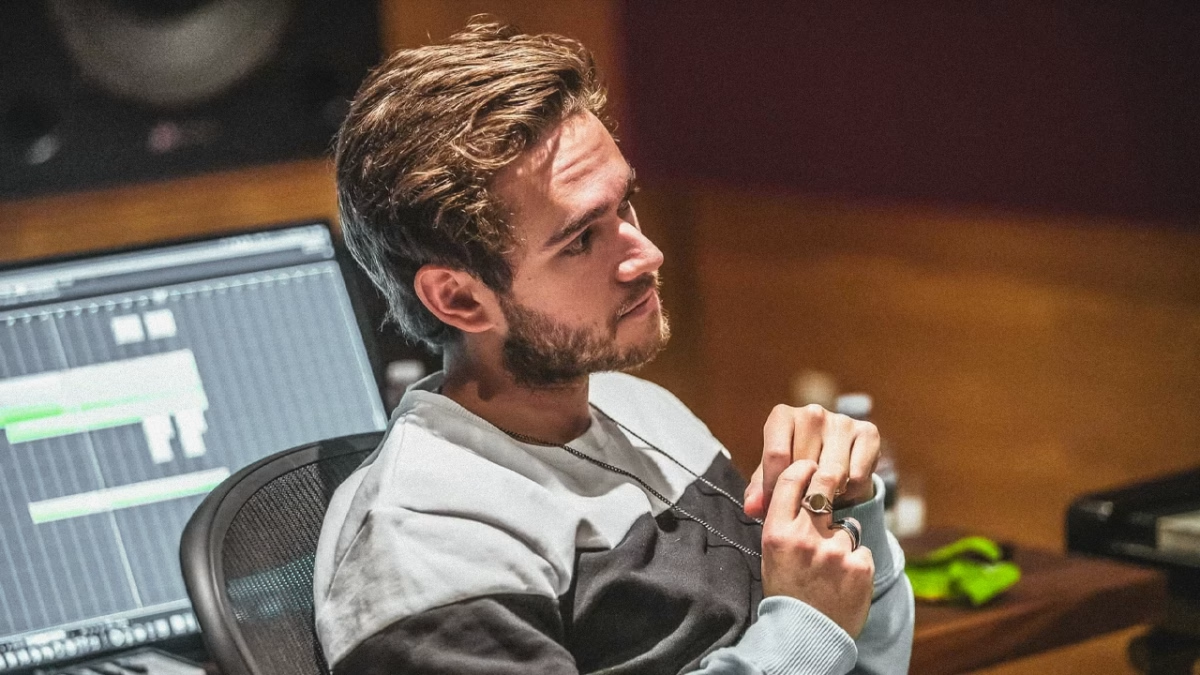
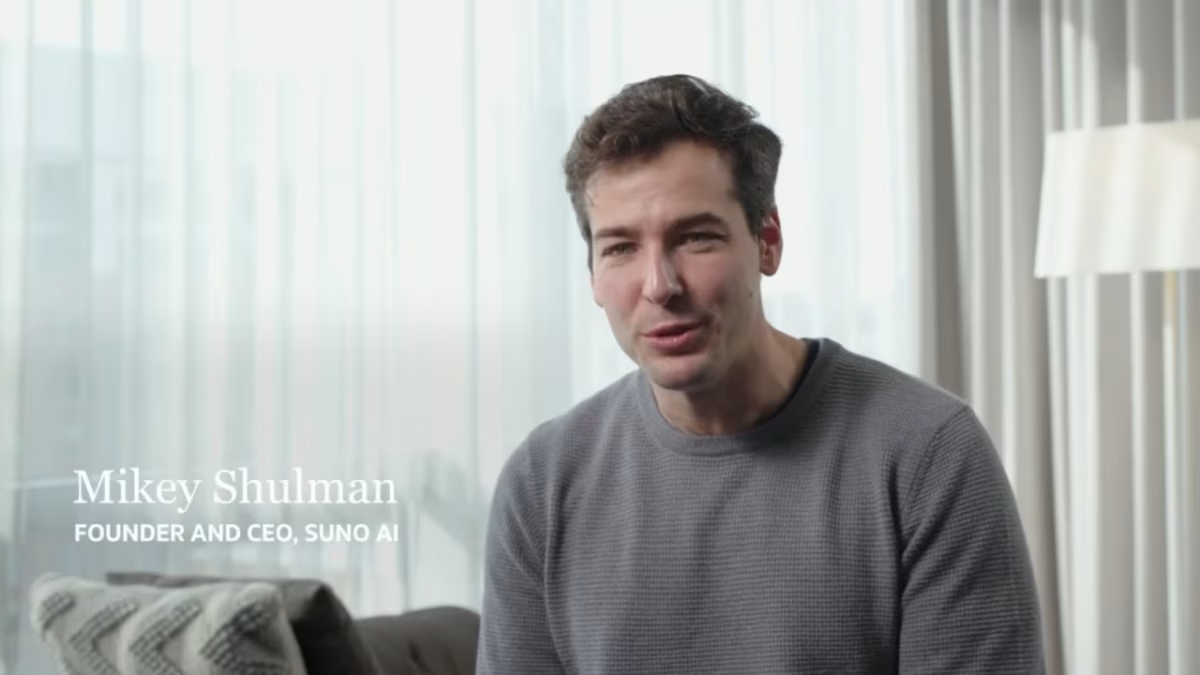
“It’s not really enjoyable to make music now,” stated Mikey Shulman, co-founder and CEO of the AI music generator Suno, on a popular venture capital podcast. “It takes a lot of time, it takes a lot of practice… I think the majority of people don’t enjoy the majority of the time they spend making music.” 1 The backlash from musicians and creators was immediate and fierce. Many argued that the struggle Shulman dismissed as “unenjoyable” is precisely where the joy and value of art reside—the “satisfaction of progress and the pride of gradual mastery.”
Shulman, a lifelong musician with a PhD in Physics from Harvard, later clarified his remarks. He explained that he was referring to people who quit music out of frustration or who abandon their instruments as adults because they can no longer keep up with the demands of practice. His goal, he argues, isn’t to replace artists but to “build something for a billion people,” expanding the music industry from a $32 billion market to one that rivals the $200 billion video game industry by making creation accessible to all. 2
The $500M Company and the Copyright War
Shulman’s vision is backed by serious capital. Suno, founded in 2021 by a team of machine learning experts from the AI firm Kensho, recently raised $125 million in a funding round that valued the company at $500 million. This massive investment underscores the tech world’s belief in AI’s potential to revolutionize music.
However, this ambition faces a formidable legal challenge. In June 2024, the Recording Industry Association of America (RIAA), representing major labels like Sony, Universal, and Warner, filed a landmark copyright infringement lawsuit against Suno. The suit alleges that Suno engaged in “unlicensed copying of sound recordings on a massive scale” to train its AI models, seeking damages up to $150,000 for each song infringed.
Suno has admitted to training its models on copyrighted material from the internet but defends the practice as legally protected under the “fair use” doctrine. Shulman compares the process to a “kid learning to write new rock songs by listening religiously to rock music,” arguing that “learning is not infringing.” The outcome of this legal battle is pivotal; it could set a precedent for the entire generative AI industry, determining whether training on copyrighted data is considered transformative fair use or industrial-scale theft.


Democratization of Art or Devaluation of Skill?
At the heart of the controversy is a philosophical divide. Shulman posits a future where “taste is the only thing that matters in art and skill is going to matter a lot less.” In this view, AI democratizes creativity, empowering anyone with a good idea to produce a song, regardless of technical ability. Proponents argue this could allow a historian to compose a song about a forgotten event or a scientist to set a theory to music, preserving ideas in new, powerful ways. 3
Critics, however, fear this “democratization” is a euphemism for the devaluation of human skill. They warn of a future flooded with generic, soulless “AI slop” that drowns out human expression and makes it impossible for professional musicians to earn a living. The viral emergence of “The Velvet Sundown,” a fictitious indie band created entirely with Suno that amassed nearly a million monthly listeners on Spotify, seemed to confirm these fears—a case of “theft dressed up as competition.”
A Tool, Not a Replacement
Away from the heated debate, many musicians are pragmatically adopting AI not as a replacement, but as a powerful new tool. It’s being used to overcome writer’s block, brainstorm new melodies, and create backing tracks that are then imported into digital audio workstations for further refinement with human-played instruments and vocals.
This mirrors the history of other disruptive technologies. The sampler and the drum machine were once decried as threats to “real” musicianship, yet they were ultimately embraced by artists and became the foundation for new genres like hip-hop and electronic music. The argument is that AI is simply the next revolutionary instrument, and its impact will be defined by how artists choose to use it.
The debate ignited by Suno forces a crucial conversation about what we value in art: the efficiency of the final product or the meaning imbued by the human journey of its creation. The future of music now hinges on whether we choose to optimize for scale or for soul.
- https://www.whiskeyriff.com/2025/01/14/its-not-really-enjoyable-to-make-music-ceo-of-suno-ai-undermines-the-entire-essence-of-the-creative-process-with-all-time-bad-take/ ↩︎
- https://completemusicupdate.com/suno-ceo-mikey-shulman-says-making-music-sucks-skill-doesnt-matter-and-everyone-building-ai-products-infringes-copyright/ ↩︎
- https://medium.com/@dallemang/ai-and-the-democratization-of-art-194cb4e9a757 ↩︎
* generate randomized username
- COMMENT_FIRST
- #1 Lord_Nikon [12]
- #2 Void_Reaper [10]
- #3 Cereal_Killer [10]
- #4 Dark_Pulse [9]
- #5 Void_Strike [8]
- #6 Phantom_Phreak [7]
- #7 Data_Drifter [7]
- #8 Zero_Cool [7]