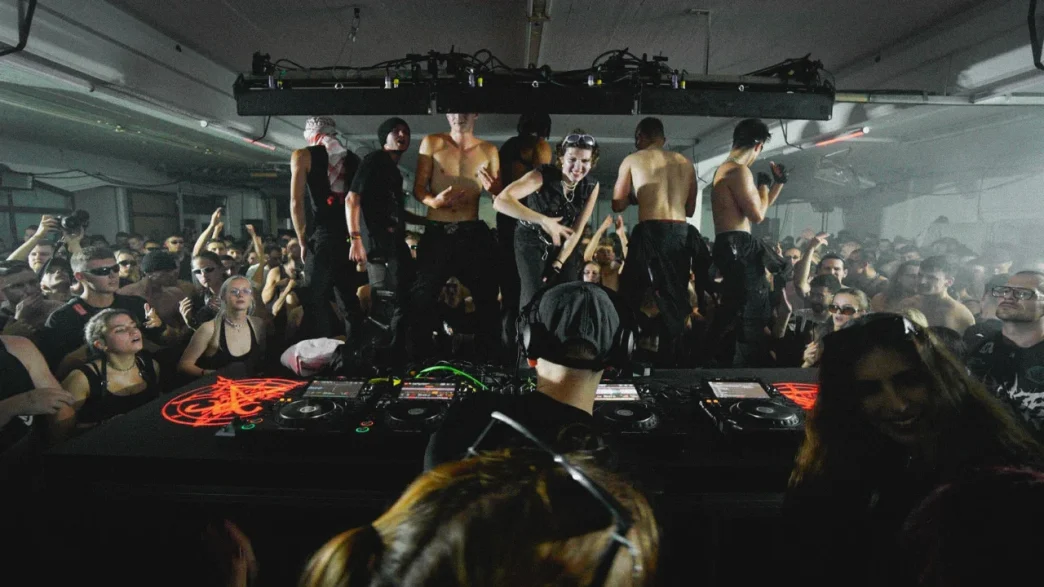
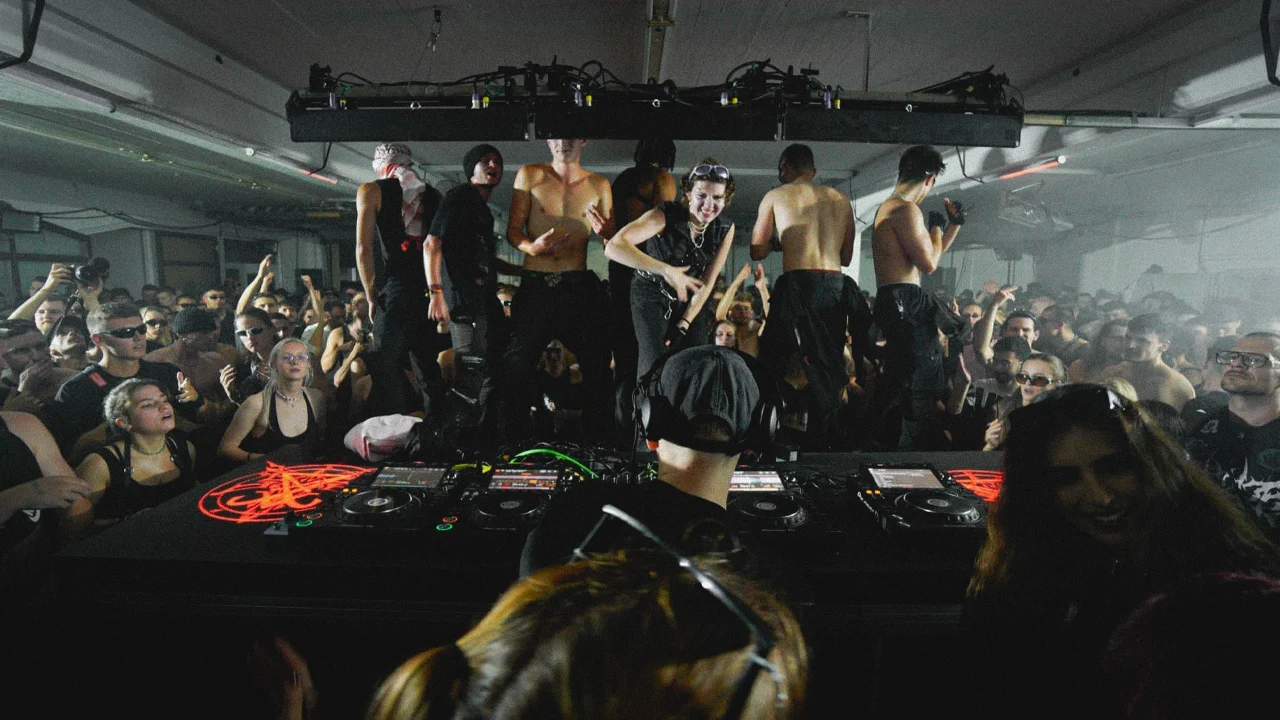

The dance music ecosystem is navigating a reckoning. Sonically, hard techno in 2026 is a fever dream, a landscape where tracks collide with cuts. But while the genre’s aesthetics have ascended to the mainstages of festivals, the architecture supporting it remains archaic. Today, the BPM bubble has burst.
Catalyzed by a leak known as the “Steer Files,” the scene is enveloped in a scandal. It is a cacophony of misconduct allegations, the collapse of Steer Management, the weaponization of vigilantism, and questions regarding the complicity of the industry’s media. Implicating DJs, including Shlømo, CARV, Basswell, and Fantasm, the crisis centers on women’s complaints detailing a pattern of abuse and exploitation. The lights have been turned on, revealing an industry comfortable with silencing victims.
The Steer Files and @bradnolimit: A Whistleblower in the Hard Techno Scene
The landscape has bypassed the gatekeepers of journalism. The vector for the crisis was an Instagram account operating under the handle @bradnolimit. Reportedly managed by Brad, a former partner at Steer Management, the account published screenshots and testimonies from women alleging violence by the agency’s artists.
However, the integrity of the “Steer Files” is convoluted. As the allegations gained traction, accused artists deployed counter-narratives aimed at discrediting the source. DJ Fantasm, an artist implicated in the controversy, issued a statement addressing the whistleblower. Fantasm alleged that Brad was an employee who had been kicked out of Steer Management.
More critically, Fantasm highlighted a hypocrisy: he claimed that Brad was aware of the misconduct while employed by the agency, yet chose to remain silent to protect his commissions. Fantasm stated that Brad is facing allegations from women. When the conduit for exposing abuse is accused of misconduct, the pursuit of justice devolves into warfare, mudding the waters for survivors.
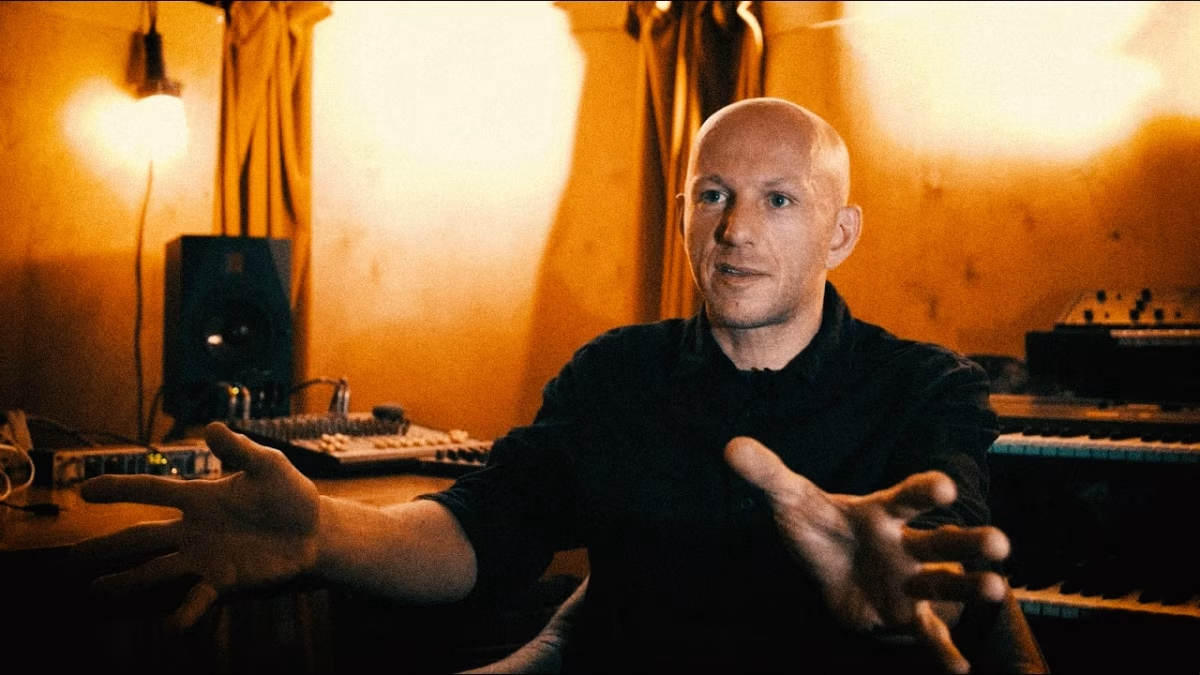
DVS1 Explains Why Hard Techno Is “EDM in Underground Clothing” — A Gateway, Not the Enemy
DJ Fantasm, “Cancel Culture,” and the Weaponization of Death Threats
In his defense, DJ Fantasm leaned into the framework of “cancel culture.” Highlighting the irony of figures who attempt to “buy a conscience” by adhering to mobs , Fantasm framed the allegations against him as lies. He revealed he had been seeking action against those spreading rumors for years and cited the death threats he had received as proof of a witch-hunt.
The deployment of “death threats” features throughout the crisis, weaponized by actors for purposes. While accused artists use them to bolster their positioning as victims of cancel culture, the proliferation of death threats serves a purpose: terrorizing the victims. In a scene dominated by imbalances, the threat of harassment, driven by fanbases, is utilized by perpetrators and their enablers to enforce silence. Victims are intimidated into submission, ensuring that their trauma remains a distraction from the “vibe” of the rave.
Shlømo, CARV, and Basswell: The Implosion of Steer Management’s Roster
The fallout of the Steer Files was a reckoning. On February 23, 2026, Steer Management experienced a “talent exodus” as artists fled the brand. The list of artists who distanced themselves through statements includes William Luck, Onlynumbers, 6EJOU, Natte Visstick, Lola Cerise, LESSSS, Creeds, ALT8, OMAKS, and Afem Syko. The scale of the allegations against the roster is staggering.
The producer CARV provided an anomaly in management. Rather than issuing a denial, CARV participated in a report where he admitted to “personal misconduct” and “crossing boundaries”. He confessed to writing messages, sending images, and being unfaithful to his wife. Rejecting allegations of conduct, he quit the industry, declaring, “The project DJ Carv ends here”.
Conversely, DJ Shlømo faces allegations involving behavior with fans, with claims referencing minors. Meanwhile, the producer Odymel attempted to frame his allegations as a pathology, citing “sexsomnia” (sleepwalking) as the cause of his actions, thereby dissociating himself from the “conscious behaviors” of his peers.
Then there is Basswell, who highlights a frustration with the scene’s procedures. Despite accusations of assaulting women, Basswell has continued to be booked for events. Communities have criticized him for hiding behind what they perceive as “BS standard press statements” drafted by professionals that fail to demonstrate accountability. So long as an artist guarantees sales, promoters appear willing to weather the backlash.

The PR-Industrial Complex: Why Dance Media Silences Victims
To understand how this crisis incubated for years, one must examine the “PR-Industrial Complex.” While subreddits and platforms burned with the Steer Files discourse, the silence from publications like Mixmag was deafening.
This blackout is the mechanism of an industry built on access. Publications are reliant on maintaining relationships with DJs and securing revenue from conglomerates. Publishing reports on misconduct threatens this ecosystem. Platforms have criticized this “pay-to-play rot,” alleging that media has abandoned independence in favor of £7k covers and jet access. Victims are silenced because their truths are incompatible with the objectives of the industry.
METOODJS and Kompass Klub: Forging Accountability in Hard Techno
As the failures of agencies and media become apparent, the community is constructing frameworks for accountability.
The development is the launch of the METOODJS initiative. Formed by a collective of women from within the industry, the platform bypasses the structures of PR firms. Operating on three pillars: Listening, Referral, and Connection, METOODJS provides a space for victims to share experiences and connects them with a database of experts.
Simultaneously, venues are setting standards for accountability. The Kompass Klub in Ghent made headlines when it cancelled DJ Fantasm’s performance scheduled for October 3. Rather than buckling to the noise of media, the club’s management instituted days of dialogue and established a mailbox to gather “honest, confidential and unfiltered input” from ravers and victims.
Furthermore, Kompass Klub demonstrated a commitment to the concept of “safer spaces.” They announced that profits from the event would be donated to an organization supporting victims of assault. They pledged to have a psychologist available free of charge at events.
The 2026 crisis is a maturation of the scene’s system. For the culture to evolve, it must dismantle the architecture of silence, rejecting the illusion that talent shields artists from decency. The survival of the movement relies on transitioning away from a culture of vigilantism and obfuscation, toward one rooted in accountability.
Sources & References
- (https://change-underground.com/the-dance-music-industry-exposed-why-its-a-rigged-game/)
- (https://change-underground.com/fantasm-makes-a-statement-and-calls-out-one-of-his-accusers/)
- (https://www.belganewsagency.eu/ghent-nightclub-cancels-performance-by-controversial-us-dj-fantasma)
- (https://www.reddit.com/r/hardstyle/comments/1rb98ab/hard_techno_djs_are_getting_exposed/)
- (https://change-underground.com/dj-carv-quits-following-admission-of-personal-misconduct-and-crossing-boundaries/)
- (https://change-underground.com/odymel-sexual-assault-allegation-the-producer-cites-sexsomnia/)
- (https://change-underground.com/metoodjs-announce-legal-support-for-the-electronic-music/)