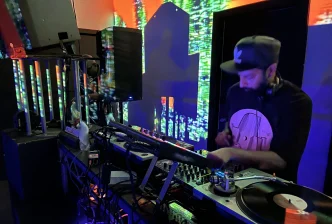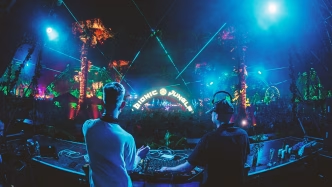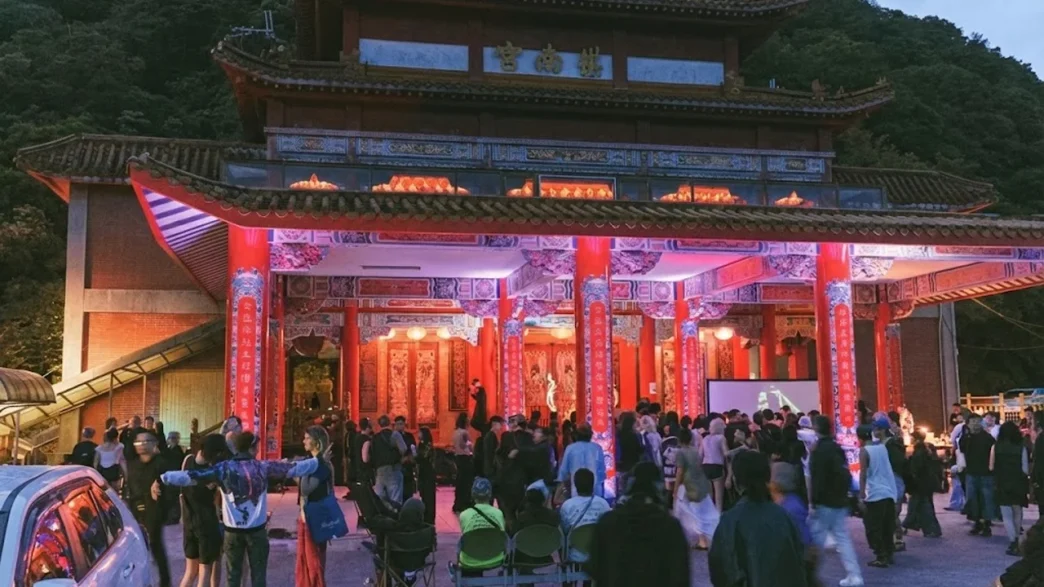

It is 2:00 AM in Tainan, and the air smells of burning incense and the thump of a 140 BPM dubplate. We are standing in the courtyard of Puji Temple, a religious site dedicated to Chifu Wangye, a prince who mythologically drank poisoned well water to save his village from a plague. But tonight, the courtyard isn’t just a place of reflection. It is the center of the 2026 Taiwan nightlife scene.
Behind a plywood speaker stack hangs a plaque of Caishen, the Chinese god of prosperity. While the DJ drops a dubstep track, families burn joss sticks nearby, and ravers feed each other skewered Taiwanese fried chicken on the open dance floor. This isn’t a pop-up; it is Temple Meltdown, an underground party series rewiring our understanding of alternative travel in Taiwan and underground electronic music.
The Structure of Repression
To understand why Taipei alternatives are migrating out of urban clubs and onto altars, you have to look at the island’s policed commercial nightlife sector. Running an electronic music venue in Taiwan means navigating the city’s “Eight Industries” zoning laws, a system that frequently lumps techno venues in with hostess bars, saunas, and karaoke parlors, making licensing nearly impossible for independent promoters to secure.
Even if an organizer manages the paperwork, the threat of the state looms. The legacy of martial law, which banned public dancing until 1987, has morphed into disruptive police raids. Take the Taipei techno institution Pawnshop, which was raided over eleven times in a span of three months. During one sweep, dozens of officers stormed the floor without a warrant, justifying the disruption over residue found hidden in a wall crack. For marginalized communities, particularly queer youth and Southeast Asian migrant workers who face mass detentions and deportation threats during similar raids , the commercial club has become a site of anxiety rather than liberation.

Pope Leo XIV Blesses ‘Holy Rave’ as DJ Priest Performs at 600-Year-Old Gothic Cathedral
Hardcore Techno on the Altar
Enter Andrew Dawson (who also goes by Chen Xuan Yu) and his partner Olivia Delacour. Three years ago, desperate for a venue after a lack of local options, Dawson approached the elder committee of a temple. The realization was immediate: the Taiwanese state might deploy a task force to shut down a warehouse rave, but they will not interfere with a religious gathering.

“Every temple in Taiwan is very different… but the interesting thing is that there is always a plaza area outside where people can gather, cook, hang out with their friends,” Dawson explains. By framing the event as a celebration for the gods, Temple Meltdown secured a legal loophole.
The curation focuses on the vanguard of underground electronic music. You won’t hear mainstage EDM here. The sonic palette is a collision of genres. You have DJs like Khula Huang bending modular synth, breakbeat, and IDM, while DJ Coral (performing as Public Property Princess) spins deconstructed club sets that mash techno with local Taike street culture and Mandopop.
The acoustic anchor of this movement is the Formosa Sound System. Built by a woodworker and tuned by audio engineer Siong, it is a 5-way reggae and dub rig engineered to push air without harshing the high-end frequencies. To maximize dynamic range for vinyl playback, the crew retrofits their Shure 447 cartridges with custom Wax Alchemy headshell wire. It is a sound system capable of delivering a sub-bass experience that doesn’t trigger noise complaints from sleeping neighbors.
Remixing the Sacred
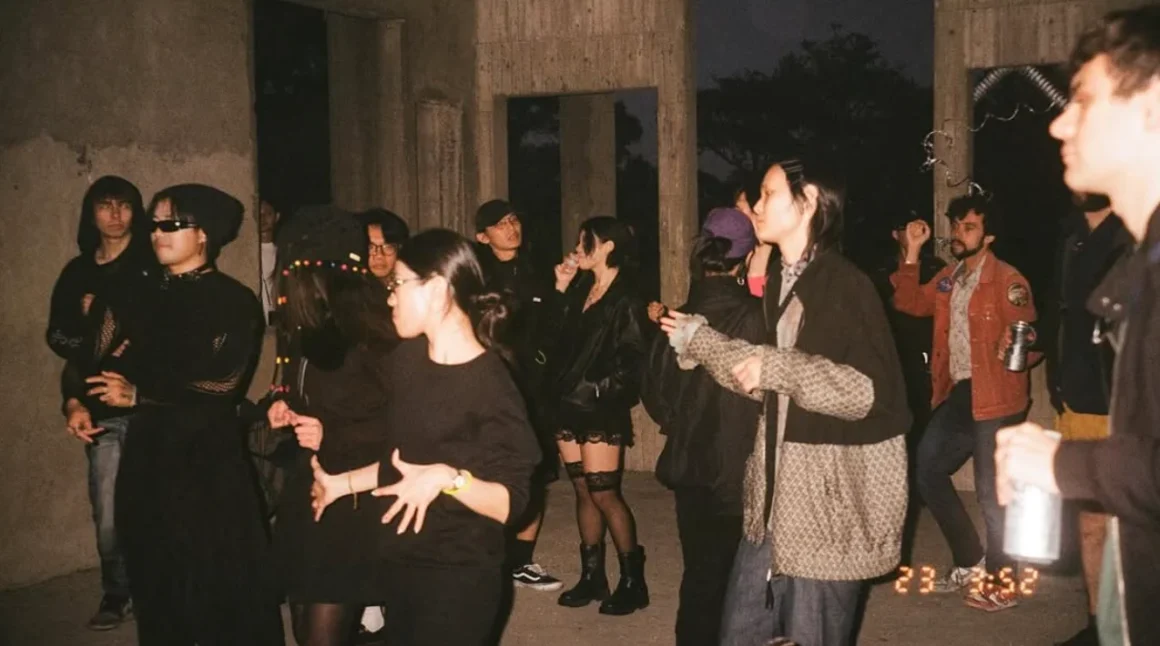
To an observer accustomed to silent churches, blasting jungle and hardcore techno in a place of worship feels rebellious or offensive. But as captured in Taiwan’s Underground Temple Raves, a documentary by filmmaker Bruno Pruhs, the scene is harmonious. Pruhs tracks ravers into the Nangang district mountains, where DIY rigs vibrate against the walls of an unfinished concrete temple.
“They’re not rebelling against tradition, they’re remixing it,” Pruhs notes.
In Taiwanese folk religion, noise, firecrackers, and kinetic energy have historically been utilized to attract the gods and ward off spirits. Dawson taps into this theology. “Besides the act being spiritual and a physical way of talking to gods, it’s about throwing the biggest, loudest, and most hospitable bash possible for the resident deity,” he says. Temple elders, anxious about the younger generation abandoning these community spaces, welcome the influx of youth with open arms.

The result is an act of spatial reclamation. Taiwan’s youth are no longer trying to recreate the mood of Berlin or London. They are throwing parties unique to their own geopolitical reality. Surrounded by dancing bachajiang masked guardians and fueled by bass , the temple rave is 2026’s alternative travel highlight, proof that sometimes the best way to escape the police state is to simply invite the gods to the party.
Sources:
- https://www.theguardian.com/music/2026/feb/24/taiwan-religious-sites-rave-venues-temple-meltdown
- https://mixmag.asia/read/taiwan-nightclub-pawnshop-fights-back-against-unlawful-police-raids-local
- https://newbloommag.net/2025/08/26/tainan-club-arrest/
- https://www.dazeddigital.com/life-culture/article/69664/1/taiwan-temple-raves-andrew-dawson-olivia-delacour-meltdown-taipei
- https://frozendub.blog.hu/2020/07/26/interview_with_archi_formosa_soundsystem_taiwan
- https://www.dazeddigital.com/music/article/69555/1/in-photos-taiwan-spiritual-temple-raves-bruno-pruhs
- https://events.mcu.edu.tw/event/%E5%8F%B0%E7%81%A3%E7%91%9E%E8%88%9E30%E5%B9%B4-30-years-of-rave-in-taiwan%EF%BC%9Afinally-ready-to-dance/
- https://eng.taiwan.net.tw/m1.aspx?sNo=0002020