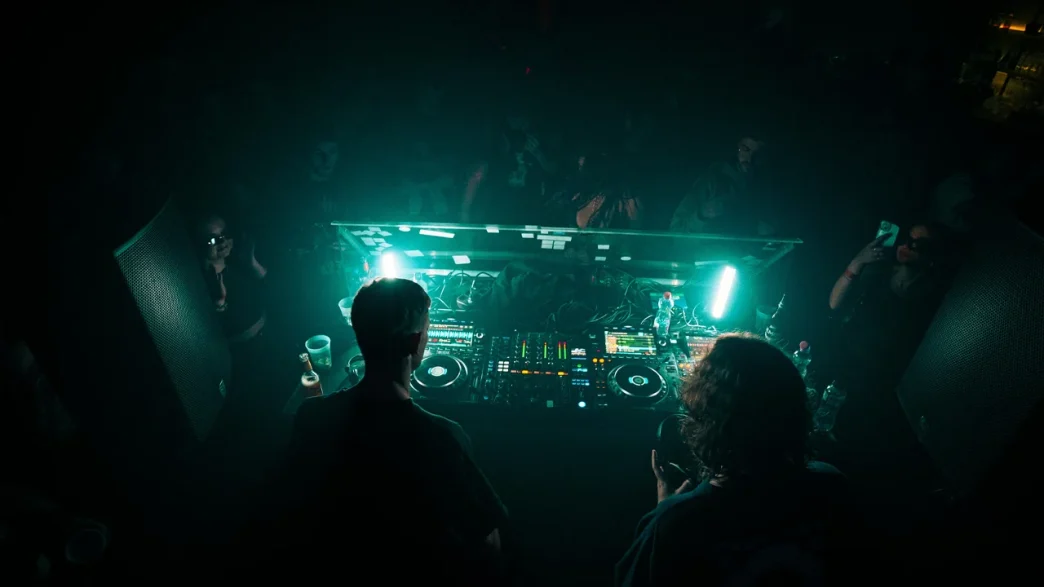
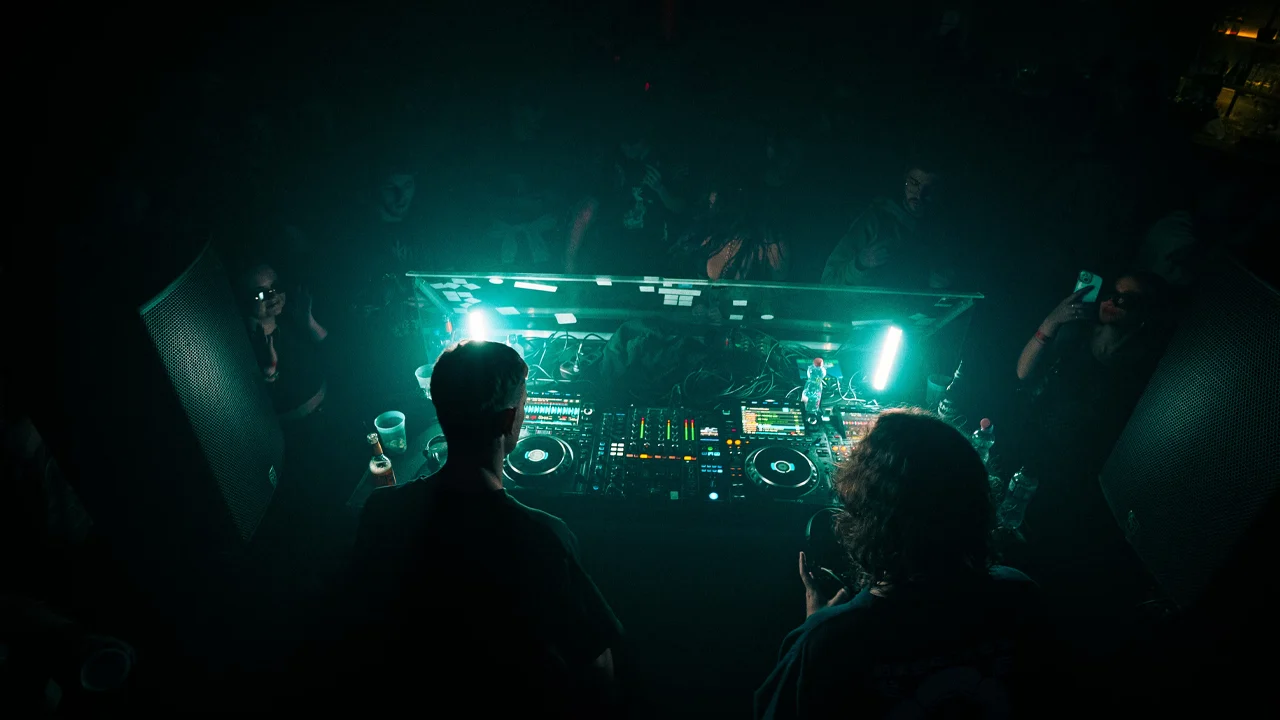

As an avid music listener, I often find myself doom scrolling through SoundCloud at 3:00 AM, descending into a digital rabbit hole where the tags look like a foreign language. I see “3-Step,” “Drift Phonk,” and “Neurostep,” yet as the bass hits, I feel the ghost of a Chicago warehouse or a London basement. There is a haunting familiarity to the roots, even when the nomenclature feels like an ephemeral digital fever dream. This taxonomic explosion isn’t just a quirk of the algorithm; it is the sound of a global electronic music industry valued at $12.9 billion in 2024, frantically re-encoding itself for a post-genre era. 1
To understand the current state of electronic dance music (EDM) is to acknowledge a fundamental schism between human perception and algorithmic data mapping. While institutional platforms like Beatport maintain a functional taxonomy of roughly 35 to 40 main subgenres to help DJs navigate the dance floor, Spotify’s “Every Noise at Once” has tracked over 6,291 “genre-shaped distinctions”. This discrepancy suggests that while unsupervised clustering research identifies only about 23 distinct acoustic clusters—natural groupings defined by tempo and rhythm—we have thousands of cultural markers that serve as tribal identifiers.
Why is everything suddenly moving at 140 BPM (and beyond)?
In 2025 and 2026, the dance floor has accelerated. We are living through a high-BPM resurgence that feels like a collective cultural response to the digital pace of life. The “UK Garage revival” isn’t a nostalgia trip; it’s a total takeover. Speed Garage, in particular, has seen a staggering 1,270% growth on Spotify globally, driven by a new generation of ravers and the viral velocity of platforms like TikTok. 2
| Genre / Style | BPM Range | Key 2025-2026 Trend |
| Speed Garage | 130 – 140 | 1,270% growth; influenced by viral “sped-up” culture |
| Drum and Bass | 160 – 180 | Surged to 3rd place in Beatport rankings; pop-leaning crossover |
| Hard Techno | 145 – 155+ | Reaching a cultural peak in Europe with distorted, industrial aesthetics |
| Hardstyle | 140 – 160 | Splitting into “Euphoric” and “Rawstyle” with aggressive sound design |
Music NFTs in 2026: The Hype Is Dead, The Tech Is Boring
This shift toward high-intensity sounds like Hard Dance and Hardcore is gaining ground while the appetite for Chillout and Ambient genres is trending downward, reflecting a world that currently craves a release of energy over a moment of rest.
Checking in on the Global South: How South Africa and Brazil are rewriting the rules
The most profound shift in the 2026 landscape is the decentralization of innovation. The “Global South”—specifically South Africa, Brazil, and Mexico—is now the primary engine of genre evolution.
Amapiano has already moved from Johannesburg townships to global mainstages, but its latest evolution, 3-Step, is where the tension lies. Defined by a three-kick drum per bar pattern—an intentional departure from the ubiquitous “four-on-the-floor” beat—3-Step blends the log-drums of Amapiano with the dark, ghostly energy of Gqom and the pensive chords of Deep House. It is more than a sound; it is a cultural movement responding to regional identity and the politics of the diaspora. 3
Similarly, Brazilian Funk (Funk Carioca) achieved a landmark in 2025 when Beatport officially launched it as a standalone genre. No longer relegated to a sub-category, this DIY sound born in the favelas has exploded globally, giving rise to the controversial “Brazilian Phonk” label—a fusion of local funk elements with the aggressive, cowbell-heavy aesthetics of Russian Drift Phonk.
Diving into the TikTok rabbit hole: Phonk, Hyperpop, and the ‘micro’ life
The internet has birthed a class of “microgenres” that exist primarily as social media soundtracks. Phonk, originally a hip-hop subgenre inspired by 1990s Memphis rap, has been largely subsumed by Drift Phonk. Characterized by high bass, TR-808 cowbells, and distorted textures, Drift Phonk has become the ubiquitous soundtrack for fitness culture and street racing videos. 4
In the same liminal space, Hyperpop has evolved into even more specific niches like pluggnB—a “niche-of-a-niche” style that combines dreamy trap (plugg) with ’90s R&B. These micro-scenes are “post-internet” movements that transcend traditional rules, focusing instead on an ethos of maximalism and surrealist nostalgia.

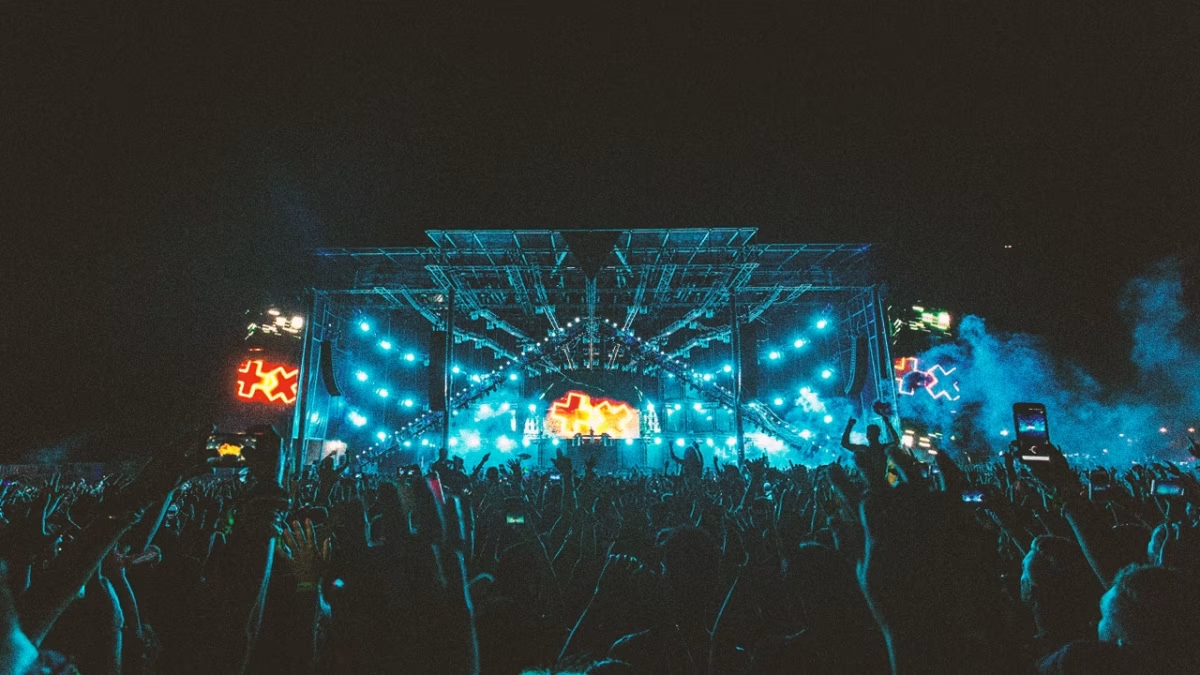
So, how many genres are there really? (Spoiler: It depends who you ask)
When we ask “how many” genres exist, we are really asking how we choose to categorize our identities.
- The Institutional View: Platforms like Beatport or Juno prioritize functional utility for DJs, keeping the list to roughly 40 segments.
- The Algorithmic View: Spotify maps over 6,291 “genre-shaped distinctions” based on listener behavior and track metadata. 5
- The Historical View: Guides like Ishkur’s map approximately 153 subgenres as a phylogenetic tree, showing the lineage from Dub and Disco to the present. 6
Despite the proliferation of tags, the industry’s growth is undeniable. Electronic music is now the third most popular genre globally, with an estimated 1.5 billion listeners. In 2024 alone, the genre picked up 566 million new followers across social platforms.
The familiarity I feel during my SoundCloud doom scrolling is the result of what researchers call “overspecification.” We may name a track “Ambient Tech-House with Melodic Undertones,” but acoustically, it often falls into one of the 23 natural clusters. The labels are for us—the listeners—to feel part of a community that others “don’t get.” In 2026, the genre is no longer just a technical description; it is a tribal flag. Whether it’s the high-fidelity restraint of Minimal D&B or the “Saturday night slaughter” roots of Dream Trance, the list will keep growing as long as we keep seeking new ways to dance.
- https://www.beatportal.com/articles/913865-ims-business-report-2025-the-global-electronic-music-industry-hits-a-record-12-9-billion ↩︎
- https://www.thelineofbestfit.com/news/latest-news/ishkurs-guide-to-electronic-music-has-finally-been-updated ↩︎
- https://www.myhouseradio.fm/2025/11/21/3-step-why-afro-houses-latest-evolution-is-more-than-a-sound-its-a-movement-mixmag/ ↩︎
- https://www.sounds.co/en/post/la-evolucion-del-phonk ↩︎
- https://relentlessbeats.com/2025/11/the-edm-subgenres-of-2025-making-marks-on-playlists/ ↩︎
- https://en.wikipedia.org/wiki/Ishkur%27s_Guide_to_Electronic_Music ↩︎
* generate randomized username
- COMMENT_FIRST
- #1 Lord_Nikon [12]
- #2 Void_Reaper [10]
- #3 Cereal_Killer [10]
- #4 Dark_Pulse [9]
- #5 Void_Strike [8]
- #6 Phantom_Phreak [7]
- #7 Data_Drifter [7]
- #8 Zero_Cool [7]