The most punk rock moment of 2026 didn’t happen in a basement venue on the Lower East Side; it happened on CBS, live from the Crypto.com Arena. When Bad Bunny accepted the Grammy for Best Música Urbana Album, he didn’t just thank his team. He looked into the camera and dismantled the federal government’s narrative on immigration in three sentences: “ICE out! We’re not savage, we’re not animals, we’re not aliens. We are humans and we are Americans.”
For the last decade, the intersection of music and immigration politics has been a slow-burning fuse. It started with contract disputes at SXSW in 2017 and evolved into the “No Music For ICE” tech boycotts of 2019. But in 2026, sparked by the aggressive return of deportation raids under “Operation Metro Surge,” that fuse has finally detonated. The music industry is no longer just commenting on the crisis; it is mobilizing its infrastructure, its capital, and its noise to stop it.
From the red carpet to the rave underground, here is how the music world is fighting back.
When the Grammys Turned Into a Protest Rally
Award shows are usually where political radicalism goes to die, smothered by designer gowns and PR-approved speeches. But the 68th Annual Grammy Awards felt different. The “ICE OUT” pin, a stark black-and-white accessory organized by the ACLU and the Working Families Party, wasn’t just spotted on the usual suspects like Bon Iver. It was pinned to the lapels of pop royalty including Justin and Hailey Bieber, Lady Gaga, and Joni Mitchell.

Algorithm Ate Their Protest, So They Called It a “Music Festival” — Inside LA’s Fight with ICE
This wasn’t just performative symbology; it was a coordinated media hijack. When Billie Eilish and Finneas took the stage to accept Song of the Year, Eilish dropped the bleeped-out line heard ’round the world: “No one is illegal on stolen land… f-ck ICE is all I have to say.” While the White House Press Secretary later dismissed these artists as “Hollywood celebrities embarrassing themselves,” the cultural impact was undeniable. The broadcast forced the “ICE OUT” slogan, previously the domain of abolitionist organizers, into millions of living rooms. It framed the agency not as a protector of safety, but as an antagonist to culture itself.
Why Minneapolis Is Singing to the Police
While the Grammys provided the air cover, the ground war is happening in Minneapolis. Following the fatal shooting of Renee Good, an unarmed protester killed by an ICE agent on January 7, and the subsequent death of Alex Pretti on January 24, the city’s music scene birthed a haunting new form of protest: the Singing Resistance.
Forget the aggressive shouting matches of cable news. This collective, which grew from a few dozen to over 2,000 members in weeks, utilizes “radical softness” as a weapon. Inspired by the Serbian Otpor! movement, choirs gather outside the Marriott Residence Inn and Enterprise car rental lots, companies that service federal agents, and simply sing.
Their repertoire isn’t just Kumbaya. The ICE OUT SING-IN Resistance Songbook flips spirituals and gospel tracks into direct confrontations. “Ain’t Gonna Let Nobody Turn Me Round” becomes “Ain’t gonna let no jail cell turn me ’round.” The aesthetic is disarming and dystopian: a wall of sound confronting a wall of riot shields, betting that a human voice singing in harmony is harder to shoot at than a screaming protester.
Techno Collectives Are Shutting Down the Day Shift
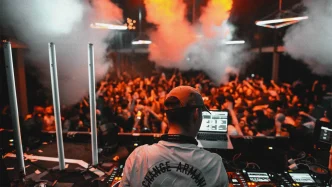
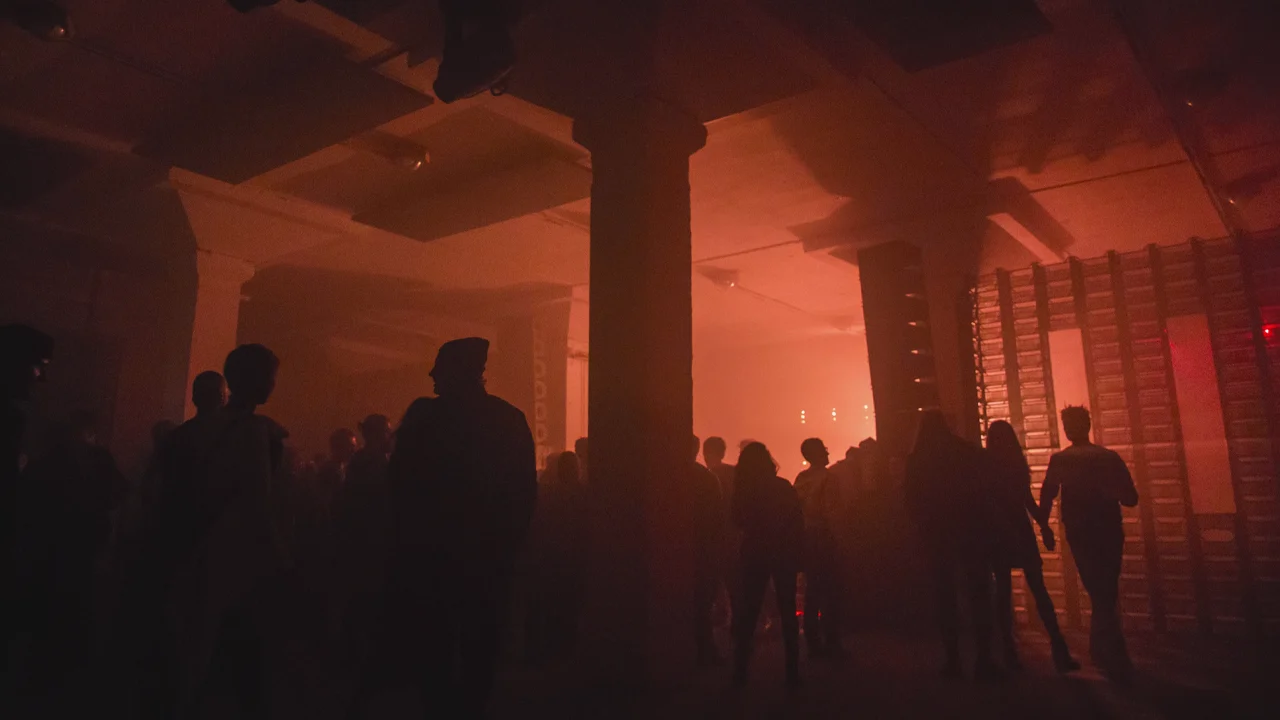
In Los Angeles, the resistance looks and sounds completely different. The electronic music community, led by the WORK collective (a collaboration between 6AM Group and Synthetik Minds), has drawn a line in the sand regarding the safety of the dancefloor.
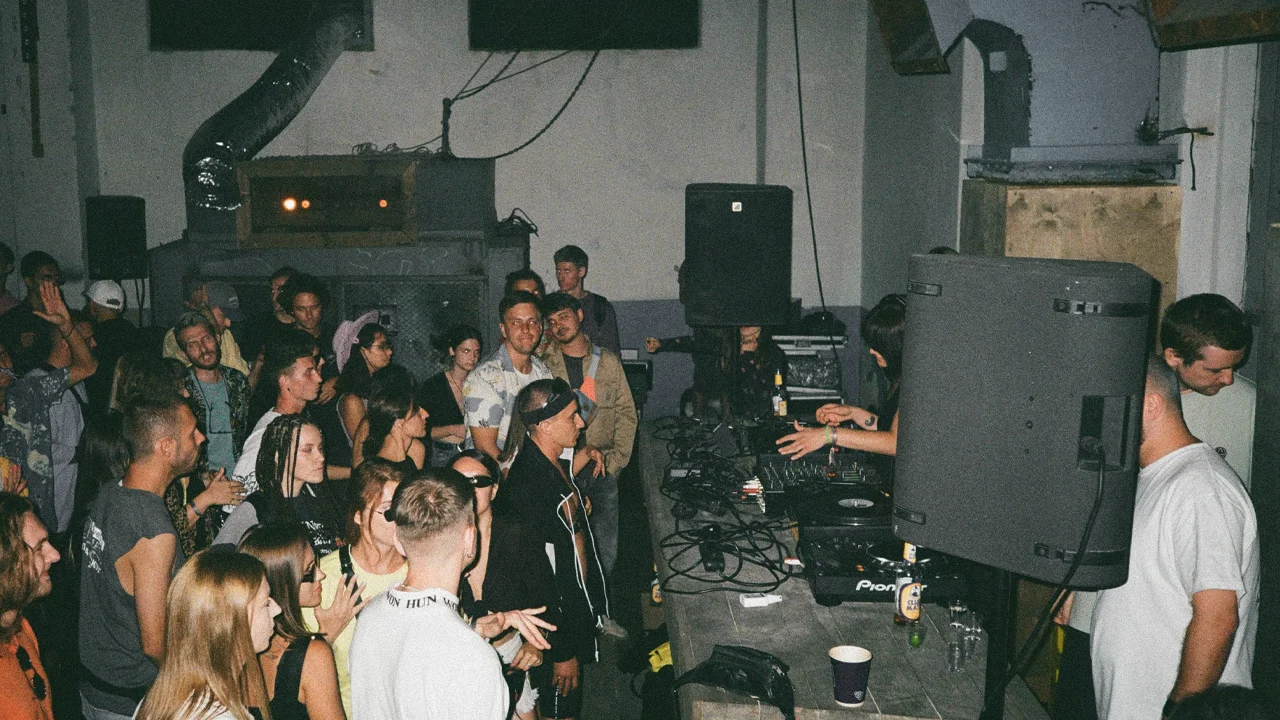
Techno has always been Black, queer, and political, but 2026 has seen the genre reclaim its revolutionary roots. In response to raids targeting immigrant communities in LA, WORK organized a “daytime shutdown,” urging promoters, DJs, and ravers to skip work and march on City Hall. But the real innovation is their “Dual-Phase Strategy.” While they march by day, they keep the parties running by night, reframing raves not as escapism, but as “intentional safe spaces” where undocumented members of the community can find refuge and community support.
This isn’t just rhetoric; it’s economics. Proceeds from these events are funneled directly to grassroots legal defense funds, turning every ticket sold into a donation for bail money and immigration lawyers.
The Record Labels Building a Legal Defense Fund
While artists protest, the industry’s infrastructure is quietly building a safety net. The standout hero here is Immigration Records. Founded by Julian Duque, a Colombian immigrant and music tech veteran, the label treats legal status as a central pillar of artist development.
Duque realized that immigrant artists face unique predatory risks. Fear of deportation can make you sign bad deals, and lack of papers can make it hard to collect royalties. Immigration Records uses blockchain-style transparency tools (via Revelator Pro) to ensure artists can see every cent they earn in real-time. This effectively creates a financial lifeline that can survive cross-border displacement.
Meanwhile, indie stalwarts like Don Giovanni Records continue to prove that punk is a verb. Label boss Joe Steinhardt has been fighting this battle since the 2017 SXSW boycott. In 2026, the label is churning out benefit compilations where 100% of proceeds go to posting bail for detained migrants.
Protest Songs Are Back, and They’re Not Metaphors
For a long time, protest music suffered from a terminal case of vagueness. But the songs of 2026 name names.
Bruce Springsteen surprised everyone with “Streets of Minneapolis,” a track that dropped the Boss’s usual stadium metaphors for a direct journalistic account of the killing of Renee Good and Alex Pretti. He calls out “King Trump’s private army” and frames the federal agents as occupiers. It is a powerful reversal of the “patriot” narrative usually claimed by the right.
On the other end of the spectrum is Jesse Welles, whose viral folk satire “Join ICE” mocks the machismo of recruitment ads. With lines like “If you’re lackin’ control and authority / come with me and hunt down minorities,” Welles uses the internet’s favorite language, irony, to dismantle the “hero” myth DHS tries to sell in its Spotify ads.
The Bottomline
The “No Music For ICE” movement has evolved from a hashtag into a permanent ecosystem. Whether it’s Bad Bunny claiming American identity for immigrants, Minneapolis choirs shaming agents with hymns, or Julian Duque building royalty structures that survive deportation, the music industry has decided that it cannot exist in a vacuum. In 2026, the mosh pit is a picket line, and the microphone is the only weapon that matters.
Sources
- Grammy Protests & Bad Bunny:(https://time.com/7364632/grammys-2026-trump-ice-out-immigration/) |(https://www.talonmarks.com/arts-entertainment/2026/02/03/artist-turn-the-2026-grammy-awards-into-a-stand-against-ice/)
- “ICE Out” Pins:(https://www.aclu.org/press-releases/be-good-and-ice-out-pins-are-widespread-at-grammy-awards) |(https://www.theguardian.com/us-news/2026/feb/06/rise-stars-red-carpet-wearing-ice-protest-badges)
- White House Response:(https://americanbazaaronline.com/2026/02/03/grammy-awards-2026-noah-mocks-trump-eilish-slams-ice-474404/)
- Singing Resistance (Minneapolis): Channel News Asia |(https://www.interfaithalliance.org/post/ice-out-resistance-songbook)
- WORK Collective (LA):(https://stagehoppers.com/las-electronic-music-community-joins-the-call-to-stand-against-ice/)
- Immigration Records:(https://revelator.com/blog/partner-spotlight-immigration-records) | Latino Life
- Bruce Springsteen & Jesse Welles:(https://www.theguardian.com/music/2026/jan/29/bruce-springsteen-anti-ice-protest-song) |(https://screenrant.com/music-artists-against-ice/)
- Historical Context (SXSW 2017): Observer
* generate randomized username
- COMMENT_FIRST
- #1 Lord_Nikon [12]
- #2 Void_Reaper [10]
- #3 Cereal_Killer [10]
- #4 Dark_Pulse [9]
- #5 Void_Strike [8]
- #6 Phantom_Phreak [7]
- #7 Data_Drifter [7]
- #8 Zero_Cool [7]