


 09
09
Live Nation CEO’s “Underpriced” Claim: How It Impacts Festival Affordability
SEP. 30 2025
Section
Read Time
Written By
[ EXCERPT ]
Live Nation's CEO claims concert tickets are "underpriced," sparking outrage from fans already struggling with high costs and hidden fees. This corporate philosophy, backed by strategic festival acquisitions like EDC and Creamfields, threatens to transform the inclusive, community-driven rave scene into an exclusive luxury experience.
Live Nation’s CEO, Michael Rapino, recently made a bold claim that sent ripples through the music world. He said concert tickets are “underpriced” and have been for a long time. Speaking at a conference, he compared concerts to sporting events. “In sports, I joke it’s like a badge of honor to spend 70 grand for a Knicks courtside [seat],” Rapino said. “They beat me up if we charge $800 for Beyoncé”. 1
The public reaction was swift and critical. Fans and media outlets called the statement “wildly out of touch”. On social media platforms like Reddit, users pointed out the massive gap between a corporate executive’s view and the average person’s budget. One popular comment read, 2 “This just tells you in what kind of a wealth bubble people like this guy live”. Music producer Jack Antonoff also pushed back, calling it a “sick way of looking at it”.
Rapino’s comments came at a sensitive time. Live Nation and its subsidiary, Ticketmaster, are currently facing two major lawsuits from the U.S. government. The Department of Justice filed an antitrust lawsuit in May 2024, aiming to break up what it calls an illegal monopoly. Then, in September 2025, the Federal Trade Commission (FTC) sued the company for deceptive fee practices and allegedly colluding with ticket brokers. This legal pressure makes Rapino’s defense of high prices seem less like a simple opinion and more like a strategic move to control the narrative. 3
How Live Nation Built a Festival Empire
Live Nation’s influence is especially strong in the electronic music world. The company didn’t just grow, it strategically acquired the biggest names in the festival scene, consolidating its power over the last decade. This approach allowed it to control not just the events, but the culture and fanbases that came with them.
Here are some of their most notable acquisitions in the electronic and festival space:
- Creamfields (2012): Live Nation bought Cream Holdings Ltd., the company behind the legendary UK dance festival Creamfields, for over £13 million. This was a major step into the European EDM market. The festival’s founder was even brought on to lead a new Live Nation Electronic Music division.
- Insomniac Events / EDC (2013): In a huge move, Live Nation entered a “creative partnership” with Insomniac, the producer of the world-famous Electric Daisy Carnival (EDC). For a reported $50 million, Live Nation acquired about a 50% stake in the company, gaining access to one of the biggest brands in the rave scene.
- C3 Presents (2014): The company expanded its reach by buying a 51% controlling stake in C3 Presents, the promoter behind massive festivals like Lollapalooza and Austin City Limits. This deal brought more iconic independent festivals under its control.
- Bonnaroo (2015/2019): Live Nation first bought a controlling interest in the beloved Tennessee festival Bonnaroo in 2015. By 2019, it completed a full buyout, ending the role of the festival’s original co-founder, Superfly.
This strategy of buying up major festivals gives Live Nation immense control. The Department of Justice calls this its “flywheel” model, where each part of the business supports the others. The company owns the festivals, the venues, the ticketing service (Ticketmaster), and even manages many of the artists. This makes it incredibly difficult for independent promoters to compete. In the UK, Live Nation now owns over 25% of all festivals with a capacity of more than 5,000 people. In the U.S., it operates a majority of the top-grossing amphitheaters and services 78% of the top-grossing arenas. 4


The Real Cost: Dynamic Pricing and Hidden Fees
Live Nation’s pricing strategy goes beyond the face value of a ticket. Two key practices have drawn heavy criticism: dynamic pricing and hidden fees.
Dynamic pricing, or surge pricing, adjusts ticket prices in real time based on demand. Ticketmaster argues this helps artists capture the “true market value” and discourages scalpers. However, fans often experience it as a system that punishes them for being in a popular queue, with prices sometimes doubling or tripling in minutes. Some artists, like The Cure’s Robert Smith, have called the practice a “greedy scam“.
Even more controversial are the fees. The FTC’s lawsuit accuses Live Nation of a “bait-and-switch” tactic, where a low price is advertised only to be inflated by mandatory fees at checkout. These “junk fees” can add up to 44% to the final cost and generated a reported $16.4 billion for the company between 2019 and 2024.
The FTC also alleges a practice of “triple-dipping” on the resale market. The company collects fees when a ticket is first sold, often to a broker. It then collects more fees when that broker resells the ticket on Ticketmaster’s own secondary market. Finally, it charges the fan who buys the inflated resale ticket another round of fees. This creates a system where the company profits from the very scalping it publicly condemns.
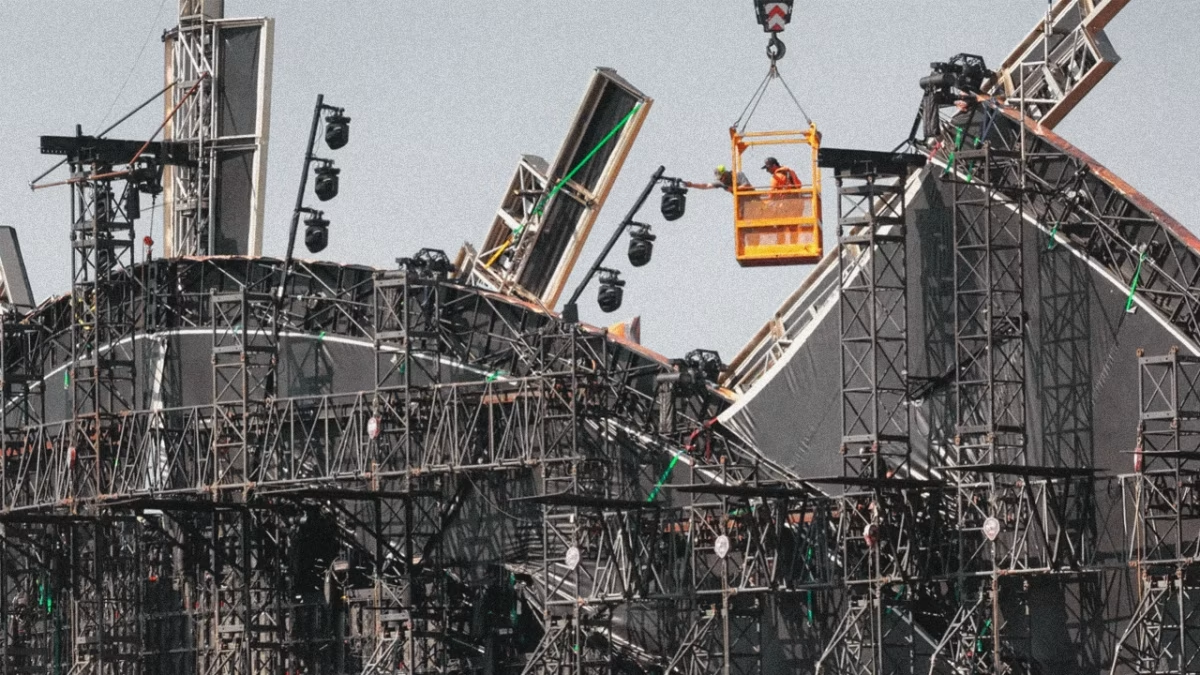
The Monumental Task of Building Tomorrowland, EDC, and Ultra
How High Prices Are Changing the Rave Scene
This corporate model is having a direct impact on the culture of the rave scene, which was built on ideals of community and accessibility, often summarized by the acronym PLUR (Peace, Love, Unity, and Respect). As festivals become more expensive, they risk becoming exclusive events for the wealthy rather than inclusive gatherings for all fans. 5
The price increases are clear. A single-day ticket to EDC in 2010 cost around $87. By 2025, a three-day pass was around $566, with resale tickets for future events already listed at over $700. Similarly, a ticket to the UK’s Creamfields festival in 2005 was £52. In 2025, the price was £310, a nearly 500% increase. This trend turns a festival pass into a major financial decision, comparable to buying a new TV or paying rent.
This high-cost environment also squeezes the rest of the electronic music ecosystem. Major festivals can pay huge fees to headlining DJs, which drives up artist booking costs for everyone. Smaller, independent clubs and promoters, the places where new artists often get their start, can’t compete. This can lead to a less diverse music scene, where only the most commercially successful artists get booked on the biggest stages. As one industry insider warned, “If the small organizers vanish, the sector’s collapse will be swift”.
In response, many fans are turning away from large corporate festivals. Community forums show a growing movement of people choosing to support smaller, local, and underground shows where tickets are more affordable and the experience feels more authentic. 6
What’s Next? A Battle for the Future of Live Music
The future of the concert industry may be decided in court. The DOJ’s antitrust lawsuit seeks to break up Live Nation and Ticketmaster, arguing that this is the only way to restore competition. The FTC’s lawsuit targets the company’s pricing and resale practices, aiming to stop what it calls deceptive conduct.
This legal fight represents a crossroads for live music. A win for the government could reshape the industry, potentially leading to more competition and fairer prices. A win for Live Nation would solidify its current business model for years to come.
Ultimately, the debate over ticket prices is about more than just money. It’s a question of whether live music should be an accessible cultural experience for everyone or a premium product for the highest bidder. While the government battles it out with the entertainment giant, fans and artists are left to navigate a system that many feel has prioritized profit over passion.
- https://www.vice.com/en/article/concert-tickets-arent-expensive-enough-actually-says-live-nation-ceo/ ↩︎
- https://mashable.com/article/ticketmaster-ceo-concert-tickets-too-cheap ↩︎
- https://www.justice.gov/archives/opa/pr/justice-department-sues-live-nation-ticketmaster-monopolizing-markets-across-live-concert ↩︎
- https://www.economicliberties.us/wp-content/uploads/2023/06/052023_AELP_Ticketmaster_PolicyBrief.pdf ↩︎
- https://coolstorybro.blog/blog/how-live-nation-hijacked-edm ↩︎
- https://www.reddit.com/r/Music/comments/1nszo75/jack_antonoff_says_live_nation_ceos_remark_about/ ↩︎
What We Covered

- [2026.07.05] ./&Friends Festival 2026 proves Philippine ravers are ready for global dance music scale
- [2026.06.30] ./How DJ Alok Uses Ancestral Music to Fund Real-World Amazon Reforestation
- [2026.06.27] ./Tomorrowland Thailand 2026 lineup sparks intense debate among dance music fans
- [2026.06.23] ./Why Do Modern Club Promoters Prioritize Viral Reach Over DJ Mixing Skills?
- [2026.06.17] ./From Dubstep to Global Pop: Oliver Tree and His Best Dance Music Features