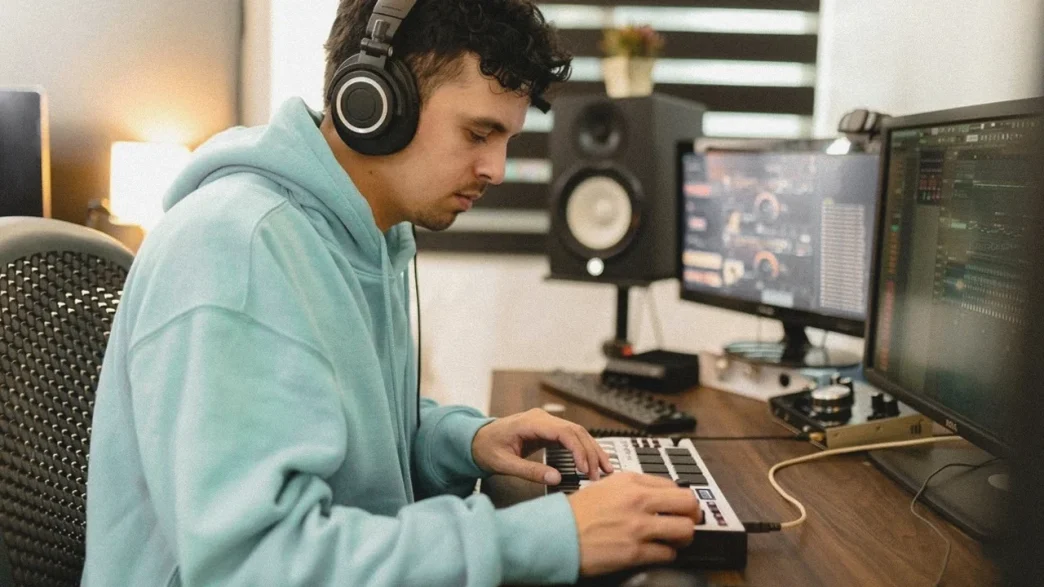
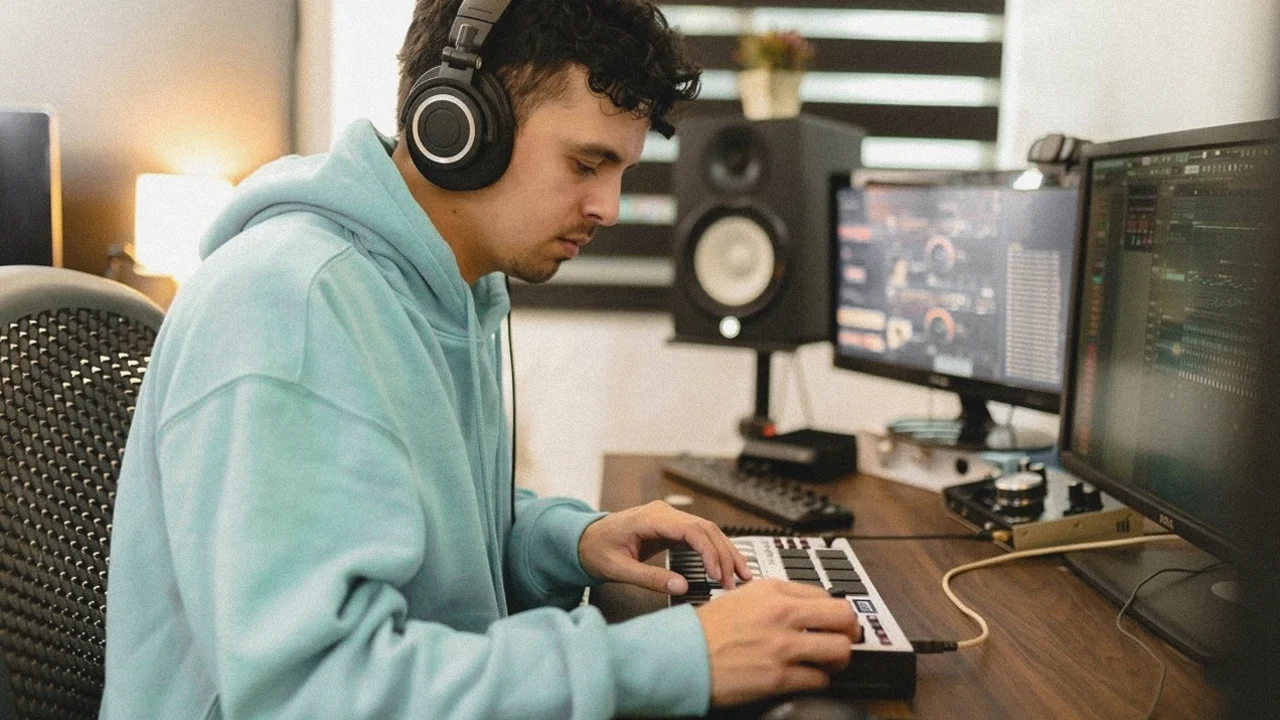

Picture this: you’ve just spent 48 consecutive hours in an Ableton session. You’ve painstakingly EQ’d a snare drum until it snaps with the crispness of a breaking glacier. Your sidechain compression is mathematically flawless. You upload the track, sit back, and wait for the underground music scene to crown you the next electronic savior.
And then… absolute silence.
Welcome to the music industry in 2026, a post-scarcity sonic dystopia where technical perfection is no longer a competitive advantage—it’s merely the bare minimum. The harsh reality that most independent electronic music producers refuse to accept is that your audio fidelity isn’t the bottleneck. Discoverability is. In an era defined by endless algorithmic churn, electronic music producer marketing and strategic DJ branding are unequivocally more important than the actual music you make.
The Mathematical Nightmare of the Song Economy
If you want to understand why your tracks are sinking like stones in the digital ocean, you have to look at the brutal math of modern streaming. The democratization of music production—where anyone with a laptop can produce a pristine tech-house track—has completely saturated the market.
Every single day, approximately 112,000 new tracks are uploaded to streaming platforms, feeding into a global catalog that now exceeds 126 million songs. That translates to a new track entering the ether every 0.8 seconds. Consequently, we are staring down a massive graveyard of unheard audio. Spotify itself has noted the paradox of the modern music industry: while payouts are hitting record highs, there are now nearly 12 million uploaders competing for those fractions of a cent.
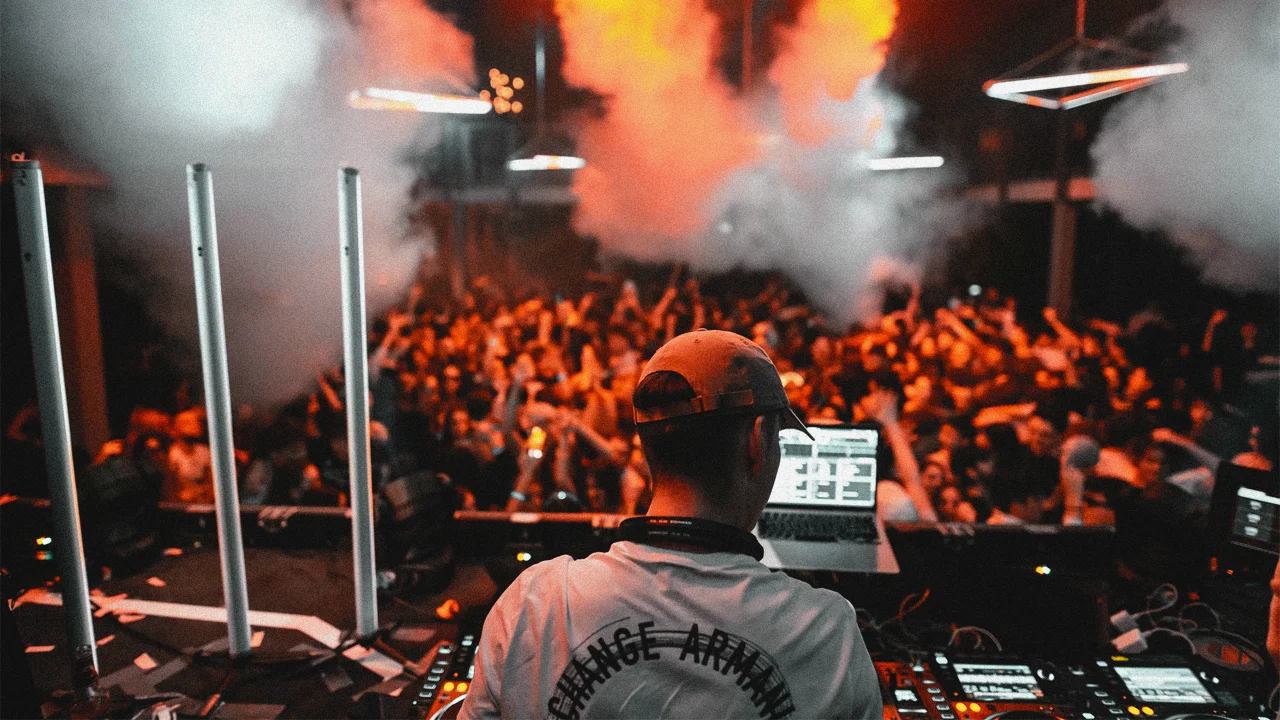
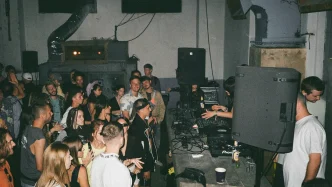
Study Reveals DJs Are Three Times More Likely to Struggle With Mental Health
When infinite choice becomes no choice at all, listeners stop filtering by audio quality. They simply don’t have the cognitive bandwidth. Instead, they rely on visual heuristics, cultural signifiers, and narrative storytelling. If you drop a track without a compelling brand architecture, you aren’t releasing music—you are just adding data to a server.
The “All Eyes, No Ears” Epidemic
“But wait,” the aspiring DJ argues, “I’ll just get a viral hook on TikTok!” This is the great myth of modern music marketing. We are currently suffering from what industry analysts call the “All eyes, no ears” crisis.
Short-form social media has fundamentally broken the music discovery funnel, especially for Gen Z. While a snippet of your track might soundtrack a million viral dance challenges, that visibility rarely translates into genuine artist fandom. The listener’s relationship remains tethered to the 15-second video, the meme, or the algorithm—not to you, the producer. The moment the trend shifts, your momentary spike in streams evaporates. Cultivating true fandom from the very beginning, rather than blindly chasing a viral algorithmic high, is the only way to ensure listeners actually seek you out.
Treating Your Audio as a Loss Leader
To survive as an electronic music producer today, you need a radical paradigm shift: your music is no longer your primary commercial product. Your music is a “loss leader.”
Think of your tracks as a hyper-engaging flyer designed to draw people into your actual ecosystem. The real product is the brand you build—the live shows, the festival residencies, the merchandise, and the community you foster. You cannot build that ecosystem if you treat marketing as an afterthought. Spending massive amounts of cash and time perfecting a project without a marketing strategy just means you’ll be sharing your art with the exact same tiny circle of people over and over again.
Case Studies in Cultivating Cults
If you want to understand how DJ branding case studies apply to the real world, examine the artists who have successfully hacked the culture.
Take Fred again.. as the prime example. He essentially dismantled the mysterious, untouchable DJ persona and replaced it with a radical, diary-entry authenticity. His album covers aren’t expensive 3D renders; they are unfiltered, timestamped selfies straight from his camera roll. But his real genius lies in direct-to-fan marketing. He uses community platforms like Discord, and even allows fans to message him personally on WhatsApp for guest lists and secret show locations. This masterclass in parasocial branding makes fans feel like they are interacting with a close friend, creating an army of evangelists.
On the opposite end of the spectrum is John Summit. He leaned heavily into a highly specific, unapologetic lifestyle brand, generating massive appeal and grossing $22 million in ticket revenue in a single year. By launching his “Experts Only” label and event series, he didn’t just sell house music; he sold access to an infinite party, building an unmistakable brand identity that cuts through the noise.
Then there’s Peggy Gou, who proved that treating social media as a holistic brand portfolio pays off immensely. She uses her Instagram to project “Peggy Gou™ the brand,” intertwining her DJ life with high fashion, directly tying her music persona to her own clothing label, Kirin. She doesn’t just sell tracks; she sells an entire aspirational lifestyle.



Music SEO: The Search for Signal in the Noise
Even the most underground DJ needs to understand Search Engine Optimization (SEO) in 2026. This isn’t just about Google; it’s about making yourself discoverable on Spotify, YouTube, and Instagram.
Following recent updates to Instagram’s algorithm, discoverability is now heavily driven by in-app searches rather than just the feed. This means your posts must be optimized with keyword-rich captions and niche hashtags.
Furthermore, the biggest mistake producers make in traditional search is trying to compete for generic keywords like “techno” or “EDM.” You will drown. Instead, a smart music SEO strategy relies on long-tail keywords—highly specific phrases with lower competition but massive user intent. If you optimize your content for phrases like “dark electronic music events in Brooklyn” or “best melodic house producers 2026,” you intercept listeners who are actively looking to engage with your specific niche. You capture the exact audience primed to convert from casual listeners into dedicated fans.
Stop Tweaking, Start Building
In the end, it’s a bitter pill to swallow for the purists: the music industry is a business, and you have to treat it like one. Talent sets the floor, but branding determines the ceiling. You can spend another week layering synths and adjusting your reverb tails, but until you figure out what your brand stands for, how you communicate it, and why anyone should care, that perfectly mixed track is destined for the sonic graveyard. Stop just making music, and start building a world.
Source & Further Readings
Music Marketing & Industry Trends
- Market Strategy: Marketing Strategy 2025 (Reprtoir), The Importance of Marketing (Forbes)
- The “Fred Again” Effect: Case study on modern stardom (The Lab Strategy)
- Streaming Data: Spotify Streaming Report 2024 (Gearnews), Spotify Industry Insights
Virality vs. Fandom
- Fandom Analysis: Why virality is not building fandom (MIDiA Research)
- Visual Culture: How Instagram changed DJ culture (Mixmag), Video Case Study (YouTube)
* generate randomized username
- COMMENT_FIRST
- #1 Lord_Nikon [12]
- #2 Void_Reaper [10]
- #3 Cereal_Killer [10]
- #4 Dark_Pulse [9]
- #5 Void_Strike [8]
- #6 Phantom_Phreak [7]
- #7 Data_Drifter [7]
- #8 Zero_Cool [7]