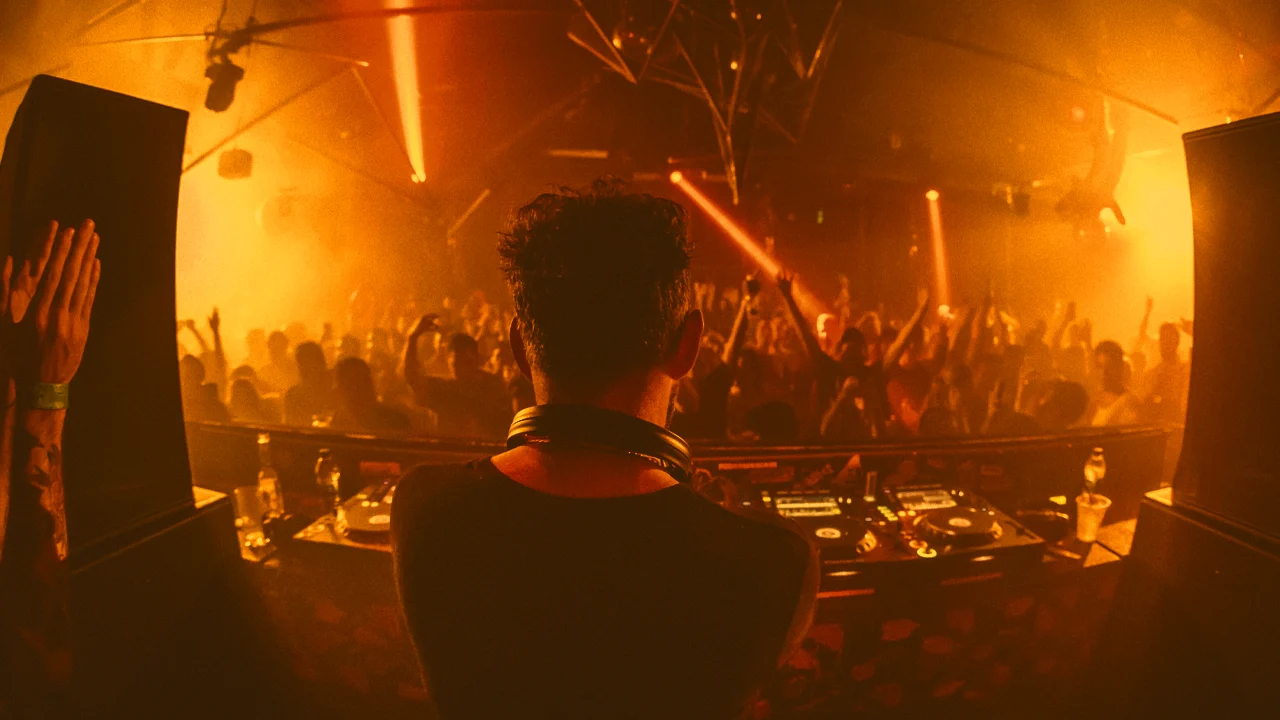
Condensation drips from the ceiling onto the Pioneer CDJ-3000s while a local resident pushes a heavy 130 BPM techno groove into the room. The crowd is locked in a trance. Then the headliner steps into the cramped booth and the energy shifts instantly. This is the handover.
Electronic dance music relies on an unbroken stream of audio. Traditional bands take breaks between sets but club nights do not. The transfer of control happens live while hundreds of people dance. It is a highly volatile five minute window of physical movement and technical risk. Egos clash over crossfaders and careers hinge on how smoothly a USB drive is loaded.
TL;DR The physical transition between DJs is a tense operation demanding strict technical etiquette. A seamless handover preserves crowd momentum and protects sound systems from audio distortion. Failing to respect the workspace, equipment, or the previous artist often results in immediate professional backlash and a permanent loss of future venue bookings.
What Actually Happens During the Five Minute Protocol?
Punctuality is the absolute foundation of a smooth transition. The incoming artist must arrive in the booth exactly five minutes before their set begins. Arriving earlier crowds the space while arriving late induces panic. The incoming act watches the active decks to note the crossfader position and check the current tempo. They must establish the mathematical reality of the mix before touching a single knob.
Direct communication happens only when the active DJ finishes a mix. The incoming artist leans in to compliment the current track and ask about the remaining time. Hardware integration comes next as the new DJ plugs in headphones and inserts USB drives into the inactive CDJs. They never rely on a single drive because network link cables fail easily. Finally they let the outgoing track play to its natural end because cutting another artist short is a massive sign of disrespect.
Why Redlining Your DJ Mixer Destroys Club Sound Systems
The Physics of Venue Control
The transfer of the mixer is a transfer of physical power. The incoming DJ inherits the club’s entire audio signal chain. Sound engineers watch this moment with intense dread because inexperienced acts often push the channel gain past the safe green zones. Pushing the volume into the red does not make the music louder. It squares off the audio sine waves and creates harsh harmonic distortion.
This acoustic clipping degrades the punch of a kick drum and exhausts the ears of the dancers on the floor. Proper gain staging prevents this damage. A professional DJ leaves headroom on the mixer and trusts the front of house engineer to amplify a clean signal. When performers ignore these physical limits audio technicians deploy heavy hardware countermeasures. They activate brickwall limiters that aggressively squash the dynamic range.
Why Is the Workspace So Heavily Guarded?
A club booth is not a VIP lounge. It is a highly specialized workspace filled with fragile electronics. Bringing friends into this dark and restrictive zone blocks sightlines and creates a severe safety hazard. An accidental bump against the CDJ platter stops the music instantly. Artists need a psychological barrier to do their job properly.
Techno producer Kyle Geiger views this boundary as a practical necessity. “The level of separation between the DJ booth and the crowd should be only as much as technically necessary, so they can work”. Liquid is the ultimate enemy in this space. A spilled drink destroys a digital mixer and ends the night. Carelessly stored coats block amplifier ventilation and cause thermal overload.
Covert Tactics and Psychological Sabotage
Not every handover is a friendly exchange. The booth frequently becomes a battleground for territory and ego. Outgoing DJs control the final audio parameters so they can elevate their successor or set a trap. The most common technical courtesy is leaving the equalizer knobs flat at the twelve o’clock position. Leaving the bass EQ knob completely cut means the next DJ will drop their first track in total silence.
Some acts employ deliberate sabotage to test their rivals. A classic move is the unmixable outro where the incumbent selects a final track with complex vocals or an off time drum pattern. This forces the incoming DJ into a dissonant clash of frequencies. Some artists drastically shift the BPM in the final two minutes to leave the next performer stranded in the wrong tempo bracket. You can easily spot covert booth sabotage by watching how they handle these final seconds.
The Heavy Price of Poor Etiquette
Dance music operates on a tight network of interpersonal trust. Promoters take massive financial risks to host events and rely on the professionalism of their talent. A performer who redlines the system or disrespects the resident DJ quickly becomes a liability. Word of bad behavior travels fast in local scenes. This leads directly to the shadow ban.
The offending artist does not get a formal rejection letter because their emails simply go unanswered and the booking calendar dries up. Upward mobility requires total mastery of booth etiquette. The ability to execute a flawless physical swap is just as critical as the music selection itself. The culture demands continuity. The DJ who protects the momentum of the room guarantees their own survival in the scene.
Sources & Further Reading
The “Five-Minute” Window (Statistic): The strict industry protocol requiring an incoming DJ to enter the booth exactly five minutes before their scheduled set to assess the room and equipment without crowding the space.
Kyle Geiger (Named Individual): The techno producer whose direct quote regarding the “cloakroom fallacy” and the technical necessity of separating the DJ booth from the crowd was featured in the article.
- Source URL: https://happytuesdays.com/blogs/the-lowdown/how-to-not-be-a-nuisance-in-the-dj-booth-with-kyle-geiger
“Twelve o’clock position” (Statistic/Hardware State): The technical standard and expected courtesy of leaving the equalizer (EQ) knobs completely flat before handing over the decks to prevent an incoming DJ from accidentally dropping their first track in silence.
- Source URL: https://www.reddit.com/r/DJs/comments/td6tre/can_someone_please_explain_to_me_how_the_fuck_you/
The “Shadow Ban” (Named Event/Industry Practice): The specific term used for the professional consequence where a DJ is silently blacklisted by promoters and venues due to poor booth etiquette, arriving late, or redlining the sound system.
130 BPM and Pioneer CDJ-3000s (Statistic and Named Equipment): The specific track tempo and modern club hardware used in the opening paragraph were added as narrative scene-setting details, though Pioneer CDJs are established as the primary industry-standard equipment.