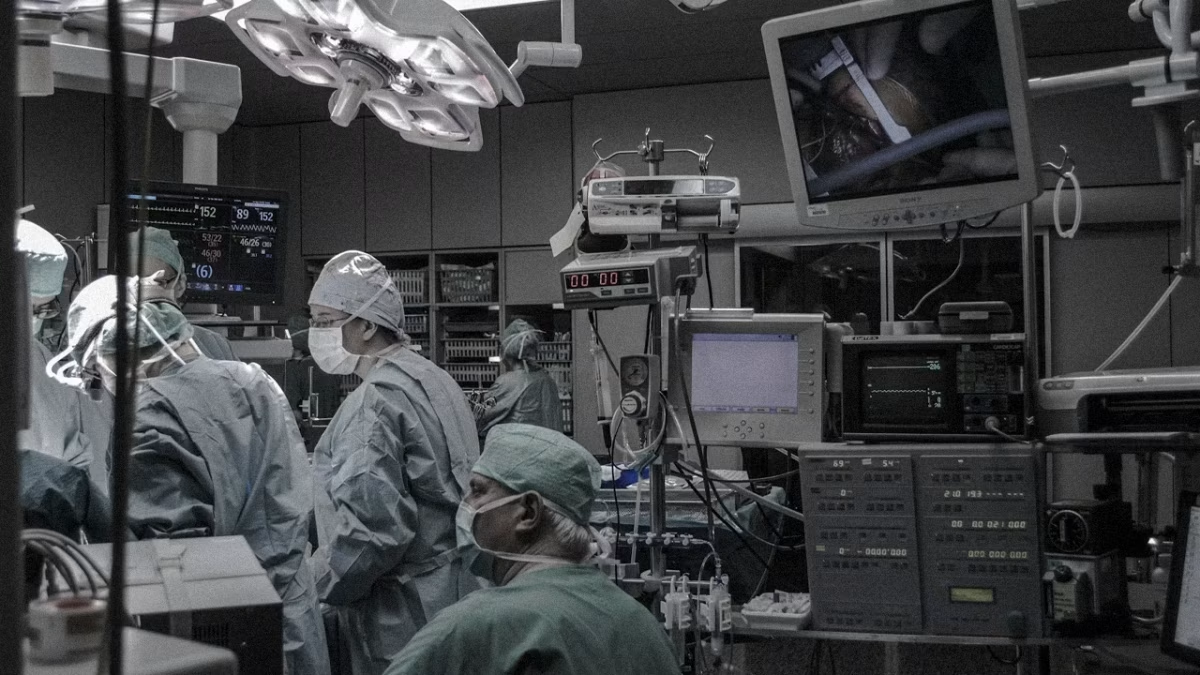

The operating room is a weird place. It is a sterile, freezing cold theater where you are stripped naked, paralyzed with neurotoxins, and sliced open by people discussing their weekend plans. The deal we make with modern medicine is simple: you give us the “Milk of Amnesia” (Propofol), and we agree to cease existing for three hours. We expect a void. We expect silence.
But the void is a lie.
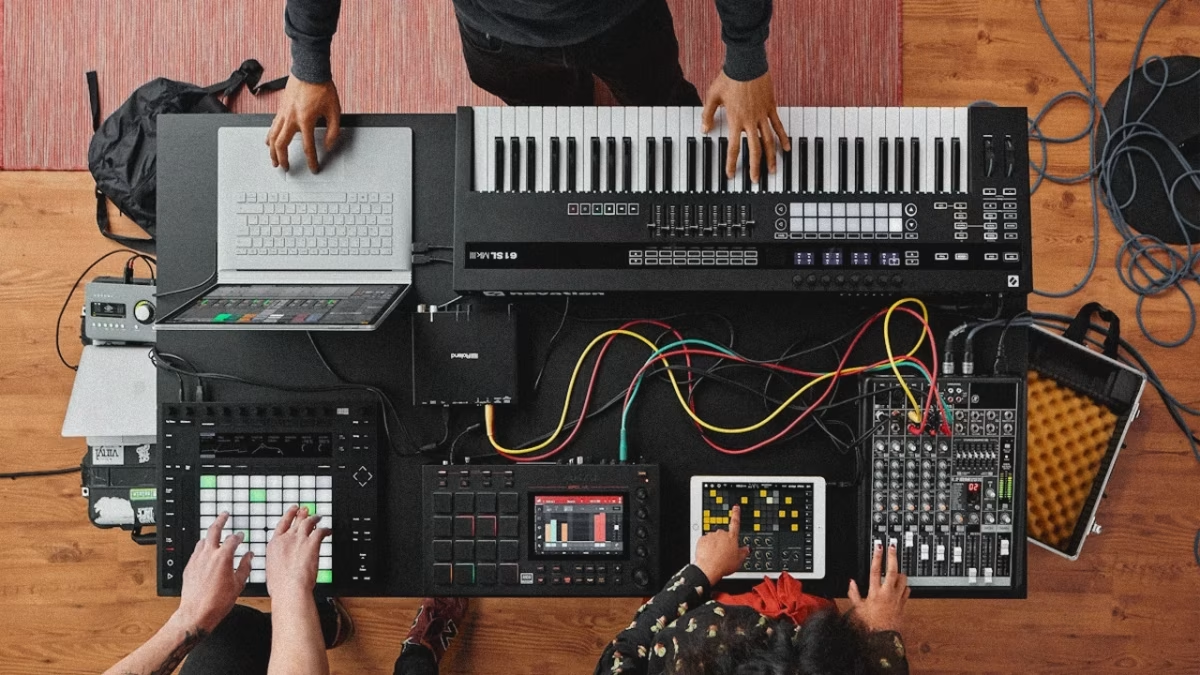
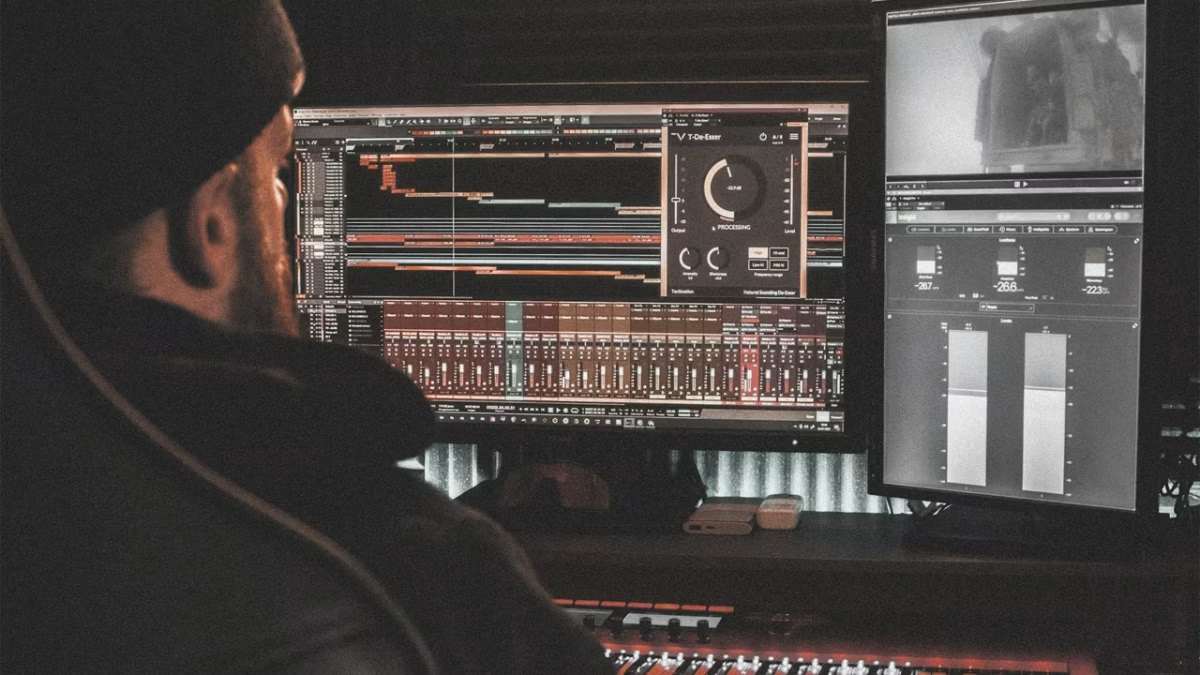
According to a groundbreaking 2025 study out of New Delhi, your brain doesn’t actually turn off when you go under. It’s still listening. And if you aren’t controlling what it hears, your body is freaking out on a cellular level, pumping stress hormones that make your recovery a living hell. The solution? You need a DJ. 1
The “Island of Wakefulness”
For decades, the medical dogma was that general anesthesia was a total system shutdown. But recent neuroimaging has exposed a terrifyingly cool concept called the “Island of Wakefulness.”
While the parts of your brain responsible for screaming “I’m being cut open!” are offline, the Primary Auditory Cortex (PAC)—the part that processes sound—stays disturbingly active. Your conscious mind is gone, but your primal brain is still tracking the acoustic environment. It hears the clanging trays, the hiss of the ventilator, and the surgeon’s playlist (which is usually Dad Rock or heavy metal). 2

Study Shows 97% of People Failed to Identify AI Music in Blind Listening Tests Conducted by Deezer
In the absence of context, the reptilian brain interprets these noises as threats. The result? Your amygdala panics. Your hypothalamus screams at your pituitary gland. Your body floods with cortisol. You might be asleep, but your nervous system is fighting for its life. 3
The 2025 Breakthrough
Enter Dr. Tanvi Goel and her team at Maulana Azad Medical College. They didn’t just want to see if music was “nice.” They wanted to see if it was a drug.
In a randomized controlled trial published in Music and Medicine, they strapped noise-canceling headphones on patients undergoing gallbladder surgery. One group got the standard OR noise; the other got a patient-selected therapeutic playlist.
The results were staggering. The patients listening to music didn’t just feel better—they biologically were better. Their cortisol levels (the stress hormone) stayed 22% lower than the people listening to silence. 4
But here is the kicker: They needed fewer drugs.
- 15% less Propofol to stay asleep.
- 30-38% less Fentanyl to kill pain.
“By delivering intraoperative music, we’re engaging the patient’s nervous system even under anesthesia,” Dr. Goel said. In a medical landscape ravaged by opioid addiction, finding a way to cut fentanyl use by nearly 40% just by playing an MP3 file is not just “wellness”—it’s a revolution.
The Opioid Hangover
The benefits don’t stop when you wake up. Data presented at the American College of Surgeons (ACS) Clinical Congress 2024 analyzed nearly 4,000 patients and found that those who listened to music used less than half the amount of morphine the day after surgery compared to those who didn’t.
Think about that. We are currently fighting a losing war against opioid dependency, where addiction often starts with a legitimate prescription after a minor surgery. If a Spotify playlist can cut your morphine consumption by 50%, the pharmaceutical industry should be sweating.
The “Sterile Cockpit” Problem
So, if this is so obvious, why isn’t every hospital doing it? Because the culture of the Operating Room is rigid, hierarchical, and deeply protective of its rituals.
Anesthesiologists refer to induction and emergence as the “sterile cockpit”—a term borrowed from aviation. They need to hear the subtle pitch changes in the pulse oximeter. They need to hear the ventilator alarms. To them, your Enya playlist is a safety hazard.
“We’ve been doing this for decades,” says Dr. Goel, acknowledging the inertia of the old guard. A survey of OR staff showed that while many surgeons like music (for their own focus), a significant chunk of anesthesiologists find it distracting and dangerous during complications.
The compromise? Headphones. But not just any headphones—they need to be noise-canceling to isolate the patient in a “sound bubble” while leaving the room silent for the doctors to do their work. 5



The Verdict
The days of being treated like a broken car on a mechanic’s lift are ending. We are realizing that “unconsciousness” is a spectrum, and the environment you sleep in matters.
If you are scheduling a surgery in 2025, don’t just ask about the surgeon’s success rate. Ask if you can bring your headphones. If they say no, tell them the science says you’re saving them money on Fentanyl.
Your brain is going to be listening to something while you’re under. You might as well choose the track.
- https://www.eurekalert.org/news-releases/1096535 ↩︎
- https://pmc.ncbi.nlm.nih.gov/articles/PMC11161138/ ↩︎
- https://bioengineer.org/listening-to-music-during-surgery-lowers-anesthetic-needs-and-stress-responses/ ↩︎
- https://www.medindia.net/news/healthwatch/music-therapy-makes-surgery-easier-by-reducing-drugs-and-stress-221701-1.htm ↩︎
- https://mmd.iammonline.com/index.php/musmed/article/view/1111 ↩︎
* generate randomized username
- COMMENT_FIRST
- #1 Lord_Nikon [12]
- #2 Void_Reaper [10]
- #3 Cereal_Killer [10]
- #4 Dark_Pulse [9]
- #5 Void_Strike [8]
- #6 Phantom_Phreak [7]
- #7 Data_Drifter [7]
- #8 Cipher_Blade [6]