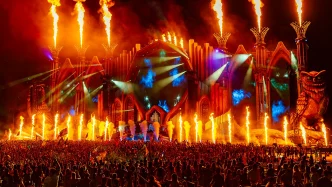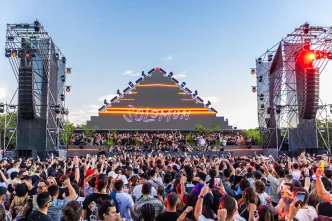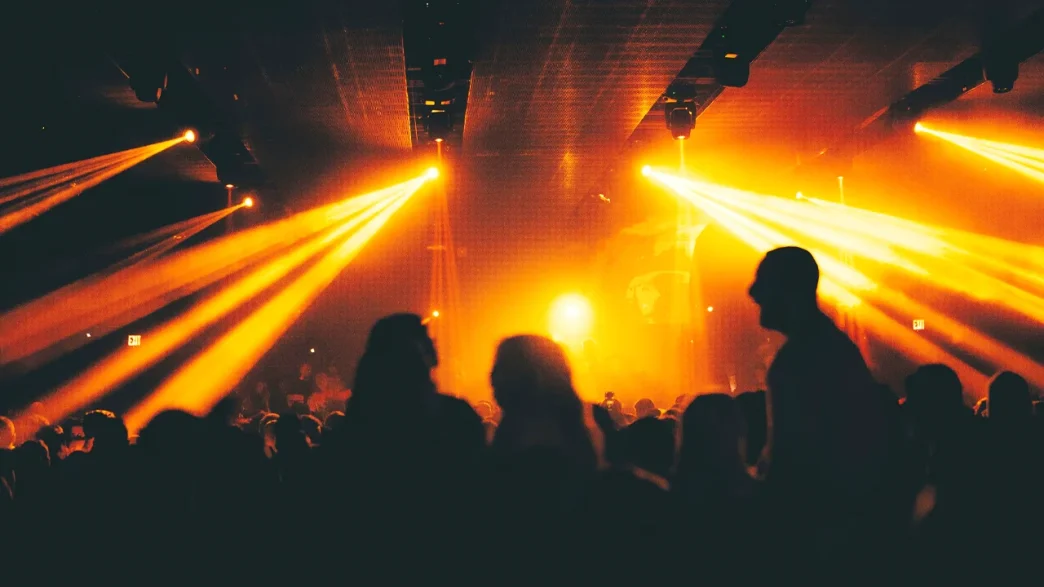
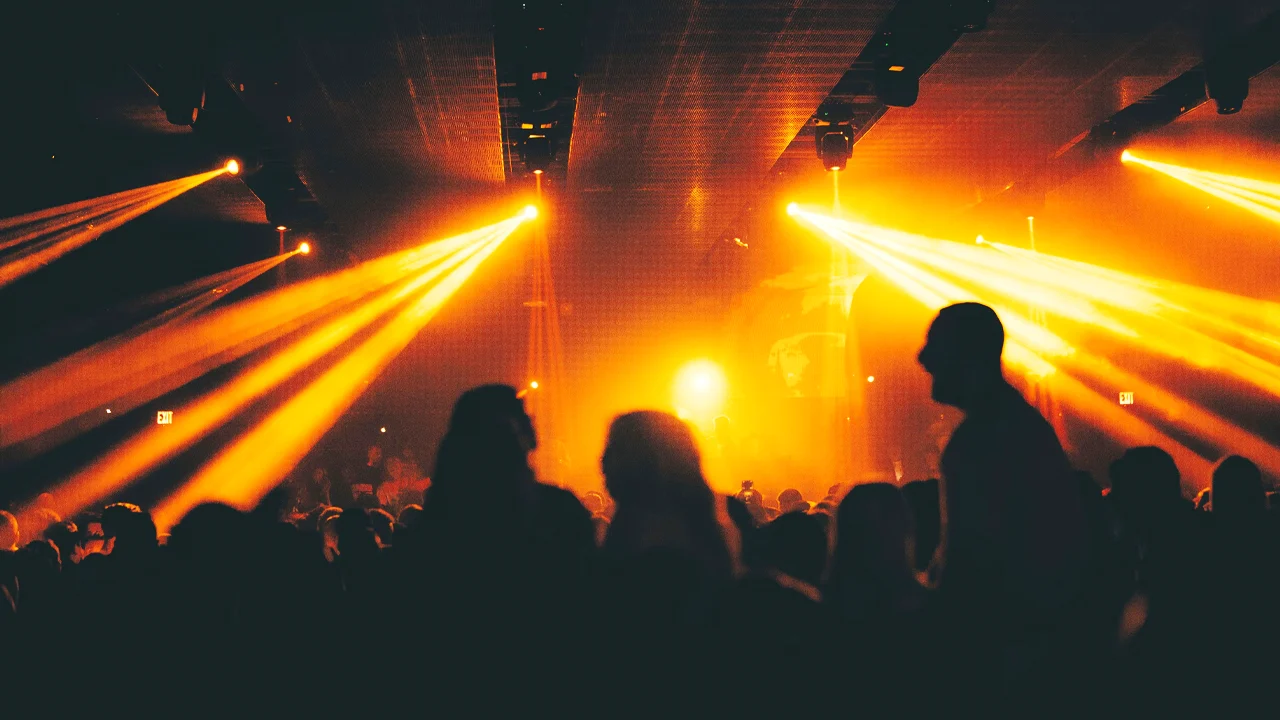

For decades, the nightclub was governed by a biological clock. It was a space for youth, where relevance decayed the moment you turned 30, and the presence of a “grey hair” signaled a failure to launch. In 2026, that binary has collapsed. The velvet rope no longer filters for youth; it filters for vibe.
We are witnessing the “Post-Demographic” rave, a shift where the dancefloor has become an equalizer. The future of nightlife isn’t about cohorts or target markets; it is, to borrow a sentiment from the scene’s current ethos, just people uplifting people.
The Temporal Shift: Day Fever and the 5-to-9 Revolution
The major disruption to club culture hasn’t been a genre, but a time slot. The idea that hedonism can only occur after midnight has been dismantled by the success of events like “Day Fever.” Co-founded by Line of Duty actress Vicky McClure, these daytime discos promise a simple contract: euphoria, home by 10 PM. 1
Initially pitched at the “overs,” Day Fever has tapped into a cross-generational desire for “intentional partying.” Gen Z, a “sober-curious” generation, is just as exhausted by the 4 AM commute as their Gen X parents. The result is a convergence. On a Saturday afternoon in Sheffield or London, you might find a 55-year-old reliving the Second Summer of Love next to a 22-year-old optimizing their sleep hygiene. They are united not by age, but by the utility of daylight raving. 2

Comfort Kills Creativity: Why the Art of DJing is About Risk
The Audiophile Sanctuary: Listening Bars as Intergen “Third Places”
If the day rave is the body of this movement, the “Listening Bar” is its soul. Imported from the Jazz Kissa culture of post-war Tokyo, these high-fidelity spaces have proliferated across New York, London, and Berlin, offering a respite from the chaotic energy of the traditional club.
In spaces like London’s Bambi or the vinyl-lined rooms of Brooklyn, social posturing has been replaced by a reverence for sound. Here, generational friction dissolves. A 70-year-old jazz fan and a 20-year-old “Selecta” engage in “low-demand social connection”—sharing space without the pressure to perform.
The technology here is crucial: specifically, the lack of it. Many venues enforce “phone-free” policies, neutralizing the digital divide. Without the ability to livestream their location, the crowd is forced to be present. It is the antithesis of the “Instagram trap”; it is a place to be alone, together.
The Sonic Ouroboros: Fred again.. and the Rave Shamans
Musically, the walls are crumbling too. The era’s defining narrative is the mentorship between Fred again.. and his “rave shaman,” The Blessed Madonna (Marea Stamper). Their 2021 anthem “Marea (We’ve Lost Dancing)” bridged the gap between the Brian Eno-mentored prodigy and the Chicago house veteran. 3
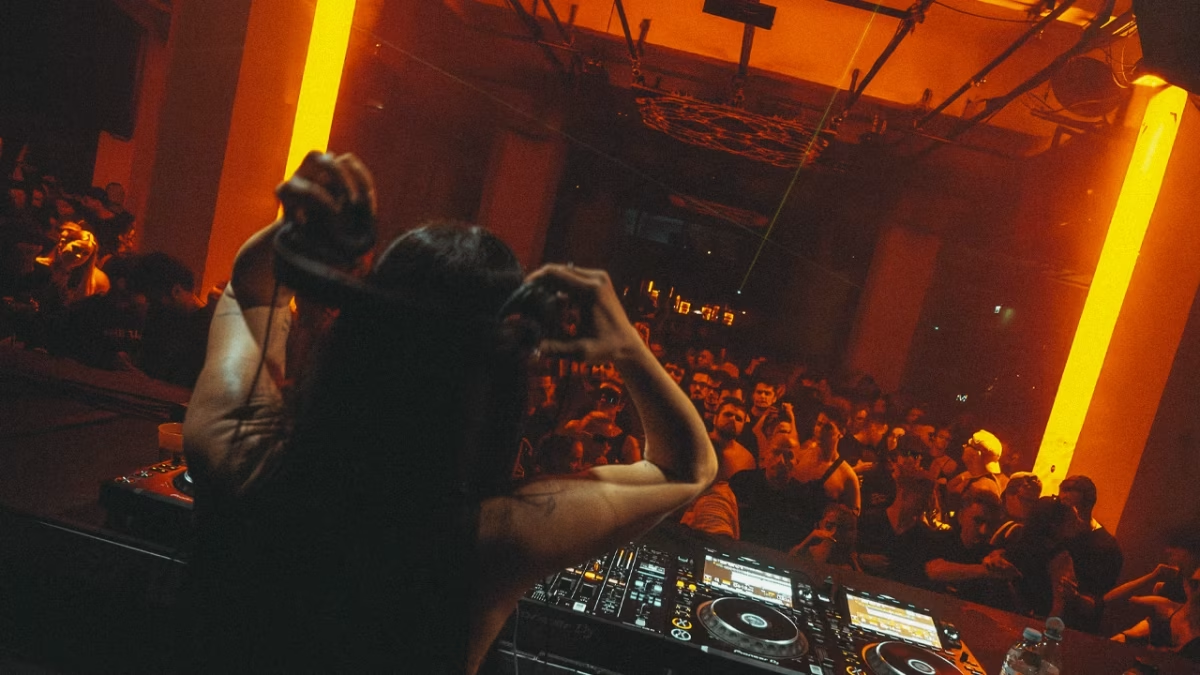
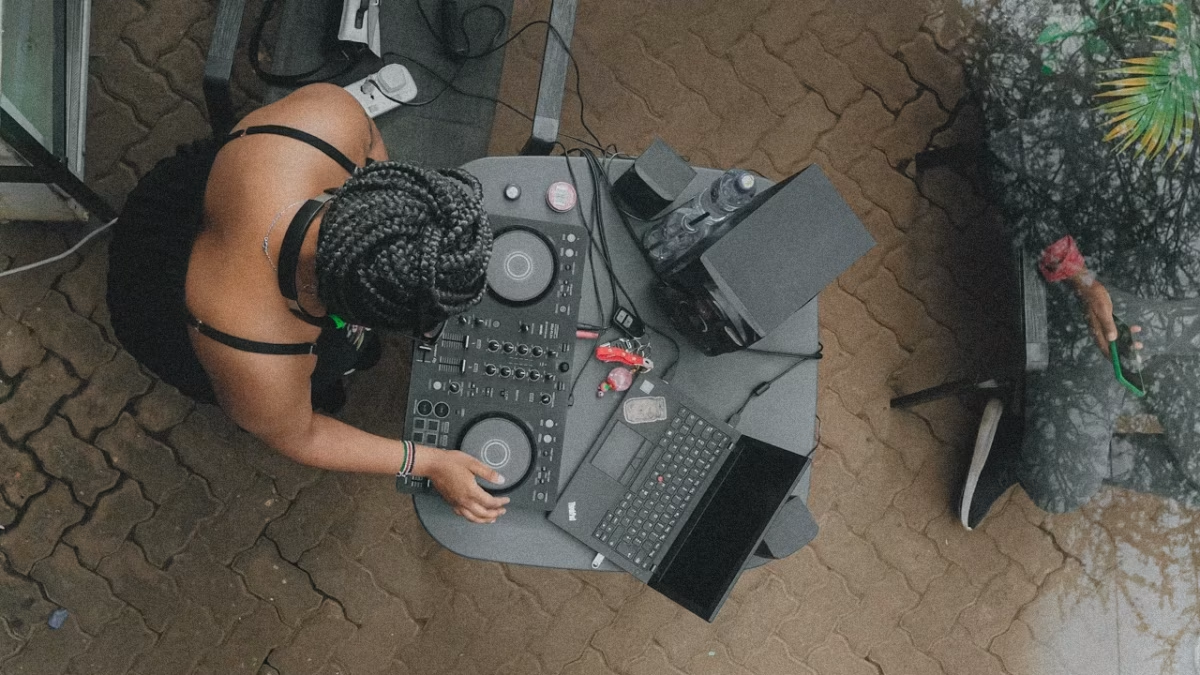
This isn’t just about remixing old tracks; it’s about respecting the lineage. We see it in the rise of DJs like DJ Sweet6teen, a young selector mining the archives of 90s trance and house, playing vinyl sets that act as a handshake between generations. When a 20-something DJ drops a white-label track from 1995, they aren’t engaging in irony; they are validating the experience of the older ravers in the room. The music has become a loop where the past and future feed one another.
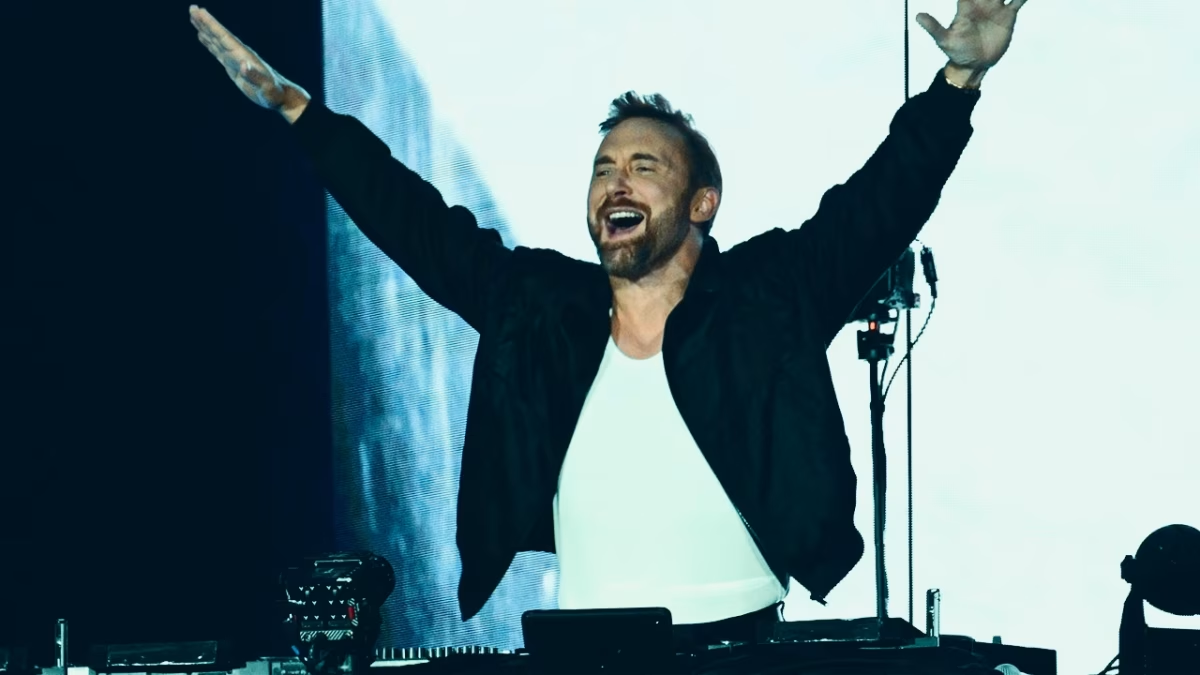
Even titans like Carl Cox—now in his 60s—are no longer “legacy acts.” They are innovators, playing hybrid live sets and mentoring the next wave via the Pete Tong DJ Academy. The “Godfather” isn’t sitting on a throne; he’s in the booth, sweating it out with the kids. 4
The Iconography of Joy: Enter the “Rave Granny”
Nothing signifies this shift more than the viral ascendancy of figures like Lynne Cole, known as “Rave Granny.” In a previous era, a grandmother at a festival would have been framed as a spectacle. Today, she is an aspiration.
Cole, who attends festivals solo because her peers have retired to the couch, represents the “Silver Raver” demographic. Her presence on the dancefloor validates the Gen Z fear of “boring adulthood.” She is proof that joy is a lifelong project. As noted in recent critiques, the friction between generations evaporates when participation is authentic; the “vibe shift” favors those who dance, regardless of the year on their birth certificate. 5
Just People Uplifting People
Intergenerational crowds aren’t just changing the vibe—they’re quietly stabilizing the nightlife economy. When 20-somethings, 40-somethings, and 60-somethings share the same floor, venues can run everything from 5-to-9 day discos to late-night sessions without relying on one narrow demo. Older ravers often have more disposable income and pay for sound, safety, and curation, while younger dancers bring energy and cultural reach—together, they extend the life of venues and scenes instead of burning out every few years.
By 2026, the nightlife industry has realized that segregating joy by age is bad business. The “age cage” was a construct of a consumerist model. The new model is circular and reciprocal.
The younger generation brings the energy and the “sober curious” intentionality; the older generation brings the history and the love of the music. In this new ecosystem, there are no boomers, no zoomers, no labels. There is only the bassbin, the dark room, and the act of lifting each other up. 6
- https://www.theguardian.com/music/2024/feb/11/daytime-clubbing-rave-generation-day-fever-club-london-outernet ↩︎
- https://www.eventbrite.com/blog/press/newsroom/the-new-nightlife-gen-zs-soft-clubbing/ ↩︎
- https://notion.online/fred-again-interview-actual-life/ ↩︎
- https://www.15questions.net/interview/carl-cox-interview-electronic-generations-improvisation-trusting-moment/ ↩︎
- https://www.walesonline.co.uk/news/real-life/gran-who-still-raving-57-26285749 ↩︎
- https://pmc.ncbi.nlm.nih.gov/articles/PMC9850285/ ↩︎
* generate randomized username
- COMMENT_FIRST
- #1 Lord_Nikon [12]
- #2 Void_Reaper [10]
- #3 Cereal_Killer [10]
- #4 Dark_Pulse [9]
- #5 Void_Strike [8]
- #6 Phantom_Phreak [7]
- #7 Data_Drifter [7]
- #8 Zero_Cool [7]