

There’s a subtle frustration appearing in rave communities these days, the kind that starts with a Reddit comment about how “festivals used to mean something” and soon turns into a generational debate. Millennials and Gen X ravers, those who spent their youth in warehouse raves and small clubs, now suggest that Gen Z played a part in changing electronic dance music culture.
The problem is, they’re mostly wrong. Or at least, they’re blaming the wrong culprit.
It’s also important to remember that not all Gen X and millennial ravers, DJs, or collectives hold this view. In fact, across these generations, many established DJs, promoters, and creative collectives actively embrace Gen Z’s energy, their digital influence, and the new dynamic of the scene. Plenty of collaboration happens across the generational divide with shared lineups and projects. 1 2
Disclaimer: Whether you call it EDM, electronic dance music, or something else entirely, this article uses “EDM” (three letters, not four) as a catch-all term for the wide world of club, dance, and festival music. For many, these labels carry different histories and meanings, so take the terminology with a grain of salt.
The Narrative: Gen Z Destroyed Everything
If you spend time in r/aves or scroll through TikTok threads about festival culture, you’ll hear the same complaint repeatedly. Gen Z commodified the scene. Gen Z shows up to festivals to take selfies instead of to actually rave. Gen Z altered the vibe. Gen Z doesn’t understand PLUR—Peace, Love, Unity, Respect—the foundational ethos that supposedly kept rave culture pure for decades. 3
As one festival-goer posted in r/aves: “I’m noticing such a decline in people having kandi to trade … I would love to trade and it makes it really tough when no one has any to offer.” Another commenter added: “The focus has shifted from kandi and connecting with new people to making sure you have the hottest fit and best wristbands for access.” 4
But it’s incomplete.
The Actual Problem Started Way Before Gen Z Showed Up
Electronic music culture didn’t die recently. It transformed. That transformation began before Gen Z hit puberty.
In the 1980s and 1990s, the original house movement in Chicago and Detroit techno were politically charged scenes, providing spaces for Black, queer, and other marginalized communities to exist on their own terms. Ravers built alternatives to mainstream institutions. 5
By the 2010s, American music executives rebranded rave culture as “EDM” (three letters), making it corporate-friendly, easier to market, and sponsor. Electronic music became branded and packaged, no longer subversive, and was sold to mainstream audiences.
Mega-festivals like Tomorrowland, Electric Daisy Carnival, and Ultra turned into multi-million-dollar operations, dominated by Live Nation and sponsorship deals. Events scaled up, shifting focus from participation and community to spectacle and consumption.
Gen Z didn’t create these changes. This corporate infrastructure predated their entry into the scene.

The Underground Rave Scene Is PLUR’s Last Hope Against Festival Capitalism
So Why Does Gen Z Get Blamed?
The reason lies in how Gen Z discovers and experiences EDM and rave culture.
Millennials and Gen Xers invested effort in finding events, building personal connections, and learning unwritten norms, often entering small, invitation-only spaces. Gatekeeping existed, but so did mentorship and community-building.
Gen Z, on the other hand, often discovers EDM through social media algorithms—TikTok and Instagram serve festival and club content instantly. Influencer and selfie culture are tied to how this generation shares experiences.
The I’M PEAKING Podcast (Episode 76) sums up current sentiment: it’s not individual influencers, but mass attention itself that transforms the scene. 6
Ironically, multiple studies and industry reports confirm: Gen Z is attending clubs and festivals less than millennials did at their age. A 2022 Keep Hush survey found only 25 percent of Gen Z expressed interest in clubbing. The UK lost 480 clubs between 2020 and 2024, with more than 40 major music festivals canceled in 2025. 7
So Gen Z is blamed both for commercializing the scene through influencer presence and for not attending, which contributes to venue closures. Data shows Gen Z faces barriers including rising costs, digital anxiety, and economic pressures, not just lack of interest. 8
The Real Culprit: It’s Capitalism, Not Gen Z
Stripping away generational drama, the pattern is clear: commercialization and scale change subcultures.
Cultural movements struggle to survive mainstream success—core values get diluted, profit motives dominate, and festival models change.
Darrell Hester, a millennial creator quoted by Newsweek, argues modern EDM doesn’t inspire escapism as “recession pop” did during the financial crisis. The music and industry shifted before Gen Z arrived.
Perry Farrell, founder of Lollapalooza, admitted in Billboard in 2014 that he “sometimes cringes at his own festival” due to commercialized EDM acts. It’s an industry-wide phenomenon, not a generational failure. 9
Live Nation’s dominance, sponsorship, bottle service, and crowding are management decisions—not the fault of younger festival goers.
Timeline: Evolution of Electronic Dance Music (EDM) Culture
- 1980s-1990s: Origins in Chicago and Detroit. House and techno emerge as political and subcultural spaces.
- Early 2000s: Rave and club culture expands. PLUR (Peace, Love, Unity, Respect) philosophy and local event values rise.
- 2010s: American EDM boom. Major festivals and commercialization. The term “EDM” becomes a branded industry keyword.
- 2020s: Widespread festival cancellations, rising economic pressures, the social media generation’s impact, generational divides, and a renewed focus on smaller community-led events.

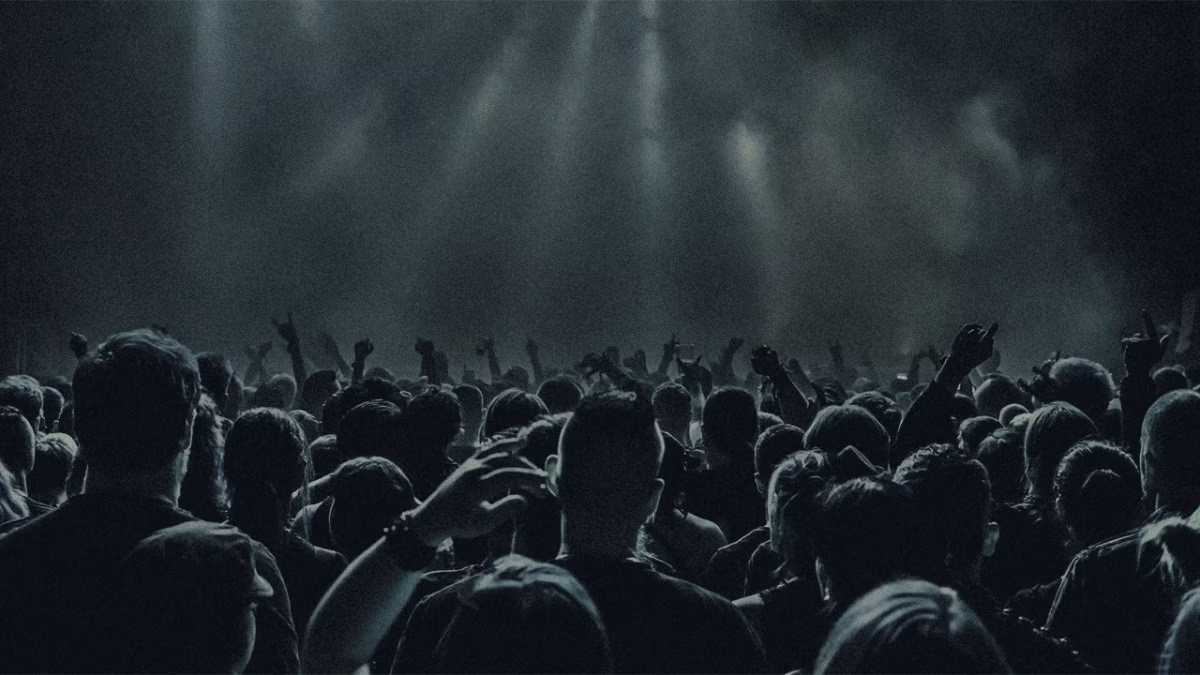

Community Spaces That Still Matter
Authentic EDM culture hasn’t disappeared; it has shifted to different spaces.
London’s Plur Project, Denver’s dance crews, Portland’s local events, and artist-backed festivals (Excision’s Lost Lands, Griz’s Seven Stars) thrive with smaller, more connected audiences.
These communities retain values like kandi trading, harm reduction, and direct participation. They’re intentionally smaller, sometimes harder to find, but they foster deep connections.
Younger ravers need to seek these groups, just as older generations did—by building relationships and learning values.
What Gen Z Actually Deserves Credit For
To be fair, Gen Z is responding to current realities, not causing them:
- Festival costs have risen steeply—a weekend easily tops $600, making participation inaccessible for many.
- Social media changes how people interact in nightlife spaces; anxiety about public exposure is real.
- Gen Z drinks less and attends fewer clubs, making choices around health and wellness.
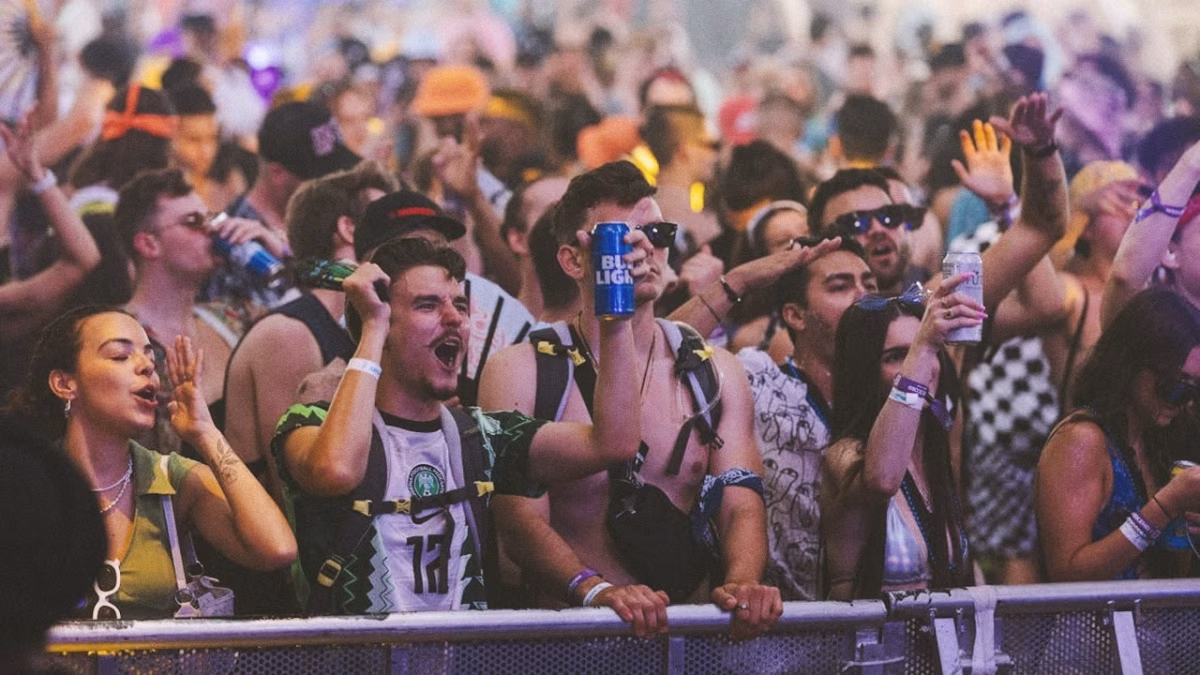
Going to Electronic Music Festivals Adds 9 Years to Your Life, Says Science
The Uncomfortable Truth
Millennials and Gen X may blame Gen Z for the loss of authenticity in EDM, but subcultural spirit fades due to mainstream commercialization—not because of one generation.
The truth is, corporate structures absorbed the scene, and now younger ravers must seek out real community. Those who succeed find meaning; those who don’t get the polished, packaged experience.
Not everyone blames Gen Z—many older DJs, collectives, and promoters work to bridge divides and co-create new scenes.
Gen X and millennials face a choice: mentor the new generation, help them find real EDM culture, or remain stuck in nostalgia. The scene’s future depends on both the willingness to adapt and the commitment to shared values.
- https://ahc.leeds.ac.uk/download/downloads/id/525/the_politics_of_partying.pdf ↩︎
- https://www.newsweek.com/millennial-theory-why-club-culture-died-gen-z-2065105 ↩︎
- https://zerogravitymarketing.com/blog/seo-impact-on-generations/ ↩︎
- https://www.reddit.com/r/aves/comments/1cuh9m4/is_kandi_trading_being_replaced_by_trinkets/ ↩︎
- https://www.reddit.com/r/Millennials/comments/17ovpy5/are_millennials_the_last_skilled_generation_ive/ ↩︎
- https://www.killyourdarlings.com.au/article/murder-of-the-dancefloor/ ↩︎
- https://www.ticketfairy.com/blog/gen-z-and-electronic-music-how-the-new-generation-is-shaping-the-future-of-dance-events ↩︎
- https://www.getsosh.com/our-take/corporate-social-responsibility-marketing-what-is-it ↩︎
- https://www.billboard.com/music/music-news/lollapalooza-perry-farrell-hates-edm-7446742/ ↩︎
* generate randomized username
- COMMENT_FIRST
- #1 Lord_Nikon [12]
- #2 Void_Reaper [10]
- #3 Cereal_Killer [10]
- #4 Dark_Pulse [9]
- #5 Void_Strike [8]
- #6 Phantom_Phreak [7]
- #7 Data_Drifter [7]
- #8 Cipher_Blade [6]


