

As a DJ and someone who spends a fair amount of time at clubs and music festivals, you start to notice the constants. The flashing lights, the overpriced water, and the glowing white-on-black logo in the DJ booth: Pioneer DJ. It’s everywhere. From the biggest festival mainstages to the corner of your local bar, their CDJ players and DJM mixers are the undisputed kings of the booth. It’s a level of market saturation that’s almost absolute. But why? Are they just that much better than everyone else, or is there a deeper, more complex story behind their reign? Let’s take a deep dive into how Pioneer DJ conquered the club, why they’re so hard to dethrone, and whether the competition stands a chance.
From Vinyl to Virtual
To understand the present, you have to look at the past. Before Pioneer, the DJ world ran on vinyl, and the undisputed workhorse was the Technics SL-1200 turntable. It was the global standard for decades. But the mixer scene was a free-for-all, with no single standard layout, forcing touring DJs to adapt to a new setup every night.
Pioneer, a Japanese electronics giant, saw an opportunity. In 1994, they stepped in with the CDJ-500, the first CD player built specifically for DJs that let you “nudge” and cue tracks with a large jog wheel, much like a record. It was a crucial first step. A year later, they dropped the DJM-500 mixer, which arguably had an even bigger impact. It introduced a standardized 4-channel layout and, for the first time ever, a suite of “Beat Effects” that automatically synced to the music’s tempo. This was a game-changer, making creative effects accessible to everyone.
The real knockout punch, however, came in 2001 with the CDJ-1000. This was the deck that finally convinced vinyl purists to go digital. Its large, touch-sensitive jog wheel had a “Vinyl Mode” that perfectly mimicked the feel of scratching and manipulating a record. It recognized that DJing was about muscle memory and feel. By creating a digital product that felt analog, Pioneer removed the biggest barrier to entry for a generation of DJs. The CDJ-1000 rapidly became the new global industry standard, effectively ending the reign of the Technics turntable in clubs worldwide.
It’s More Than Just Gear
Pioneer’s historical innovations set the stage, but their continued dominance is built on a powerful three-pronged strategy that creates a fortress around their brand.
- The Ecosystem: Rekordbox and Pro DJ Link With the launch of the CDJ-2000 in 2009, Pioneer shifted the standard from CDs to USB sticks, and they did it by creating a “walled garden.” At the center is Rekordbox, their proprietary music management software. Before a gig, DJs analyze their tracks in Rekordbox to get crucial data like BPM and set cue points. Without this step, many of the advanced features on the CDJs simply don’t work. This library is then exported to a USB. The second piece is Pro DJ Link, a network protocol that lets up to four players and a mixer talk to each other. This means a DJ can plug in one USB and access their entire library across all decks, or sync the tempos of multiple tracks with the push of a button. Together, Rekordbox and Pro DJ Link create a seamless workflow, but they also create massive switching costs. Moving a meticulously organized library of thousands of tracks to a competitor’s system is a daunting task, keeping DJs locked into the Pioneer ecosystem.
- Muscle Memory and Rock-Solid Reliability Pioneer has been brilliant at keeping its equipment layout remarkably consistent over the decades. If you learned on a DJM-600 mixer from 2001, you can step up to a brand new DJM-A9 today and your hands will know exactly where to go. For a touring DJ playing in a different city every night, this familiarity is priceless. It eliminates the stress of adapting to a new setup and minimizes the risk of errors. Furthermore, club and festival gear takes a serious beating. Pioneer has built a legendary reputation for making hardware that is robust, reliable, and can handle years of abuse. For a venue owner, buying equipment that won’t break down is a smart, safe investment.
- The “Rider” Is Law This is the final, and perhaps most powerful, piece of the puzzle. A headlining DJ’s performance contract includes a “technical rider,” a legally binding document that lists the exact equipment they require for their show. For decades, that rider has almost universally specified the latest Pioneer CDJs and a DJM mixer. This creates a powerful, self-perpetuating loop:
- Venues buy Pioneer gear to attract big-name DJs.
- Aspiring DJs learn on Pioneer gear because that’s what’s in the clubs.
- When those aspiring DJs become headliners, they demand Pioneer on their own riders, completing the cycle. This makes the “industry standard” a logistical and contractual reality, making it incredibly difficult for any competitor to gain a foothold, regardless of how good their products are.


The Great Debate
The DJ community is passionate and deeply divided on Pioneer’s dominance. The conversation generally breaks down into three camps.
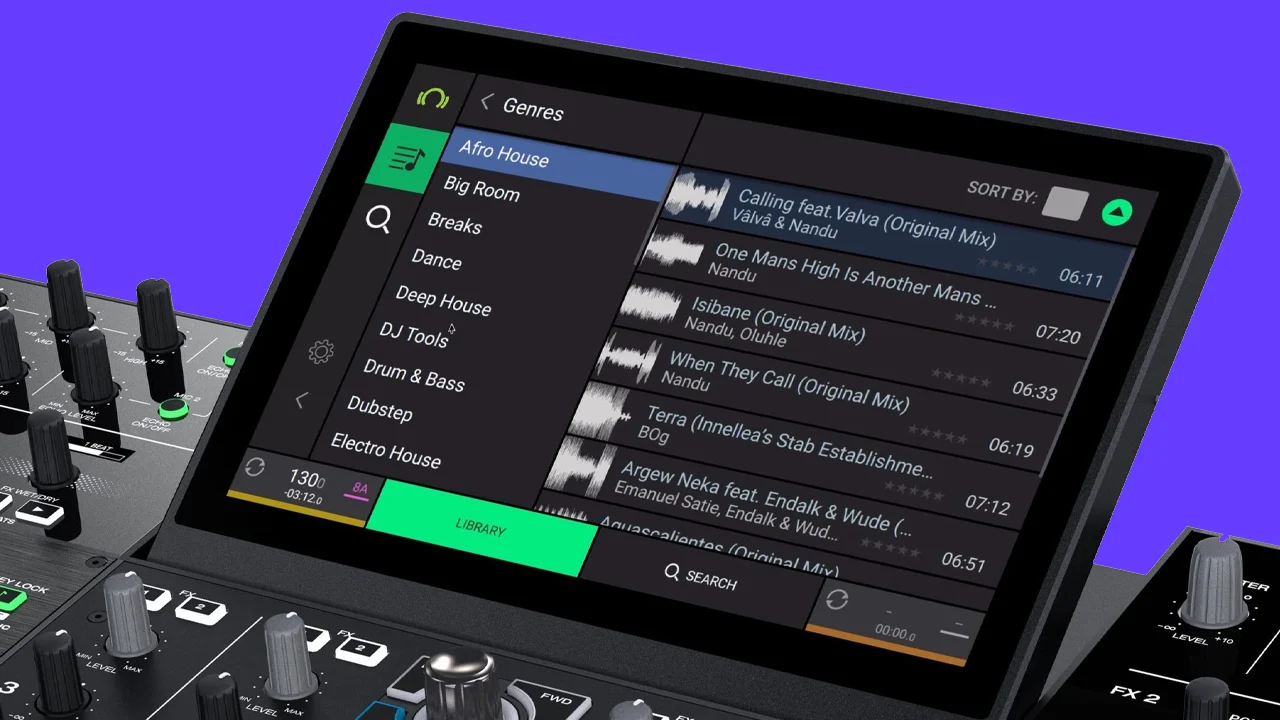
- The Pragmatists vs. The Innovators The Pragmatists are the touring pros and venue owners. For them, Pioneer is the standard for a reason. It works, it’s everywhere, and it’s reliable. The ability to show up to any gig in the world with just a USB stick and know it will work flawlessly is a professional necessity. The Innovators, on the other hand, champion the competition, primarily Denon DJ. They argue that Pioneer has become complacent, charging premium prices for technology that lags years behind. They point to Denon’s players, which often have more features like built-in Wi-Fi, dual-track playback from a single deck, and better screens for a lower price. When Denon launched the SC5000 player in 2017, its features made the top-tier Pioneer CDJ-2000NXS2 look “dated.”
- The Audiophiles: The Quest for Perfect Sound This camp is all about sound quality, and they almost always prefer mixers from the British company Allen & Heath. Forum discussions are filled with DJs describing the analog sound of an A&H mixer like the Xone:96 as having a “warmth,” “physicality,” and “presence” that Pioneer’s digital mixers lack. Pioneer’s sound, while clean and precise, is often described as “tinny,” “hollow,” or “fatiguing” over long sets at high volumes. The Allen & Heath Xone:96 is designed for sonic purists, with a legendary analog filter system and a 4-band EQ that many consider superior for sculpting sound. It forgoes built-in effects, encouraging a modular setup with external gear, whereas Pioneer’s DJM-A9 is an all-in-one digital powerhouse packed with effects.
The Verdict
So, is Pioneer DJ the best? It depends entirely on your definition. While competitors like Denon may offer more cutting-edge features and Allen & Heath may deliver superior analog sound, neither can compete with Pioneer’s iron grip on the professional infrastructure. Their dominance was built on smart innovation at a crucial time, but it’s maintained by a powerful combination of reliability, familiarity, and a self-reinforcing industry standard that makes choosing anything else a risk for clubs and touring artists. For now, the king of the booth isn’t going anywhere.
* generate randomized username
- COMMENT_FIRST
- #1 Lord_Nikon [12]
- #2 Void_Reaper [10]
- #3 Cereal_Killer [10]
- #4 Dark_Pulse [9]
- #5 Void_Strike [8]
- #6 Phantom_Phreak [7]
- #7 Data_Drifter [7]
- #8 Zero_Cool [7]


I would argue that Pioneer CDJs are industry standard, but not their mixers. Allen & Heath certainly give Pioneer DJM series solid competition, with many reputable clubs and DJs asking for this on their tech riders – this is particularly the case in the Techno scene, which is a significant chunk of the market.