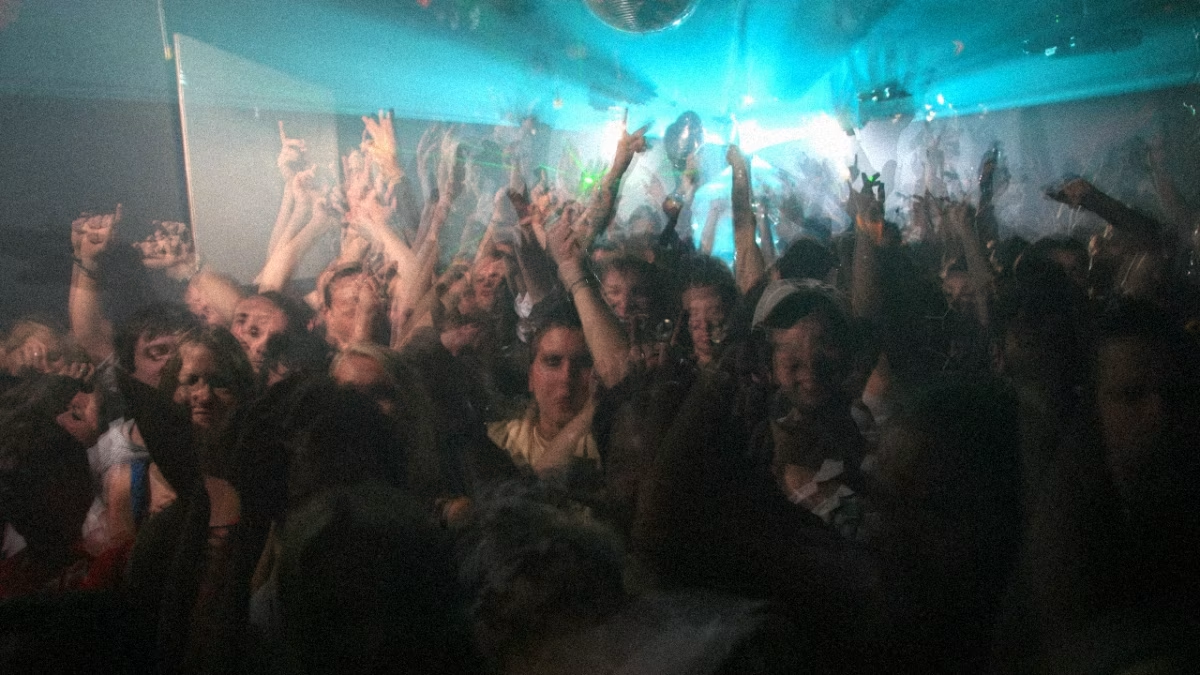

The word “rave” gets thrown around a lot. It’s used to market everything from multi-day festivals in the desert to DJ sets at the fanciest nightclubs. But if you ask someone who was part of the original scene, they’ll tell you that what many call a rave today is something else entirely. The term has split, creating a gap between its underground roots and its modern, commercialized version.
So, what is a true rave? It’s more than just electronic music and dancing all night. It’s a culture born from a specific history, with a unique sound and a core philosophy that still fuels passionate debate today.
The Original Rave: A Counter-Culture Was Born
The rave scene as we know it exploded in the late 1980s in the UK. It was 1 a direct reaction against the mainstream club culture, which was often seen as aggressive and exclusive. Young people, especially from the working class, were looking for an escape and a sense of community. They found it in all-night parties fueled by a new, hypnotic sound called acid house, which came from the Black and queer communities of Chicago and Detroit.
These weren’t your typical parties. The key elements of a classic rave were:
- Secret Locations: Early raves were often illegal, held in abandoned warehouses, open fields, or private barns. The location was a secret, shared only through flyers or secret phone lines right before the event. This created a sense of adventure and built a community of dedicated people.
- Music-Centric Experience: The DJ wasn’t a celebrity on a giant stage. They were often at the same level as the crowd, focused on creating a seamless musical journey to keep people dancing for hours. The focus was on the shared energy of the dancefloor, not watching a performer.
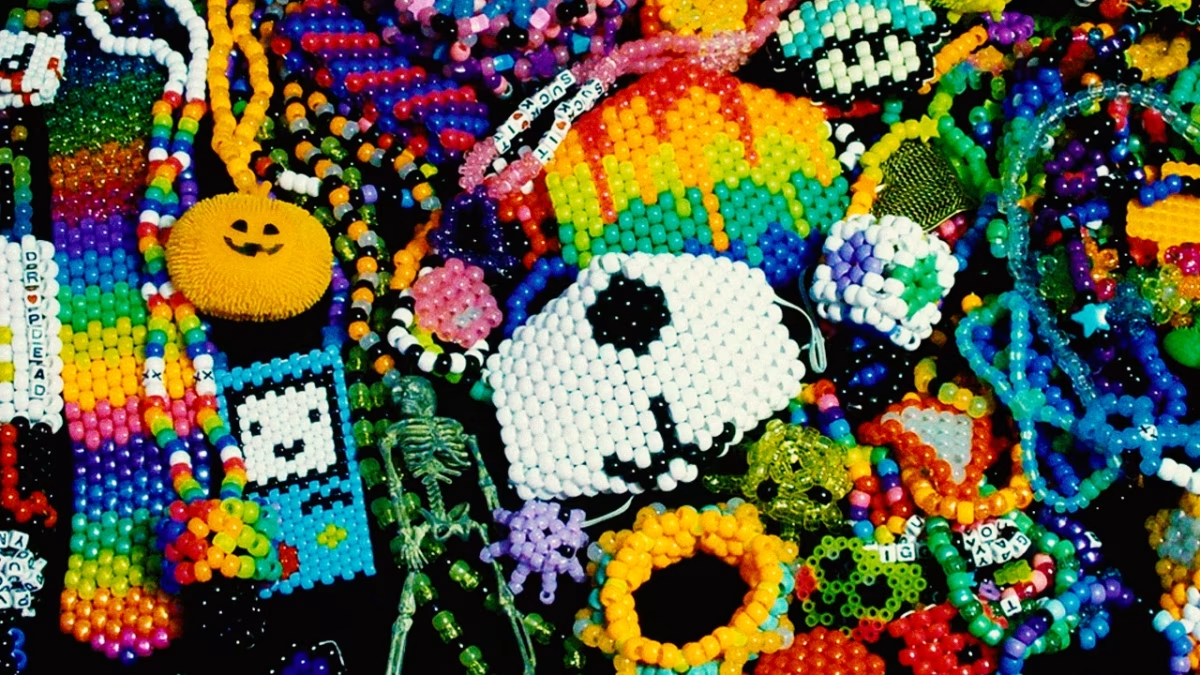
- A Philosophy of PLUR: The scene developed a code of conduct: Peace, Love, Unity, and Respect (PLUR). This was a conscious effort to create a safe and inclusive environment where everyone was welcome, regardless of their background. This ethos was symbolized by the trading of handmade “Kandi” bracelets, a gesture of friendship and acceptance. 2
From Underground Movement to Big Business
The very things that made early raves special, their energy and sense of community, also made them attractive to commercial interests. Over time, the underground movement transformed into a global industry, and the meaning of “rave” began to change.
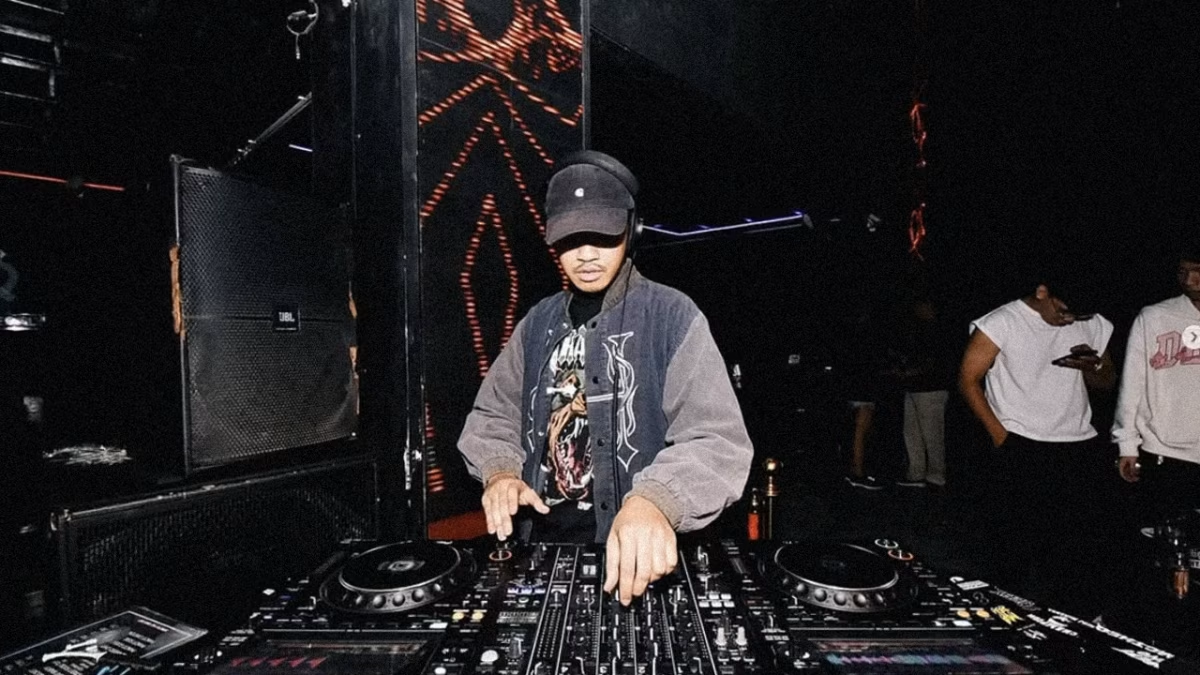
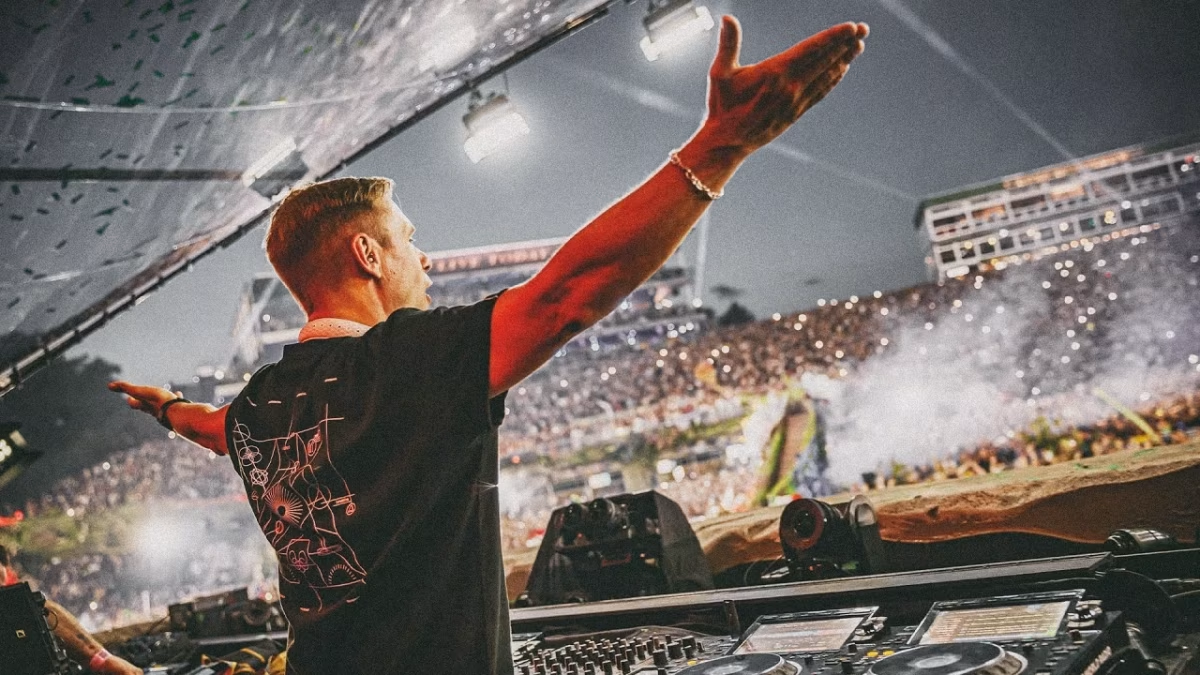
This shift was driven by the rise of the “superstar DJ.” Promoters realized they could sell more tickets by marketing specific DJs as headliners. This moved the focus from the collective dancefloor to a performer on a stage, turning a participatory experience into a spectator event.
As the scene grew, it moved from illegal warehouses to legal, ticketed venues like stadiums and festival grounds. Costs skyrocketed, with tickets for modern festivals often costing hundreds of dollars.
The term “EDM” (Electronic Dance Music) was introduced, which many see as a corporate rebranding to make the culture more marketable and strip it of its rebellious, underground history.
For many veterans of the scene, today’s large-scale festivals feel more like “simulations of what raves were.” Online forums are filled with discussions about how the vibe has changed. People point to the sea of phones recording the DJ, arguing that the focus has shifted from being in the moment to capturing content for social media. 3

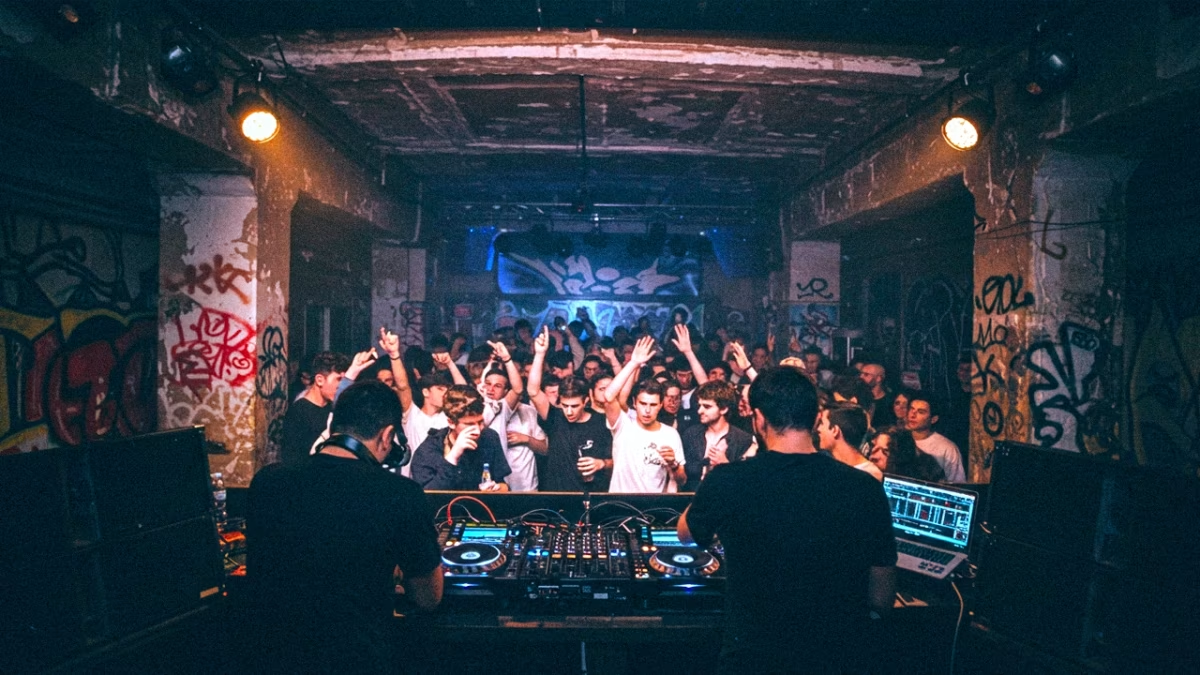

The Underground Strikes Back
In response to the commercialization of the scene, a new wave of underground movements has emerged worldwide. These grassroots collectives are consciously pushing back against the festival-industrial complex by reviving the core principles of the original rave culture.
Instead of massive, impersonal venues, these groups seek out intimate and unconventional spaces, from small clubs to art galleries, to foster a stronger sense of community. The focus is shifted back to the dancefloor and the shared experience. Many of these collectives prioritize creating safe spaces, particularly for queer and other marginalized communities who were foundational to the early scene.
These modern underground events often champion local and regional talent, resisting the reliance on expensive, international headliners. Some even enforce strict no-photo policies, a direct act of resistance against the social media spectator culture that dominates mainstream festivals. This forces attendees to be present in the moment and engage with the music and each other, embodying the PLUR ethos not as a marketing slogan, but as a living practice. 4
What Is a Real Rave?
Ultimately, the word “rave” now exists on a spectrum. On one end, you have the commercial festival, an entertainment product with massive stages and corporate sponsors. On the other, you have the underground event that holds true to the original principles of community, secrecy, and a shared musical experience.
The good news is that the original spirit is far from dead. It lives on in the passionate communities around the world that are creating their own events, on their own terms. They prove that a true rave isn’t defined by the size of the lineup or the light show, but by the people on the dancefloor and the values that bring them together. 5
- https://www.musicgateway.com/blog/spotify/a-history-of-rave-music ↩︎
- https://www.strikemagazines.com/blog-2-1/plur-understanding-the-rave-about-edm ↩︎
- https://www.reddit.com/r/EDM/comments/1lqtq2n/what_are_redms_thoughts_on_this_video_the/ ↩︎
- https://www.technoairlines.com/blog/plur-the-heartbeat-of-rave-culture ↩︎
- https://www.reddit.com/r/aves/comments/1l2bjx3/rave_parties_are_the_best/ ↩︎
* generate randomized username
- COMMENT_FIRST
- #1 Lord_Nikon [12]
- #2 Void_Reaper [10]
- #3 Cereal_Killer [10]
- #4 Dark_Pulse [9]
- #5 Void_Strike [8]
- #6 Phantom_Phreak [7]
- #7 Data_Drifter [7]
- #8 Zero_Cool [7]


Great article! 🙂 The thing that really made raves unique back in the 90’s was that there were plenty of older ravers who were there to guide the new ravers into the scene. Once everything blew up in the late 90’s and early 2000’s and rave music started infiltrating mainstream society (I remember hearing DnB on a Georgia Pacific Lumber commercial) there just weren’t enough veterans to reach all of the new people and this shift diluted the pool. I think the good news is that now that there is such a wide acceptance of the music, the underground will have an ample supply of people to draw from in terms of developing individual scenes to rekindle the kind of unity that was just the normal thing back then…. I always thought that Rave culture would take over the world, and perhaps it is? I hope so! PLUR! <3