
Music has always bent to the physical limits of its medium. The 12-inch vinyl record birthed the extended club mix because wider grooves allowed for louder bass frequencies. That format gave DJs the exact tool they needed: the extended percussion intro. While 16-bar intros are frequently used in high-energy genres like big room house to reach the breakdown faster, 32 bars has historically served as the traditional standard for slower-progressing genres like progressive house and techno.
For the purposes of this article, we are using the 32-bar arrangement as our primary structural baseline. At standard club tempos, 32 bars equal precisely one minute. That is one minute of bare drums designed specifically for a DJ to beatmatch and blend one track into the next seamlessly. Today, that functional minute is dead.
The Mathematics of Engagement Dictate Modern Musical Structure
The structural composition of electronic dance music now revolves entirely around digital platform payout thresholds. Because streaming services only monetize a track and register positive algorithmic feedback after 30 seconds of continuous playback, producers have completely eradicated the traditional 32-bar percussive intro to place the melodic hook immediately at the start of the track.
Platforms operate on a strict data diet where the skip rate is the ultimate judge of artistic viability. If a listener skips a track within the first 10 seconds, the algorithm registers a catastrophic failure. The system assumes the song is unengaging and halts its organic reach. Traditional club tracks, which patiently layer hi-hats and kick drums to slowly build tension, are completely incompatible with this ecosystem. A modern digital consumer will not wait 60 seconds for a melody to arrive. To survive, producers extract the climax and shove it into the opening seconds. The song must hook the listener instantly to drag them across the 30-second finish line.

Why Redlining Your DJ Mixer Destroys Club Sound Systems
How Do Algorithmic Penalties Punish Traditional Song Builds?
Streaming recommendation algorithms actively bury songs that experience high skip rates during the opening seconds. To prevent casual listeners from swiping away before the crucial 30-second mark, artists utilize a pop overture technique that front-loads the most compelling vocal or melodic element within the first five seconds.
The economic reality is grim. Average per-stream payouts sit at fractions of a penny. There is zero financial bonus for crafting a progressive, eight-minute epic. If a listener has ten minutes of free time, an artist earns five times more money if that listener loops a two-minute track five times. This volume mandate has gutted track lengths across the board in several notable ways:
- Track Collapse: The bridge is practically extinct in modern arrangements.
- Verse Reduction: Second verses are now considered a luxury that harms completion rates.
- Micro-Hooks: Short-form video platforms accelerate this decay by demanding 15-second viral loops.
Financial Incentives Reward Brevity Over Substance
Under the pro-rata market share model used by major streaming platforms, a two-minute track generates the exact same royalty payment as an eight-minute track. This economic reality heavily incentivizes producers to release shorter songs that encourage listeners to play them repeatedly on loop.
Major electronic labels know exactly how this game works. Spinnin’ Records A&R executive Frederick Pranger noted this algorithmic shift openly by stating that “the market will do a lot of the curating” when it comes to deciding which artists get signed. When labels test the waters with digital audiences, tracks that fail to hold attention in the opening moments are discarded entirely. The result is a homogenous catalog of micro-tracks engineered entirely for passive playlist consumption rather than active dancefloor utility.



Why Are Working DJs Facing an Existential Performance Crisis?
By removing the 32-bar intro and replacing it with dense melodic elements, producers have stripped working DJs of the percussive tools required to smoothly mix two songs together. This forces performers to rely on jarring, rapid-fire track transitions that disrupt the pacing of live events.
You cannot mix two competing melodies without causing a horrific clash of frequencies. A DJ needs bare percussion to overlap tracks cleanly. When every new release starts immediately with a dense synth chord or a loud vocal hook, the DJ is left with nothing to blend. This forces a frantic performance style known as drop mixing. The DJ waits for the outgoing track to finish, kills the volume instantly, and slams the crossfader over to the new track. The seamless, hypnotic flow that defined nightclub culture is replaced by a disjointed barrage of drops that mimics the frantic scrolling of a social media feed. As producer Spencer Brown famously lamented about making radio edits tailored for the digital era, “It feels like chopping off your baby’s arms and legs!”
Market Split Forces a Grueling Dual-Release Strategy
To appease both the algorithmic demands of passive streamers and the technical needs of professional DJs, electronic music labels now release two distinct versions of every song. A short radio edit goes to mainstream platforms, while a separate extended mix with full percussive intros is reserved for specialized DJ storefronts.
The industry is actively splitting in two. Consumer streaming platforms demand rapid gratification. Professional DJ platforms, conversely, demand high-quality files with functional intros and outros. To navigate this, labels employ a dual-release strategy:
- The Radio Edit: Pushed to the masses to satisfy the algorithms and maximize stream counts.
- The Extended Mix: Uploaded to specialty portals like Beatport for the professionals.
However, uploading both versions to a mainstream platform simultaneously splits the total stream count, which weakens algorithmic momentum. To protect their metrics, labels frequently hide or delay the extended mixes entirely. The casual listener gets the micro-track, while the club-ready version is locked behind a premium paywall on specialty sites.
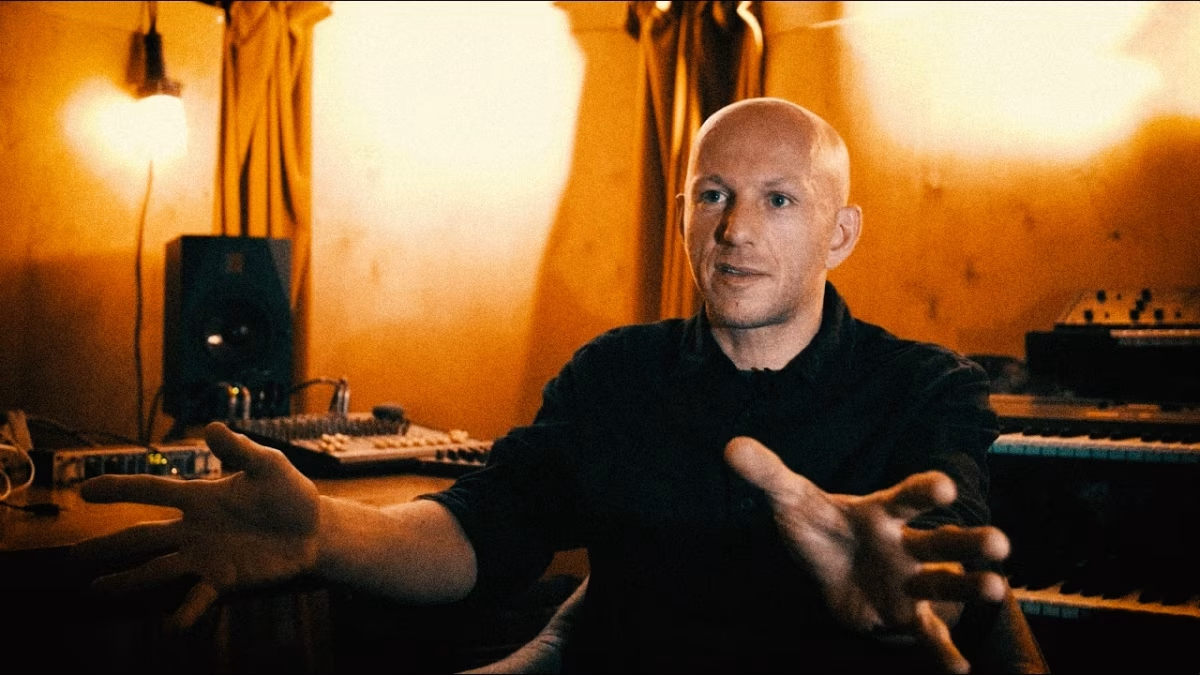
DVS1 Explains Why Hard Techno Is “EDM in Underground Clothing” — A Gateway, Not the Enemy
How Is Artificial Intelligence Emerging as a Desperate Survival Tool?
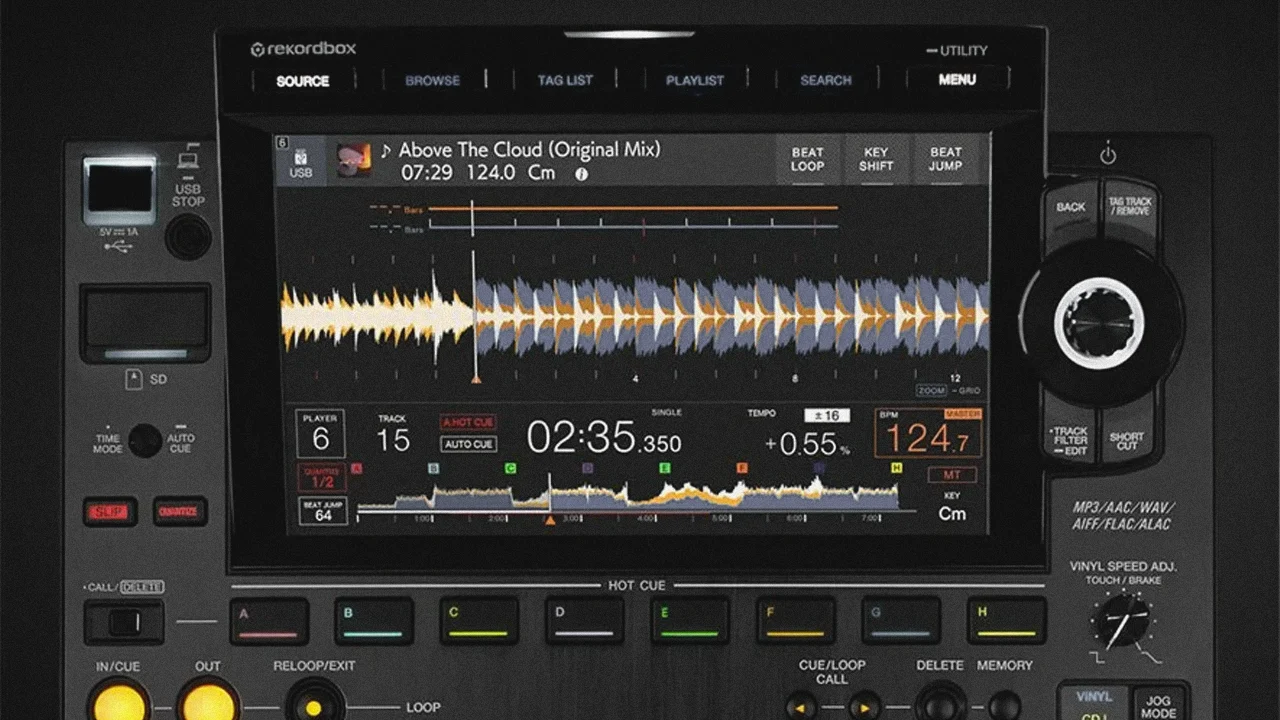
Professional DJ software now integrates real-time artificial intelligence to isolate vocals, drums, and melodies from flattened audio files. DJs use this technology during live sets to manually extract the drum stems from shortened tracks, artificially manufacturing the missing intros required for beatmatching.
Faced with unmixable digital files, DJs are turning to machine learning for salvation. Modern performance software can instantly dissect a regular stereo file into distinct stems. If a track lacks an intro, the DJ simply mutes the vocal and melody stems on the fly, isolating the drums to build a makeshift 32-bar runway. While functionally brilliant, this places a massive technical burden on the performer. They are no longer simply playing records. They are frantically remixing fragmented audio in real time just to maintain a continuous groove. The underground scene resists this digital disposability by returning to physical media and independent labels, but the commercial machine marches on, optimizing every second of audio for maximum retention.
Sources & Further Reading
- 12-inch vinyl record origins and wider grooves: https://www.psaudio.com/blogs/copper/the-vinyl-beat-in-a-12-inch-world
- 32 bars equating to one minute at standard tempos:(https://en.wikipedia.org/wiki/Thirty-two_bar_form)
- 30 seconds of continuous playback rule: https://support.spotify.com/us/artists/article/how-your-streams-are-counted/
- Skips occurring within the first 10 seconds:(https://www.youtube.com/watch?v=t3s6WPNyX9o)
- Pop overture in the first 5 to 10 seconds: https://imusician.pro/en/resources/blog/does-the-song-length-matter
- Fractions of a penny per-stream payouts: https://royaltyexchange.com/blog/how-music-streaming-platforms-calculate-payouts-per-stream-2025
- 15-second viral hooks: https://www.fanraizd.com/blog/how-tiktok-is-shaping-the-music-industry-in-2025
- Frederick Pranger (Spinnin’ Records) quote: https://wintermusicconference.com/2026/03/18/how-spinnin-records-listens-demos-that-get-signed-in-the-streaming-era/
- Spencer Brown quote: https://www.reddit.com/r/Monstercat/comments/zxb9mn/when_it_comes_to_tracks_with_extended_mixes_radio/
- Artificial intelligence stem separation technology: https://stemsplit.io/blog/dj-stem-separation-guide
* generate randomized username
- COMMENT_FIRST
- #1 Lord_Nikon [12]
- #2 Void_Reaper [10]
- #3 Cereal_Killer [10]
- #4 Dark_Pulse [9]
- #5 Void_Strike [8]
- #6 Phantom_Phreak [7]
- #7 Data_Drifter [7]
- #8 Zero_Cool [7]