A new kind of protest is happening in the music world. It’s not a song on the radio. It’s the absence of songs. The movement is called “No Music for Genocide” (NMFG), and it launched on September 18, 2025. Over 400 artists and independent labels started the campaign by pulling their music from streaming services in Israel. 1
The movement’s main tool is geo-blocking. This is a technical feature that distributors use to control where music is available. Artists are asking their distributors to remove Israel from their list of approved territories. This creates a digital picket line. It turns a feature for copyright into a form of political protest. 2
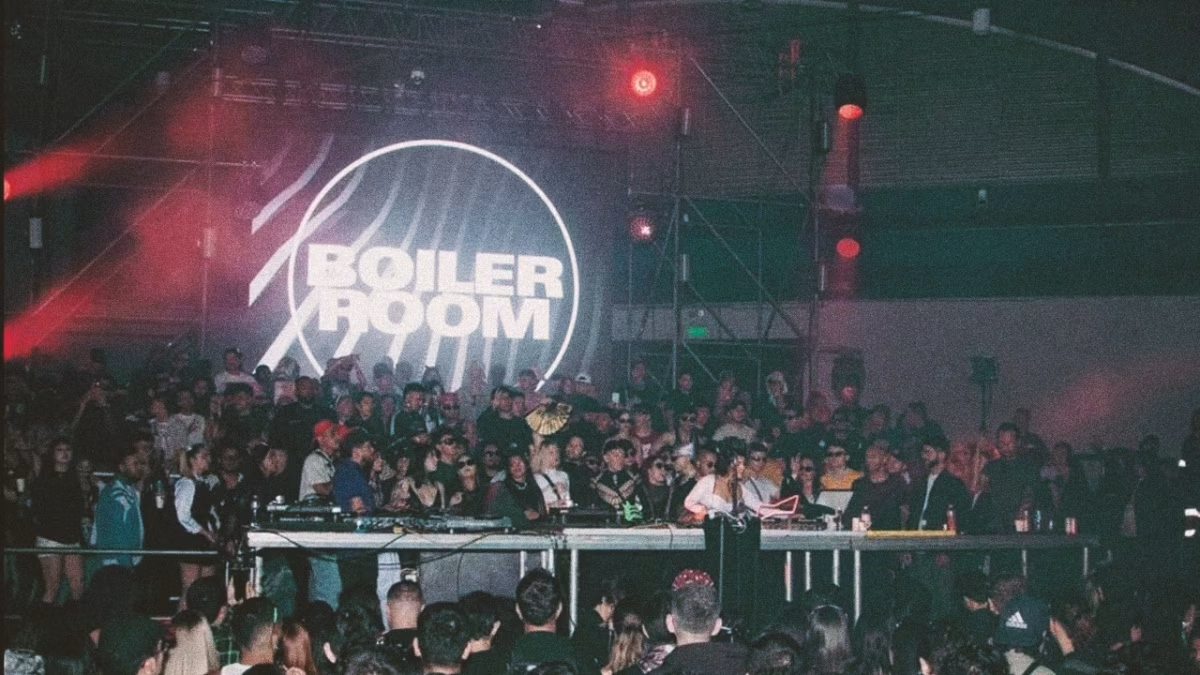
This boycott has found strong support in the electronic music community. Many influential DJs, producers, and labels have joined. Their participation brings a global conflict into a culture often known for unity on the dance floor. This article explores the No Music for Genocide movement, focusing on the electronic artists involved and the global debate it has created.
Why Artists Are Joining the Boycott
The NMFG movement is a grassroots effort with no official corporate backing. Its mission is based on four main points of protest against Israel’s policies : 3
- “Genocide in Gaza”
- “Ethnic cleansing of the Occupied West Bank”
- “Apartheid within Israel”
- “Political repression of Pro-Palestine efforts”
Organizers say these issues require a strong response from the cultural world. They often compare their actions to the cultural boycott of apartheid-era South Africa. They believe artistic boycotts are proven tools for challenging state policies.
The movement also points to the music industry’s response to Russia’s 2022 invasion of Ukraine. Major labels like Sony, Universal, and Warner quickly suspended operations in Russia. NMFG participants ask why the same standard has not been applied to Israel. This argument suggests a double standard in the industry’s actions.
For many artists, the campaign offered a way to act. They felt powerless and were “unsure how to use music in this moment”. The boycott provided a “tangible act” they could take to show their stance.

Pennies for Artists, Millions for Missiles: The Real Reason Musicians Are Leaving Spotify
The Electronic Artists on the Frontline
The electronic music scene has been a major force in the NMFG movement. The list of participants includes pioneers, current stars, and important labels. Their involvement gives the campaign significant cultural weight.
Here are some of the key electronic music artists and labels who have joined the boycott:
- Arca
- Björk 4
- Brian Eno
- David Holmes
- Eartheater
- Jamie xx
- Kelela
- Massive Attack
- Mechatok
- Nick León
- Oklou
- Orbital
- Palmistry
- Sega Bodega
- Smerz
- Vegyn
- Yaeji
- Yeule
- Hyperdub (Label)
- NTS Radio (Platform)
- PAN (Label)
- TraTraTrax (Label)
The participation of Massive Attack was especially important. As trip-hop pioneers and longtime activists, their statements have helped define the movement’s message. The involvement of experimental icons like Arca and Björk shows the boycott’s reach into the avant-garde music world. 5
Artists like Yaeji and Kelela show the campaign’s appeal to a younger generation of creators. The support from institutions like NTS Radio, PAN, and Hyperdub is also critical. When these platforms join, it’s not just one artist making a statement. It is a part of the independent music scene’s infrastructure taking a stand.


How a Digital Boycott Works (and Doesn’t)
The main tactic of the boycott is geo-blocking. Artists ask their distributor to remove Israel from the territories where their music can be streamed. For independent artists, this is often a simple process. They usually own their music rights and have flexible distribution deals.
It is much harder for artists on major labels like Sony, Warner, and Universal. These labels often own the worldwide distribution rights to an artist’s music. An artist might not have the legal power to remove their music from one country if it violates a larger deal between their label and streaming platforms. 6
The rock band Paramore is a clear example of this problem. After the band joined the boycott, fans noticed their music was still available in Israel. Singer Hayley Williams explained on Instagram that her team was working to get the music taken down but faced challenges with their label, Atlantic Records. She said she didn’t know why the albums were available again after being blocked. She even wondered if the records were “even able to be a part of this boycott”. This case shows the limits of an artist’s control when signed to a major label.
The Global Reaction: Support and Criticism
The NMFG campaign has caused a strong and divided reaction worldwide.
Supporters praise the movement as an act of solidarity. ZOHUD, a musician from Gaza, said, “It is never acceptable to use music to normalise oppression or to hide crimes against humanity”. Online communities have supported the boycott as a way to “normalise political unrest against crimes such as the genocide and ethnic cleansing of Palestinians”.
Critics have been just as vocal. Some call the boycott “peak performative activism“. They argue that for most independent artists, the Israeli market is very small. This means they are not making a real financial sacrifice. Others say cultural boycotts hurt ordinary people and stop cultural exchange that could lead to understanding.
The movement’s name is also a major point of conflict. Opponents strongly disagree with the use of the term “genocide” to describe Israel’s actions. They call it a “grotesque” distortion of history and a “blood libel” against the Jewish state. This leads to the most serious charge against the movement: antisemitism. Critics say the campaign singles out Israel while ignoring human rights issues in other countries. The movement’s supporters deny this. They state that “criticism of a government is not the same as hatred of the people”.
The complexity of the boycott was highlighted by the case of Roi Perez, an Israeli DJ based in Berlin. A London festival canceled his performance after pressure from a group called “Ravers for Palestine”. This happened even though Perez has a history of pro-Palestinian advocacy. The activist group argued that his nationality alone served to “art-wash” Israeli policies. The cancellation was criticized by many, including other pro-Palestinian activists, who saw it as targeting an ally.
The “No Music for Genocide” movement is a new form of digital protest. It has shown how the tools of music distribution can be used for political action. The campaign is especially strong in the independent and electronic music scenes. These artists are using their platforms to demand political change.
The boycott has not been without controversy. It has sparked a global debate about the role of art in conflict, the power of artists, and the line between political criticism and discrimination. The final impact of the movement is not yet clear. But it has already succeeded in starting a difficult and important conversation. It has forced everyone, from artists to fans to industry leaders, to think about the connection between music, money, and politics in a connected world.
- https://en.wikipedia.org/wiki/No_Music_For_Genocide ↩︎
- https://offlicencemagazine.com/blog/over-400-artists-sign-up-to-no-music-for-genocide ↩︎
- https://tambourhinoceros.net/blogs/news/no-music-for-genocide ↩︎
- https://www.reddit.com/r/popheads/comments/1npiihb/paramore_and_hayley_williams_join_no_music_for/ ↩︎
- https://www.theguardian.com/music/2025/sep/18/massive-attack-remove-music-from-spotify-to-protest-ceo-daniel-eks-investment-in-ai-military ↩︎
- https://www.reddit.com/r/popheads/comments/1nkgc9t/over_400_artists_and_labels_have_removed_their/ ↩︎
* generate randomized username
- COMMENT_FIRST
- #1 Lord_Nikon [12]
- #2 Void_Reaper [10]
- #3 Cereal_Killer [10]
- #4 Dark_Pulse [9]
- #5 Void_Strike [8]
- #6 Phantom_Phreak [7]
- #7 Data_Drifter [7]
- #8 Zero_Cool [7]