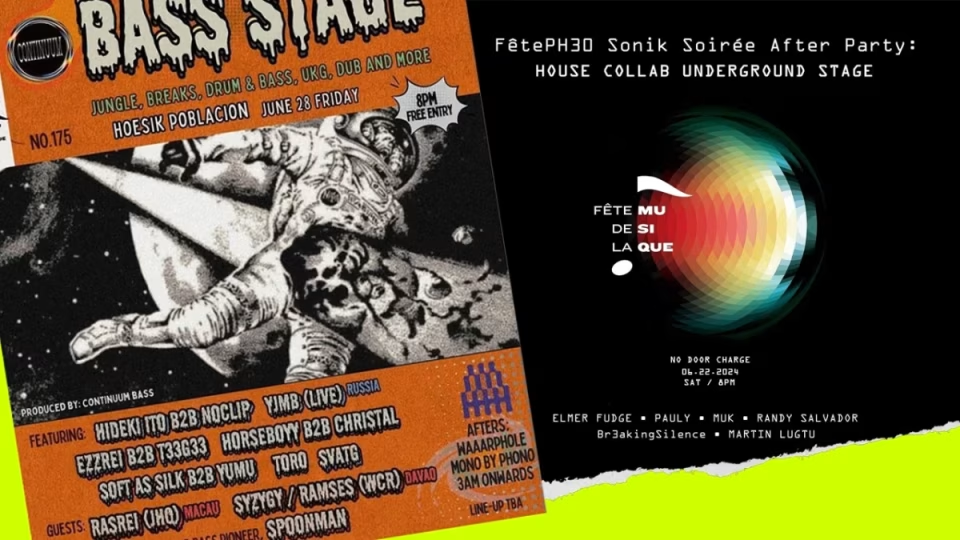
Nightclubs weren’t just party destinations for the LGBTQIA+ community; they were havens. Places of self-expression, acceptance, and belonging. Disco, with its irresistible beats and energy, became a powerful anthem of liberation. Pioneering artists like Donna Summer and Sylvester found their voices, while iconic dance styles such as voguing emerged from the underground ballroom scene—a vibrant community predominantly made up of Black and Latinx LGBTQIA+ individuals.
Read also: How a Queer Couple is Shaping Cebu’s Bass Music Scene
LGBTQIA+ Impact on Dance Music
The LGBTQIA+ community’s influence isn’t confined to the past. Today’s dance music scene continues to thrive on the contributions of LGBTQIA+ artists, DJs, and partygoers. From expressive costumes and performances that challenge gender norms to the inclusive atmosphere of many clubs, the spirit of those early safe spaces persists.
The Culture of Self-Expression
The LGBTQIA+ community’s self-expression is amplified by the frequency and nature of their events. These gatherings encourage people to embrace their true identities and foster a powerful sense of community. The lyrics of Diana Ross’s “I’m Coming Out” perfectly capture this message of self-acceptance and collective strength.
There’s a new me coming out and I just had to live
And I wanna give, I’m completely positiveDIANA ROSS’ I’M COMING OUT, 1980
Philippine Nightlife and Pride
The LGBTQIA+ community’s impact on dance music extends far beyond its origins. Today’s scene actively promotes inclusivity, with events and festivals creating safe and welcoming environments. From Berlin’s legendary club scene to Manila’s underground spaces, the spirit of unity and self-expression fostered by the LGBTQIA+ community remains central to dance music culture.
LGBTQIA+ DJs Share Their Experiences
We spoke with LGBTQIA+ DJs about their work in the nightlife industry, and their experiences vary. Khim Custudio highlights the increasing inclusivity of many venues.

Support is present and more apparent in every venue. I can agree there’s been a change and shift in views of the LGBTQIA+ community from the public. Most of the support comes from women in the crowd; men are present, often enjoying the event and showing their acceptance.
Khim Custudio
Khim also emphasizes the dedication artists put into their performances. DJs meticulously study venues and craft playlists to build a positive crowd atmosphere. He also notes the complexities and occasional hierarchies within the LGBTQIA+ community itself.
There is still that hierarchy involved when it comes to being in the industry. It may be kind of frustrating sometimes when some other parts of the community would often raise some competition because of the need to show out to people.
Keith Velez from Iloilo City shares similar sentiments, emphasizing the community’s role in promoting dance music and the importance of creating safe spaces for everyone.

Because of their styles and uniqueness, the dance music scene has become more diverse in the country. And through my platform, I aim to promote equality.
Keith Velez
The Role of Emerging Artists
The LGBTQIA+ community consistently introduces emerging artists and fresh ideas to the Philippine music scene. Brian Cua discusses the significant contributions of LGBTQIA+ artists and how building relationships within the industry is vital. He shares the power of social media in sharing ideas and getting feedback from fans.

Social media plays a crucial role in my approach. It allows me to share ideas, music remixes and mashups, while also receiving important feedback from followers and fans. This feedback informs my gigs and helps me refine my performances.
BRIAN CUA
Brian also notes the decline in stigma surrounding LGBTQIA+ spaces, pointing out that even some straight clubs may host LGBTQIA+ nights. He emphasizes the importance of safe spaces, although acknowledges that occasional issues can occur, as they do in any club.
Drag queens play a vital role in educating people about LGBTQ struggles. Beyond their captivating performances and uncanny impressions, they cleverly weave in today’s issues and humorous memes, encouraging critical thinking.
Key Contributions of the LGBTQIA+ Community
The LGBTQIA+ community’s impact on the Philippine dance music scene is undeniable:
- Boiler Room and Budots Music: The Boiler Room featuring DJ Love introduced Budots music globally, attracting significant LGBTQIA+ attendance and support.
- Influence on P-Pop: P-Pop groups like BINI and SB19 benefit significantly from LGBTQIA+ support and advocacy.
- Leading DJs: Gay and queer DJs are at the forefront of the underground dance scene, pushing creative boundaries.
- Economic Impact: The LGBTQIA+ community is a significant spending group, driving the nightlife industry.
- Post-Pandemic Growth: The pandemic fueled a desire for communal events and exploration of self-identity.
- New Dance Communities: Various LGBTQIA+ dance communities formed post-pandemic, promoting inclusivity and self-expression.
- Original Music: Artists like Paul Pablo, Jason Dhakal, Stef Aranas, and Marina Summers are creating unique dance/pop music.

PROOF and SENTRAL in Cebu exemplify inclusivity. Alex Pearson emphasizes the open and welcoming atmosphere, highlighting how these venues are popular with Cebuanos regardless of their background.
We started doing RoyalS with Drew Sarmiento since he made that name. Then we would follow it up by doing it every year as a tradition. We started it in sentral and we do it to celebrate it as a sign that we do not judge and we support their community.
Alex Pearson

Midnight Rebels and PROOF CEBU co-present Pride Night, featuring HOEST of After The Noon, DJs Polky Yu and Steven Cortes, and MC Gudavibes.
Frequently Asked Questions
What is the historical connection between the LGBTQIA+ community and electronic dance music?
The LGBTQIA+ community played a crucial role in the development of electronic dance music, particularly disco and house. They established safe spaces in clubs, fostering creativity and innovation.
Which specific genres of electronic music were pioneered by LGBTQIA+ individuals?
Disco, emerging in 1970s New York, and house music, from 1980s Chicago, were significantly shaped by the LGBTQIA+, Black, and Latino communities.
How did early LGBTQIA+ clubs influence the development of dance music?
Early clubs provided inclusive environments for DJs to experiment with sounds, blend genres, and create unique experiences centered around community and emotional expression.
What challenges have LGBTQIA+ artists faced within the electronic music industry?
LGBTQIA+ artists have encountered commercial exploitation, appropriation of their contributions, and a lack of recognition. Ongoing efforts aim to rectify these issues.
Who are some prominent LGBTQIA+ figures in electronic music history?
Key figures include David Mancuso, known for The Loft, and Frankie Knuckles, the “Godfather of House Music.” Contemporary artists like Honey Dijon continue to advocate for inclusivity.
* generate randomized username
- COMMENT_FIRST
- #1 Lord_Nikon [12]
- #2 Void_Reaper [10]
- #3 Cereal_Killer [10]
- #4 Dark_Pulse [9]
- #5 Void_Strike [8]
- #6 Phantom_Phreak [7]
- #7 Data_Drifter [7]
- #8 Cipher_Blade [6]