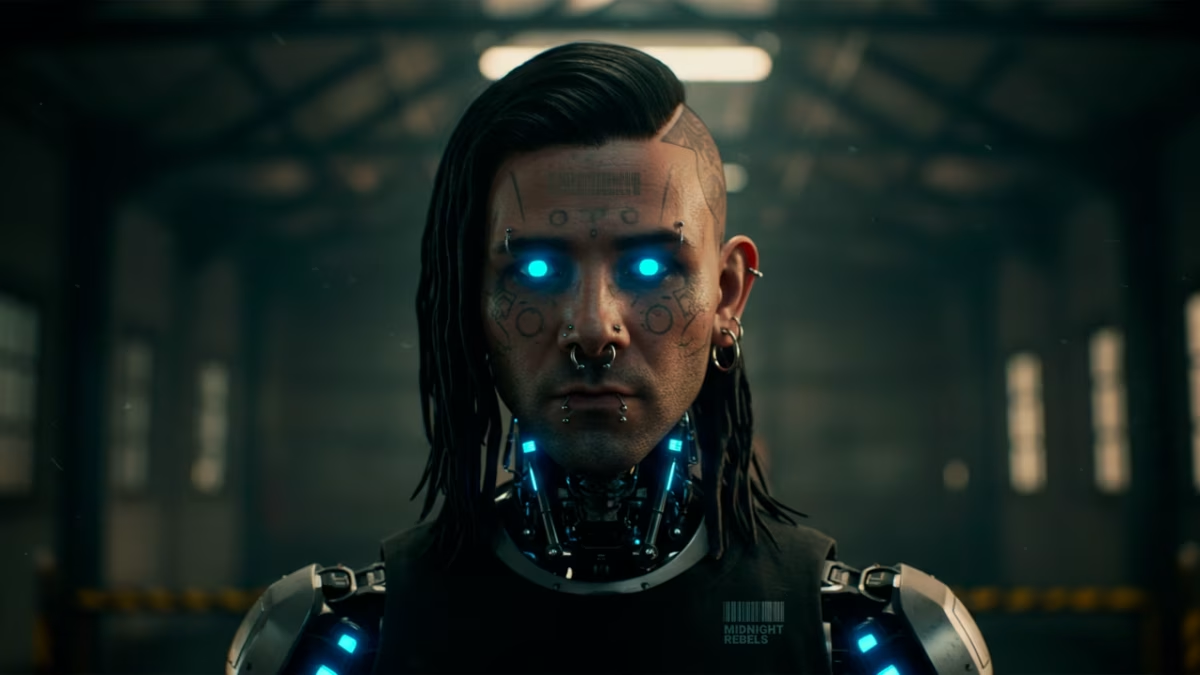

For years, the DJ has been central to parties, clubs, and festivals, creating the energy that moves a crowd. But with artificial intelligence advancing quickly, a big question comes up: how long until AI takes over the DJ booth, and what will that mean for music and entertainment?
While many debate if AI will fully replace human DJs, current technology and new features show a clear shift. AI can already handle many traditional DJ tasks and offers some unique advantages.
Today’s Tech and What’s Coming
An AI DJ isn’t just an idea anymore. Here’s how current technology is setting the stage for a more automated future:
- Huge Music Libraries and Easy Access: DJ software now connects with streaming services like Apple Music and Spotify, giving DJs instant access to millions of tracks. This means no more physical crates or hard drives, and AI can use this massive database for quick song choices.
- AI for Song Selection and Mixing: AI learns to understand music deeply. Tools like Mixed In Key and Beatport’s DJ AI suggest songs based on how fast they are (BPM), their musical key, phrasing, genre, and even mood. AI can now mix tracks harmonically and create smooth transitions.
- AI-Powered Personalized Experiences: Spotify’s AI DJ, launched in 2023, is a good example. It uses AI to create custom playlists with AI-generated commentary, much like a radio host. Recent updates even let it take voice requests, giving users more control.
- AI in Music Production: Beyond live mixing, AI is changing how music is made. Tools like AIVA and Soundraw can create original songs, while iZotope’s Neutron and Ozone use AI for smart mixing and mastering. Features in software like DJ.Studio can separate vocals, bass, or drums from a track in real-time, opening up new ways to remix and mashup.
- Real-time Crowd Analysis (Developing): The ultimate goal for AI DJs is to “read the room.” Still in early stages, this involves using data from digital tickets (music history), motion sensors, wearable tech (like heart rate monitors), and even facial recognition to understand how the crowd feels. With enough data, an AI DJ could adjust its set almost perfectly to the audience’s mood.
AI vs. Human DJs: The Pros and Cons
The rise of AI in DJing brings clear advantages and disadvantages when compared to human DJs:
Pros of AI DJs:
- Accuracy and Speed: AI can perfectly match beats, mix songs musically, and transition between tracks with great precision, avoiding human errors.
- Non-Stop Play: AI systems don’t need breaks or sleep, providing continuous entertainment for long periods.
- Vast Music Collection: AI can instantly access and process a huge music catalog, covering many tastes and specific genres without limits.
- Highly Personalized: AI can create very personalized experiences for listeners or a whole crowd, picking music based on real-time data and preferences.
- Lower Cost: In some cases (like background music for shops or gyms), an AI DJ subscription could be much cheaper than hiring a human DJ.
- New Music Discovery: AI can introduce listeners to new music and artists they might not otherwise find, expanding their listening beyond their usual choices.
Cons of AI DJs:
- No Emotional Connection: This is perhaps the biggest challenge for AI. Human DJs connect with the audience, pick up on subtle signals, build excitement, and react spontaneously in ways AI struggles with. The overall “feel” and art of DJing are very human.
- Limited Creativity: While AI can create new mixes and songs, its creativity comes from learned patterns. It might lack the raw, unexpected spark, risk-taking, and true improvisation of a great human DJ.
- Privacy Concerns: Collecting and analyzing real-time crowd data brings up major privacy issues. Also, the idea of AI “controlling” emotions through music is a complex ethical problem.
- Similar Music Choices: AI often promotes what’s already popular, potentially making music tastes too similar and making it harder for new or different music to get noticed.
- Dependency: Relying too much on AI could stop human DJs from developing their skills and creativity.
- Missing “The Journey”: A human DJ tells a story with their set, taking the audience on a journey with highs, lows, and surprises. This storytelling is personal and hard for AI to copy.
- Job Impact: For some types of gigs (like background music), AI could directly replace human DJs, especially affecting new artists who need these opportunities.
How Far Will AI Go?
Most people in the music industry believe AI won’t fully replace human DJs anytime soon, especially where a strong human connection and spontaneous art are key. For unique events, smaller venues, and places where the DJ is the main performer, the human touch remains essential.
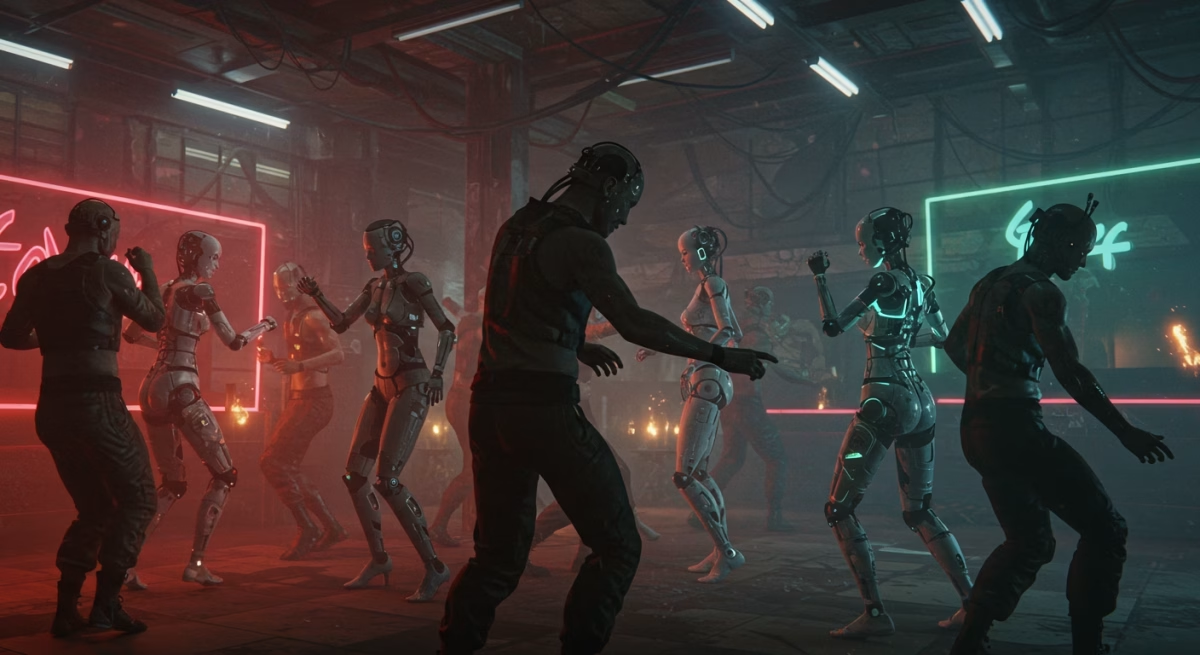
However, AI will keep improving and become a more important tool for DJs. It will act as a powerful helper, managing technical tasks like beatmatching and even suggesting tracks based on complex data. This will free up human DJs to focus on the truly creative and emotional parts of their job—interacting with the crowd, choosing unique tracks, and creating a memorable atmosphere.
The future will likely involve a mix of human and AI, where DJs use AI tools to make their shows better, work more efficiently, and explore new creative paths. Those who use and adapt to these changes will succeed. While technology changes fast, the core of DJing—the ability to connect and bring joy—will likely stay a human skill.
Top 10 FAQs on AI and the Future of DJing
Will AI completely replace human DJs in the near future?
While AI is rapidly advancing in music selection and mixing, it’s highly unlikely to completely replace human DJs, especially in settings where emotional connection, improvisation, and “reading the crowd” are crucial.
What specific tasks can AI already perform in DJing?
AI can already handle tasks like accessing vast music libraries, suggesting songs based on BPM, key, genre, and mood, creating seamless transitions, beatmatching, and even separating vocals or instruments from a track in real-time for remixes.
What are the main advantages of using AI as a DJ?
AI offers advantages like instant access to millions of tracks, precise mixing, continuous performance without breaks, the ability to analyze data quickly for song choices, and potential for time-saving on technical tasks.
What are the key limitations of AI when it comes to DJing?
The biggest limitations for AI DJs are their lack of genuine emotional connection with the audience, limited true creativity (as AI learns from existing patterns), inability to truly “read the room” spontaneously, and potential for privacy concerns if using real-time crowd data.
How does Spotify’s AI DJ work, and can it take requests?
Spotify’s AI DJ combines personalization algorithms with generative AI to curate personalized playlists with AI-generated commentary. Recent updates allow it to take voice requests for genre or mood changes, but full, direct interaction is still in beta or not available for all features.
Will AI make DJing easier for beginners?
Yes, AI tools can significantly lower the barrier to entry for aspiring DJs by automating complex technical aspects like beatmatching and harmonic mixing, allowing beginners to create professional-sounding mixes more easily.
How can human DJs use AI tools to enhance their performances?
DJs can use AI as a powerful assistant to manage technical tasks, suggest new tracks, explore creative remixing possibilities through stem separation, and free up more time to focus on crowd engagement and artistic expression.
Are there ethical or privacy concerns with AI DJs, especially regarding crowd analysis?
Yes, collecting and analyzing real-time crowd data (e.g., via digital tickets, sensors, facial recognition) raises significant privacy concerns. There are also ethical questions about AI potentially influencing emotions through music.
What is the “human element” that AI struggles to replicate in DJing?
The “human element” includes the ability to build excitement, tell a story with a set, improvise spontaneously, read subtle audience cues, and create a unique, authentic connection that goes beyond algorithmic song selection.
What does the future of DJing likely look like with AI?
The future will most likely involve a collaborative approach where human DJs leverage AI tools to enhance their shows, work more efficiently, and unlock new creative avenues. Those who adapt and integrate AI effectively are expected to thrive.
Featured Image generated by Google ImageFX
* generate randomized username
- COMMENT_FIRST
- #1 Lord_Nikon [12]
- #2 Void_Reaper [10]
- #3 Cereal_Killer [10]
- #4 Dark_Pulse [9]
- #5 Void_Strike [8]
- #6 Phantom_Phreak [7]
- #7 Data_Drifter [7]
- #8 Cipher_Blade [6]