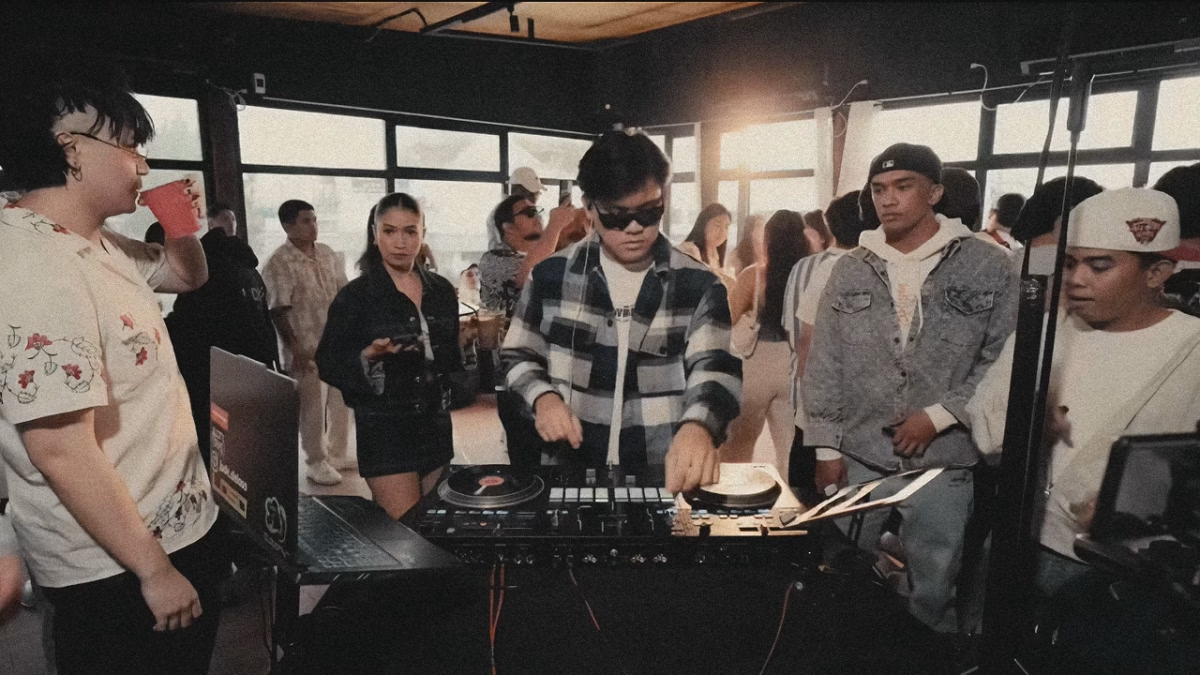

I’m Angelica Castro, better known as STRO, one half of the audiovisual duo STRODANO. Finding myself back in Manila, the city’s familiar chaos now feels a little different. It’s colored by the memory of a month in Los Angeles, a trip that began as a journalistic endeavor on the Manila Sound movement and unexpectedly turned into a weighty re-evaluation of my own identity. What I thought was a story about a community of Filipino-American artists became a story about myself, about belonging, and about the intricate, often strenuous, relationship I have with my homeland.
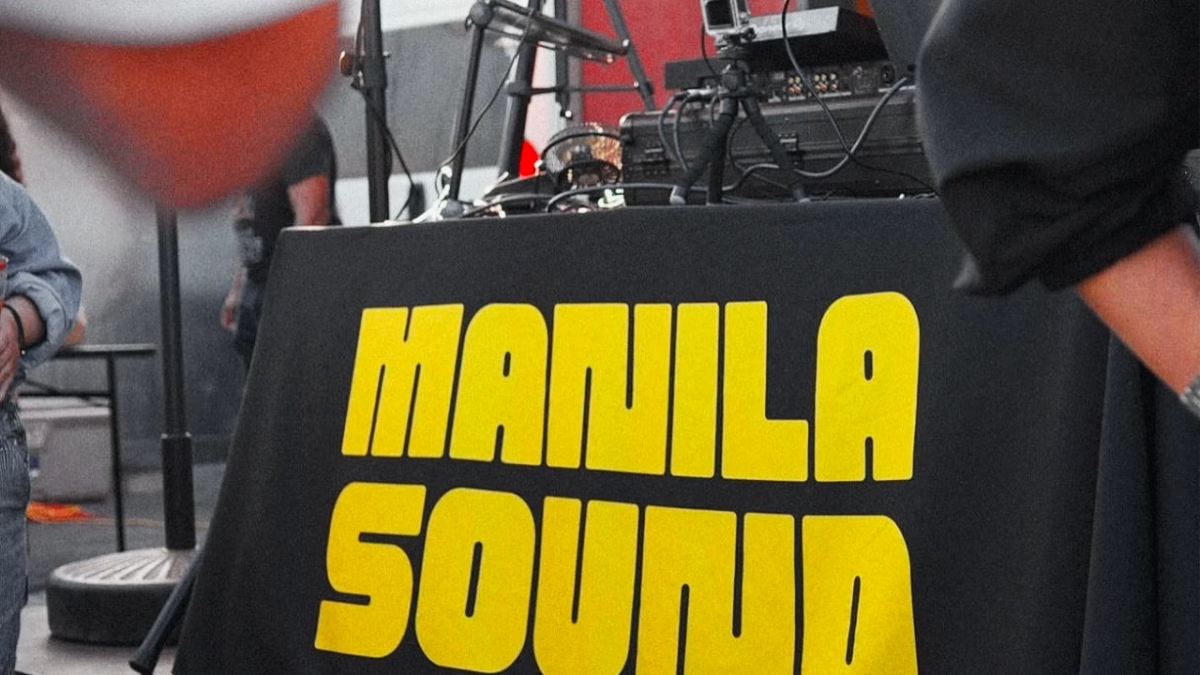
The invitation came from Justin, a friend of over a decade. We navigated our respective worlds—he in the US, I in the Philippines—bound by an unspoken, low-maintenance connection. his offer of his backhouse was spontaneous yet it became a pivotal experience. The initial mission was clear: to document and collaborate with Manila Sound, a collective of young Filipino DJs and artists that he and his friends started, dedicated to championing Filipino music
The Sound of Collaboration
My world was meant to connect with theirs through music. Within the first week, the collaboration was already bearing fruit. We produced three new tracks, digging into the rich archives of classic Filipino disco and reinterpreting them. The work was immediate and deeply resonant, a direct musical conversation between Manila and Los Angeles. We were creating tangible proof of the bridge Justin and his community were building.
This modern movement shares a spirit with its namesake, the pioneering “Manila Sound” of the 1970s. That original era, as chronicled in works like the documentary The History of The Manila Sound, represented a monumental period of creative and cultural expression in the Philippines. To see its name revived in LA was to witness a new generation reaching back in time to anchor their contemporary identity.
A Pride I Didn’t Recognize
As the days turned into weeks, the focus shifted from the recording studio to the people themselves. Being immersed with the Manila Sound community unearthed a stark realization: Filipinos who grew up outside the Philippines often champion their heritage with an enthusiasm that can seem muted in those of us who live here.

The View from the Diaspora
This wasn’t a point of resentment; it was a source of admiration that bordered on personal indictment. It held a mirror up to my own perspective. I have always loved my country, but that affection was buried under layers of frustration and exhaustion. The relentless grind of dealing with broken systems and societal shortcomings had worn me down, creating a cynical distance. Yet here was a community of young people, many of whom had never lived in the Philippines, actively working to close that same distance for themselves. They were trying to belong to the very thing I, in my fatigue, had been subconsciously pushing away.
Questioning My Own Narrative
It prompted a crucial question: Had I become so fixated on everything wrong with the Philippines that I had lost the ability to see what was right? Was my critique born of concern, or had it curdled into simple disillusionment?
The Intergenerational Connection
Justin’s family became an integral part of this education. His father welcomed us not as guests, but as family. Night after night, we would have a smoke with him while he recounted stories of his youth in the Philippines. He painted pictures of a time and place I knew only through history books, his nostalgia making it feel immediate and real. He also spoke of his sons, sharing childhood memories with a candor that was both warm and foreign to me.
One evening, after his dad went to bed, Justin turned to me with a surprising confession. “I’ll never be able to connect with my dad like you guys do,” he said. The irony was palpable. He had a father but felt a generational and cultural gap. We, who did not have parents in our lives, were effortlessly connecting with his. “But you guys had a great life here,” I responded, the thought forming as I said it. “You really can’t have it all.” That exchange stayed with me, a stark reminder of the different voids we all seek to fill.

Living the Stories We Would Tell
As our departure neared, we found ourselves diving deep into nostalgia. We rewatched the media that defined our formative years—Rush Hour, South Park, Hey Arnold. We played the video games that consumed our youth—Dance Dance Revolution, Marvel vs. Capcom, Need for Speed. It was the logical conclusion to weeks spent making music inspired by our shared past.
A single moment brought everything into focus. After another evening of stories with Justin’s dad, we were all relaxing on the couch. I paused and looked at my friends.
“These are the stories we’re going to tell when we’re older,” I said. “This time right now—we’re living it.”
That realization crystallized the meaning of the trip. Manila Sound is more than just a musical genre or a party series. It is a conscious act of creating a shared history. It is about forging a durable sense of self, rooted in a heritage that is embraced not despite its complexities, but because of them.
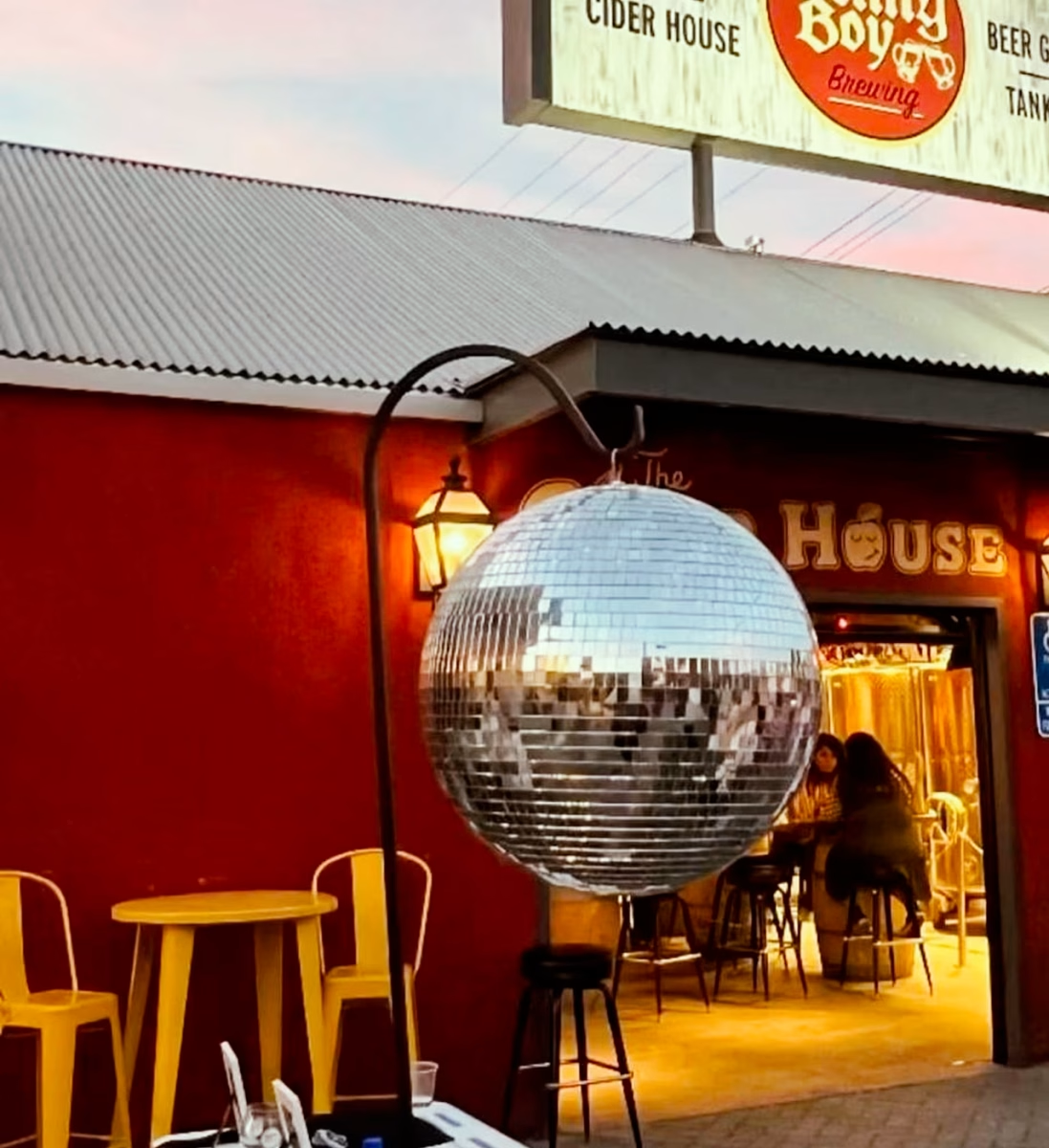
Before leaving LA, during one final rant about the Philippines and its multitude of challenges, Justin cut through my monologue with a simple, piercing question: “Why do you hate yourself?”
The question struck me, reframing my years of frustration not as righteous anger, but as a reflection of my own disappointment in something I loved. I returned to Manila with the understanding that love and frustration are not mutually exclusive. They must coexist. I love the Philippines, and I love being Filipino—not with blind patriotism, but with a clear-eyed acknowledgment of its beauty and its profound flaws. And I know my frustration comes from a deep-seated belief that we have the potential to be so much more. I have always believed that.
Listen to the entire Manila Sound Vol.1
Frequently Asked Questions
What is the Manila Sound movement in Los Angeles?
Manila Sound is a collective of Filipino-American DJs, artists, and creatives in Los Angeles. They focus on celebrating and promoting Filipino music, from classic OPM (Original Pilipino Music) and disco to contemporary sounds, to foster a sense of community and connection to their cultural heritage.
How does the Filipino diaspora connect with their roots?
Members of the Filipino diaspora often connect with their roots through cultural avenues like music, food, and community events. Movements like LA’s Manila Sound demonstrate a proactive effort to engage with Filipino history and art as a way to understand and solidify their identity while living abroad.
Why can loving a country and being critical of it coexist?
Loving a country doesn’t require ignoring its flaws. For many, deep-seated love is the very source of their criticism. The frustration with systemic issues, corruption, or social problems often comes from a place of wanting the nation to live up to its potential and a desire for a better future for its people.
What was the original “Manila Sound” of the 1970s?
The original “Manila Sound” was a musical genre that emerged in the Philippines in the mid-1970s. Characterized by its blend of Filipino folk, rock, pop, and disco with catchy, often bilingual (Taglish) lyrics, it became a defining sound for a generation and is considered a golden age in Original Pilipino Music (OPM).
What role does intergenerational storytelling play in Filipino culture?
Intergenerational storytelling is crucial in Filipino culture for passing down history, values, and a sense of identity. As seen in the article, these stories connect younger generations, particularly those in the diaspora, to a past and a homeland they may not have experienced directly, helping to bridge generational and geographical gaps.
* generate randomized username
- COMMENT_FIRST
- #1 Lord_Nikon [12]
- #2 Void_Reaper [10]
- #3 Cereal_Killer [10]
- #4 Dark_Pulse [9]
- #5 Void_Strike [8]
- #6 Phantom_Phreak [7]
- #7 Data_Drifter [7]
- #8 Cipher_Blade [6]