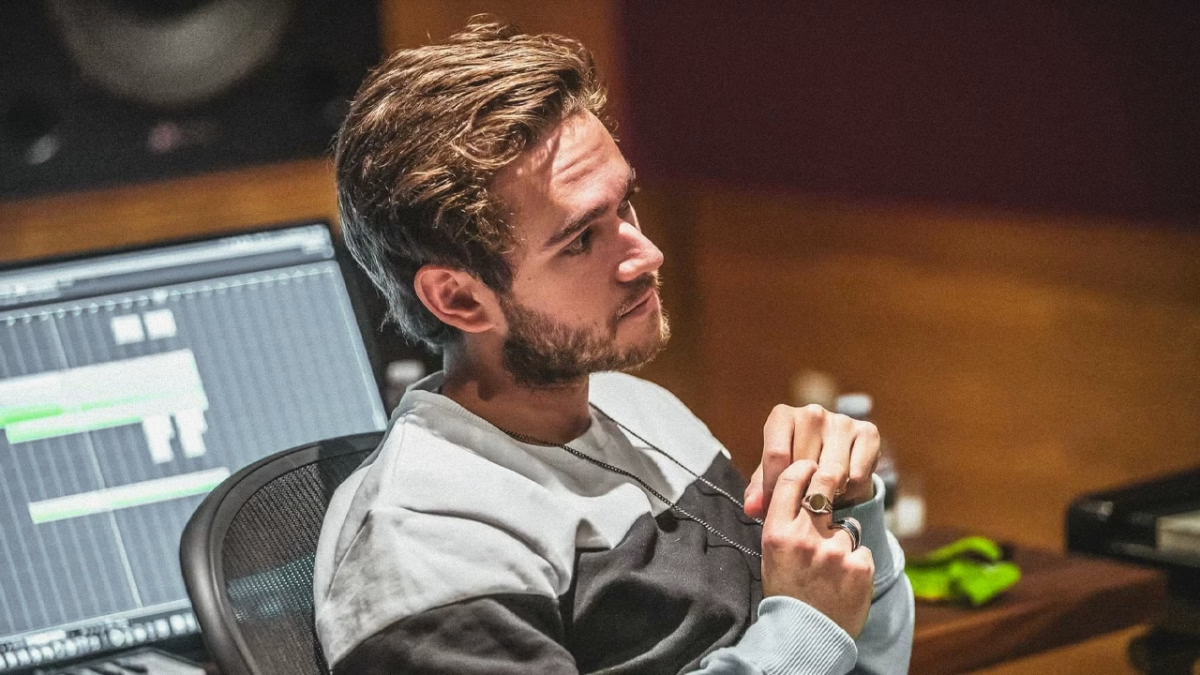
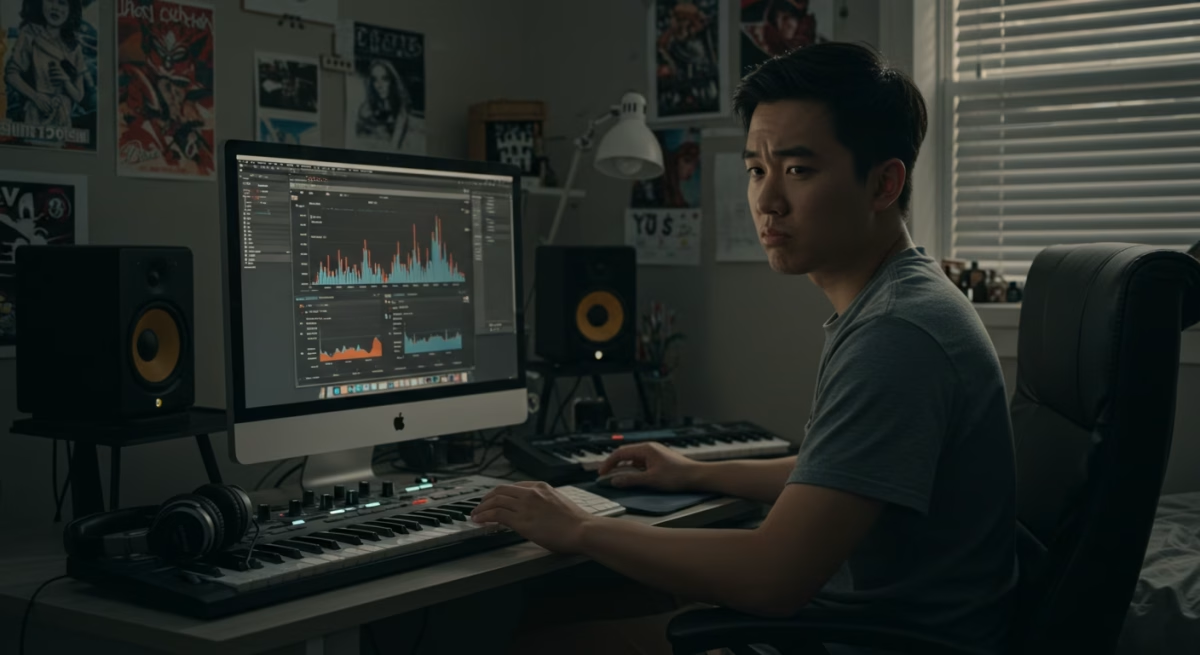
The music world is being shaken up by Artificial Intelligence (AI). This brings amazing new tools, but also scary questions about the future. For producers and DJs like me, it feels like there are two kinds of AI: tools that help us create, and tools that could replace us. It forces us to ask what it even means to be an artist today. This is a big deal, so let’s look at what’s really happening with AI—the good, the bad, and the complicated.
The Good AI: A Creative Helper
On one side, you have AI tools that are like great assistants. Services like LANDR and plugins from iZotope make it easy for anyone to get a professional-sounding mix, and one survey found that 65% of indie artists saw more listeners after using AI mastering. For DJs, tools like Lalal.ai can separate vocals from a track, opening up endless new ways to remix and be creative. The DJ duo DJs From Mars said this tech completely changed how they work, giving them “unlimited” ideas. These tools help with the boring stuff, so we can focus on being creative.
The Scary AI: A Potential Replacement
On the other hand, the rise of generative AI platforms like Suno and Udio represents a more disruptive frontier. Capable of creating complete songs with lyrics and vocals from a simple text prompt, these tools challenge the value of musical craft itself. This “democratization” of music has led to a content deluge, with industry reports indicating that between 100,000 and 150,000 new tracks are uploaded to platforms like Spotify daily 1. A 2024 IMS Business Report revealed that 60 million people—10% of the consumer base—used AI to “create” music 2, burying human-made art under a mountain of machine-generated content. 3
The Dark Side: AI-Powered Scams
This flood of AI music has a dark side: large-scale streaming scams. Criminals are using AI to make hundreds of thousands of fake songs to steal royalty money. Instead of playing one song millions of times (which is easy to catch), they use bots to play thousands of different AI songs just a few times each. This helps them avoid getting caught.


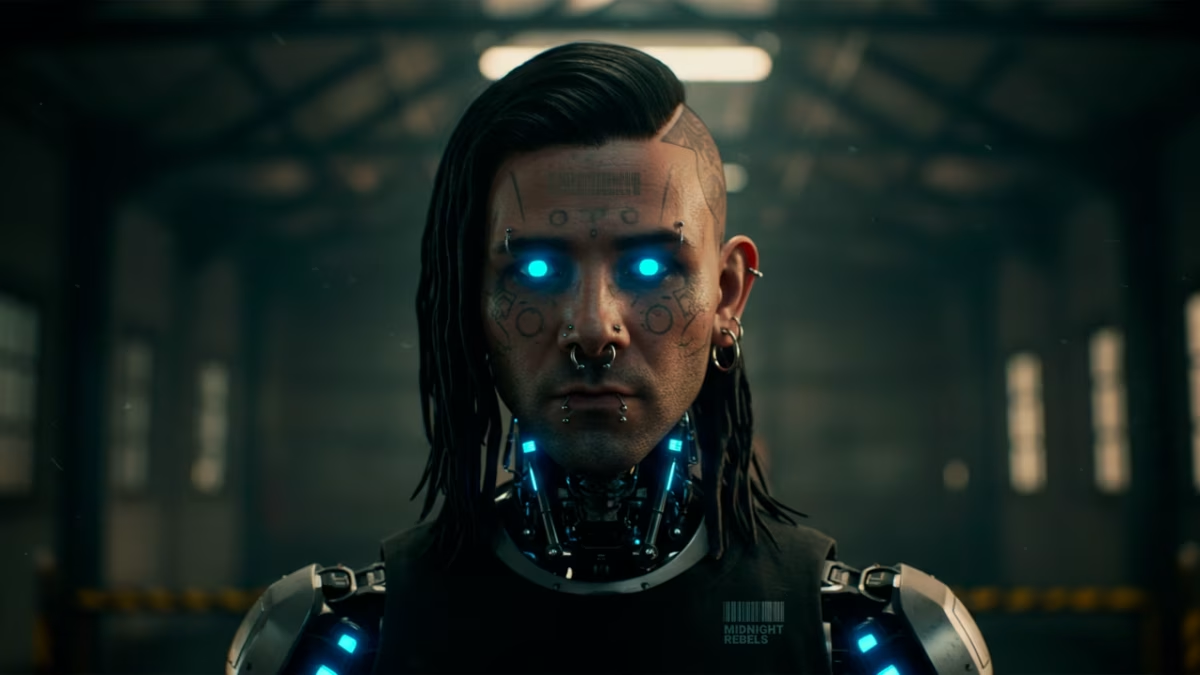
This isn’t just a theory. In September 2024, the government charged a man named Michael Smith with a scheme that stole over $10 million in royalties. He allegedly used AI to get hundreds of thousands of songs and then used bots to stream them. And it’s a huge problem. One fraud detection company, Beatdapp, estimates that 10% of all music streams are fake, which means scammers are stealing $2 to $3 billion from real artists every year.
The Legal Fights: Who Owns What?
The music industry is fighting back in court in two main ways. The first fight is about protecting an artist’s voice. The viral “Heart on My Sleeve” track, featuring startlingly realistic AI clones of Drake and The Weeknd, triggered widespread alarm. This public outcry directly spurred new legislation, most notably Tennessee’s ELVIS Act, the first law in the U.S. to explicitly add an artist’s voice to the list of personal attributes protected by publicity rights.
The second, more fundamental battle is over the data used to train AI models. Tech companies argue that training their systems on vast libraries of copyrighted music is a “fair use” of that material. 1 Music rights holders, including major labels that have filed lawsuits against platforms like Suno and Udio, counter that it is mass copyright infringement. 4
The courts are starting to weigh in. The U.S. Copyright Office has made it clear: if a human doesn’t make it, it can’t be copyrighted. And a big court case in June 2025 (Bartz v. Anthropic) made an important point: using legally bought books to train AI might be fair use, but using stolen or pirated music is not. This changes everything, because now the question is simple: was the music used for training obtained legally? 5
What’s Next for Musicians?
So, what does the future look like? It seems the music world is splitting in two: there will be a market for cheap, functional “audio content” for things like commercials and background music, which AI will likely take over. Then there will be the market for real “art” made by people.
For human artists to succeed, they’ll need to focus on the things AI can’t do. Experts and artists agree that the future is about the human touch: the energy of a live show, telling real stories from their lives, and building a true connection with fans. In a world flooded with fake music, the real, human soul behind a song is what will matter most.
- https://medium.com/ai-music/theres-no-excuse-for-making-bad-music-anymore-how-ai-turned-every-bedroom-into-abbey-road-3e6a1ca0ce93 ↩︎
- https://www.amworldgroup.com/blog/ai-tools-for-music-production ↩︎
- https://www.musicbusinessworldwide.com/can-ai-generated-content-be-copyrighted-heres-what-a-new-report-from-the-us-copyright-office-says1/ ↩︎
- https://www.musicradar.com/music-tech/i-love-it-but-a-part-of-me-is-a-little-afraid-of-it-trap-producer-lex-luger-releases-generative-ai-model-based-on-his-sound ↩︎
- https://www.reddit.com/r/musicproduction/comments/1fssnf6/becoming_worried_about_ai/ ↩︎
* generate randomized username
- COMMENT_FIRST
- #1 Lord_Nikon [12]
- #2 Void_Reaper [10]
- #3 Cereal_Killer [10]
- #4 Dark_Pulse [9]
- #5 Void_Strike [8]
- #6 Phantom_Phreak [7]
- #7 Data_Drifter [7]
- #8 Zero_Cool [7]