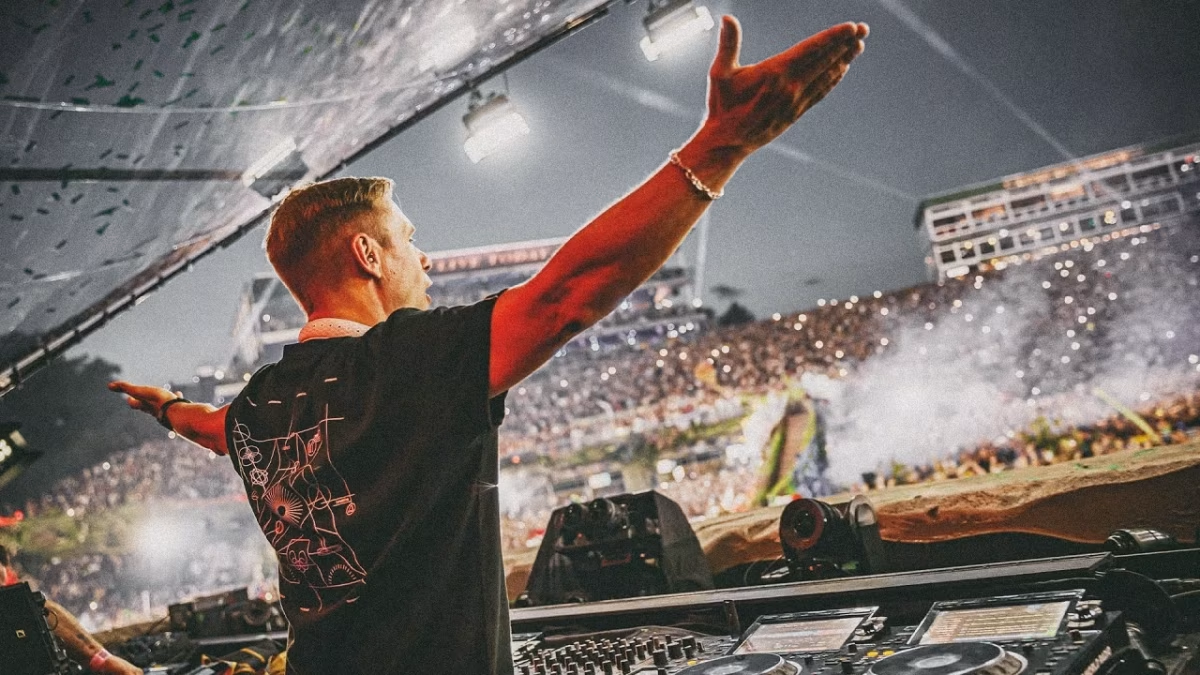

Walk onto the main field of any major electronic music festival today, and you’ll see a familiar sight: thousands of people, phones in the air, all facing a massive, glowing stage. At the center of it all is the DJ, elevated like a rock star. This phenomenon, often called “DJ worship,” is a huge part of the modern electronic dance music (EDM) experience. For many, seeing their favorite artist perform is the whole point. But within the rave community, a conversation is bubbling up about what this shift means for the culture’s soul. 1
Let’s explore what DJ worship is and why some long-time ravers are hoping to turn the focus back to the dancefloor.
What Exactly Is “DJ Worship”?
At its core, “DJ worship” describes the evolution of the DJ from a background music curator to the main spectacle of the event. In the early days of rave culture, the DJ was often a “shaman” or guide, sometimes tucked away in a dark corner where the music, not the person, was the focus.
Today, the scene is dominated by superstar DJs who are global brands. Promoters can sell more tickets by marketing a celebrity headliner than a general vibe, leading to massive stages, dazzling visuals, and a concert-like atmosphere. Social media has amplified this, allowing DJs to build huge personal followings and giving fans a direct connection to their idols. For many attendees, this is a positive evolution. The experience is about seeing a specific artist they love, and the DJ’s energy is a key part of the performance. As one fan puts it, when it’s just you, the music, and the DJ, “it’s a beautiful meditation”. 2
A Return to Rave Roots
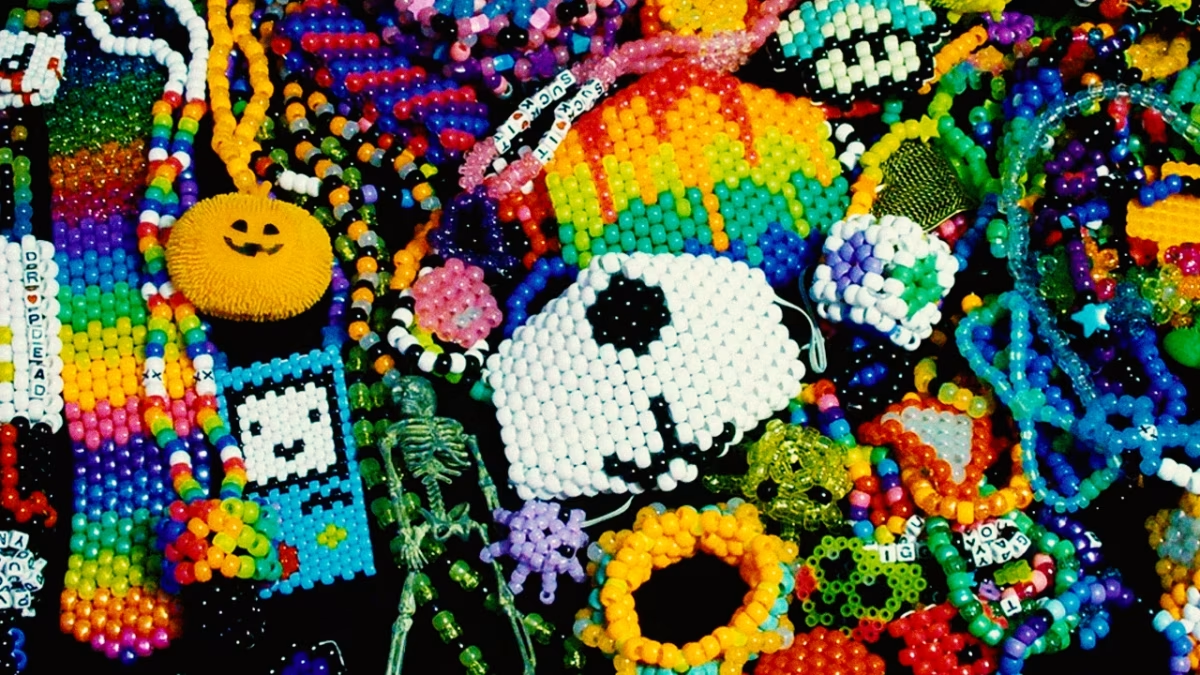
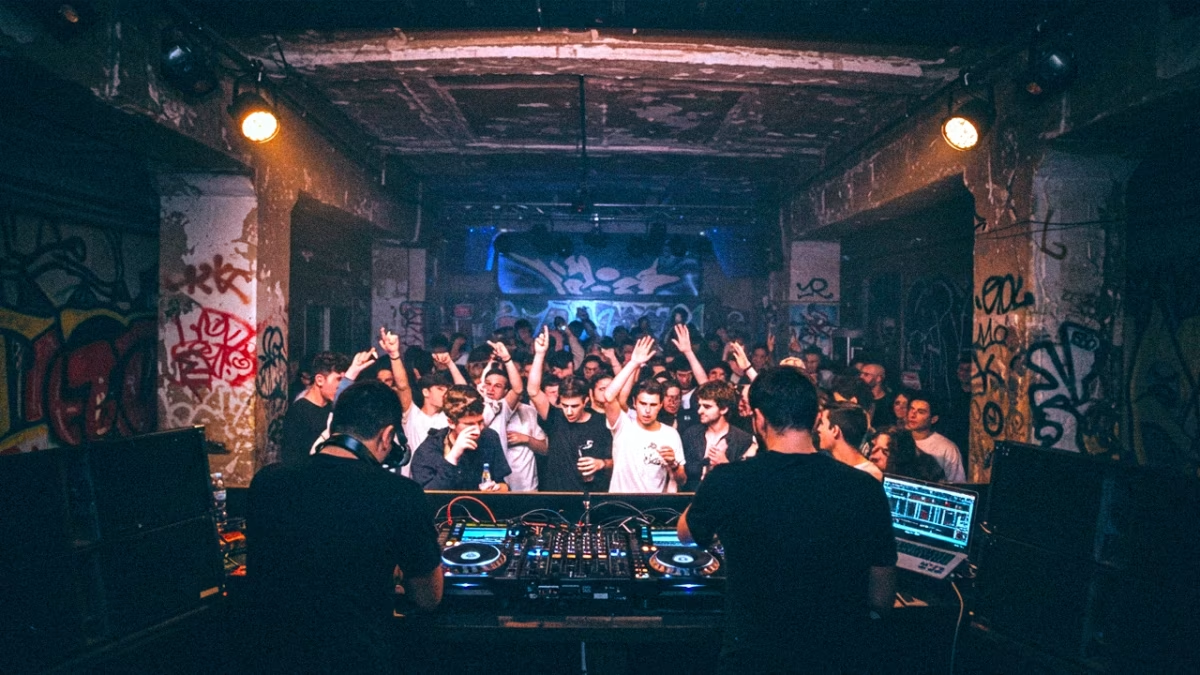
On the flip side, a growing part of the community feels this focus on the DJ goes against the original spirit of raving. Rave culture has deep roots in the underground clubs of the ’70s and ’80s, which were often safe havens for marginalized Queer, Black, and Latinx communities who were excluded from mainstream nightlife. The point wasn’t to watch a performer; it was to create a judgment-free space for everyone to connect.
This spirit was codified in the mantra PLUR: Peace, Love, Unity, and Respect. It’s a set of principles for creating an inclusive, collective experience on the dancefloor. Those who advocate for this ethos argue that when thousands of people face a stage, it breaks that sense of unity. The event becomes millions of individual connections to the DJ, with very few connections happening between the people in the crowd. 3


Connection vs. Content
This shift is most visible with the sea of phones at every show. When the DJ is a spectacle, the first impulse is to record it. A 2016 survey found that 40% of concertgoers often record videos. Critics of this trend say every phone that goes up creates a barrier, pulling someone out of the moment and turning them from a participant into a spectator. The collective energy that makes a dancefloor feel magical can get lost in the process.
Veteran DJs have also weighed in. Techno icon Richie Hawtin has criticized the “rock star mentality,” arguing that clubbing should be about an “energy transfer” between the DJ and the crowd—a two-way street that’s impossible when the DJ is an “unreachable” figure on a pedestal. This pressure can also affect the music itself. To please massive crowds, some DJs may feel pressured to play predictable, commercial sets rather than taking risks and introducing new sounds. It brings to mind a timeless piece of wisdom from house music pioneer Frankie Knuckles: “The minute you think you’re greater than the music, you’re finished”. 4
Finding the Vibe
The debate over DJ worship isn’t about saying one way of enjoying music is right or wrong. It’s an awareness of how much the scene has changed. The massive, DJ-focused festival is an incredible experience for millions. At the same time, the original, community-first ethos is still alive. Underground crews in cities like New York are throwing “renegade” parties in parks, and clubs from Berlin to London are implementing no-phone policies to bring the focus back to the dancefloor. Ultimately, the culture is big enough for both, and the future of the dancefloor is in the hands of the people on it.
- https://haenfler.sites.grinnell.edu/subcultures-and-scenes/edmrave-culture/ ↩︎
- https://www.musicca.st/blog/marketing-5/the-impact-of-social-media-on-the-careers-of-djs-and-edm-producers-9 ↩︎
- https://www.ravebeetle.com/blogs/news/what-is-plur-rave-culture ↩︎
- https://www.digitaldjtips.com/richie-hawtin-speaks-out-about-rock-star-djs/ ↩︎
* generate randomized username
- COMMENT_FIRST
- #1 Lord_Nikon [12]
- #2 Void_Reaper [10]
- #3 Cereal_Killer [10]
- #4 Dark_Pulse [9]
- #5 Void_Strike [8]
- #6 Phantom_Phreak [7]
- #7 Data_Drifter [7]
- #8 Cipher_Blade [6]