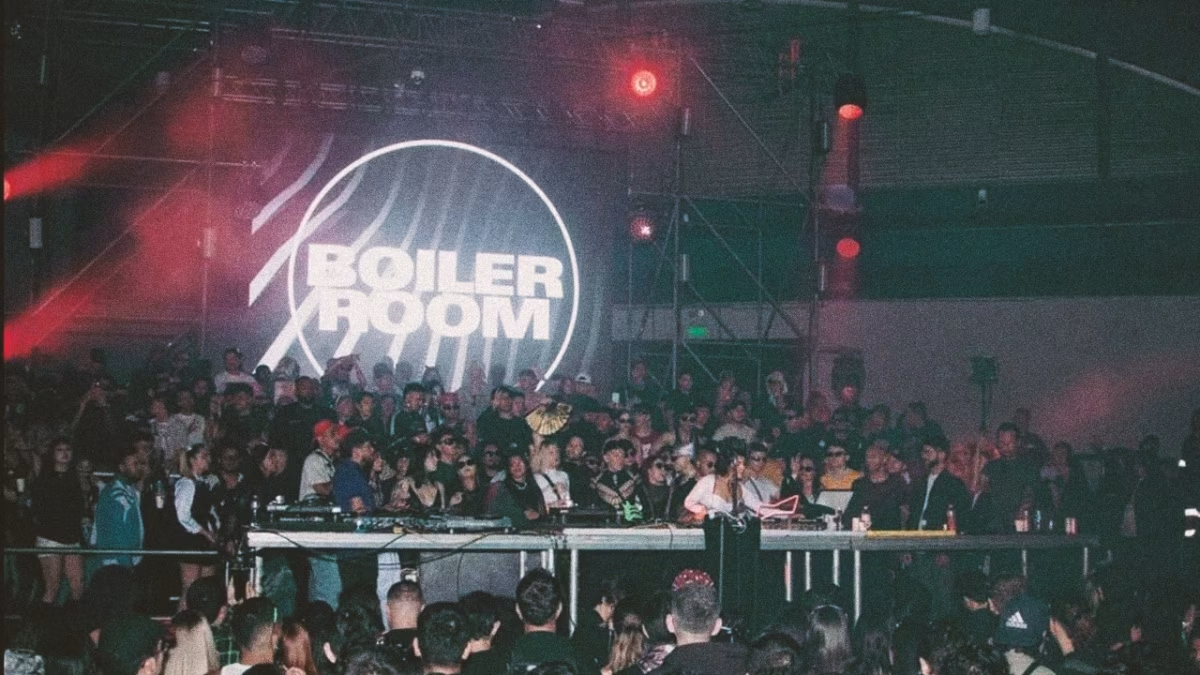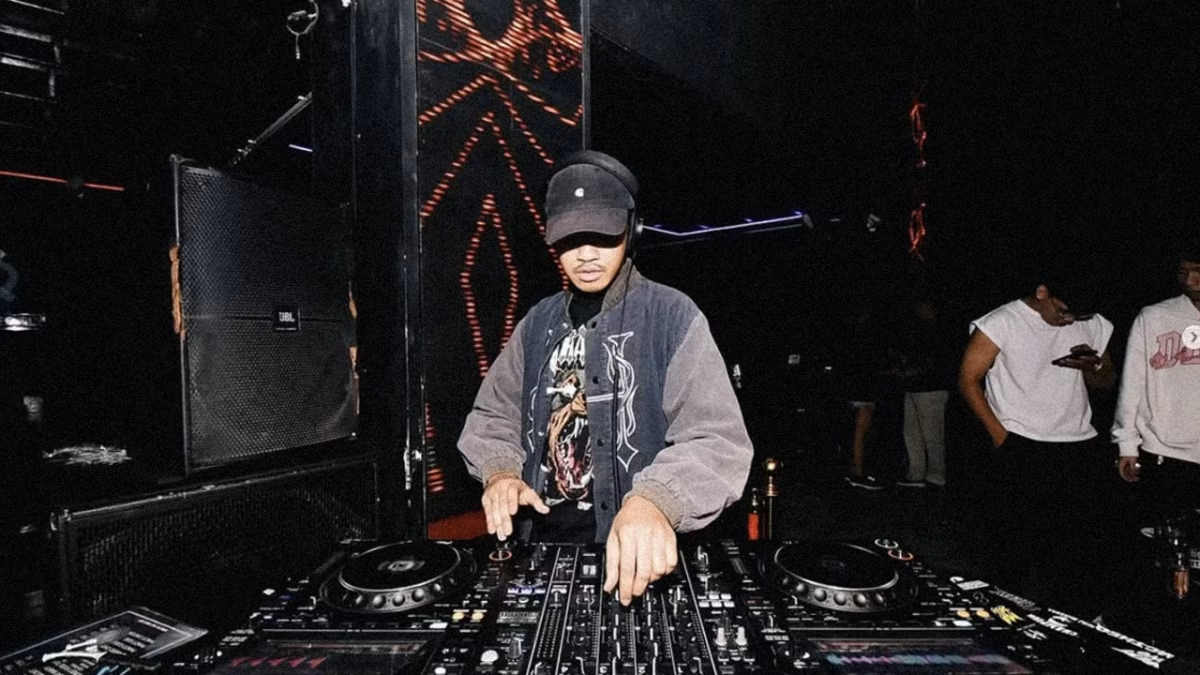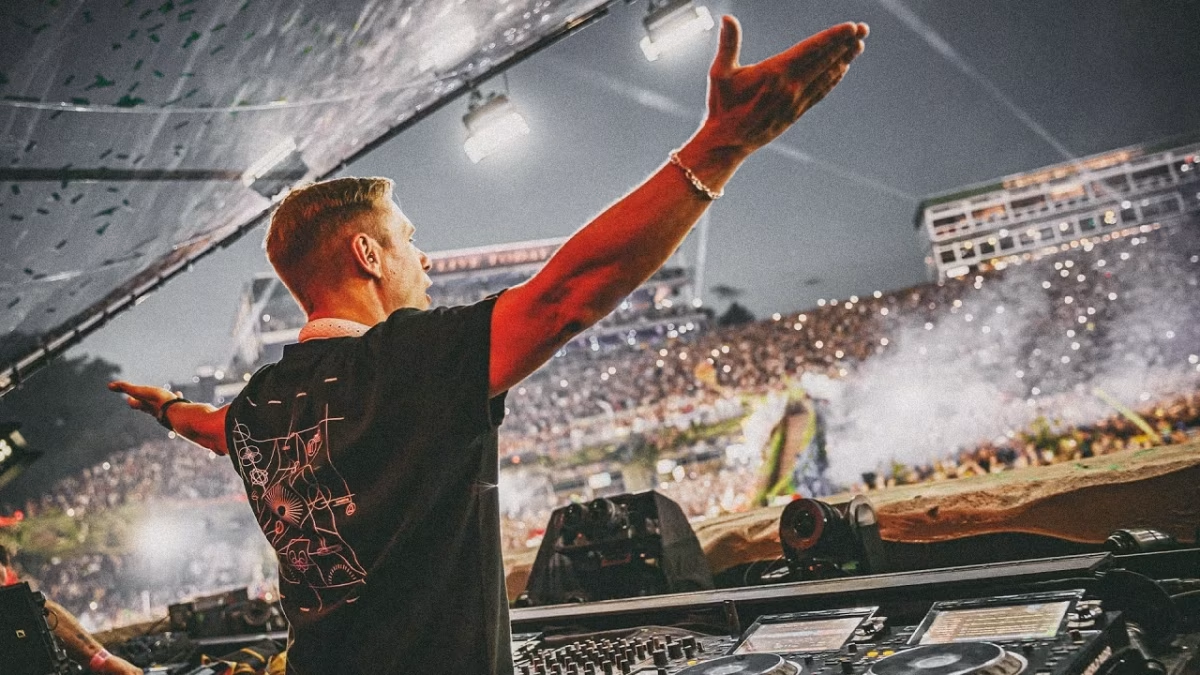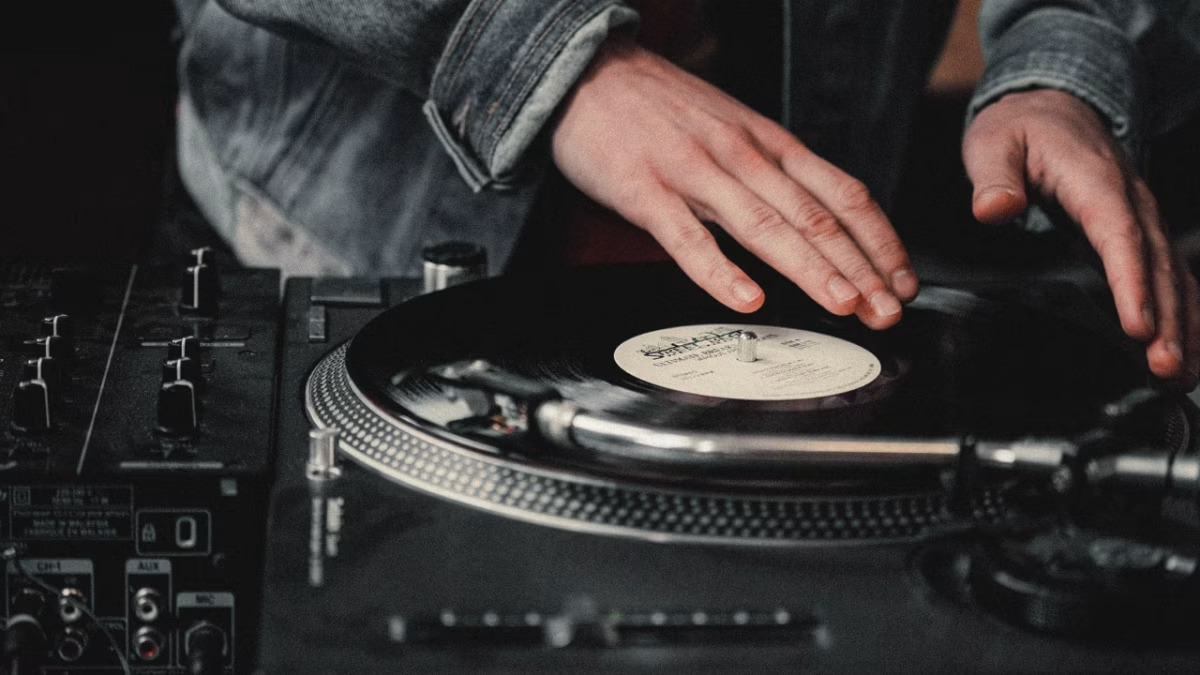

“It feels like everyone’s a DJ these days.” You’ve probably thought it or heard someone say it. From your cousin who just bought a controller to the global superstars headlining massive festivals, the world is full of DJs. But this didn’t happen overnight. The journey from a guy playing records on the radio to a global cultural phenomenon is a wild story, full of game-changing inventions, musical revolutions, and huge cultural shifts. It happened in four big waves. Each one changed the game and brought a flood of new people into the craft. Let’s break down how we got here.
Radio Stars and the First Parties (1930s-1960s)
Let’s start with a quick history lesson. The term “disc jockey” was first used in 1935 by Walter Winchell to describe a radio announcer named Martin Block. Block’s trick was making it sound like he was at a live ballroom event, but he was just playing records in a studio.
These early radio DJs were the original music influencers, guys like Alan Freed and Wolfman Jack who could make a song a hit just by playing it.
The real leap happened in 1943. A British radio DJ named Jimmy Savile hosted the world’s first DJ dance party in a small room in England, playing jazz records for a crowd.
This was the moment the DJ escaped the radio station and stepped into the party. A few years later, the first commercial nightclub, the Whiskey à Go-Go, opened in Paris, creating a place where people paid to hear a DJ play records instead of a live band.
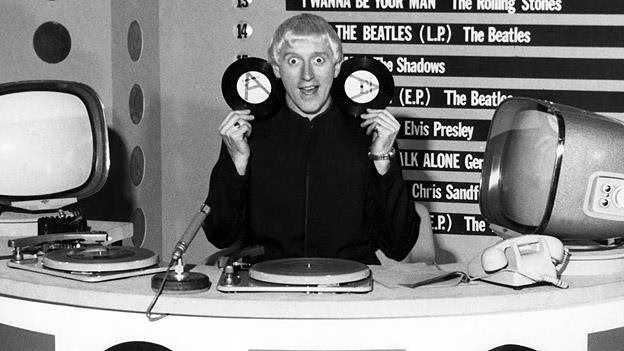
The key piece of tech was simple but brilliant: the twin-turntable system. It let a DJ cue up the next song while one was still playing, creating a continuous flow of music. No more awkward silence on the dance floor. At the same time, Jamaican “sound systems” were taking root, with mobile DJs hosting huge street parties that would later inspire the block parties where hip-hop was born. This first wave didn’t create artists. It created a job.
DJs Become Artists (1970s-1980s)
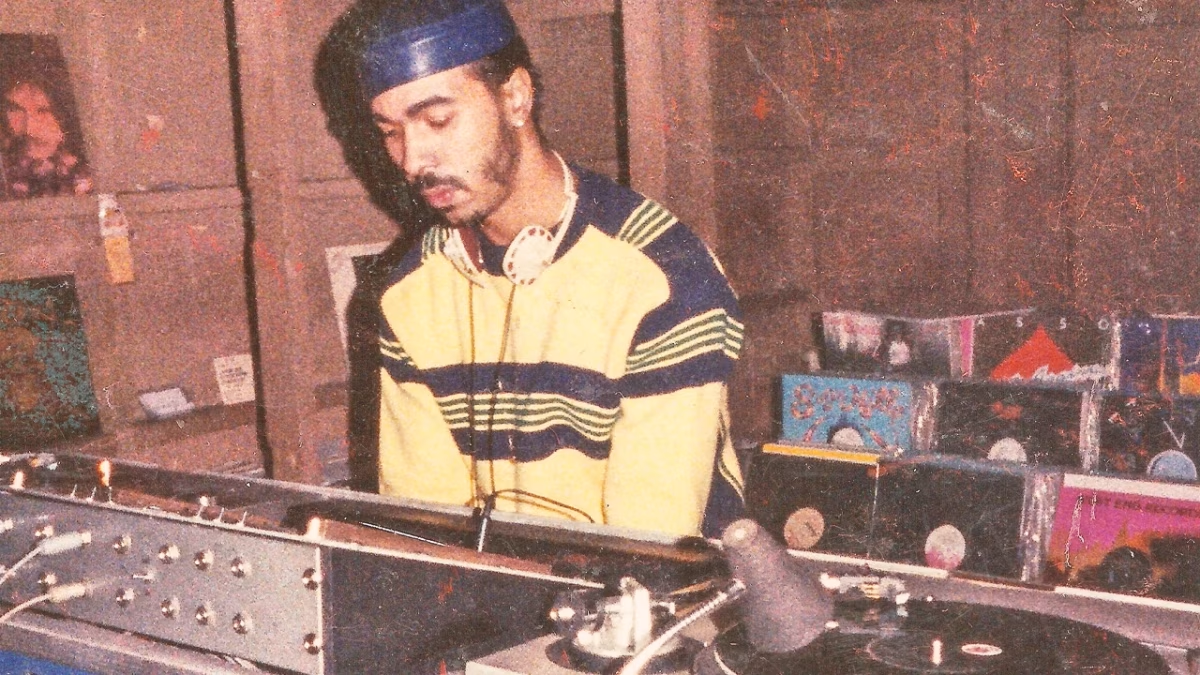
This is where things get really interesting. The DJ went from just playing songs to creating them. The catalyst was one legendary piece of gear: the Technics SL-1200 direct-drive turntable. Unlike older turntables, its motor was directly connected to the platter. This gave it high torque and stable speed, meaning you could touch, stop, and spin the record by hand without breaking the machine. It turned the turntable from a playback device into a rugged musical instrument. 1
In the Bronx, this new tool fell into the hands of creative geniuses.
- DJ Kool Herc, the “father of hip-hop,” used two copies of the same record to loop the drum “break” over and over, creating the foundation of hip-hop music: the breakbeat.
- Grand Wizzard Theodore accidentally invented scratching in 1975 when his mom called him and he stopped a record with his hand. He turned that mistake into a core part of the hip-hop sound. 2
- Grandmaster Flash perfected these techniques, developing precise ways to cut between records and elevating the craft to a new level of skill.

This new art form was called “turntablism”. Meanwhile, in the clubs of New York, Chicago, and Detroit, another revolution was happening. DJs like Francis Grasso popularized “beatmatching,” seamlessly blending two tracks together by matching their tempo. This created the hypnotic, non-stop journey of a modern DJ set. When disco faded, DJs used its parts to build new worlds. In Chicago, Frankie Knuckles took old disco records, added a drum machine, and created House music. In Detroit, pioneers like Juan Atkins created the futuristic sound of Techno. DJs were now officially artists, inventors, and cultural leaders.
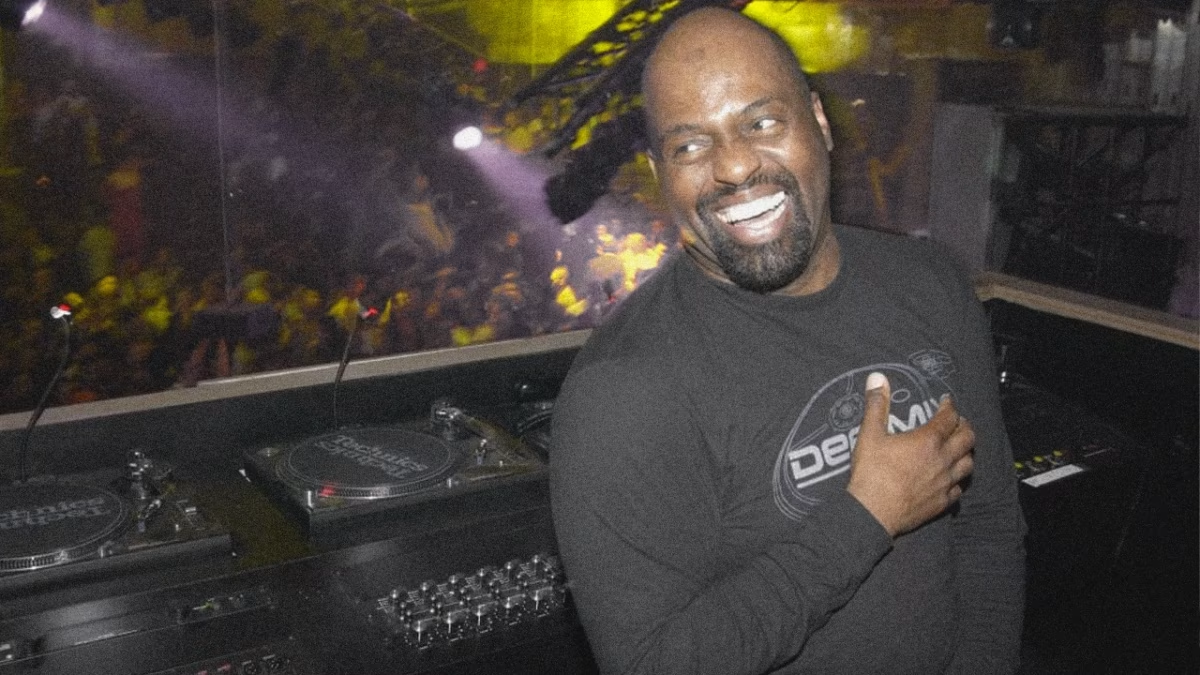
Why Frankie Knuckles’s Warning Against Ego is the Soul of House Music
DJing for Everyone (1990s-2000s)
This wave was all about access. Technology tore down the walls that kept DJing a niche skill. For decades, being a DJ was expensive. You had to constantly buy vinyl records, which were heavy and costly. Then came two game-changers: the Compact Disc (CD) and the MP3 file.
In 2001, Pioneer released the CDJ-1000, a CD player that could perfectly mimic the feel of scratching a vinyl record. It became the new club standard. At the same time, MP3s and file-sharing sites like Napster made music libraries practically infinite and free. A DJ’s collection was no longer limited by their wallet.
Then came Digital Vinyl Systems (DVS) like Serato and Final Scratch. This tech let you control MP3s on your laptop using your old turntables and special time-coded vinyl. It was the best of both worlds: the classic feel of vinyl with a limitless digital library.
The final piece of the puzzle was the affordable, all-in-one DJ controller. These devices packed two decks and a mixer into one portable unit that you could plug into a laptop. As one DJ on Reddit put it, back in the day a pair of Technics and a mixer could set you back £1000. Now, for a few hundred bucks, anyone could start practicing in their bedroom. This created a massive explosion of “bedroom DJs” and hobbyists. The numbers back this up. In 2023, DJ controllers dominated the market, making up 38% of all hardware units sold, and nearly 60% of all equipment was bought by amateurs and learners.
The DJ as a Brand (2010s-Present)
The latest wave is about business and branding. In the 2010s, Electronic Dance Music (EDM) exploded in America, turning DJs into mainstream pop stars. Artists like David Guetta and Calvin Harris started collaborating with huge vocalists like Rihanna and Sia, creating global chart-topping hits. The EDM market is now worth over $10 billion, with huge festivals like EDC attracting half a million people.
At the same time, social media completely changed how you build a DJ career. Platforms like SoundCloud, Instagram, and TikTok let DJs connect directly with fans, build a following, and get discovered without a record label. You’re not just a DJ anymore. You’re a content creator. You have to build a personal brand, create viral videos, and engage with your community. Some in the community love this direct connection , but others worry about the pressure of algorithms and the rise of “Instagram DJs” who might have more followers than skills.
Read also: 61% of New DJs Believe “Social Media Numbers Matter More Than Musical Skill.”
The newest tech development is streaming service integration directly into DJ software. With a subscription to a service like Beatport or TIDAL, you can access millions of songs instantly. It’s amazing for taking requests at a wedding or exploring new genres without buying tons of tracks. But there are downsides. You need a solid internet connection, and you often can’t find the special DJ-friendly edits that pros rely on.

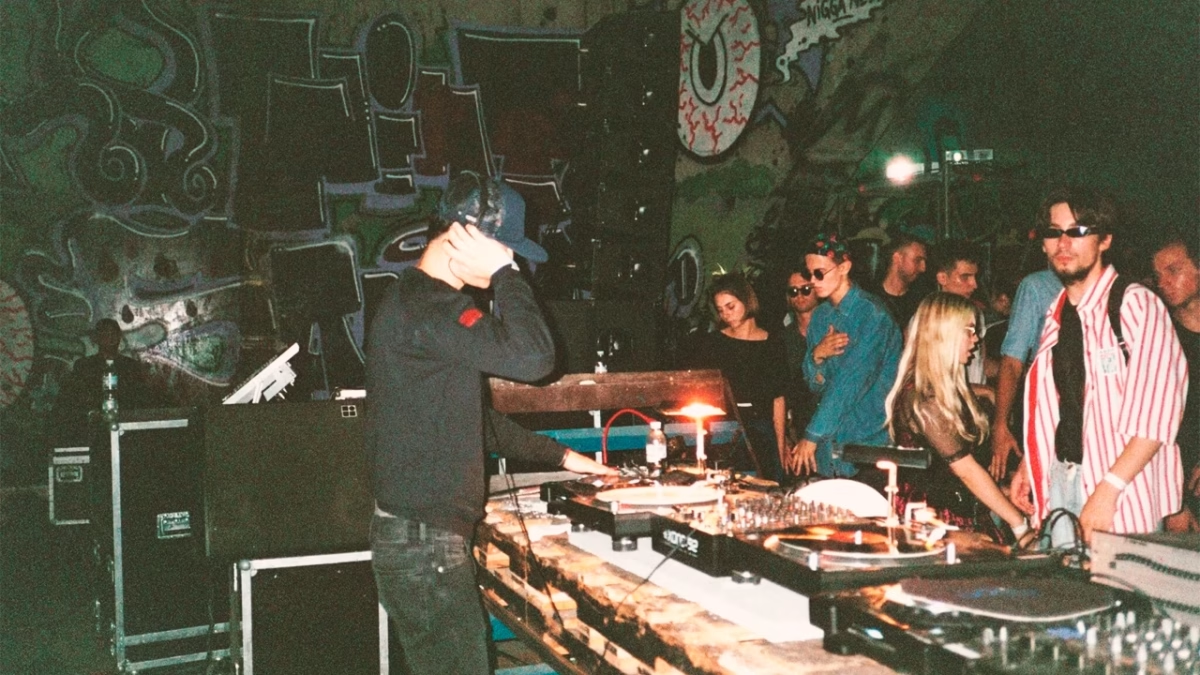
A Crowded Dance Floor
With all this new access, it’s never been easier to start DJing. But that also means it’s never been harder to stand out. The market is incredibly saturated. One person on Reddit summed it up perfectly: “Lower costs + lower skills = everyone’s a DJ now”. 3
The data tells a tough story. A look at the popular booking site Resident Advisor showed that out of over 134,000 DJ profiles, only 1.6% had five or more upcoming gigs booked. That’s the tiny slice of working professionals at the top. Another study found that 76% of electronic music artists don’t feel their career is financially sustainable, and a whopping 82% have to work other jobs to pay the bills. 4
There’s also a lot of debate in the community about whether technology has made things too easy. Features like the “sync” button, which automatically matches the beats of two songs, can feel like a cheat code to older DJs who spent years mastering the skill of beatmatching by ear. The flip side is that these tools can free up a DJ’s mental space to be more creative with their mixing, using effects, loops, and samples in ways that were impossible on old gear.
The Beat Goes On
The story of the DJ’s rise is a story of technology. Each big influx of new DJs was kicked off by a new tool that made the craft more accessible, more creative, or more profitable.
- The Foundational Wave gave us the job with twin turntables.
- The Artistic Wave gave us the art form with the direct-drive turntable.
- The Digital Wave gave us mass access with controllers and MP3s.
- The Mainstream Wave gave us global brands with social media and streaming.
The tools will keep evolving. AI might help you pick the next track, and virtual reality could be the next nightclub. But at its core, DJing is still about one thing: sharing the music you love with other people and creating a moment on the dance floor. And that’s a beat that will never stop.
- https://www.zipdj.com/history-of-dj-equipment/ ↩︎
- https://www.pbs.org/opb/historydetectives/feature/the-art-of-turntablism/ ↩︎
- https://www.reddit.com/r/DJs/comments/qjh3rd/why_is_everyone_a_dj_now/ ↩︎
- https://www.attackmagazine.com/features/long-read/the-1-reality-what-the-numbers-tell-us-about-dj-economics/ ↩︎
* generate randomized username
- COMMENT_FIRST
- #1 Lord_Nikon [12]
- #2 Void_Reaper [10]
- #3 Cereal_Killer [10]
- #4 Dark_Pulse [9]
- #5 Void_Strike [8]
- #6 Phantom_Phreak [7]
- #7 Data_Drifter [7]
- #8 Zero_Cool [7]