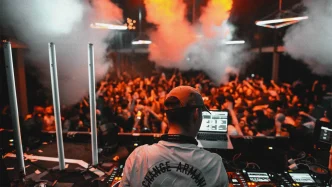


The February 2026 global festival season is waking up, but the electronic dance music (EDM) community is staring down a drug supply that public health experts are calling deadlier than ever before. The era of predictable club drugs is gone. Now, the primary threat to festival drug safety is the infiltration of synthetic opioids—specifically nitazenes—into non-opioid substances like MDMA, cocaine, and ketamine.
Nitazenes are a class of synthetic opioids engineered in the 1950s but abandoned by pharmaceutical companies because they were simply too strong. Today, they are up to 100 times more potent than fentanyl and 500 times stronger than morphine. They are showing up in the recreational supply, often sold as “fentanyl-free” drugs or pressed into fake pills. The danger is immediate. A standard dose of naloxone is often useless against a nitazene overdose; responders have to administer multiple doses, spaced minutes apart, just to restore a normal breathing pattern.
What Is Medetomidine and Why Is It Replacing Tranq?
It is not just opioids causing the chaos. The illicit market is also saturated with powerful non-opioid veterinary sedatives. Xylazine, known as “Tranq,” is heavily prevalent in cocaine supplies and does not respond to naloxone at all. But a new chemical is already taking its place. Medetomidine, an alpha-2 adrenergic agonist, is estimated to be 100 to 200 times more potent than xylazine. It forces users into a deep coma with a dangerously slow heart rate and low blood pressure.
Epstein Files Reveal Surreal 2009 Email With Instructions To Research Dance Music
Here is the baseline threat matrix for EDM festival drug safety in 2026:
| Substance | Potency Relative to Morphine | Naloxone Reversibility | Prevalence in EDM Supply |
| Fentanyl | 50-100x | High (Standard Dose) | Ubiquitous. |
| Nitazenes | 100-500x | Low (Multiple Doses) | Emerging Threat. |
| Xylazine (Tranq) | N/A (Sedative) | None | High in Cocaine. |
| Medetomidine | High (Sedative) | None | Rising. |
How Does the RAVE Act Punish Festival Safety?
In 2026, harm reduction is a mandatory duty of care. Yet, festival organizers remain handcuffed by antiquated legislation, primarily the RAVE Act (the Illicit Drug Anti-Proliferation Act of 2003). The law holds venue owners and promoters criminally and civilly liable for “maintaining a drug-involved premises”. If a festival operates an open drug-testing tent or distributes detailed overdose warnings, federal prosecutors can use those safety measures as evidence of liability. The legislation incentivizes ignorance over safety.
How Is BunkBot Bypassing Security to Save Lives?
Because organizers cannot openly protect their attendees, independent harm reduction groups have gone underground. The Bunk Police have engineered an autonomous communication network known as BunkBot to bypass security protocols. Festival-goers text the word “SAFETY” to 1-888-NOT-BUNK (668-2865) to subscribe. From there, they enter event-specific codes for massive gatherings like Ultra, EDC, or Burning Man. When the underground team detects a lethal batch of drugs on the campgrounds, BunkBot blasts a real-time alert directly to attendees’ phones. The system also broadcasts the ever-changing locations of covert testing kits after security inevitably shuts them down.



Front-of-House vs. Back-of-House: How Are Festivals Testing Drugs?
To gather this intelligence, the scene relies on a mix of clandestine and compromised testing methods. Since open Front-of-House testing remains a legal minefield, many events utilize Back-of-House (BOH) testing. Security teams confiscate substances at the gates, and medical staff test them out of sight. If a lethal adulterant is found, organizers can issue generalized safety warnings without officially sanctioning drug use.
The testing technology itself has to be fast and flawless. Mobile Fourier-transform infrared (FTIR) spectrometers analyze the bulk of a substance, but they struggle to detect trace amounts of hyper-potent synthetics. To compensate, medical teams use highly sensitive immunoassay strips. Next-generation strips engineered by companies like BTNX can detect nitazenes and medetomidine in seconds. These tools are now standard issue in welfare centers, even at festivals with strict zero-tolerance policies.
The 2026 festival landscape requires radical survival tactics. Until federal policy catches up to the reality of the synthetic crisis, guerrilla chemistry and autonomous text alerts are the only things keeping the dancefloor safe.
Sources
- (https://www.mdpi.com/1420-3049/30/19/3890)
- (https://www.smf.co.uk/commentary_podcasts/turning-the-tide-on-nitazenes-and-other-dangerous-drugs/)
- (https://www.drugsandalcohol.ie/43369/1/2025-06-ndarc-fact-sheet-nitazenes-final.pdf)
- (https://www1.racgp.org.au/newsgp/clinical/what-are-nitazenes)
- (https://publichealthscotland.scot/publications/rapid-action-drug-alerts-and-response-radar-alert-nitazenes/rapid-action-drug-alerts-and-response-radar-alert-nitazenes-version-20/recognising-and-responding-to-a-possible-nitazene-overdose/naloxone/)
- (https://www.substanceusephilly.com/medetomidine)
- (https://www.med.unc.edu/fammed/nctac/wp-content/uploads/sites/1256/2025/08/ACHD-Medetomidine-Brief-August-2025.pdf)
- (https://www.addictioncenter.com/community/turnt-up-the-volume-the-dangers-of-music-festival-drug-use/)
- (https://scholarship.kentlaw.iit.edu/cgi/viewcontent.cgi?article=4226&context=cklawreview)
- (https://bunkpolice.com/bunkbot/)
- (https://spunout.ie/health/drugs/back-of-house-testing-drugs-hse-what-is-it/)
- (https://www.bccsu.ca/wp-content/uploads/2020/08/FTIR_TestStrip_Field_Assessment-Sept2019.pdf)
- (https://www.cda-amc.ca/sites/default/files/hta-he/HC0108-Drug_Checking_Technologies.pdf)
- (https://www.btnx.com/product/nitazene-test-strips-ntz-18s26)
- (https://www.btnx.com/blogpost/what_an_independent_study_reveals_about_medetomidine_test_strips)
* generate randomized username
- COMMENT_FIRST
- #1 Lord_Nikon [12]
- #2 Void_Reaper [10]
- #3 Cereal_Killer [10]
- #4 Dark_Pulse [9]
- #5 Void_Strike [8]
- #6 Phantom_Phreak [7]
- #7 Data_Drifter [7]
- #8 Zero_Cool [7]