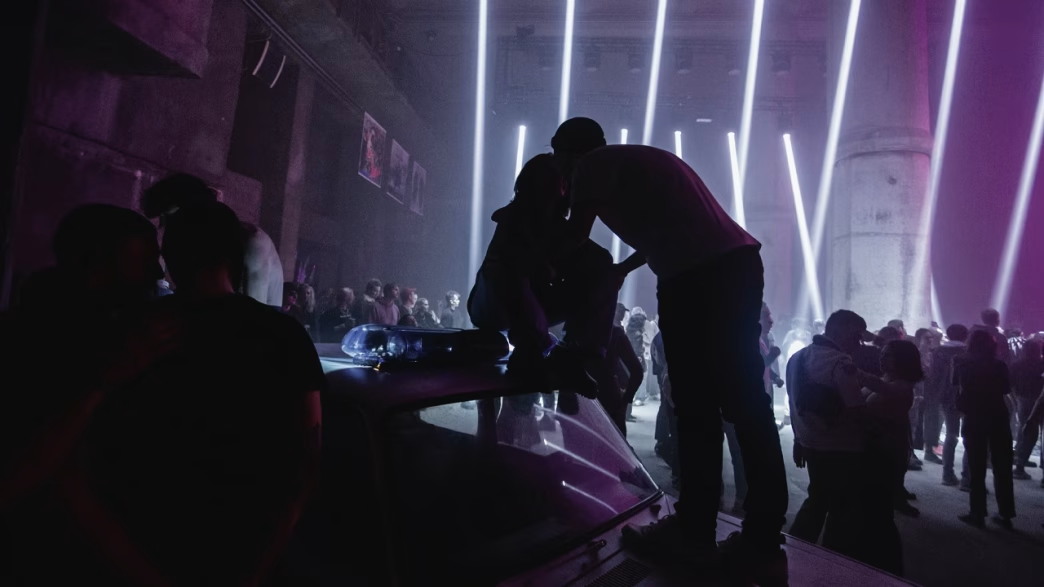
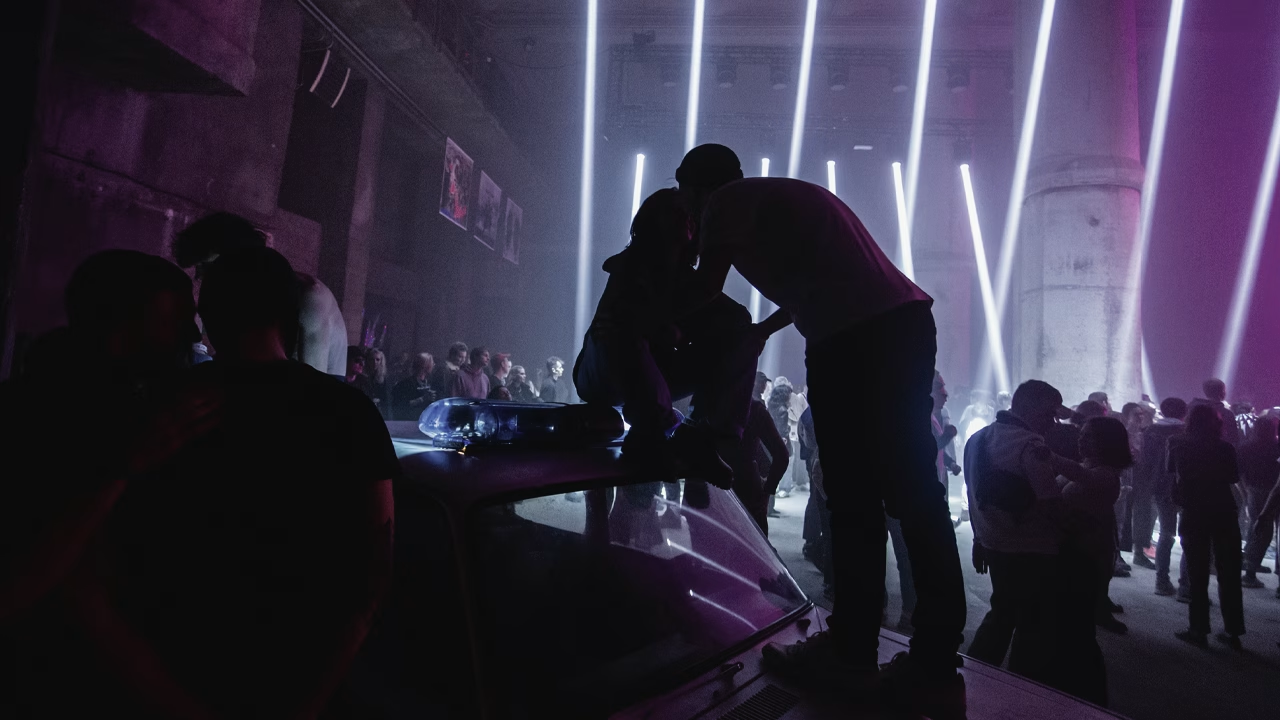

The modern underground doesn’t end when the house lights come up; it ends when the screen goes black. For a generation of club kids, promoters, and nocturnal shapeshifters, the “feed” replaced the flyer on the telephone pole long ago. Instagram isn’t just an app for these communities—it is the archive, the box office, and the safety net. But over the last year, a chilling silence has descended upon the global queer circuit. It is a silence not born of apathy, but of erasure.
Throughout late 2024 and 2025, a systemic wave of account suspensions and deletions has swept through queer nightlife collectives worldwide. The purge is surgical in its targets but clumsy in its execution, operated by automated moderation tools that conflate sex-positive expression with criminal activity. The result is a form of digital gentrification that is rapidly sanitizing the internet of its messiest, most vital subcultures.
PLUR for Sale: Has Rave Culture Lost Its Meaning?
The Digital Guillotine
The most high-profile casualty of this crackdown is Gegen, the legendary Berlin collective known for its synthesis of hard techno and fetish aesthetics. For 15 years, Gegen has defined the sound and look of Berlin’s sex-positive underbelly. But in August 2025, and again in October, Meta permanently deleted Gegen’s Instagram account, severing its connection to over 90,000 followers. The reason cited? “Human Exploitation.” To anyone who has stepped foot inside a Gegen party, the charge is laughable—a grim irony for a collective founded on radical bodily autonomy and consent. But to Meta’s automated decision-making systems (ADM), the nuances of queer performance are invisible; the algorithm sees a flyer for a leather party and reads it as a crime scene.
Gegen is not an outlier. As reported by Resident Advisor‘s Hattie Lindert, this is a global phenomenon. In Santiago, Chile, the queer party Chachorros was nuked just as it approached 15,000 followers, a move founder Camilo described as “a total loss of our workspace” [1]. In Bangkok, the collective Horn lost 8,000 followers overnight without warning [1]. In Amsterdam, The Queer Agenda—a vital hub for Dutch queer culture—was wiped off the map in November along with its entire network of associated accounts, including Striptopia and Sexquisite [2].
The “Human Exploitation” Glitch
The weapon of choice in this purge is Meta’s “Human Exploitation” policy. Ideally, this policy exists to combat the horrors of trafficking. In practice, it has become a blunt instrument used to bludgeon sex workers, drag performers, and queer artists. The issue lies in “context collapse.” Meta’s AI lacks the cultural competence to distinguish between a consensual performance art piece and non-consensual abuse. When a drag queen posts a flyer with a cash app link and a corset, the machine sees solicitation.
This algorithmic moral panic reached a fever pitch in January 2025, when a “glitch” prevented teen users—and many adults—from searching innocuous hashtags like #trans, #lesbian, and #nonbinary, redirecting them instead to a “sensitive content” warning [3]. While Meta eventually apologized, claiming it was an error [5], the message was clear: in the sanitized metaverse, queer existence is inherently “sensitive,” a liability to be managed rather than a culture to be celebrated.
Erasure as Economic Violence
The fallout is not merely aesthetic; it is economic. Nightlife is a gig economy. For independent DJs, performers, and organizers, an Instagram profile is a CV and a storefront. When Replicant Events in Paris had eight of its associated accounts banned, founder Lenny Cartwright had to hire a lawyer and petition Paris Mayor Anne Hidalgo to intervene with Meta France just to get them back [1]. Most collectives do not have the political capital to call the mayor.
When these accounts vanish, ticket sales crater. Safety information—bad date lists, harm reduction guides, vetting protocols—disappears. The “digital death penalty,” as activists call it, effectively bankrupts community hubs that operate on razor-thin margins. Groups like Repro Uncensored have documented over 210 such takedowns in late 2025 alone, linking the suppression of queer nightlife to a broader crackdown on reproductive health resources [4].

The Gentrification of the Feed
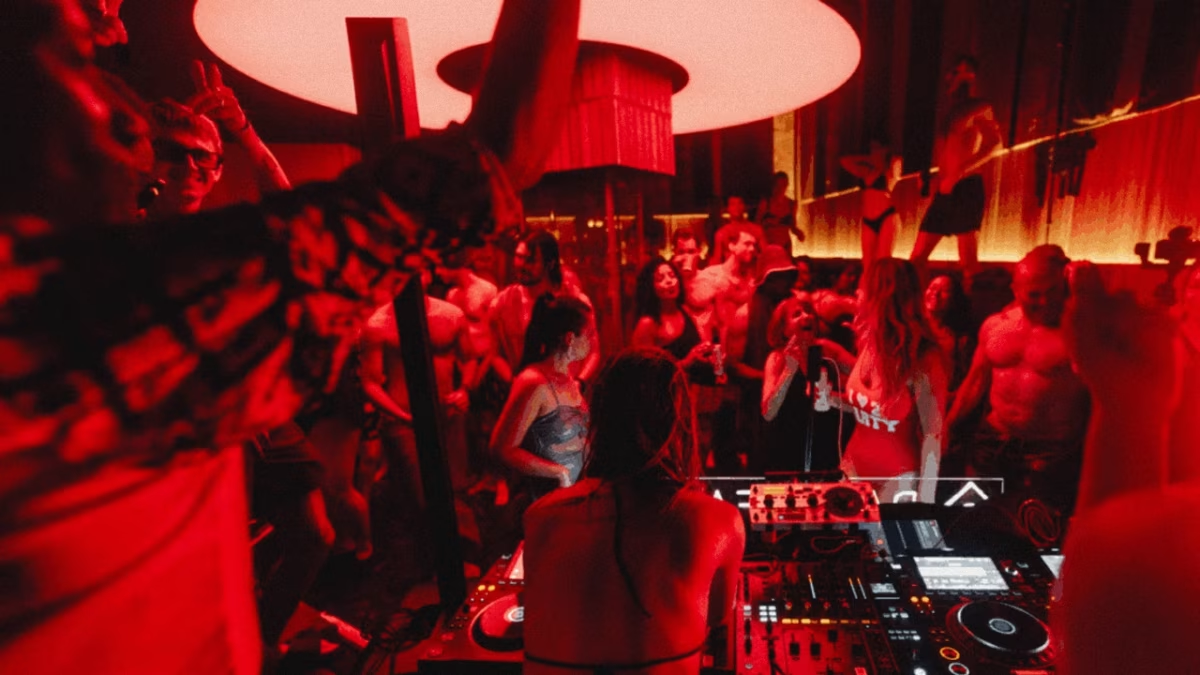
This digital purge mirrors the physical gentrification of queer spaces. Just as rising rents push gay bars out of city centers, “brand safety” algorithms are pushing queer aesthetics off the main stage of the internet. We are witnessing the suburbanization of social media, where the only acceptable content is that which can be safely monetized next to a detergent ad.
The resilience of these communities is historic, but the loss is tangible. When The Queer Agenda was deleted, years of photography, flyers, and comments—a living archive of Amsterdam’s queer history—evaporated instantly. Unlike a club that closes down, there is no rubble left behind, no physical site to mourn. Just a broken link. As we move deeper into 2026, the underground is fracturing. Collectives are retreating to newsletters, Telegram channels, and niche apps like Lex, returning to the closed loops of the pre-social media era. The party will go on—it always does—but the digital lights have been turned up, and the view is terrifyingly sterile.
Sources:
- Resident Advisor: Global queer nightlife collectives accuse Meta of suspending accounts without cause
- Repro Uncensored: Case Study – The Queer Agenda
- Mashable: Instagram blocked LGBTQ+ content by accident, Meta claims
- The Guardian: Meta shuts down global accounts linked to abortion advice and queer content
- Diva Magazine: Teens blocked from seeing LGBTQIA content on Instagram
* generate randomized username
- COMMENT_FIRST
- #1 Lord_Nikon [12]
- #2 Void_Reaper [10]
- #3 Cereal_Killer [10]
- #4 Dark_Pulse [9]
- #5 Void_Strike [8]
- #6 Phantom_Phreak [7]
- #7 Data_Drifter [7]
- #8 Zero_Cool [7]